Monthly Archives: March 2020

Kia Soul EV 2020 (Image: Kia.com)

Kia Soul EV 2020 UK review

Appealingly quirky electric crossover touches down in the UK with a 64kWh battery and a 280-mile range

What is it?

If the e-Niro is to be thought of as Kia’s ‘normal’ electric vehicle, you get the sense the Korean firm might want you to think of the new Soul EV as its cool older cousin. You know, the one who vapes and listens to bands you’ve never heard of.

Kia Soul EV 2020 (Image: Kia.com)

Its looks are key to that. The third-generation Soul retains the unabashedly boxy profile and boosted ride height of its predecessors. To this tester’s eyes, it’s not quite as energetically styled as it once was; perhaps that’s got something to do with the sort of sleepy look the new headlight design lends the front end. Nevertheless, it’s quite appealing; there’s still a healthy amount of quirk appeal about the design, which is an increasingly rare phenomenon.

In Europe, Kia will be selling the Soul only as a battery electric vehicle (BEV), while petrol models will still make their way to the US. Here in the UK, the decked-out First Edition model, which costs £33,795 post-Government grant, is for now the sole offering (sorry).

Despite the initial lack of choice, however, Kia UK seems pretty confident in the Soul EV’s potential. It already has some 2000 units on order, along with 8000 e-Niros. Given that just under 38,000 BEVs were sold here throughout the entirety of last year, it looks like Kia is gearing up to claim a fairly sizable chunk of the market for itself between now and December.

Read more: Autocar

Honda e Electric Car (Image: Honda.co.uk)

Coronavirus forces shutdown of Geneva Motor Show, but BMW i4 and other EVs will be unveiled online

Geneva Motor Show decided to cancel this year’s event because of the coronavirus, but we are still going to see a few of the electric cars that were going to be unveiled at the show.

As we previously reported, a few electric vehicles were scheduled to be unveiled in Geneva next week.

Honda e Electric Car (Image: Honda.co.uk)

However, the organization behind the auto show decided to cancel the event due to the coronavirus threat.

Maurice Turrettini, Chairman of the Foundation Board, said in a statement:

“We regret this situation, but the health of all participants is our and our exhibitors’ top priority. This is a case of force majeure and a tremendous loss for the manufacturers who have invested massively in their presence in Geneva. However, we are convinced that they will understand this decision.”

Several automakers have confirmed plans to still unveil their electric vehicles through online presentations.

BMW is set to unveil its the BMW i4, its next electric car.

The German automaker said in a statement:

“The BMW Group will carry out the program planned for Geneva including the world premiere of the BMW Concept i4 at a digital press conference with CEO Oliver Zipse in Munich at the originally scheduled time (Tuesday, March 3, 2020, 8.15 a.m. CET) and broadcast it via live stream. Further details concerning the live broadcast will follow as soon as possible.”

Fiat-Chrysler was set to unveil its next-generation Fiat 500e electric car and it confirmed today that it didn’t have a plan in place to unveil the vehicle without the show, but the automaker said that it was looking into a way to unveil the car.

Read more: Electrek

It’s Time to Go Green!

If you would like to know more about Solar Panels and the PowerBanx range of home battery systems, and get a free instant quote, please complete our online form:

Just about to finish at Cherwell (Image: T. Larkum)

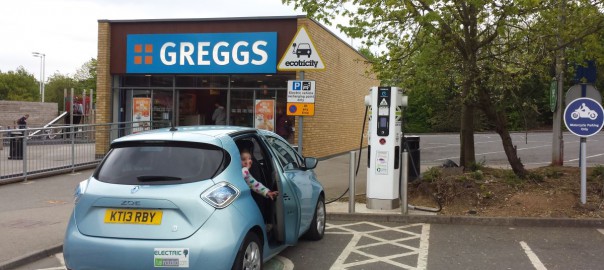
Electric vehicle charge points at supermarkets double in two years

The number of electric vehicle (EV) charge points at supermarkets has doubled in the last two years, according to data analysed by Zap-Map and the RAC.

Some 542 EV charger units were installed by supermarkets from the end of October 2017 to the end of 2019, taking the total on their sites to 1,115 – a growth of 95%. This means 6.5% of all the UK’s public charge points are located at supermarkets with growth in-line with the overall growth of public charge points.

Just about to finish at Cherwell (Image: T. Larkum)
(Image: T. Larkum)

The number of stores offering charging facilities has also doubled with 608 supermarket sites now catering for battery electric and plug-in hybrid vehicles which equates to 5% of all supermarkets – while this appears low it is no doubt in part due to a considerable proportion of smaller supermarket sites not having car parks. Between 2017 and 2019, 313 stores added chargers with, on average, two charging units being installed per site.

The RAC and Zap-Map have both long advocated the importance of supermarkets offering customers charging facilities due to the fact that customers spend 45 minutes on average in their stores – a more than reasonable amount of time to top up an electric car.

Asda and Morrisons have the greatest proportion of stores with charge points

From 2017 to 2019, the proportion of the UK’s 11,979 supermarkets which have EV charging facilities has increased from 3% to 5%. When looking at each supermarket’s store portfolios Asda has the greatest proportion of locations where an EV can be charged – 122 of its 633 sites (19%).

Morrisons is in second spot with EV charging available at 89 of its 494 stores (18%), while Waitrose comes in third place with 14% – 49 of 349 stores.

While Tesco currently only has 4% of stores with charging capability, it has highest total number of stores with charging facilities (142 of 3,961 stores).

Read more: RAC

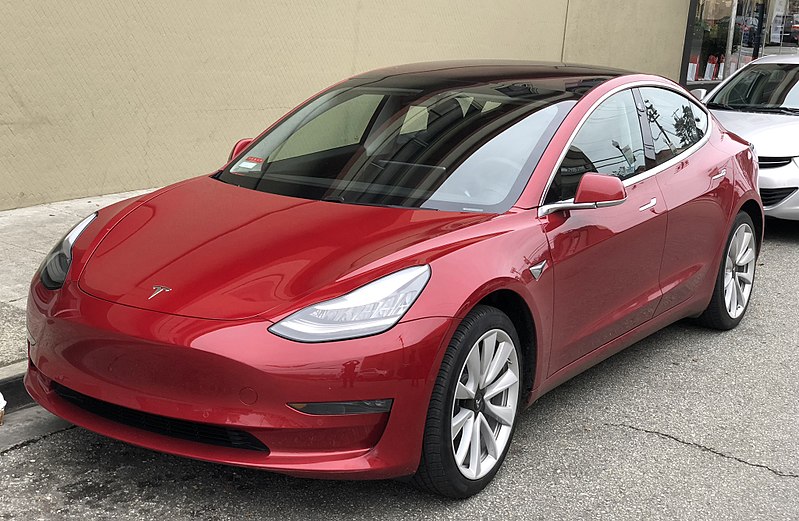
Tesla Model3 (Image: Wikimedia/Carlquinn)

Tesla Model 3 wins UK Car of the Year 2020 award

Tesla’s Model 3 has been crowned UK Car of the Year 2020, making it back-to-back wins for electric vehicles at the awards following the Jaguar I-Pace’s victory in 2019.

After emerging triumphant as Best Executive car when the category winners were announced on February 12, the Tesla battled it out against eight other category winners for the overall title.

Tesla Model3 (Image: Wikimedia/Carlquinn)

Three of these cars were electric vehicles (EVs) and the popularity of another one of the trio – the Kia e-Niro – ensured the closest-ever winning margin in the history of the UK Car of the Year Awards.

John Challen, director of the UK Car of the Year awards, said: “Game-changer is an often-overused phrase, but the Tesla Model 3 has shaken up the executive segment and got many brands thinking. Electric vehicles attract a broad spectrum of opinions, but it’s clear that with its technology, performance and range, the Model 3 is converting a lot of people….

Read more: Telegraph

It’s Time to Go Green!

If you would like to know more about Solar Panels and the PowerBanx range of home battery systems, and get a free instant quote, please complete our online form:

Used EV guide: how to buy a second-hand electric car

EV anxiety remains, but the switch to electric power is gathering momentum. And, what’s more, you don’t have to pay a premium and buy new

Never mind all the new electric cars arriving this year, could 2020 be the year people start buying used ones? It’s an important question since whether people are prepared to buy used electric cars and for how much will help determine how successful the new models will or won’t be.

Simply put, it’s used EVs that will provide nervous buyers with their first, more affordable experience of an electric car that one day may give them the confidence to purchase a new one. It’s used EVs that will determine how much people pay each month for a new model on a PCP. And it’s used EVs that, if they sell easily and for a profit, will give dealers the confidence to market and support the new models.

Fortunately, it looks as though EVs may have turned a corner. Consumer interest is increasing as new models with longer ranges arrive, the charging infrastructure expands and city centres begin penalising fossil-fuel cars. Sales of new and used models are growing while, crucially, the residual values of used EVs are, for the most part, stabilising and even rising in one or two cases, albeit from a very low base.

Leading auction house Shoreham Vehicle Auctions believes the market has reached a “tipping point of acceptance”. It cites the example of a 2015-reg Nissan Leaf Acenta with 20,000 miles that in 2017 was valued at £8850. Last year, the same model with the same mileage but registered in 2017 was, it says, worth £11,000.

It’s not a universal trend, though. CAP, a valuation guide, says the EV sector is a two-speed market with cheaper used EVs such as the Peugeot iOn and Renault Zoe rising in value, while premium models such as the Jaguar I-Pace, Audi E-tron and Tesla Model X are still falling.

“There is a growing market for a used EV bought for use as a second car for city commutes and we expect to see demand increase as clean air zones are rolled out and new models are launched,” says Chris Plumb, senior valuations editor at Cap HPI. “On the other hand, the high price of new premium models is yet to translate into higher used prices.”

Read more: Autocar

It’s Time to Go Green!

If you would like to know more about Solar Panels and the PowerBanx range of home battery systems, and get a free instant quote, please complete our online form:

MG ZS EV (Image: T. Larkum)

New MG ZS EV vs new Renault Zoe

Renault has upgraded the Zoe with a super range, while MG is undercutting every comparable electric car. Who has the brighter idea?…

For all the hype around Tesla, and as much as you might dream of owning a Model 3, a Model S or perhaps even a Model X, there’s more than a reasonable chance you don’t have the wherewithal. However, that doesn’t mean you shouldn’t consider an electric car at all, because there are now quite a few that offer many of the same perks for a much lower price.

MG ZS EV (Image: T. Larkum)

So, assuming that you need a reasonable boot and rear seats that can comfortably accommodate adults, what are your cheapest options? Well, the Renault Zoe is certainly one; this car came out in 2013 but has just been thoroughly overhauled, with a bigger battery, a new interior, a swanky infotainment system and the option of a more potent motor.

Prices start at £25,670 (after the Government’s £3500 grant), but here we’re testing the range-topping GT Line, which gets all the gadgets you’re likely to want. Meanwhile, the MG ZS EV can cost just £22,495 (again, after the grant), although we’ve picked the range-topping Exclusive for a closer match with our chosen Zoe.

Driving

Performance, ride, handling, refinement

Although the Zoe offers two power outputs (108bhp or 132bhp), you get the stronger motor as standard with GT Line trim. Don’t expect anything remotely close to Tesla performance, but acceleration is still punchy away from the line and you can easily keep up in the outside lane of the motorway.

The ZS is quicker – not hugely, but put your foot down and it surges forth with noticeably more vigour. In fact, in the wet, you have to be a bit gentle when pulling out of junctions, lest the 141bhp motor spin up the front wheels.

Lift off the accelerator pedal in either car and you feel yourself slowing down as the regenerative braking system harvests energy to replenish the battery. And you can strengthen this effect so that you’ll need the brake pedal less often.

Performance isn’t just about how quickly you can speed up and slow down; it’s also about how far you can travel between charges. Officially, this Zoe can achieve 238 miles, compared with 163 for the ZS – unsurprising, considering the French car is more aerodynamic and has a bigger battery.

In our real-world tests, the Zoe went a very respectable 192 miles on a full charge (slightly farther than the entry-level Tesla Model 3). We were unable to test the ZS, due to unreliable weather, but it’s likely to be at least 50 miles adrift in equivalent conditions.

Read more: What Car

It’s Time to Go Green!

If you would like to know more about Solar Panels and the PowerBanx range of home battery systems, and get a free instant quote, please complete our online form:

Budget 2020: What does it mean for motorists?

Following Chancellor Rishi Sunak’s first budget, we look at whether it was good or bad news for drivers…

The government has announced new funding for electric vehicle charging, pothole filling and road improvements as part of its annual March budget.

In his first budget as Chancellor, Rishi Sunak announced a new package worth £27 billion for strategic road improvements over the next five years, including an extra £2.5 billion to repair 50 million potholes over the next five years. The Chancellor dubbed the announcement as representing the largest investment ever in the transport sector.

Below, we look at each of the Chancellor’s other announcements, and how they affect motorists and car buyers.

Electric vehicle charging

The Chancellor announced a new £500m funding pot, to be spent over the next five years, to help grow the UK’s rapid charging network for electric cars. The intention is that drivers will never be more than 30 miles away from a rapid charging point. The fund is primarily designed to cover the cost of businesses installing fast charging points on their premises.

According to charging point locator Zap Map, there are currently close to 18,000 charging points in more than 11,000 locations across the UK.

Plug-in vehicle grant

In addition, the current grant for those buying an electric vehicle, due to run out at the end of this year, has been extended to 2023 in a move worth £403 million. However, the current grant of up to £3500 will be cut to £3000 on orders placed from 12 March. In addition, the grant is no longer available on cars costing more than £50,000.

Industry body the Society of Motor Manufacturers and Traders had wanted the government to go one step further by abolishing VAT on electric and plug-in hybrid cars. The group said that this would increase sales of such cars to just under one million by 2024, resulting in the saving of 1.2 million tonnes of CO2.

So far in 2020, more than 6500 purely electric vehicles have been sold – a rise of more than 200% on the same period in 2019. However, such cars still represent just 2.9% of total cars sold. More than 160,000 buyers have made use of the grant since it was introduced in 2011.

Elsewhere, the budget confirmed that electric vehicles will be exempt from the so called Expensive Car Supplement, which can add up to £1600 in tax over five years on cars costing more than £40,000.

Read more: What Car

It’s Time to Go Green!

If you would like to know more about Solar Panels and the PowerBanx range of home battery systems, and get a free instant quote, please complete our online form:

2020 Renault Zoe (Image: Renault)

Renault Zoe electric car sales surge, becoming one of the brand’s best-selling cars

Renault’s bet on the Zoe electric car is starting to pay off. Sales surged to almost 10,000 units in Europe last month and the vehicle is becoming one of the brand’s best-selling cars.

Despite being only sold in Europe, the Renault Zoe is one of the best-selling electric cars in the world.

2020 Renault Zoe (Image: Renault)

Total deliveries have now surpassed 250,000 units and what is most surprising is that sales are not slowing down.

Last month, Renault delivered almost 10,000 Zoe electric cars in Europe.

That’s twice as many units as the previous month and a 156% increase over the same period last year.

In January, the Zoe was Renault’s second best-selling car in Europe – second only to Clio 5, which was delivered in higher volume…

Read more: Electrek

It’s Time to Go Green!

If you would like to know more about Solar Panels and the PowerBanx range of home battery systems, and get a free instant quote, please complete our online form:

Plug-in vehicle leasing demand skyrocketed in 2019, according to Vantage Leasing

Vantage Leasing, the personal and business contract hire company, saw a 700% increase in demand at its business for plug-in vehicles last year.

Premium brand models made up the majority of the new plug-in vehicle contracts.

The Range Rover Sport PHEV was the most popular option, accounting for 60% of all plug-in hybrid models. Even more surprisingly, it was also the most popular version of the car, making up 59% of all Range Rover Sport lease contracts in 2019.

BMW X5 xDrive45e PHEV (Image: BMW)

The data points to a huge surge in plug-in vehicle interest and Vantage Leasing has now launched an ‘EV Chooser’ tool that compares key metrics for EVs – including range, price and efficiency.

Vantage Leasing has also created its own EV ranking based on how vehicles fair across those criteria, with the Skoda CITIGOe IV coming out on top.

BMW Group’s plug-in models performed particularly well. The second-most popular PHEV was the BMW 5 Series, closely followed by the BMW 3 Series and MINI Countryman. Plug-in derivatives accounted for 30% of 3 Series lease contracts and 67% of Countryman contracts.

Other strong performers included the Volvo XC90, with double the number of Twin Engine plug-in hybrid models leased in 2019 compared with 2018.

Read more: AM Online

It’s Time to Go Green!

If you would like to know more about Solar Panels and the PowerBanx range of home battery systems, and get a free instant quote, please complete our online form:

Nissan Leaf (Image: Qurren/Wikipedia)

Leasing customers look to snap up EVs before subsidies end

Personal leasing customers are rushing to electric vehicles (EVs) ahead of next month’s expiration of the £3,500 subsidy for plug-in vehicles.

Latest figures from Leasing.com show that pure EVs accounted for 5% of all leasing enquiries in January – almost twice that of their share of the overall new car market (2.7%).

The Nissan Leaf proved to be the most popular all-electric model in January. With a range of around 168 miles, the 110kW N-Connecta 40kWh Nissan Leaf derivative proved most popular, ahead of the Tesla Model 3.

Nissan Leaf (Image: Qurren/Wikipedia)

The Plug-in Car Grant (PICG) is spread evenly across the term of the lease and can reduce the monthly cost of a 36-month contract by around 25%, or £100 a month, according to the British Vehicle Rental and Leasing Association (BVRLA).

Leasing.com and the BVRLA are calling for the grant to be extended to continue to acceleration the uptake of zero-emission vehicles

Paul Harrison, head of strategic partnerships at Leasing.com, said: “Leasing customers are responsible for the purchase of tens of thousands of electric vehicles each year and the PICG is vital in helping more consumers make the transition from petrol or diesel to electric vehicles.”

“Now that hybrid vehicles appear to have been added to the government’s ban, and speculation it could happen as early as 2032, more urgently needs to be done to continue to incentivise the uptake of electric vehicles by consumers.”

Read more: Motor Trader

It’s Time to Go Green!

If you would like to know more about Solar Panels and the PowerBanx range of home battery systems, and get a free instant quote, please complete our online form: