Monthly Archives: May 2019

ZS EV (Image: MG)

Electric MG ZS EV now available to order

New MG ZS EV will arrive in September with 170-mile range

Orders have opened for the MG ZS EV, MG’s first electric car. Currently on display at the London Motor and Tech Show, it’s set to arrive in the UK on 1 September. Senior officials at the firm have promised that the new model won’t suffer the long delivery times that affected early sales of its rivals, which include the Hyundai Kona Electric and the Nissan Leaf.

The new electric SUV will be the first of several new MG models arriving in the next two years, as the brand expands its model line-up. When it arrives, the ZS EV will be aiming to tempt buyers away from more expensive rivals, with an estimated starting price of around £24,000 after the current £3,500 Government grant is applied.

ZS EV (Image: MG)
ZS EV (Image: MG)

Originally unveiled at the 2018 Guangzhou Motor Show, the ZS EV will be sold alongside the conventional petrol ZS in the UK.

The ZS EV will have a 44.5kWh water-cooled battery and a single electric motor powering the front wheels, that together produce 148bhp. The car should get from 0-62mph in around eight seconds. The final UK version of the ZS EV will retain these power and performance figures, but stricter WLTP testing is likely to reduce the official driving range to around 170 miles.

MG has confirmed that the ZS EV will feature rapid-charging capability, allowing it to be recharged to 80% in 43 minutes. To recharge to 100% on a domestic charger, you’ll need to spare six and a half hours.

Read more: Car Buyer
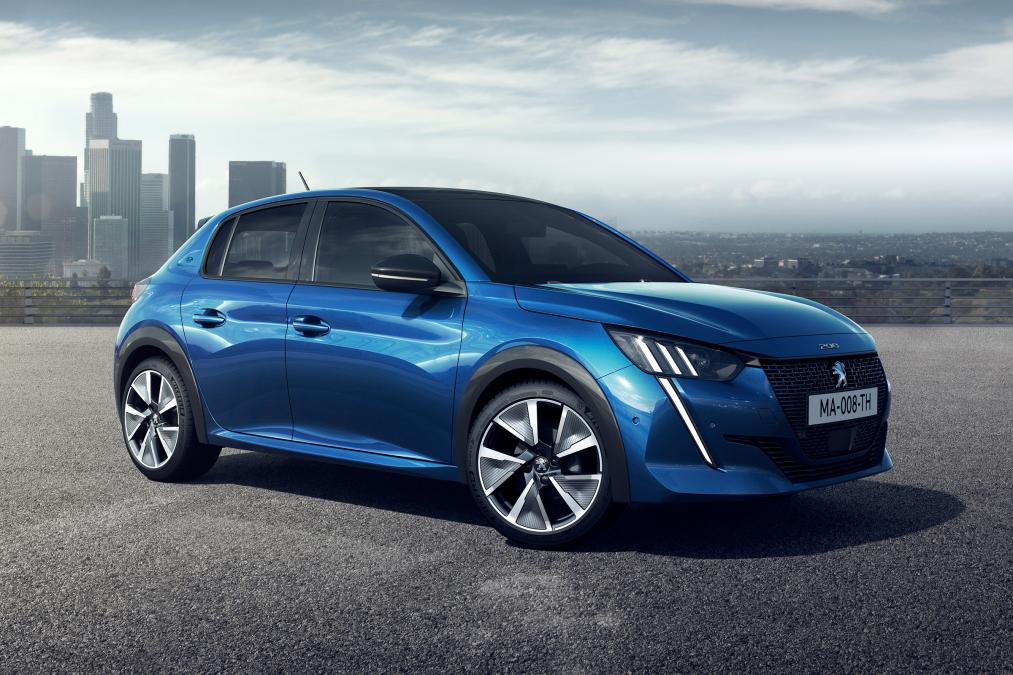
Peugeot e-208 (Image: Peugeot)

Peugeot positions e-208 as tough rival to fuel-powered siblings

Peugeot hopes to draw buyers to the brand’s first mass-market full-electric vehicle — the e-208 — with a long-term battery warranty and lease rates that are comparable to internal combustion versions.

The favorable terms are part of Peugeot’s ambitions to have the e-208 account for 15 percent of its new small hatchback’s global volume.

Last year, Peugeot sold about 230,000 208s in Europe and 295,000 globally. Europe is expected to be the No. 1 market for the EV, which goes on sale at the end of 2019 (gasoline and diesel versions of the new-generation 208 will go on sale this spring). IHS Markit forecasts that Peugeot will produce about 350,000 208s in 2020, with the e-208 making up a significant portion of that extra volume.

Peugeot e-208 (Image: Peugeot)

Sales prices for the 208 will be announced this spring, but Peugeot is already promoting a 48-month, 60,000-km, 299 euro-a-month lease for the e-208, with a down payment of 2,400 euros. The company says the terms compare favorably to gasoline versions (269 euros a month) and diesel versions (289 euros a month) of the 208 when the cost of fuel is taken into consideration.

“When you add usage costs, the electric version is actually less expensive,” Sylvain Chereau, Peugeot’s EV director, told Automotive News Europe. “TCO (total cost of ownership) is the central message to our customers.” Volkswagen is promoting a similar plan for its ID range of electric vehicles, with the first model expected to go on sale in 2020.

Read more: Autonews

Tesla Model 3 (Image: Tesla.com)

Electric dreams? What you need to know about Tesla’s Model 3

The electric car will be available in the UK soon. We look at costs and how it compares with rivals

Launched with the intention of being Tesla’s first mass-market electric car, the new Model 3 is smaller and simpler than the other vehicles in the Californian carmaker’s stable. And according to Tesla, the new saloon is the “more affordable” of the range – though with a starting price at just under £39,000, many would query that claim.

The order book for the Model 3 officially opened at the start of May – though reservations had begun prior to that – with three versions of the car on sale, the most expensive coming in at £56,000. But change the colour from the standard black and you will have to shell out more.

Tesla Model 3 (Image: Tesla.com)

Compared with the Model S, Tesla’s flagship car, the Model 3 has slower acceleration from 0 to 60mph, a shorter range and less than 100 customisable configurations compared with more than 1,500 in the bigger car.

Interest in going electric is growing fast: research from Close Brothers Motor Finance suggests 15% more motorists are looking to buy an electric car with their next purchase compared with two years ago. And while Tesla is clearly confident about the future of the new car, expecting to ship between 360,000 and 400,000 vehicles worldwide this year, is it really an affordable option for Britons?

Read more: The Guardian

Electric cars can help you live longer

Migration from polluting vehicles that burn fossil fuels to electric vehicles, ideally using electricity generated sustainably could significantly reduce the incidence of cardiopulmonary illness due to air pollution, says a study.

This could lead not only to less employee absence from work through illness but also lead to broad improvements in the quality and length of life.

The researchers, Mitchell House and David Wright from the University of Ottawa in Canada, analysed the health benefits associated with driving an electric vehicle, and compared them with the cost of expanding the electric vehicle-charging infrastructure between 2016 and 2021.

The study, published in the International Journal of Electric and Hybrid Vehicles, found that in the majority of plausible scenarios of balanced growth, when the number of vehicles rises so does the number of charging stations, and there is a positive net benefit to society.

Read more: Business Standard

Researchers have no idea when electric cars are going to take over

The only thing sure about electric cars is they will eclipse the internal combustion engine—one day.

The timing, however, is the topic of fierce and wildly divergent speculation. At the moment, only one in 250 cars on the road is electric. Battery electric cars comprise 2.1% of new global auto sales (about 2 million passenger vehicles). Electric vehicle (EV) sales should hit 2.7 million in 2019 even as the broader auto market declines (paywall).

But guesses about the timing of gas guzzlers’ eclipse are all over the map. Quartz assembled several of the top projections to gauge the size of the discrepancy. Optimists such as Bloomberg New Energy Finance (BNEF) in its 2019 Electric Vehicle Outlook report see the total EV stock soaring to 548 million by 2040, or about 32% of the world’s passenger vehicles. Bears, such as ExxonMobil and the oil cartel OPEC, put that day far into the future. Exxon’s most recent predictions, the most pessimistic (or optimistic?), show the global stock of EVs reaching only 162 million by 2040. That’s 70% lower than BNEF’s base case.

How can these predictions be so divergent?

Two assumptions make all the difference in EV adoption models, says Colin McKerracher, head of advanced transport for BNEF. The first is price parity. EV’s sticker price is expected to exceed conventional cars’ until the mid-2020s. Right now, electric vehicles are more expensive than conventional counterparts thanks to their pricey batteries and relatively small EV manufacturing capacity. No one is sure how far battery costs, the biggest expense in making EVs, can fall (they’ve already dropped 85% since 2010), and when EVs will achieve the same economies of scale as combustion engines have secured over the past century. The price of oil changes the total cost of ownership as well (New York City says EVs’ lower fuel and maintenance costs already makes them the cheapest option for its fleet).

Read more: Quartz

Kia e-Niro vs BMW i3 vs Hyundai Kona Electric

We find out if the new Kia e-Niro or revamped BMW i3 can beat our current EV champion, the Hyundai Kona Electric

Until recently, electric vehicles generally fell into one of two camps: small, more affordable and often frustrating because of drawbacks such as a limited range; or bigger cars that had larger batteries and therefore a longer range, but were also much pricier.

However, there’s now a growing group in the middle ground promising affordability and usability, thanks to their accurate and genuinely exploitable predicted range that’s making ‘range anxiety’ a thing of the past.

EVs are as usable as ever and leading this group are two upstarts and one familiar face. The newest model is the Kia e-Niro, which combines an advanced electric drivetrain with a conventional compact SUV body. The latest BMW i3 gets a bigger battery that gives it even more range. And in the sportier i3s trim that we’re testing here, it pretty much matches the e-Niro for performance and price.

Finally the Hyundai Kona Electric is our current favourite affordable EV, having taken the title at our New Car Awards last year – but it’s by no means old. The e-Niro shares much of the Hyundai’s tech, so it’ll be interesting to see how much difference there is and which will be Britain’s best wallet-friendly EV.

Read more: Auto Express

Electric Vehicle Approved scheme to recognise dealers

A new scheme has been launched to recognise dealerships skilled at selling and servicing electric vehicles.

The Electric Vehicle Approved scheme will encourage car dealers to develop their expertise in servicing electric vehicles, as the country continues to move towards a zero-emission future backed by the government’s comprehensive £1.5 billion Road to zero strategy.

The standard for electric vehicle dealer accreditation has been developed by the National Franchised Dealers Association (NFDA) and the Energy Saving Trust (EST).

Successful dealerships will be known as ‘Electric Vehicle Approved’ and recognised for their commitment to training, quality advice and effective service.

Future of Mobility Minister Jesse Norman said: “Record levels of ultra-low emission vehicles on our roads are good news, as we seek to end the sale of new conventional diesel and petrol cars and vans by 2040.

“The accreditation recognises businesses with knowledge, capability and commitment to electric vehicles, and will help to encourage more car owners to switch to a greener alternative.”

Following a pilot scheme, in which the electric vehicle skills of 12 dealerships were audited, it is estimated there will be 130 Electric Vehicle Approved sites across the UK by the end of 2019.

Uncertainty among customers and poor advice from dealers have been identified as a key barrier to electric vehicle ownership. The scheme therefore aims to help create a trusted brand, increasing the confidence of drivers looking to buy an electric vehicle.

Read more: Motor Trader

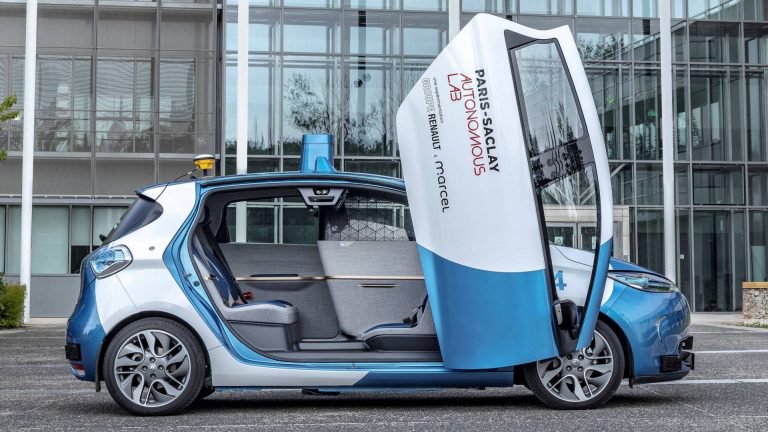
ZOE Cab autonomous vehicle (Image: Renault)

Nothing To See Here, Just An Autonomous Renault Zoe With A Lambo Door

Renault and several partners have started “The Paris-Saclay Autonomous Lab” project which aims to make self-driving transportation a reality in France.

The project aims to develop new mobility services using dedicated lane and public and campus streets to supplement the existing Saclay Plateau transportation systems.

Made possible by Renault’s collaboration with the Transdev Group, IRT SystemX, Institut VEDECOM and the University of Paris-Saclay, the trial program uses three Renault Zoe Cab self-driving prototypes and a Transdev-Lohr i-Cristal autonomous shuttle.

The latter will provide collective transportation service for up to 16 passengers at a time during the night when the regular transportation systems are not functioning. As for the three Zoe Cab vehicles, they will be used for a daytime on-demand car service for the Paris-Saclay urban campus.

ZOE Cab autonomous vehicle (Image: Renault)

People can hail a car or book one ahead of time using a dedicated Marcel smartphone app. A prototype autonomous electric Renault Zoe Cab vehicle will then come to pick up the user and then drop them off at the destination. The service is designed to provide a large number of pick-up and drop-off points, which do not interfere with other traffic and are located near the most frequented campus areas.

The all-electric Renault Zoe Cab and Transdev-Lohr i-Cristal shuttle autonomous vehicles are equipped with GPS-type sensors, Lidar, cameras, inertial units, and self-driving software. The technology enables them to detect other vehicles and pedestrians, safely pass through intersections and roundabouts, detect deceleration and recognize traffic lights. In the specified areas they operate they provide full autonomy, although a “safety operator” is present at all times inside the vehicle.

Renault does not provide additional details about the Zoe Cab autonomous prototype but it’s easy to spot the changes compared to the regular production model. Those include the massive Lambo-style door on the right-hand side which eases access to the cabin thanks to the elimination of the B-pillar. The interior features three passenger seats, two facing forward and one facing rearward, as well as a “driver’s seat” that is isolated from the passenger compartment, presumably for safety reasons.

Read more: Car Scoops

Big Oil wants to kill electric vehicles

Big Oil and its front groups want to kill electric vehicles (EVs) under the pretense of fairness.

It’s no secret why. The industry sees that the electric transportation future is coming fast, threatening their polluting profits, and they’re scared. We should double down on electrifying transportation and support an expansion of EV tax credits so we can stop pollution that is driving the climate crisis and making our air healthier for everyone.

Let’s get real about Big Oil: The industry receives over $26 billion in subsidies from American taxpayers and pays nothing for polluting the air we breathe and exacerbating the climate crisis. If there’s any group doesn’t need help from the government, it’s this industry.

Let’s also get real about who suffers the most from air pollution and climate: low-income families and communities of color. Pollution from fossil-fueled transportation is the largest single source of climate pollution in the United States. As we saw when Hurricane Harvey dumped 60 inches of rain on Houston or when Hurricane Maria pummeled Puerto Rico, it’s frontline communities who suffer the greatest losses and are left without the help they need.

The threat and disparate impacts go beyond climate. Transportation pollution is also making us sick. According to new research published in The Lancet Planetary Health, exhaust from cars is responsible for up to 4 million new cases of pediatric asthma each year. Another recent study by the Union of Concerned Scientists shows that African Americans and Latinos are exposed to roughly 40 percent more air pollution from vehicles than white people in California. The same study found that California households earning less than $20,000 per year are exposed to 25 percent more particulate matter pollution (PM 2.5) than California households earning more than $200,000 per year.

There’s a straightforward fix for a good part of this dangerous pollution: electrify the transportation sector. And thankfully, the sector is heading that way fast. For instance, electric vehicle (EV) and electric bus sales, while still a small percentage of overall sales, are growing precipitously. Between 2017 and 2018, EV sales almost doubled, and, in the latter half of last year, a zero-emissions vehicle was the fifth-best-selling passenger car in the United States. Bloomberg New Energy Finance projects that over 80 percent of all new bus sales globally will be electric buses by 2030. These increased sales are driving down costs and making electric transportation affordable for all.

Read more: The Hill

Mercedes eVito electric van (Image: DPD)

DPD puts fleet on EV fast track with new 2021 target

DPD is to incorporate over 500 EVs into its delivery fleet, claiming a UK first with the addition of new Mercedes-Benz eVito vans.

The move comes as part of the delivery company’s commitment to having 550 EVs as part of its fleet by 2021, with 100 of these to be added this year.

The delivery company has commissioned 10 eVito vans to be part of its London fleet, with plans for more to be a part of a nationwide roll-out of EVs later this year. The vans are the 3.2 tonne long-bodied version and can be fully charged in six hours, with a range of approximately 93 miles.

Mercedes eVito electric van (Image: DPD)

As part of its commitment to reducing emissions in its deliveries, DPD is also intending to open eight all-electric micro-depots in London. It opened its third all-electric microin March this year and it is also working on developing an eCargo bike with Electric Assisted Vehicles Limited.

Read more: Current News