New data shows that 11 second-hand cars have increased in value in the last year
That’s despite each one having another 12,000 miles put on the clock
Of the appreciating models, the biggest increases came for old electric cars
The list also includes petrol and petrol-hybrid older vehicles
If you want to buy a car that will rise in value, you usually need to go for something classic or exotic – not a £6,000 runaround.
But new figures reveal a handful of family cars bucking the usual price trend and they all share one attribute, they are electric.
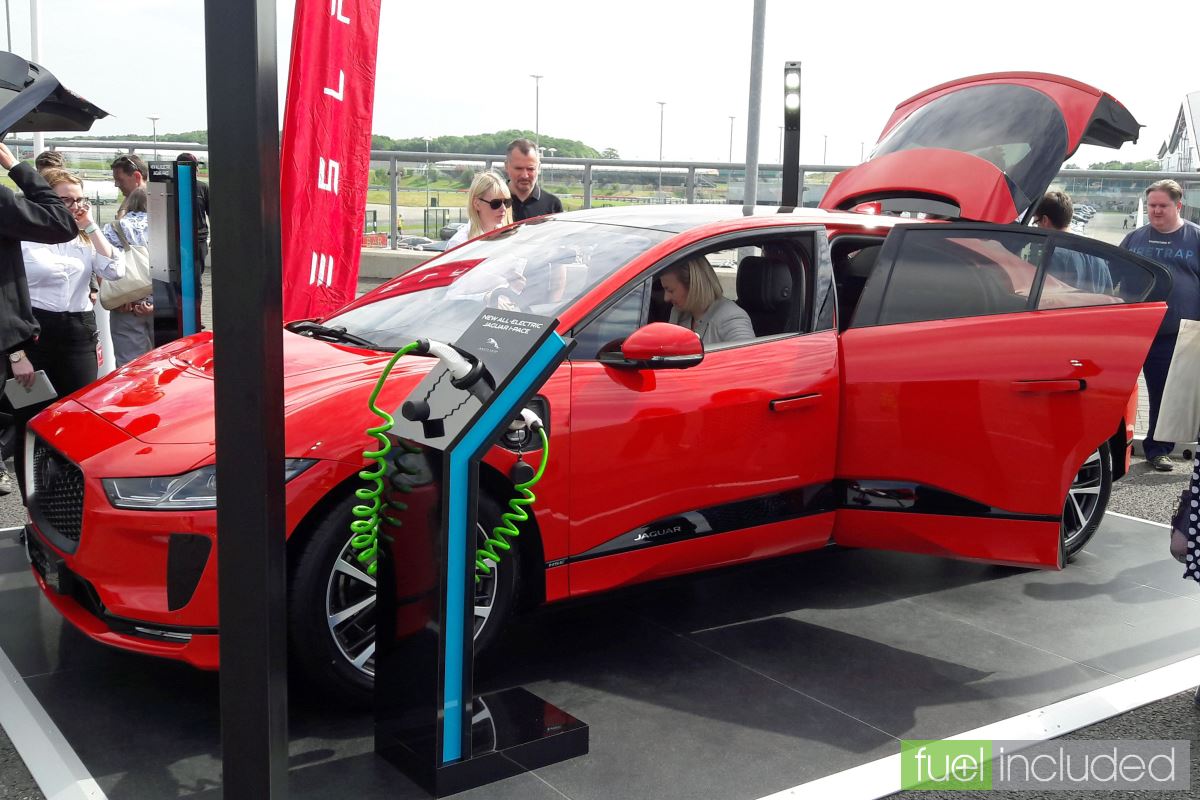
Cheapest Electric Cars in the UK (Image: Fuel Included)
The Renault Zoe is top of a list compiled by price specialist HPI of second hand cars that are rising in value – and someone who bought one this time last year could potentially now sell it for 30 per cent more.
This means that if you had bought an average Renault Zoe in July 2017 for £6,300 and spent the past year putting 12,000 miles on the clock it should now be worth £1,900 more, says HPI.
There could be as many as 11 million electric vehicles on British roads by 2030 and 36 million by 2040, in what would be a major upheaval for the UK’s energy system.
National Grid’s latest report on the future energy system overshoots the Government’s own targets which call for an end to petrol and diesel car sales by the same year.
The acceleration of the electric vehicle market will bolster demand for electricity, which is already in relatively tight supply, but the dual growth in battery storage will dramatically reduce the amount of new power generation projects which will be needed.
This time last year National Grid data estimated that the electric cars could increase peak demand electricity by as little as 8GW by 2030.
In its latest report the same amount is likely to be needed only by 2040 if consumers charge vehicles at off-peak times and through vehicle-to-grid technology.
Fintan Slye, of National Grid, said the growth of electric vehicles is one of the major trends in the system operator’s scenario planning which is used within the industry to inform decision making.
“We are already operating in an exciting period of change – a trend which is set to continue, certainly up to 2050 and beyond,”
he said, meaning that National Grid’s work balancing energy supply and demand “will become increasingly complex”.
National Grid expects “smart” energy use, which uses digital algorithms to charge and release energy from storage at the most cost effective time, will play a major role in shaping the energy system by the end of the next decade.
FLINS, France — Renault is preparing to double production of the full-electric Zoe at its factory here outside Paris. The surge in output as part of a billion-euro investment in electric vehicles by the French automaker.
A new version of the Zoe will appear next year, the first substantial change to the small battery-driven hatchback since its introduction at the end of 2012.
Renault ZOE at our test drive event in Milton Keynes (Image: J. Tisdall)
The Zoe was the top-selling EV in Europe from 2015-2017, but so far this year it has been narrowly overtaken by the redesigned Nissan Leaf, from Renault’s Japanese alliance partner.
Last year about 30,000 Zoes were produced at the Flins plant, with a total of 100,000 made since the model’s debut. Renault officials want to increase the rate of production to about 440 per workday from about 220 per day.
The factory will use its traditional August recess to prepare for the increase. This will include upgrading the in-house battery assembly area, officials said earlier this month at an event that included a tour of the plant.
The Flins factory, which opened in 1952, makes Renault Clio hatchbacks, the Nissan Micra hatchback and the Zoe on the same production line. Last year, about 63,000 Clios and 94,000 Micras were produced at the plant.
Recent upgrades to Renault’s EV range, which includes the Twizy, which is an electric alternative to a scooter, and two electric vans, have been focused on range and power, but that is about to change.
In addition to the redesigned Zoe, likely to be on the existing architecture, the company’s Drive the Future strategic plan calls for a total of eight EVs by 2022. Some of those EVs will be on a new alliance platform called CMF-EV set to debut no earlier than 2020. Vehicles on that platform will be built at Renault’s plant in Douai, northern France.
The United Kingdom’s newly published Road to Zero report recommends that all new homes should be equipped with chargers for electric vehicles as part of plans to move toward zero emissions and in line with its objective to eliminate diesel and gasoline vehicles by 2040. The plan includes public charging being incorporated into streetlights, gas stations and freeway rest areas, but no incentives for scrapping diesel vehicles; in fact, the bulk of the money to pay for the plan comes from taxes on diesels.
The outlook for the electric vehicle is changing rapidly, despite the oil lobby’s best attempts to spread misinformation. In countries such as Japan, the number of recharging points has long exceeded the number of gas stations, although obviously, many of them are in people’s homes. Electric buses are increasingly seen as a logical option for public transport by more and more cities around the world, which is hitting the oil companies hard.
The automotive industry will undergo unprecedented change: after weathering Dieselgate, Volkswagen has announced the launch of a car-sharing service for electric vehicles next year as part of a plan to win back the trust of users and regulators, supported by an alliance with a Chinese battery manufacturer that will also supply BMW, which says the deal was a way to accelerate its transition toward the mass manufacture of electric vehicles, which until recently it said would not be possible until 2020.
All of this suggests we’re heading in the right direction, but far too slowly. The U.K.’s announcement of a ban on diesel and gasoline vehicles from 2040 was little more than a gesture aimed at keeping the country in line with the rest of the EU, while avoiding the ire of the automotive industry and the users. In practice, within two years, when electric vehicles will outprice their diesel and gasoline competitors, market forces will take over and the internal combustion engine will be seen for what it is: outdated, expensive, overcomplicated and bad for the environment.
There are currently more than 150,000 ultra-low emission vehicles on British roads.
The strategy sets out a target that at least 50 percent of new car sales be ultra-low emission by 2030.
The British government has unveiled a plan that it hopes will make the country a world leader in electric vehicles.
The Road to Zero Strategy contains a series of proposals to help increase green infrastructure, cut vehicle emissions and “drive the uptake” of zero-emission vans, trucks and cars, the government said in a statement Monday.
The strategy sets out a target that at least 50 percent of new car sales — and “up to” 40 percent of van sales — be ultra-low emission by 2030. The government added that it had already made a commitment to invest £1.5 billion ($2 billion) in ultra-low emission vehicles by the year 2020.
Other measures include plans to install charge points in newly-built homes and lampposts, the launch of a £400 million Charging Infrastructure Investment Fund and a new £40 million program to develop and trial “innovative, low-cost wireless and on-street charging technology.”
Additionally, electric vehicle owners would be provided with as much as £500 to help them install a charge point at their home.
New homes in suburban England would need to be fitted with electric car charging points under a government proposal to cut emissions.
Ministers also want new street lights to come with charge points wherever there’s on-street parking.
Details of a sales ban on new conventional petrol and diesel cars by 2040 are also expected to be set out.
Electric cars charging in Milton Keynes (Image: T. Larkum)
The strategy comes at a time when the government is facing criticism for failing to reduce carbon emissions.
The government’s target is to reduce the UK’s greenhouse gas emissions by at least 80% of 1990 levels by 2050.
The proposals, announced by Transport Secretary Chris Grayling, aim to make it easier to recharge an electric car rather than refuel petrol or diesel vehicles.
They include:
The need to assess if new homes and offices should be required to install charging points as standard
New street lighting columns with on-street parking to have charging points in appropriate locations
More money being allocated to fund charging infrastructure.
Mr Grayling said the proposed measures would mean the UK having “one of the most comprehensive support packages for zero-emission vehicles in the world”.
“The prize is not just a cleaner and healthier environment but a UK economy fit for the future and the chance to win a substantial slice of a market estimated to be worth up to £7.6 trillion by 2050,” he said.
Cambridge City has selected eVolt UK to supply electric vehicle (EV) charging points across Cambridge for its Ultra Low Emission Vehicle Taxi project, which aims to increase the number of EV taxis used in the historic city.
The project, which is being primarily funded by the Office for Low Emission Vehicles (OLEV), will see eVolt install 21 of its Rapid and Fast Chargers across the city over the next three years. The first phase is underway, with two chargers already operational in the Adam and Eve Car Park (CB1 1DX). A further six Rapid Chargers will be installed across three other sites, due for completion by the beginning of September.
The three other initial sites include: car parks at Castle Hill and Arbury Court, and one on-street location in Newmarket Road, which initially will only be available for taxis. The Rapid Chargers are capable of providing 80 per cent charge to an EV Taxi in 30 minutes.
Cllr Rosy Moore, Executive Councillor for Environment and City Centre, says: “Installing these new rapid chargers for electric taxis marks a genuinely positive shift away from polluting diesel taxis.
“Work like this is one way the council is aiming to make it much easier for people to use electric vehicles, in order to help improve air quality for all of Cambridge’s residents plus all of those people who work in and visit the city.”
eVolt will work alongside Electric Blue, who are providing the remainder of the funding for the project and will also provide operational support throughout.
Justin Meyer, General Manager of eVolt UK, says eVolt is proud to support the project:
“We are committed to help Councils lower emissions, improve local air quality and provide reliable charging infrastructure where it is most needed. We anticipate that these units will help promote the use of EV taxis in Cambridge and encourage more drivers to make the switch.”
Cambridge was one of 10 councils in the UK to be awarded funding by OLEV in its competition for EV Taxi Infrastructure. The project aims to help reduce carbon dioxide emissions across the UK and provide cleaner air for a more sustainable and eco-friendly future.
In an aggressive scenario, electrified transportation could displace 8 million barrels of oil per day.
When Tesla announced that it had built 7,000 cars in a week, I got excited. Even though electric vehicles (EVs) make up only a small percentage of new car sales in most countries, those sales are growing rapidly.
But how long before they really start to take a bite out of oil demand?
Norway offers some clues, where years of generous—some would say unsustainable—incentives saw EVs and plug-in hybrid sales grow to 55% of the new car market in March. And the cumulative impact of those sales may have FINALLY translated into a drop in overall demand, with gasoline in particular seeing a 2.9% drop in sales.
Of course 2.9% is not exactly groundbreaking, but it’s important to remember that change is rarely linear. If it really is due to electric vehicles, then that figure should grow each year as adoption rates increase and older model gasoline cars retire from the fleet. And that, in turn, could lead to further drivers like gas stations closing, or lower resale value for fossil fueled vehicles.
Similar dynamics will be at play on a global scale, albeit many years behind. Now the carbon/finance geeks at Carbon Tracker have launched an interesting EV Demand Displacement Tool that allows users to explore how rates of EV adoption, mileage and efficiency gains in internal combustion engine (ICE) cars might interact to displace oil demand, and how that in turn could lead to major disruption for investors and volatility in oil pricing.
If motor manufacturers are right about the prospects for electric vehicle sales, an oil price crash won’t be far behind.
LONDON, 5 July, 2018 – Oil and gas companies have underestimated probable electric vehicle sales and the effect they will have on their own businesses and profits, a new report says.
If the car manufacturers’ projections of future sales of electric cars are correct, then demand for oil will have peaked by 2027 or even earlier, sending the price of oil in a downward spiral as supply exceeds demand, says Carbon Tracker (CT), an independent financial think-tank carrying out in-depth analysis on the impact of the energy transition on capital markets.
The sun sets on drilling (Image: Pexels)
It says fossil fuel companies have taken into account some engine fuel efficiencies and the effect they would have on oil demand, but not the expected increase in electric vehicles themselves. There is a big mismatch between forecasts of EV market penetration from vehicle manufacturers and from oil majors, says Laurence Watson, a CT data scientist.
“The oil industry is underestimating the disruptive potential of electric vehicles, which could reduce oil demand by millions of barrels a day. Increases in fuel efficiency will also eat into oil demand and the industry’s profits. The oil majors’ myopic position presents a serious investor risk,” he told the Climate News Network.