Daily Archives: September 13, 2017

Can Your Car Power Your Home? Nissan Thinks So

When you think of the electric cars, Tesla is perhaps the name that first comes to your mind. For all its technical achievements, the Elon Musk-backed company has also done a great job of marketing and made itself synonymous with the electric cars industry. But as industry observers know, if there’s one car that’s come close to matching – and at times exceeding – Tesla’s success, it’s the Nissan Leaf.

The Nissan Leaf was the world’s best selling electric car for a couple of years, and at other times was not too far behind Tesla’s offerings. While Tesla is the upstart that has shaken up multiple industries, Nissan, of course, is among the incumbents in one of the biggest industries in the world. The automaker invited Gadgets 360 to its headquarters in Yokohama, Japan earlier this year, and we got an opportunity to pick the brains of some of the company executives to understand the company’s vision for the future of mobility.

We touched upon a wide range of topics, from autonomous driving – and the role Nissan will play in its evolution – to clean energy, and the company’s beliefs that vehicle-to-grid might be a huge opportunity for automakers and consumers alike.

What is vehicle-to-grid?

If you’ve heard anything about electric cars, you’ve obviously realised that they need to be charged regularly, often at night, when the car is standing idle in the garage. With vehicle-to-grid, automakers want to make the relationship between the cars and the grid a lot more involved, starting with how the cars might want to give back to the grid.

Daniele Schillaci, EVP, Nissan explains.

“The EV [Electric Vehicle] technology is changing also the cost of ownership for the customer,” says Schillaci. “Because today, when you have normal technology – gasoline or diesel – your car in the night, is stuck on the garage, you cannot use it, it’s a fixed cost. The EV technology – thanks to the vehicle-to-home – means the car, even when you don’t use it, it becomes a variable cost. Because during the night, your house charges the car because the electricity fee is very low during the night. And during the day, your car can charge your house, when the electricity fee is higher.”

Read more: Gadgets360

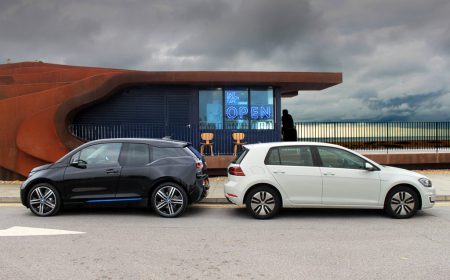
Battle of the electric family cars: 2017 BMW i3 REX vs Volkswagen e-Golf

BY 2040, if the government gets its way, drivers looking for a new car will have a simple choice: buy an electric car or a hybrid car.

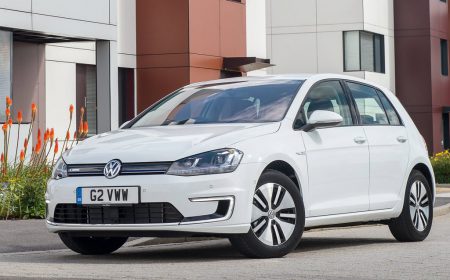
The Volkswagen e-Golf and BMW i3 REX give a taste of things to come. The former is Britain’s best-known family hatchback first, and a pure-electric car second. It should mean it’s user-friendly and doesn’t require as big a leap of faith as a high diver jumping from a cliff top.

The i3 REX is an electric car for pragmatists. In addition to having an electric motor and a battery pack, it has a two-cylinder petrol engine, packaged beneath the boot floor, in the same space as the car’s electric motor. This acts as a generator, to maintain battery charge when it gets low.

The e-Golf, which is propelled under battery power alone, has been revised for 2017 as part of the updated Golf range, and can officially travel 186 miles on a single charge. The i3 REX has a battery range of around 140 miles, but the REX motor allows it to travel a total of 200 miles before you need a top-up of electricity or petrol.
The e-Golf, which is propelled under battery power alone, has been revised for 2017 as part of the updated Golf range, and can officially travel 186 miles on a single charge. The i3 REX has a

We put the pair to the test, on a trip to the seaside. Needless to say, it rained; could the electric cars keep our spirits high?

2017 Volkswagen e-Golf review

Words: Will Dron

Well, it’s a Golf, isn’t it? VW sold 5,236 of its ever-popular hatchback in July alone, just 15 short of the best-selling Ford Focus. In order to create its electric car, all VW had to do was strip out the petrol or (whisper it) diesel engine, along with its transmission, and bolt in a few Duracell batteries and an electric motor. Oh, and change the alloys and tweak the styling of the lights slightly.

When you climb inside, it looks like a Golf, too. The instruments are the same, the switchgear is the same, the seats are the same, the infotainment system is the same (albeit with updated software to show electric energy flow and driving efficiency).

The i3, on the other hand… now that’s an incredible achievement. Designed from the ground up as an electric car, with a carbon fibre tub to save weight and carefully considered packaging, for optimal weight distribution. And the interior of the i3 — totally original and full of reclaimed wood and other dolphin-friendly materials. BMW put a huge amount of research and development into coming up with that car.

But then you remember… being a Golf is no bad thing.

The moment the penny really dropped was when James Mills, having parked his totally original, very clever little i3 REX next to the e-Golf, was having a little root around the back of my car. He quickly pointed out that the i3 has only four seats, whereas the VW has five, just like a normal Golf. Yes, the transmission tunnel houses the battery pack, so it doesn’t have a flat floor in the rear, but other than that, it’s a Golf.

Read more: Driving.co.uk