Daily Archives: August 8, 2017

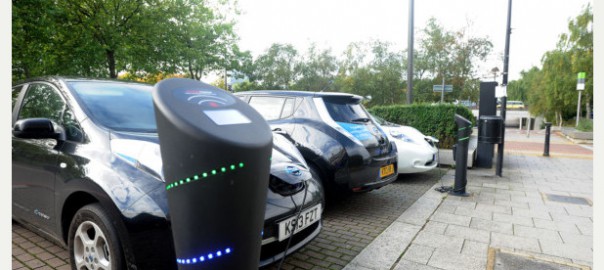
Electric cars charging in Central Milton Keynes

Electric Car Heaven: Charging in Milton Keynes

Milton Keynes has probably the greatest concentration of electric car charging points of any location in the world. This arguably makes it the best candidate destination city for electric car drivers anywhere in the world.

Electric cars charging in Milton Keynes (Image: T. Larkum)

Of course, those are difficult statements to confirm since there aren’t international league tables of such things. However, a look at international charge point maps like Plugshare certainly seems to indicate that it has as many standard power charge points (some 170) as other candidate ‘hot spots’ such as Los Angeles in the US and Oslo in Norway. If you look further into the density of high power rapid chargers (56) it appears to win hands down against all comers.


Charge Point Locations

More to the point, however, is that charge point locations are very well organised in Milton Keynes. While in other cities the growth and placement of charge points appears to be organic, i.e. nearly random, they are well placed in MK. Specifically the city centre is arranged in blocks on a grid (in the American style) and charge points are placed along at least one and usually both of the long sides of each block. One block can have as many as a dozen standard speed chargers.

The rapid chargers are arranged more strategically. In the city centre there is one rapid to every one or two blocks. Outside the centre, in the suburbs, there is one to every second or third housing estate.

Rapid Chargers next to Milton Keynes Central railway station parking (Image: T. Larkum)
Rapid Chargers next to Milton Keynes Central railway station (Image: T. Larkum)

The result of having so many charge points in Milton Keynes is that anyone can visit the city in an electric car and be confident of finding somewhere to charge for the return journey. With a typical EV range of 80 miles this means that MK can welcome visitors from as far afield as Southampton in the south, Gloucester in the west and Nottingham in the north – they won’t have to charge on the way in or back home.


Chargemaster / Polar Network

The charge points in MK are part of the Polar network operated by Chargemaster. Therefore to make use of them it’s necessary to use a Polar app or swipe card, either on subscription (Polar Network) or Pay As You Go (Polar Instant).

With that arranged, it is possible to find a charge point near almost anywhere in the city centre. Their locations can be seen on the council’s charge point map (PDF) and on the online Polar Live map.

This makes MK the perfect place for EV owners, whether visiting occasionally for shopping or commuting in daily for work.

Part 2: Parking

f

Our electric car is driving on sunshine

Our solar panels occupy only a third of our roof area. Even so, on a summer day they produce about the same power our Volkswagen electric car draws as it charges from a plug in the garage.

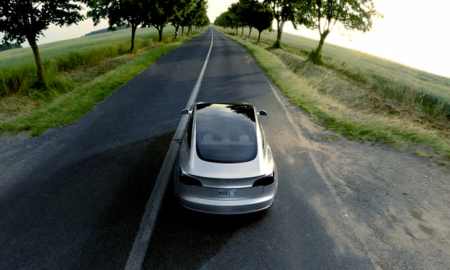
Electric car on the road. ‘We are literally driving on sunshine,’ write James and Lesley Willis. Photograph: EPA

So, to the extent that we top up during the day, we are literally driving on sunshine: nil use of resources, nil pollution, and, in the context of your article (Battery cars may eat up more than Hinkley Point’s capacity by 2030, 13 July), nil load on national power generation infrastructure. Going for a drive in serene, effortless near-silence, knowing that it hasn’t cost anybody anything, is quite simply wonderful.

The rapid increase in the number of distributed solar power installations is producing an unmanageable peak on sunny days. But our experience illustrates that there is an excellent match between renewable energy and electric vehicles. Electric cars are big batteries on wheels, storing far more power than they need for journeys. They could be made to play a dynamic part in balancing the uneven generation inherent in many forms of renewable energy.
James and Lesley Willis
Alton, Hampshire

Zoe Williams suggests (Is a car maker about to save the planet? 10 July) that “the goal has to be an electric car powered by renewable energy”. A seemingly admirable aim but one that implies that the only problem is atmospheric pollution. Unfortunately, the motor car also encourages sprawl, making our cities less compact and sustainable and resulting in healthy travel alternatives (walking, cycling, public transport) becoming more difficult. It divides communities, both by splitting them with transport corridors and by isolating users in their car bubbles. It maims and kills, which may become more of an issue, as electric cars are quieter. It requires road space that is increasingly not available, causing issues from congestion and excessive travel time to access and pavement parking. And, given that a high percentage of pollution in the life-cycle of a car is in its production, how much is actually avoided?

Source: The Guardian

Electric cars are the key to ending our addiction to oil

A shift of emphasis to electric cars will raise supply challenges for both components suppliers and talent managers.

Last orders’ has been called for the internal combustion engine.

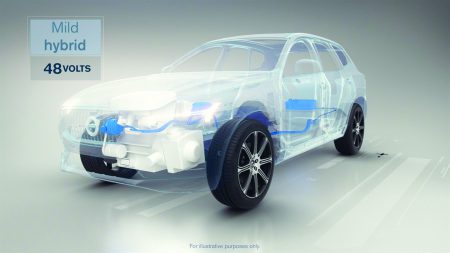
Volvo hybrid car concept

Just a day after Volvo announced plans to include an electric motor element in all its cars, the new French government said it will legislate to phase out non-electric vehicles.

This will not be an overnight transformation. Volvo has said that all new cars from 2019 will be either fully electric, hybrid or what it calls “mild hybrid”.

The French government’s 2040 deadline is sensibly long-term, given that in France only 1.1% of new car registrations last year were for fully electric vehicles and in the whole of the EU the number was just 0.6%.

But make no mistake – this is a big shift. Other countries will follow France’s lead; other car makers will follow Volvo in the footsteps of Toyota, Tesla and others.

Manufacturers of electric cars seek talent

For the electronics sector, it’s a big deal too. The automotive industry is already a major employer for electronics engineers as in-car electronics become increasingly sophisticated.

Jaguar Land Rover’s recent campaign to recruit 1,000 engineers is testament to how hard they have to work to recruit already, but as the market shifts more to electric vehicles it will surely soak up even more of the talent pool.

Growing demand for components from tier one automotive firms has been mooted as one cause of strong sales and extending lead times in the market. This is before the shift to electric really takes hold, so expect massive changes as the market adapts.

How stakeholders in the electronics supply chain adapt to the challenge will be a defining factor in our attempts to break our addiction to oil.

Source: Electronics Weekly