Monthly Archives: July 2017

MINI Countryman PHEV (Image: T. Larkum)

MINI Countryman Plug-in Hybrid Electric Vehicle (PHEV) – First Impressions

We currently have a plugin MINI Countryman on loan (technically it’s an “F60 MINI Cooper S E ALL4 PHEV Countryman AUTO” but that’s too much of a mouthful) and I was lucky enough to get the first go with it last night. What’s special about this MINI is that it has a conventional petrol engine driving the front wheels and an electric motor and battery driving the rear wheels.

This means it can drive entirely on electricity for up to about 20 miles and then go over to petrol for longer journeys (300 miles or so). Also, it can act as a hybrid like a Prius to get good economy. Finally, the drive layout means it can be used in four wheel drive mode – very useful in rain and snow.

I drove it home, had use of it for the evening, and drove it back to the office today.

The first thing that struck me when I was it was the size – this is not a small car! Having grown up with the original Mini (my Dad had a series of them) I was surprised just how big the new MINI Countryman is.

It is intended, of course, for families with children so its size shouldn’t be a surprise. The upside is that it has a lot of interior space and feels very roomy.

In fact, I took a number of passengers in the back and they all remarked on how much space there was, and in particular its high ceiling.

It also has a pretty big boot.

Part 2 is here: MINI Countryman Plug-in Hybrid Electric Vehicle (PHEV) – Part 2: Driving and Charging
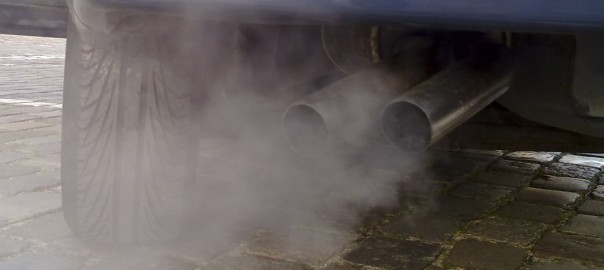
 

Car exhaust pollution (Image: Wikipedia)

Latest diesel car models remain highly polluting, tests show

Six new vehicles including Land Rover and Suzuki are adding to air pollution crisis, despite stricter rules coming in months.

Car exhaust pollution (Image: Wikipedia)

The latest diesel car models are failing to meet pollution limits when on the road, just three months ahead of stricter new tests, independent tests have found. Results show that none of six new 2017 diesel cars met the EU standard for toxic nitrogen oxides (NOx) pollution in real-world driving.

The updated Equa Index, produced by the testing firm Emissions Analytics, shows that 86% of all diesel models put on to the British market since the 2015 Volkswagen emissions scandal failed to meet the official limit on the road, with 15% producing at least eight times more NOx emissions.

Levels of NOx, emitted mostly by diesel vehicles, have been illegally high in 90% of the UK’s urban areas since 2010. The toxic fumes are estimated to cause 23,500 early deaths a year and the problem has been called a public health emergency by a cross-party committee of MPs.

Ministers have already lost twice in the courts over the adequacy of government air quality plans and are being sued again over their latest proposals, which were published on 5 May but widely condemned as inadequate. The government’s own analysis shows clean air zones in urban centres, where charges deter the most polluting vehicles, are the most effective way to cut pollution quickly. But Nick Molden, CEO of Emissions Analytics, said the wide variation in real-world performance of diesel cars undermines such plans.

Read more: The Guardian

Volkswagen Is Bringing 2 New Electric Cars to U.S., Report Says

A leaked slide confirmed the plans to unveil two new U.S.-bound EVs under the Volkswagen brand.

Volkswagen Group is getting ready to hit the EV market hard. Between the recent news of a new Microbus successor and the continual improvement of Audi-brand EVs, Volkswagen is positioning itself in a very good way. But after a slide deck was reportedly leaked by Autoblog Netherlands, it seems that two new models are headed to the States.

The blog, which is written in Dutch, reveals the planned markets for several releases of electric vehicles under the Volkswagen brand between 2019 and 2022. These two models, the I.D. Lounge and I.D. AEROe are set to be released in the United States and China sometime between 2020 and 2021, assuming things go according to plan. To put this in perspective with Volkswagen’s other releases, the timeline also shows the following vehicles and the possible target dates for their corresponding markets:

  • Volkswagen I.D. – Released in the European market sometime around 2019
  • Volkswagen I.D. Cross – Released in the European and Chinese markets sometime between 2019 and 2020
  • Volkswagen I.D. Lounge – Released in the Chinese and United States markets sometime around 2020
  • Volkswagen I.D. AEROe- Released in the Chinese and United States markets sometime between 2020 and 2021
  • Volkswagen I.D. BUZZ – Release is still to be decided presumably between 2021 and 2022

Judging by the images, which are cars covered by sheets, the I.D. Lounge appears to be a full-size SUV, while the I.D. Aero seems to possibly fit a smaller hatchback profile, similar to the existing Audi A3 E-Tron. It is likely that these models will also be built in Volkswagen Group’s large electric assembly plant in Brussels, assuming it is up to the task of eight (five Volkswagen and three Audi) new EVs in the next five years.

Read more: The Drive

MINI Countryman Plug-in Hybrid (PHEV) electric car videos

We are lucky to have been lent one of the new MINI Countryman plug-in hybrids for a couple of days.

This morning I took the opportunity to do some quick videos around the car to give a taste of what it’s like.

Prices are here, and a form to get a quote: Prices for the Mini Countryman Plug-In Electric Hybrid

If instead you’d like us to calculate the Total Cost of Ownership of a MINI PHEV compared to a fossil car or another electric car then go here: Total Cost of Ownership

Projections estimate UK electric car sales will hike in the next five years

Recent studies have suggested that electrically powered vehicles could become more affordable within the next five years.

The revolution of electric cars got off to a somewhat slow start in the UK, but figures have been slowly improving over the last few years with sales in 2015 reported to be around 49,700.

With the battery pack accounting for around 25 per cent of the overall price, electric cars were somewhat unaffordable on their initial launch.

However, research conducted by Nature.com highlighted battery pack prices (measured by the cost per kilowatt-hour) fell by around 80 per cent between 2010 and 2016, causing vehicles sales to soar in the UK.

Using current trends and patterns, optimistic researchers have predicted electric car battery prices might pass the affordability threshold soon after 2020, with overall sales figures said to be at a staggering 1.6 million in the UK alone.

However, more conservative forecasts have predicted vehicle battery packs will hit the affordability threshold by 2030, with sales figures estimated to be at around 13.6 million.

Source: Car Keys

First try of an electric mini

We are lucky today to get the loan of the new plug-in electric hybrid Mini Countryman for the weekend from our friends at BMW. Jo, our sales and business administrator, drew the long straw and will  get to enjoy the new car until Monday.

It shows an electric range of up to 22 miles (25 if you drive really gently), so the average driver won’t need to switch on the 1.5l engine.

Looking forward to lots of fun with an iconic car.

The Inevitable EV

Four decades ago, the electric car looked set to be an acceptable commuting vehicle within a few years.

From 1977: “The electric car seems inevitable. As oil resources dwindle, it will appear far more prudent to develop an automobile powered by electricity, charged by an already-in-place power generation system, than to invest in huge plants to produce synthetic gasoline. Electric automobiles would snuggle nicely into a large, unexploited niche in the electric economy by recharging at night when electric demand is low and power plant capacity idle.

“But as yet electric cars have proven abysmal technical failures. For example, in its 1975 tests of two electric cars on the market, Consumer Reports magazine found ‘major safety and operating problems.’ The cars performed poorly, not even living up to their modestly advertised abilities. They accelerated sluggishly, balked at hills, and petered out at inopportune times. The magazine declared that ‘it would be foolhardy to drive either car on any public road.’ The electric cars now on the market have a range of only about 30 miles at 50 miles per hour, with 0-to-30 acceleration times of about 12 seconds. What’s more, the cars were not significantly cheaper to run than comparable gasoline-powered subcompacts.

“Two test electric vehicles recently commissioned by the Energy Research and Development Administration could mark some resurgence for the electric car. The two electric car versions are being built for E.R.D.A. by General Electric Co. and AiResearch Manufacturing Co.

“Both vehicles will possess about the same range and performance characteristics—70 miles between charges, 60-mile-an-hour speeds, and 0-to-30 m.p.h. in about eight seconds. They will also both be about the size and weight of a conventional subcompact, and will operate for about the same costs as a conventional car.”

Read more: Technology Review 1977

EU contemplates introduction of minimum quotas for the sales of electric vehicles

BRUSSELS – The European Commission is considering the introduction of a ‘zero emission vehicles’ (ZEV) mandate.

If translated into legislation this means that Europe’s car makers will have to comply with minimum quotas for the production and sales of zero emission vehicles. Such a move will give an unprecedented push to the supply of electric vehicles in Europe, while putting an end to the transport sector’s stubborn CO2 emissions which have seen no significant decline over the past decade and still remain higher than in 1990.

he introduction of a ZEV mandate is being deliberated as the EU regulation setting CO2 standards for new cars and vans (together referred to as light duty vehicles) is currently undergoing reform. Late last year the Commission conducted a public consultation, to which Bellona submitted its views, strongly supporting the tightening CO2 standards, and the inclusion of a targeted mechanism, mandating quotas for the sales of zero emission vehicles. The Commission’s legislative proposal is expected later this year, following which it will be handed over to the European Parliament and Member States.

Meeting the EU’s target of reducing CO2 emissions from transport by 60% and eliminating the use of fossil fuels in cars by 2050 will necessitate immediate efforts to transition to a low- and zero-emission transport sector. Existing CO2 legislation has fallen short in doing so however, largely as a result of the inadequacy of the EU vehicle emission testing regime (the NEDC test) which has accompanied fuel economy standards and thus allowed car makers to systematically cheat their way into compliance.

Read more: BELLONA

From heatwaves to hurricanes, floods to famine: seven climate change hotspots

Global warming will not affect everyone equally. Here we look at seven key regions to see how each is tackling the consequences of climate change

It could have been the edge of the Sahara or even Death Valley, but it was the remains of a large orchard in the hills above the city of Murcia in southern Spain last year. The soil had broken down into fine white, lifeless sand, and a landscape of rock and dying orange and lemon trees stretched into the distance.

A long drought, the second in a few years, had devastated the harvest after city authorities had restricted water supplies and farmers were protesting in the street. It was a foretaste of what may happen if temperatures in the Mediterranean basin continue to rise and desertification grows.

All round the world, farmers, city authorities and scientists have observed changing patterns of rainfall, temperature rises and floods. Fifteen of the 16 hottest years have been recorded since 2000. Carbon dioxide and other greenhouse gas emissions steadily climb. Oceans are warming and glaciers, ice caps and sea ice are melting faster than expected. Meanwhile, heat and rainfall records tumble.

The evidence for the onset of climate change is compelling. But who and where is it hitting the hardest? How fast will it come to Africa, or the US? What will be its impact on tropical cities, forests or farming? On the poor, or the old? When it comes to details, much is uncertain.

Mapping the world’s climate hotspots and identifying where the impacts will be the greatest is increasingly important for governments, advocacy groups and others who need to prioritise resources, set goals and adapt to a warming world.

Read more: The Guardian