Monthly Archives: August 2016

The Ioniq will first be available as a hybrid and EV, with a PHEV coming later

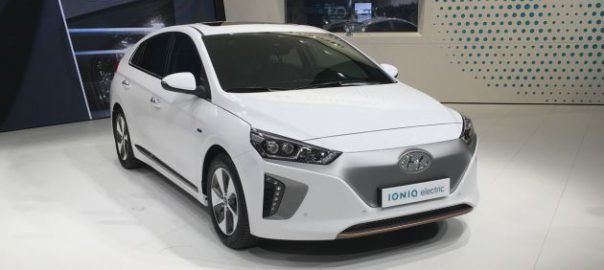
Hyundai Ioniq specification and pricing announced

Hyundai has revealed details of its Ioniq range – the first to be offered in hybrid, plug-in hybrid or pure-EV specifications. The family hatchback will start at £19,995, and goes on sale later this year.

The Ioniq will first be available as a hybrid and EV, with a PHEV coming later

The Ioniq Hybrid will be the first available in the UK, going on sale on Thursday 13th October. It is the conventional hybrid that starts the range off, with prices starting at just under £20,000 for the Ioniq Hybrid SE 1.6 GDi. This will feature a 1.6 litre petrol engine, CO2 emissions rated at 79 g/km, and comes in one of three trim levels – SE, Premium, and Premium SE. The Hybrid range tops out at £23,595.

Following on closely from the hybrid is the Ioniq Electric, which will be available in selected specialist dealerships to start with, before being rolled out nationwide soon after. Prices for the all-electric vehicle start at £28,995, with just the two trim levels – Premium and Premium SE. The latter costs £30,795 – though neither price includes the £4,500 Plug-in Car Grant (PiCG), which it is expected to be eligible for.

Both models are priced very competitively against predicted competition. The Ioniq Hybrid’s main rival is expected to be Toyota’s best-selling Prius, which starts at £23,295. The Ioniq Electric’s biggest challenger on the other hand is likely to be the Nissan Leaf – also a best seller in its market.

The Leaf starts at £21,530 for a 24kWh model with a quoted range of 124 miles, while the longer-range Leaf 30kWh has an official range of 155 miles and starts at £25,230. The Ioniq Electric – presuming it is eligible for the PiCG – will sit slightly askew of the two models in terms of price at £24,495 and £26,295 for each trim. However, it has a quoted ‘maximum potential driving range’ of 174 miles from its 28kWh battery and 88kW motor.

Equipment levels are good across all trims, and all three Ioniq models will feature Hyundai’s five year, unlimited mileage warranty – the Ioniq Electric’s battery covered for eight years or 125,000 miles.

The final version to come to market – the Ioniq Plug-In Hybrid will go on sale in the UK early 2017, with prices and specification details to be announced closer to launch.

Source: Next Green Car
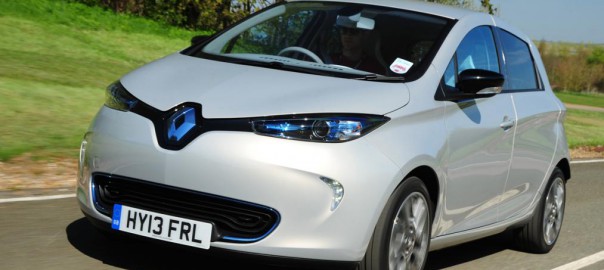
Renault ZOE Primer: First Drive

This is a quick introduction to using the ZOE. It is intended to give just the basic information required for a test drive, use of a ZOE from a hire/rental company, or to get your ZOE home the day you buy it.

Rapid Charging the ZOE (Image: T. Larkum)

Doors

  1. The ZOE is a five door car designed to look like a three door car: the rear doors are opened by pressing on the concealed black handles (marked with a thumbprint) next to the windows.
  2. ZOE uses keyless entry, i.e. it opens electronically via a key fob rather than with a physical key. There are two methods, the simplest is to lock and unlock the doors using the buttons on the key fob.

Driving

  1. The ZOE has been designed to feel like a small automatic car so it has a large gear lever beside the driver. It has the usual positions from front to back: Park (P), Reverse (R), Neutral (N) and Drive (D); these modes and the current selection are shown on the dashboard when power is on.
  2. To start the car:
    1. The gear lever must be in Park (all the way forward).
    2. The key fob must be somewhere within the car.
    3. Press and hold the brake pedal.
    4. Press the Start/Stop button to the left of the steering wheel.
    5. The car will start with an audible chime and ‘READY’ will show on the dashboard – the car is ready to move.
  3. To move away engage the Drive gear position (with foot still on brake) and release the handbrake (beside the driver’s seat).
  4. Note that the ZOE has been programmed with ‘creep’, i.e. it will move forward like an automatic even when the accelerator is not pressed.
  5. The ZOE has both conventional and electronic brakes and at low speed, below about 10mph, the brakes can feel a bit ‘grabby’ especially if you are not used to it; take care in car parks and other confined spaces.
  6. There will be an external sound for warning pedestrians when you drive forward up to about 20mph. Note, however, there is no warning sound when reversing.
  7. Once in Drive mode, since there is no gearbox, you can accelerate up to maximum speed (about 84mph) without changing gear.
  8. You can come to a complete stop in Drive If you are stopping for any length of time you should then engage the handbrake and Park mode.
  9. To turn off completely use the Start/Stop

Charging

  1. If charging from a home charge point ensure it is powered up and ready (a Chargemaster/Polar charge point shows an amber light, for example).
  2. Ensure the car is in Park mode, the handbrake is engaged and the motor is off (no ‘READY’ sign).
  3. Release the charging port door (it carries the Renault badge on the nose) using the button on the key fob.
  4. Open the charging port door (which swings to your left) and the internal charging port cover (which swings to your right) by hand.
  5. Insert the charging cable from the charge point. This should be followed by an audible click as the ZOE locks the connector into place (it cannot be pulled out by hand).
  6. If charging from a public charge point, at this point you need to initiate a charge (the method will depend on the charge point model).
  7. The ZOE dashboard will read ‘Ongoing Checks’ as it communicates with the charge point. The charge point will also likely give an indication (a Chargemaster/Polar unit will show amber and green lights, for example).
  8. When the charge begins it will be accompanied by a high pitched whine (not always audible to everyone). The dashboard will show how long the charge will take as ‘Time Remaining : ’ plus an hours:minutes display. It will also show the percentage charge complete.
  9. The car should be locked if unattended, but operating the locks and doors has no effect on the charge operation.
  10. The ZOE may sit at 99% for a long time to battery balance – it does no harm to stop charging at this or any other point occasionally if it’s convenient (e.g. when in a rush).
  11. If at a public charge point the charge should be stopped at the charge point. A home charge point can be turned off or left on and the cable simply disconnected.
  12. Release the charge cable connector using the button on the key fob, and withdraw the connector.
  13. Close the charging port cover and charging port door; charging is complete.

Top Gear finally breaks free from Jeremy Clarkson with Tesla film

Rory Reid’s piece on Tesla’s revolutionary electric car in episode four shows the BBC2 programme is at least trying to head in a new direction

“This car might just be on the cusp of changing everything.”

ClUuOEwWYAA7x6Z_Tesla_ModelX_TopGear

Matt LeBlanc’s Top Gear intro last night didn’t just herald a brave new world in electric cars. It also suggested that the new show had finally turned a corner.

Chris Evans has been accused of simply trying to copy what Jeremy Clarkson did first and best. But last night at least hinted that the show is trying to put some distance between it and old Top Gear, thanks to some smart handling from occasional presenter Rory Reid.
Reid was in New York City to drive new electric car the Tesla Model X.

Now, both electric in general and Tesla in particular have been dirty words round Dunsfold Aerodrome for years, ever since Clarkson eviscerated the company’s Roadster sports car in a film in 2008.

Back then Clarkson, shock horror, actually enjoyed his time in the electric car – until he realised how much it cost and how quickly it would run out of charge. “What we have here is an astonishing technical achievement: the first electric car that you might actually want to buy,” he said. “It’s just a shame that in the real world, it doesn’t seem to work.”

Tesla were so angry with the film that they attempted to sue Top Gear, but their appeal case was eventually dismissed by the court of appeal in 2013.

Fast forward to Clarkson-free Top Gear 2016 and Tesla were back with their new car, the Model X, which it is claimed will do 250 miles and charge in as little as 30 minutes.

Rory Reid was completely won over by the new motor and its ‘Ludicrous Mode’, which apparently turns it from family SUV into a drag racer that’s more than a match for even the biggest gas guzzlers.

“Everything changes right now,” Rory said pointedly. “The Model X pushes the reset button.”

Read more: Radio Times

Climate Change Impact in Africa (Image: iPhoto)

If You’re Younger Than 31, You’ve Never Experienced This

Life was cooler in 1985.

Climate Change Impact in Africa (Image: iPhoto)

Still not convinced the Earth is rapidly warming? Consider this: The last time the global monthly temperature was below average was February 1985.

That means if you are 30 years old or younger, there has not been a single month in your entire life that was colder than average.

“It’s a completely different world we’re already living in,”

Mark Eakin, coordinator of NOAA’s Coral Reef Watch, told scientists gathered this week for the International Coral Reef Symposium in Honolulu. He added it likely won’t be long before that same age bracket has experienced only above-average temperatures.

“It’s happening that fast,” Eakin said.

Michael Mann, a climate scientist at Penn State University, told The Huffington Post that as long as humans continue to warm the planet by burning fossil fuels, there is, in a sense, no “normal” or “average.”

“What is considered unusually warm today will be considered average in the future,” Mann said in an email. “And for what we call ‘warm’ in the future, there is currently no analog.”

The National Oceanic and Atmospheric Administration recently announced May 2016 as the 13th consecutive warmest month on record — the longest streak since global temperature records began in 1880.

“The combined average temperature over global land and ocean surfaces for May 2016 was the highest for May in the 137-year period of record, at 0.87°C (1.57°F) above the 20th century average of 14.8°C (58.6°F), besting the previous record set in 2015 by 0.02°C (0.04°F),” NOAA said.

NASA data shows global temperatures in May were 1.67 degrees Fahrenheit above the 1951-1980 average.

Read more: Huffington Post

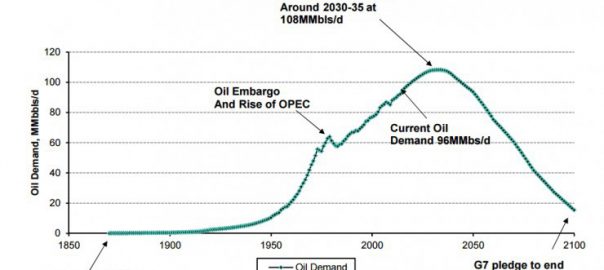
Peak Oil Could be in 15-20 Years (Image: Bernstein Research)

Big Oil Is Terminal

“Peak oil demand” is the new “peak oil supply” because of climate change and plummeting costs for electric car batteries.

It’s increasingly clear that we’re not going to move off of oil because we run out of supply. Rather, we’re going to move off of oil because it is both the economic and moral thing to do.

The research firm Bernstein notes that two “existential threats to the oil industry” exist — “climate change” and “advances in battery technology and computing power, which have resulted in a surge in interest in electric vehicles and autonomous driving.” They project the peak in oil demand could come as soon as 2030–2035:

Peak Oil Could be in 15-20 Years (Image: Bernstein Research)

Read more: Think Progress

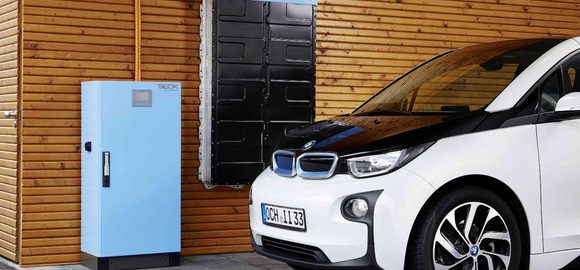
Carmaker announces plans to turn BMW i3 batteries into home energy storage kits (Image: BMW)

BMW follows Nissan into home energy storage market

Carmaker announces plans to turn BMW i3 batteries into home energy storage kits

Carmaker announces plans to turn BMW i3 batteries into home energy storage kits (Image: BMW)

The world of electric vehicles and energy storage are becoming increasingly intertwined, after German carmaker BMW last week became the second major carmaker in as many months to announce plans to enter the home energy storage market.

BMW told delegates at the Electric Vehicle Symposium & Exhibition 29 conference in Montreal last week it will use the high voltage batteries deployed in its i3 range of electric vehicles to create a new residential storage product in collaboration with German firm Beck Automation.

The BMW system will use new and second hand batteries from EVs, and will be available in a 22kWh or 33kWh sizes – powerful enough to keep the average home operating for 24 hours with no external generation.

In a statement BMW said the new storage system will allow BMW i customers to “more fully realise their commitment to sustainability” and take a step closer to energy independence. Customers will be able to store clean energy generated by rooftop solar panels, and protect their home against power outages from the grid, BMW said.

“The remarkable advantage for BMW customers in using BMW i3 batteries as a plug and play storage application is the ability to tap into an alternative resource for residential and commercial backup power, thus using renewable energy much more efficiently, and enabling additional revenues from the energy market,”

said Cliff Fietzek, manager for connected eMobility at BMW North America.

Read more: Business Green

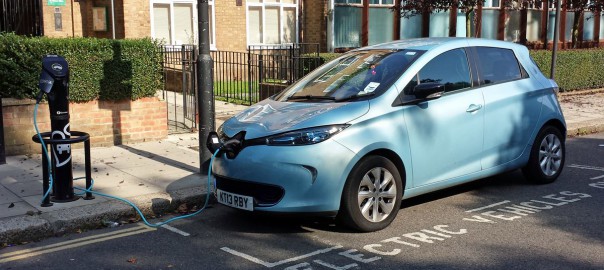
Slow Charging the ZOE at Highgate (Image: T. Larkum)

Electric cars: the benefits in London

EVs already have numerous advantages in the city, but fresh parking and charging options are making them irresistible

Slow Charging the ZOE at Highgate (Image: T. Larkum)
Charging a Renault ZOE in London (Image: T. Larkum)

Clean, quiet, powerful electric cars make perfect sense everywhere; in the countryside, for family trips and for commuting. But it is in towns and cities with their zero emission credentials that electric cars really triumph.

Nowhere is this more evident than in London. In January it officially became a ‘Go Ultra Low City’ after winning a government competition and £13m to prioritise electric vehicles (EV) across the capital.

The aim of the scheme – also spearheaded by Bristol, Nottingham and Milton Keynes – is to boost the take-up of plug-in electric cars both in the capital and across the country.

London is already favourable to electric cars, which are exempt from the £11.50-a-day congestion charge and can park for free in many boroughs. The new Go Ultra Low City work will deliver a range of measures to encourage take up of EVs, including:

• a single residential chargepoint offer to London EV owners that don’t have off-street parking

• new commercial rapid chargepoint infrastructure to provide speedy charging for businesses and fleet vehicles

• support for London’s expanding car club networks; and

• new ‘Neighbourhoods of the Future’ which will trial new innovative ways of promoting EVs at the local level

Read more: Standard

The mayor of London announced his proposals at Great Ormond Street Hospital where he visited children who are being treated for respiratory problems exacerbated by poor air quality (Image: S. Rousseau/PA)

Diesel car drivers hit with new ‘toxic’ fee

Drivers of diesel cars face the world’s toughest air pollution penalties under plans for London that could be extended to other cities.

The mayor of London announced his proposals at Great Ormond Street Hospital where he visited children who are being treated for respiratory problems exacerbated by poor air quality (Image: S. Rousseau/PA)

A £10 daily “toxicity charge” will be imposed next year on petrol and diesel cars and vans made before 2005 entering central London. This will be added to the £11.50 congestion charge, Sadiq Khan, the mayor of London, said.

By the end of the decade the fee will be extended to pre-2015 diesel cars and the charging zone will become ten times bigger, affecting 210,000 drivers a day, according to projections by the mayor’s office.

Mr Khan said that he was planning the

“toughest emission standards of any major city in the world”

to help reduce the 9,500 premature deaths a year that are linked to air pollution in the capital.

The government pledged last year to penalise older taxis, buses and lorries in new “clean-air zones” in Birmingham, Leeds, Southampton, Nottingham and Derby. At the time ministers said that cars would be exempt from restrictions, but the environment group Client-Earth is bringing a High Court challenge calling for the government to take tougher action.

Under Mr Khan’s plans the ultra-low emission zone will be expanded from central London to the North and South Circular roads. The charge will be in place at all times. Thousands more roadside cameras will be installed to catch and fine drivers who fail to pay.

The scheme will penalise thousands of drivers who bought a diesel car believing that it produced fewer emissions. Mr Khan said that older diesel cars produced up to 20 times as much air pollution per mile as petrol cars. The mayor urged the government to work with him to launch a national scrappage scheme under which a driver trading in a highly polluting vehicle could receive a discount on a cleaner car.

Read more: The Times

Tesla showroom in Milton Keynes (Image: T. Larkum)

Tesla and SolarCity? Yes, it makes sense.

The combined company will be perfectly suited to markets that barely exist yet

Tesla showroom in Milton Keynes (Image: T. Larkum)

Elon Musk announced last week that he wants Tesla, his electric-car company, to acquire SolarCity, the rooftop-solar company he helped found and now serves as chairman. The result would be a single “end to end” energy behemoth.

“As a combined automotive and power storage and power generation company,” Musk said, “the potential is there for Tesla to be a $1 trillion company.”

Reaction was, by and large, skeptical. (Tesla stock dropped 10 percent the following day.) Over at Stratechery, Ben Thompson says Tesla already faces “very long odds of achieving its plans.” Adding SolarCity’s negative $2.6 billion cash flow to Tesla’s already negative $1.5 billion is no help to Tesla, though it might save SolarCity. Thompson thinks Musk wants it because he’s “highly exposed to SolarCity’s plummeting stock.” Otherwise it makes no sense, he says, because Tesla and Solar City have “zero business synergies.”

Analysts at research firm UBS, in a pair of briefs, echo that critique, arguing that there’s little these businesses offer one another that they couldn’t get from some kind of cross-marketing agreement.

I’m not qualified to comment on the near-term business merits of the deal. It may well prove to be a disaster. But I think Thompson and other critics are underestimating the synergies. They are limited now, but they will grow over time. (Over at Greentech Media, Julia Pyper also has good piece on this.)

How fast will the synergies grow? That depends on factors largely outside either company’s control.

That’s the big risk of this deal: Even assuming the merged company could get past its short-term challenges, its long-term fate rests on policy and regulatory decisions it can’t predict or determine. It’s a merger based on hope.

Synergy depends on future markets

The kinds of markets in which electric cars, home batteries, and solar panels could fully, uh, synergize do not currently exist in most places. They are precluded by the way the US structures its electric utility sector, as a patchwork of monopolies and quasi-monopolies.

Read more: Vox

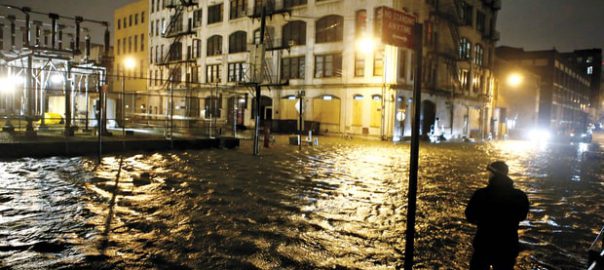
Hurricane Sandy flooded huge parts of Lower Manhattan and downtown Brooklyn (Image: J. Countess/Redux)

Can New York Be Saved in the Era of Global Warming?

The future of America’s greatest city is at risk

Hurricane Sandy flooded huge parts of Lower Manhattan and downtown Brooklyn (Image: J. Countess/Redux)

It’s a bright spring day in New York, with sunlight dancing on the East River and robins singing Broadway tunes. I’m walking along the sea wall on the Lower East Side of Manhattan with Daniel Zarrilli, 41, the head of New York’s Office of Resilience and Recovery – basically Mayor Bill de Blasio’s point man for preparing the city for the coming decades of storms and sea-level rise. Zarrilli is dressed in his usual City Hall attire: white shirt and tie, polished black shoes. He has short-cropped gray hair, dark eyes and an edgy I’ve-got-a-job-to-do manner.

Zarrilli may be the only person in the world who holds in his head the full catastrophe of what rising seas and increasingly violent storms mean to the greatest city in America. Not surprisingly, instead of musing about the beautiful weather, he points to the East River, where the water is innocently bouncing off the sea wall about six feet below us.

“During Sandy,” he says, darkly, “the storm surge was about nine feet above high tide. You and I would be standing in about four feet of water right now.”

As Zarrilli knows better than anyone, Hurricane Sandy, which hit New York in October 2012, flooding more than 88,000 buildings in the city and killing 44 people, was a transformative event. It did not just reveal how vulnerable New York is to a powerful storm, but it also gave a preview of what the city faces over the next century, when sea levels are projected to rise five, six, seven feet or more, causing Sandy-like flooding (or much worse) to occur with increasing frequency.

“The problem for New York is, climate science is getting better and better, and storm intensity and sea-level-rise projections are getting more and more alarming,”

says Chris Ward, the former executive director of the Port Authority of New York and New Jersey, the agency in charge of airports, tunnels and other transportation infrastructure.

“It fundamentally calls into question New York’s existence. The water is coming, and the long-term implications are gigantic.”

Read more: Rolling Stone