Daily Archives: February 26, 2016

Dundee Cabs charge points

Evolt’s charging infrastructure sets example to the ranks!

The Evolt Electric Vehicle (EV) charge point infrastructure supplied and installed by APT Controls at the Dundee taxi company 203020 has become an ‘ideal model’ for cab firms looking to go electric, according to its CEO David Young.

Dundee Cabs charge points

203020 is increasing its fleet to 100 fully electric vehicles, making it the largest EV taxi fleet in the UK.

Dundee is currently vying with seven other cities for £20 million of funding to become the UK’s electric taxi capital – and Evolt is playing a significant part in helping to achieve this.

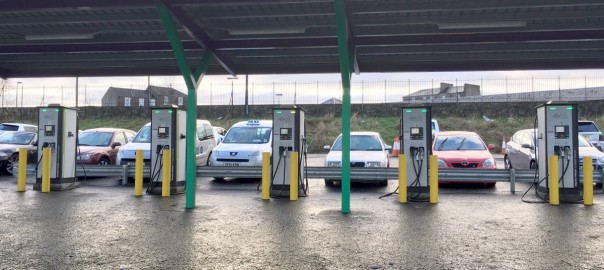
APT Controls was selected after a full tender process as the key supplier to 203020’s fleet of 30 EVs, and has subsequently installed five top-of-the-range 50kW Tri-Rapid chargers, which efficiently charge vehicles in half an hour, and a further ten 7kW chargers that are ideal for quick ‘top ups’.

David says Evolt came highly recommended:

“Two companies informed me of its reliability, and when it came to choosing a product, Evolt really stood out.

“The equipment is very well installed, maintained to high levels and we have never had a problem with their use – which is testament to the manufacturer’s quality since each Rapid Charger is in consistent use with approximately 17 and 21 charges every day.”

Now the charging infrastructure is in place, David says that another 100 EVs are currently on order:

“Since the EV programme started one year ago, over 30 taxi firms from all over the UK have visited to see our set up,” he says. “It’s an ideal model of environmental success, and Evolt has really helped in driving it forward with its reliable charge points.”

David says 203020 will have 100 EVs on the road within six months:

“This time next year every vehicle we own will be 100 percent electric, and with that expansions come an increased use of the charge points. Two of our Rapid chargers are already the busiest in the UK, and our original 30 EVs will very soon reach 1,000,000 miles, saving hundreds of tons of carbon emissions.”

Justin Meyer, General Manager for Evolt, anticipates an increased role in the future:

“The take-up of EVs, and therefore the increased need for charge points, is accelerating and we forecast significant growth in the supply of our EV charging solutions to taxi companies as well as to local councils for their fleets and initiatives.”

Evolt’s Rapid Charging range of 50kW DC and 43kW AC output systems is made up of two carefully designed products; the Compact Charger and the Advanced Charger. Both are proven systems allowing EV charging at AC and DC outlets on the unit (when enabled). Each unit also has a built in 3G communications modem enabling remote monitoring of the charging process and charging data collection (where needed). And its 7kW dual-socket range is robustly designed and features an intelligent tamper-proof opening mechanism to increase security.

Source: Evolt via Gravity London
Buying a Renault Zoe: introducing the electric car convert

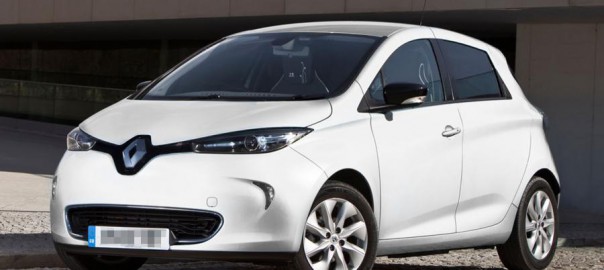
Apologies that it’s been a while since I wrote an update on life with our Renault Zoe, bought on PCP and undergoing the rigours of everyday family life in south-west London.

renault_zoe_blog_0
Since delivery 10 weeks ago it has covered 1000 miles, mostly in the hands of my wife, who traded her eight-year-old Ford C-Max for life on the electric superhighway. Well, as the low mileage suggests, perhaps more of the electric urban highway.

The experience so far has been overwhelmingly positive, the Zoe slotting in to our lives seamlessly. There have been no worries about range, or charging times, or space, or ride quality (all supposed shortcomings), just general joy at the instant torque, silent running and modern high-tech kit list that makes the £150 a month lease with battery a steal.

How so, sceptics may ask? The answer lies in the fact that it suits our needs so perfectly. If we lived in the country, commuted far and wide, didn’t have a drive or a second car, it just wouldn’t work. But none of those things are an issue, so on we motor – even when the sub-zero temperatures reduce full charge range to an eyebrow raising 55 miles.

Yes, I choked at first, but the point is a 25-mile run is as far as we’ll typically do. We just have to charge it more than we expected – but even that is painless, and at roughly two hours to 80% full not remotely inconvenient.

You guessed it, I’m a convert. As I said at the beginning of this series, electric cars aren’t for everyone, but if they suit you they really suit you.

Source: Autocar

EVs cost £300 less in servicing and maintenance costs, and around £750 in fuel bills

Easy to maintain electric cars save owners £1,000 a year

Motorists could save more than £300 per year on car maintenance by switching to electric cars according to Go Ultra Low, the ultra-low emission vehicle campaign. When combined with fuel savings, the total adds up to savings of more than £1,000 each year.

EVs cost £300 less in servicing and maintenance costs, and around £750 in fuel bills

The Go Ultra Low study discovered that the average motorist spends £400 each year for servicing and maintenance for their petrol or diesel car – compared to the equivalent £96 annual costs for owners of electric cars.

For the county as a whole, the average cost racks up to £13 billion spend each year on maintenance and servicing for petrol and diesel cars, with a saving of up to £10 billion if every motorist switched to plug-in cars.

The main reason behind the difference in maintenance costs is the simplified powertrain found in electric cars, with fewer moving parts, things to go wrong, and consumables.

The calculations are fairly conservative too,with the Go Ultra Low survey reporting that more than one third of respondents who own petrol and diesel cars saying that they paid between £100 and £200 extra on unanticipated costs.

Poppy Welch, Head of Go Ultra Low, said:

“Pure electric vehicles have fewer moving parts than cars with an internal combustion engine. This means that there are fewer things which require maintenance, and servicing is simpler and cheaper to complete with fewer consumables. Drivers dread unexpected large repair bills, but as more motorists switch to electric vehicles, these killer bills are becoming a thing of the past.

“It’s time that the British public realise just how cheap electric vehicles are to live with – and it’s not just the cut-price servicing. Fuel and running costs can be as low as 2p per mile and plug-in vehicles benefit from the lowest rates of tax, offering the average driver significant cost savings.”

Last year, Go Ultra Low revealed that motorists could cut £750 on their annual fuel bills by going electric. Today;s results show that more needs to be done to educate car buyers on the costs involved with electric cars. More than a quarter (26 per cent) of respondents think that electric cars are more expensive to run and 17 per cent consider plug-in vehicles to be more expensive to service.

Sales of plug-in cars continue to grow as more drivers realise the benefits the ultra low emission vehicles’ ultra low running costs.

Source: Next Green Car

Electric vehicles on charge (Image: ELN)

Are Londoners ready to switch to EVs?

A majority of people in London would switch to electric vehicles (EVs), according to a new survey.

Electric vehicles on charge (Image: ELN)

It claims 80% said they would consider going green if they were buying a car in the next six months.

At least six in 10 Londoners also said they are worried about the environment and the long term impact of air pollution.

The new survey of more than 1,700 people from Vital research and statistics and commissioned by the Institute of the Motor Industry (IMI), also reveals 16% intend to vote for the London Mayoral candidate who promises to tackle the city’s air pollution.

A study published this week found around 40,000 deaths a year are linked to air pollution in the UK.

Despite the enthusiasm for EVs, Londoners are concerned about the price as they believe greener cars are more expensive to buy and run compared to diesel or petrol cars and have a limited range.

They are also worried there aren’t enough charging points and qualified technicians in the capital to service the cars.

However according to the IMI, electric and hybrid cars are “just as fast as petrol cars and the running costs are a fraction of current vehicles”.

Steve Nash, CEO at IMI added:

“Very soon drivers will realise the true capabilities of electric vehicles with manufacturers continuing to advance the technology. As our research indicates demand will surge and it’s clear the next London Mayor has an urgent task to ensure the charging infrastructure is capable of keeping pace as Londoners make the switch to greener fuel to get around the city.

“The government will also need to focus on the skills base required to keep these cars on the road. With only 1,000 technicians currently qualified in the UK, they have some way to go.”

Yesterday a new report revealed EVs will represent 35% of new car sales globally by 2040.

Source: Energy Live News