Daily Archives: February 22, 2016

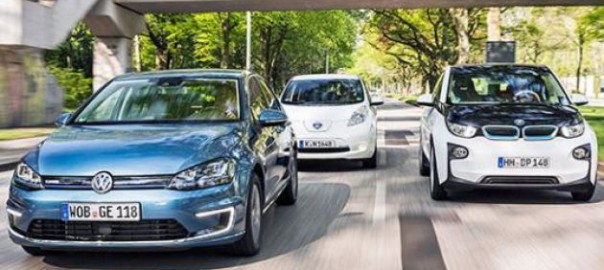
UK motorists now have more than 30 electric models to choose from

A Multimillion-Dollar Assault On Electric Vehicles

A new group could spend $10 million a year on the campaign.

UK motorists now have more than 30 electric models to choose from

The oil and gas industry may have thought it had killed the electric car, but sales — boosted by generous government subsidies — rose dramatically between 2010 and 2014, and energy giants are worried the thing may have come back to life.

Time to kill it again.

A new [US] group that’s being cobbled together with fossil fuel backing hopes to spend about $10 million dollars per year to boost petroleum-based transportation fuels and attack government subsidies for electric vehicles, according to refining industry sources familiar with the plan. A Koch Industries board member and a veteran Washington energy lobbyist are working quietly to fund and launch the new advocacy outfit.

Koch Industries, the nation’s second-largest privately held corporation, is an energy and industrial conglomerate with $115 billion in annual revenues that is controlled by the multibillionaire brothers — and prolific conservative donors — Charles and David Koch. James Mahoney, a confidante of the brothers and member of their company’s board, has teamed up with lobbyist Charlie Drevna, who until last year helmed the American Fuel and Petrochemical Manufacturers, for preliminary talks with several energy giants about funding the new pro-petroleum fuels group.

Read more: Huffington Post
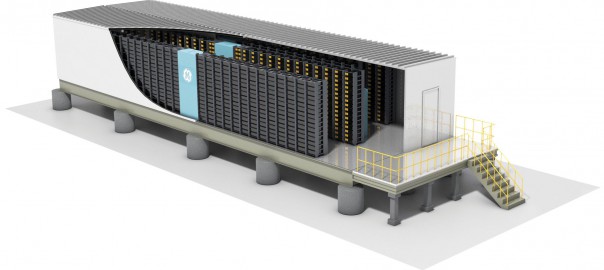
General Electric Lithium-Ion Energy Storage System (Image: GE)

Battery Cost Reductions Lead To Rise In Battery Energy Storage Market

The energy storage system market is expanding at a fast pace, and 2016 could double the world’s power output of installed ESS.

General Electric Lithium-Ion Energy Storage System (Image: GE)

ESS is becoming dominated by lithium-ion batteries – cost reductions of those batteries, combined with government funding programs and utility tenders, brings tremendous growth of orders, according to IHS.

The global pipeline of planned battery and flywheel (who still uses flywheels these days?) projects had reached 1.6 gigawatts (GW) in Q4 2015 (up 45% compared to Q3 2015).

IHS doesn’t reveal the MWh of ESS because they measure installations in MW or GW. That makes comparison to EVs more difficult.

45% of new ESS installations are planed in the U.S. followed by Japan with 20%.

Read more: Inside EVs

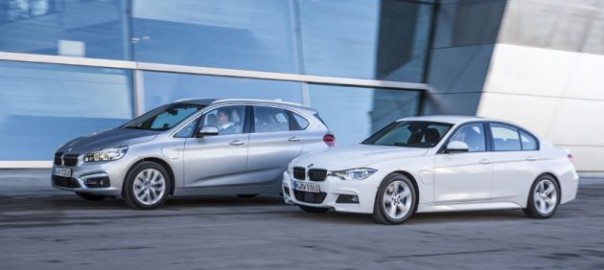
BMW plug-in cars (Image: BMW)

BMW’s i models form foundations for green future

BMW’s current fleet of vehicles has a number of green models available – but the company wants to push efficient cars further to the forefront of its model line-up and has developed a range of systems to help support it.

BMW plug-in cars (Image: BMW)

With the recent launches of the BMW 330e and 225xe plug-in hybrid (PHEV) models, the German giant now has a number of plug-in options spread across a variety of different market sectors. The X5 40e SUV has already been launched this year and the 740e PHEV is due too, giving BMW four PHEV models in its line-up in 2016 alone.

Add to that the i3 EV, i3 REX and i8 PHEV and BMW has a number of options available for those looking at plug-in models – compact citycars, a family MPV, a compact executive saloon, large SUV, luxury saloon and supercar.

BMW has also confirmed that it is continuing to work on hydrogen fuel cell (HFV) technology, to create a combination of set-ups – pure electric for short, regular journeys, and HFV for longer runs.

The new BMWs X5 xDrive 40e, 330e, 225xe, and 740e models are the first products to benefit from the research and development carried out by BMW’s iCars division. The i3 and i8 remain at the cutting edge of BMW’s efficiency programmes, but the lessons learnt from those models is already being filtered down to the next generation of ‘standard’ models.

BMW has announced that these PHEV variants will be grouped together under the banner of iPerformance – set to be launched at the Geneva Motor Show alongside the plug-in 7-Series. This brand is intended to indicate to customers the plug-in electric systems under the skin, and increased use of carbon fibre in some cases, despite the cars looking relatively normal, and not as futuristic as the i3 and i8.

Read more: Next Green Car

WHAT WE LEARNED DRIVING A TESLA MODEL S TO THE SOUTH OF FRANCE

Tesla’s all-electric flagship Model S gives you range confidence.

1620_Tesla_modelS_GQ

The 20th Century failed to deliver several high profile science fiction promises: jetpacks exist but are impractical, flying cars never worked, and working androids are still yet to arrive outside of a Japanese technology conference. The 21st Century is doing a little better. It’s now possible for anyone to travel thousands of miles in a semi-autonomous all-electric vehicle, as long as they have a little extra money to spend.

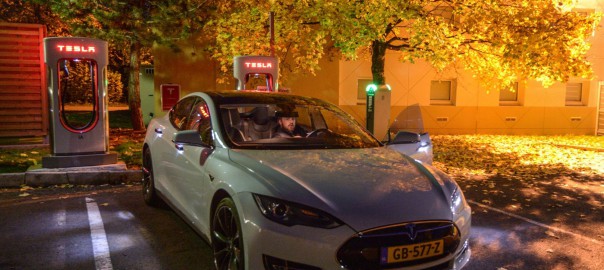
Taking a Tesla Model S on a 1,200 mile round-trip to the middle of rural France is not only possible, thanks to the company’s network of supercharger stations, it’s one of the best road trips we’ve ever driven. For the last few years Tesla has been building a network of 120kW supercharging stations which can get you to half charge in 20 minutes. That means you can get almost anywhere in Europe, for free, if you have a compatible car and don’t mind stopping every few hours (which you’ll probably do anyway).

Read more: GQ Magazine

“Our goal is really to create a world where everyone is able to cover their own energy needs with a decentralized energy source.”

Sonnen ships Ten Thousandth Battery Storage System

German startup Sonnen shipped its 10,000th battery system this week, claiming a leading position in the global smart energy storage market as it takes on Tesla and shakes up the traditional electricity business model.

“Our goal is really to create a world where everyone is able to cover their own energy needs with a decentralized energy source.”

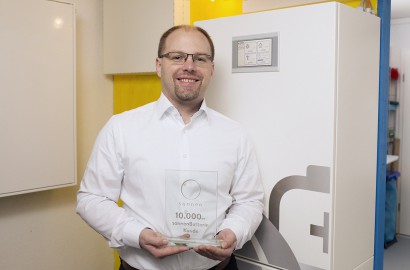
Sonnen marked the milestone by gifting German homeowner Stefan Wolpert an extra 2 kilowatts of battery capacity and a free membership to sonnenCommunity — Sonnen’s decentralized energy trading platform.

The shipment announcement comes on the heels of the startup’s expansion into the U.S. last month, with a new headquarters unveiled in Los Angeles and a rapidly growing distribution network. Sonnen has already partnered with 30 local solar installers and aims to reach 100 partners by the end of the year.

In early February, Sonnen announced that it is now ready to install systems in Hawaii after meeting the advanced energy storage requirements from the Hawaii Electric Companies (HECO). The sonnenBatterie, which comes fully equipped with smart energy management technology, is billed as an “out-of-the-box” solution that meets the obligations under HECO’s new distributed energy tariffs. Company executives say a 4-kilowatt-hour sonnenBatterie in Hawaii will cost about $10,000 and provide a return on investment in as little as 6.5 years.

At the outset, Sonnen is targeting sales to solar customers in places with high electricity costs, like Hawaii and Puerto Rico. California is another promising market, where storage benefits from incentives and can help solar customers arbitrage time-of-use rates. But the company ultimately sees batteries offering financial and resiliency benefits across the U.S., and is currently working with Spruce to offer attractive financing packages for energy storage in all 50 states.

Sonnen already has 1,000 battery storage systems under contract in the U.S. and aims to contract for up to 3,500 systems through the year. As Sonnen increases its U.S. presence, it continues to grow sales in seven European countries, Australia and the Philippines.

“Our goal is really to create a world where everyone is able to cover their own energy needs with a decentralized energy source,” said Boris von Bormann, CEO of Sonnen North America, at the company’s L.A. office launch. “Of course we love the utilities, but just imagine if you could take your energy future into your own hands.”

Read more: Renew Economy

Severe Flooding, Against a Background of Wind Turbines: November 2012, Tyringham, Bucks. (Image: T. Larkum)

Organic farming ‘could be key to feeding the world as global warming takes hold’

Major study finds chemical-free agriculture restores the soil and can produce higher yields than ‘conventional’ methods

Severe Flooding, Against a Background of Wind Turbines: November 2012, Tyringham, Bucks. (Image: T. Larkum)

Organic farming – long held to be irrelevant in tackling world hunger – could be key to feeding the world as global warming takes hold, one of the biggest studies ever to be carried out into the “contentious” practice has concluded.

The research, which has reviewed hundreds of studies stretching back over four decades, not only overturns conventional wisdom but contradicts Britain’s official Food Standards Agency, which has repeatedly attacked chemical-free agriculture. It adds to emerging evidence that it may be more productive and profitable than conventional farming in the long term, especially in developing countries, and says it can provide an “ideal blueprint in addressing climate change”.

Read more: Independent

Electric Vehicles Will Triumph Because They’re Better

Electric vehicle sales may be driven mostly by policy and preference right now, but they’ll soon be powered by dominant economics—including a profitable symbiosis between electrical drive and autonomous control, according to a former researcher for General Motors.

“What is going to happen here, I believe, is it’s just going to become easier to build an electric car,”

said Lawrence Burns, until recently the director of the Program for Sustainable Mobility at Columbia University and a professor of engineering practice at the University of Michigan. He served as General Motors’ corporate vice president of research & development and planning from 1998 to 2009. He now advises firms, including Google and Allstate, on mobility transformation.

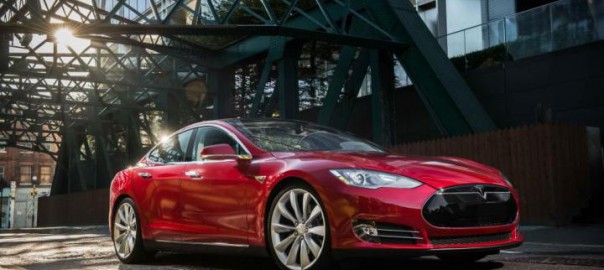
Tesla Model S Drivetrain

“Beyond 2025, battery and fuel-cell vehicles could simply become the best way to design and engineer a light-duty vehicle,” Burns said tonight at the University of Chicago Booth School of Business. “Set aside all the motivations with climate change, oil dependence—it’s just a better way to do a car. It’s simple.”

Read more: Forbes