The long-awaited launch of the PHEV version of a very popular car
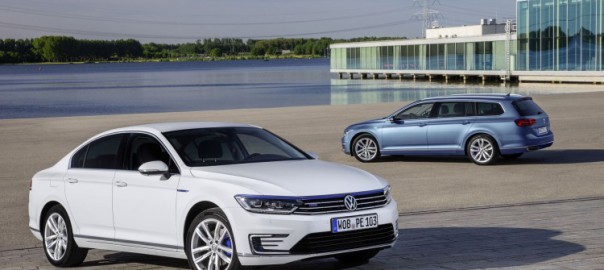
Volkswagen announced the official launch of its second plug-in hybrid model after the Golf GTE – the Passat GTE (available in a longer Variant version too).
Sales in first few countries already began (in Germany from €44,250), while the rollout in Europe will take a few months.
Volkswagen Passat GTE and Passat GTE Variant
Volkswagen is getting ready to begin sales in Asia this year too.
“The Volkswagen continues to electrify! Following the Golf GTE*, comes the next high-volume model with a plug-in drive system: this time the German carmaker is electrifying the new Passat GTE. Its launch marks the debut of a new generation of business and family cars – zero-emission vehicle and long-distance touring car all in one. A Volkswagen that combines the present and the future. A car that boasts not only one of the most progressive drive systems of our time, but also an array of innovative assistance and infotainment systems that is ground-breaking in the segment of large family cars.”
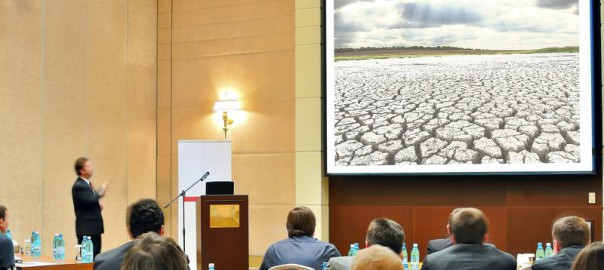
Should climate risk be assessed in the same way as risk of nuclear war or pandemic?
When assessing the risk of serious climate change there is not enough focus on the worst-case scenarios that could trigger societal and economic collapse. That’s the conclusion of a major new report assessing the risks posed climate change, commissioned by the UK Foreign Office.
Climate Change: A Risk Assessment argues climate risk should be assessed in the same way as risks to national security or public health – considering the worst-case scenario first, and working backwards to avoid that risk coming to pass.
For example, when assessing the risk of a global pandemic scientists and politicians assess the risk of a worst-case scenario and plan accordingly. Similarly, planning for nuclear conflict has long started by addressing the risk of the worst case scenario. Conversely, most assessments of the impact of climate change tend to focus on the impact of two-, three- or four-degree rises in global temperature – when the worst-case long term scenario is closer to a nine or 10-degree rise.
An audio-heavy video of the e-Golf to give the experience of driving it – it’s different!
What Winding Road does well in its video reviews is to capture what it feels and sounds like while sitting in the driver’s seat of the car being reviewed. These videos showcase the Volkswagen e-Golf in Winding Road style.
Per the video description:
Wear headphones! The audio in this video was recorded with in-ear binaural microphones. With headphones or earbuds on, you’ll feel like you’re actually sitting in the driver’s seat.
Some consolidation is happening in the charging point market
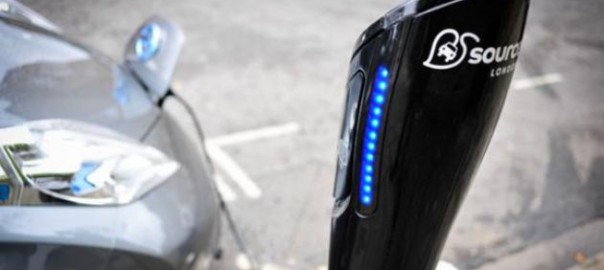
A 70-strong business headquartered in Hereford has been acquired by a manufacturer of charging points for electric vehicles.
GB Electrical, which installs electric vehicle charging points across the country, has been bought by Chargemaster, a Luton-based business that designs, develops and manufactures the equipment.
To date, the company has used a number of external subcontractors for its installation work and this acquisition will enable it to increase its capacity and quality of installation service.
Chargemaster chief executive David Martell said: “We are delighted to be able to offer our customers a seamless end-to-end service. GB Electrical has many years’ experience in the EV market and offer a national footprint enabling us to provide the highest level of service while offering customers unrivalled value for money.”
Terry Pickering, managing director of GB Electrical, added: “We have been working with Chargemaster for some years now and, as market leader, we have been impressed with the reliability of their equipment and the ease of installation.
“This deal means we can benefit from being part of a leading UK firm, both financially and from an administrative point of view. We’ve been impressed with the help and commitment by sales and back office staff, and I’m excited that my entire workforce has a guaranteed future with the company due to its unique market position.”
I have spent my lifetime face to face with some of the most brutal and inhumane acts ever committed, but nothing has been as traumatizing for me as trying to get action to tackle the climate crisis.
As a long time human rights defender and prior Executive Director at WITNESS, I helped produce and direct films on rape as a weapon of war and amputations in Sierra Leone’s recent bloody conflict, I conducted an undercover investigation into the Russian mafia’s involvement in trafficking women for forced prostitution, I investigated hit squads in apartheid South Africa, and I spent countless hours in editing rooms watching first hand images of death, destruction, and devastation.
But spending my days and nights trying to get our country to tackle global warming is more emotionally demanding than any job I have ever done.
When I was at WITNESS, people used to say “The work you do must be so difficult. How do you manage?” to which I would respond “Well, I can see the results. And it’s not as bad as environmental work would be!” What I meant when I said that five years ago is that I felt overwhelmed by our inexorable march to “pave it all” — parking lot by parking lot, McDonald’s by Wal-Mart.
But seeing former Vice President Al Gore give his now famous slideshow at the TED conference in 2006 convinced me that nothing mattered more than tackling global warming, and that climate change had massive humanitarian and human rights consequences. There was no looking back, so in mid-2007 I leapt, knowing that I was headed straight towards my deepest fears and concerns.
As I started to immerse myself in the science and early impacts of global warming, I became increasingly distraught. But I soldiered on, hoping against hope that I would be so busy in an ambitious new start up campaign at 1Sky, and so relieved to be trying to do something about it, that I would not be overwhelmed with existential angst and despair. Looking back on the last year and a half since I started as 1Sky’s Campaign Director in the fall of 2007, my wish has generally come true. But since President Obama’s inauguration and the 2009 clock started ticking on the countdown to Copenhagen, I feel myself slipping. And I know I am not alone.
I asked a few weeks back whether you’d buy a used Nissan LEAF, revealing that I myself am mulling such a purchase.
No sooner do I start to explore the decision in depth that some of those familiar naysaying headlines start popping up. Over at Autoblog Green, I see this: Electric cars can be dirtier than gas ones. Meanwhile over at Torque News, I learn that a LEAF is greener than a Prius in most states—but is only borderline in my home state of North Carolina.
Now there are way too many ambiguities to discuss here: The study quoted in Autoblog Green did not, for example, take into account the fact that refining gasoline requires vast amounts of (usually) coal-burning electricity too. Without a true well-to-wheels (or mine to wheels) analysis, the whole exercise becomes a bit moot. Equally, how does it change the equation if an electric car driver chooses to buy from a green energy tariff? And how do we plan for a changing electricity grid in the future?
What really interests me is the bigger point, however: We may be spending too much time worrying about our own, specific carbon footprint—and not enough time worrying about the role we are playing in a broader transition to a low carbon economy.
The case of electric cars is just one example of this phenomenon. If we need to decarbonize both electricity supply and our transportation systems, then the idea that a gas-fired car is (or may be) currently greener becomes largely irrelevant. What matters is that we need both emission-free cars and emission-free electricity in the very near future, and any form of oil-powered car, however efficient, is simply not going to get us there. (One recent study suggests that a future based on autonomous, electric vehicles could create 94% reductions in CO2 emissions as the grid gets greener.)
So buy your electric car (if you need a car), and then work like hell to defend and promote clean energy where you live, and maybe reduce car dependence too.
Other examples of this phenomenon range from the constant whining about Al Gore’s carbon footprint (as opposed to his leverage) to the dangerous notion that “voting with your dollar” is as important as engaging with the political system.
Yes, your personal impact on the planet is part of the bigger picture. But it’s that bigger picture that actually matters.
WASHINGTON—Evoking cataclysmic scenes of extreme weather and widespread drought and famine, the nation’s climate change deniers held a press conference Wednesday to describe exactly what the Earth must look like before they will begin to believe in human-induced global warming.
The group of skeptics, who said that the consensus among 97 percent of the scientific community and the documented environmental transformations already underway are simply not proof enough, laid out the precise sequence and magnitude of horrific events—including natural disasters, proliferation of infectious diseases, and resource wars—they would have to witness firsthand before they are swayed.
The skeptics laid out four conditions that must be met for them to accept that climate change isn’t simply a theory: 100 named hurricanes a year, the full evaporation of the Mississippi River, nine-month-long heat waves, and the complete extinction of every animal in the class Reptilia
“For us to accept that the average surface temperature of the Earth has risen to critical levels due to mankind’s production of greenhouse gases, we’ll need to see some actual, visible evidence, including a global death toll of no less than 500 million people within a single calendar year,” said spokesperson William Davis, 46, of Jackson, NJ, who added that at least 70 percent of all islands on the planet would also have to become submerged under rising seas before he and his cohort would reconsider their beliefs. “To start, we’re going to have to see supercell tornadoes of category F4 or higher ripping through Oklahoma at least three times a day, leveling entire communities and causing hundreds of fatalities—and just to be perfectly clear, we’re talking year-round, not just during the spring tornado season.”
“I don’t think it’s too much to ask to see a super hurricane destroying the Southeast U.S. and another one at the same time decimating the Pacific Northwest before I make up my mind about this.”
“The reality is that we’re still experiencing cold, snowy winters, and the entire global population is not currently embarking on cross-continental migrations in search of arable land,” Davis continued. “Until that changes, we cannot be expected to believe climate change is occurring.”
Davis went on to say that certain events, such as massive, uncontrollable wildfires across the U.S—not just restricted to the American West, but in areas including Florida and New England—would render climate change deniers open to reevaluating the decades’ worth of data that show the planet is warming at a catastrophic rate. Additionally, Davis said that for the community to begin believing a single word of any scientific journal article corroborating climate change, every one of Earth’s glaciers would have to retreat at a rate exceeding 20 miles per year, and each of the skeptics, individually, would have to go a decade without seeing naturally occurring ice anywhere.
Furthermore, climate change deniers maintained that if the total number of plant and animal species on the planet remained higher than 200 in aggregate, they would not be dissuaded from their belief that Earth is simply experiencing one of its natural warming cycles that would eventually resolve itself on its own.
“I don’t think it’s too much to ask to see a super hurricane destroying the Southeast U.S. and another one at the same time decimating the Pacific Northwest before I make up my mind about this,” said global warming skeptic Michelle Wilkinson of Medina, MN, adding that she would be willing to recognize the findings of the Intergovernmental Panel on Climate Change if repeated and unpredictable storm surge flooding rendered every major East Coast city, including Boston, New York, Philadelphia, and Washington, D.C., wholly uninhabitable. “The fact of the matter is that if I walk outside at any time of day at any point in the year and it’s below 90 degrees, then there simply isn’t enough proof that we need to be cutting carbon emissions.”
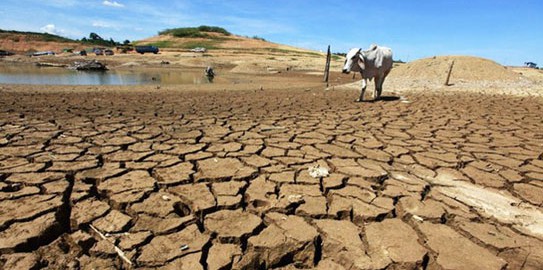
After clarifying that the desertification of major population centers, and the global refugee crisis that would result, would be necessary but not sufficient evidence of climate change, the skeptics reportedly unveiled a vivid artist’s rendering of the vast expanse of parched, lifeless earth and dead trees that each of them must see through the windows of their homes before reversing their opposition to public schools teaching children about global warming.
“We keep hearing all this mumbo-jumbo about the sixth mass extinction we’re in the midst of,” said Mitch McConnell, a U.S. senator from Kentucky, at the conclusion of the press conference. “Well, if that’s the case, then tell me this: Why aren’t the streets littered with human bodies right now, with the ragged bands of the still-living siphoning the moisture from the corpses of the dead?”
“We’re not unreasonable; we just need the evidence to be convincing before we make a decision,” McConnell added.
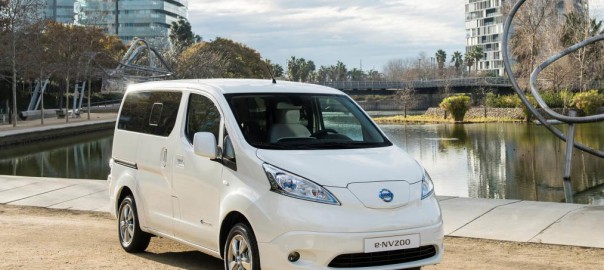
The Nissan e-NV200 electric MPV makes more sense with seven seats but is that enough to make you buy it?
Nissan isn’t only a market leader in electric cars but electric vans as well. Its e-NV200 small van has been leading the electric LCV market since December 2014, becoming a top choice for companies looking to make zero emission deliveries. Available as a panel van and a five-seat combi, there’s now a more practical people carrying version sporting seven seats.
It’s taxi companies, private hire firms, fleets and hotels Nissan is targeting with its e-NV200 7-seater as it’s these groups of people who have been haranguing Nissan to build one. Up until now they’ve had to rely on more conventional seven-seaters like the Ford Galaxy or put up with carrying just five in e-NV200 five-seater models if they wanted to be ‘green’.
…
for companies who undertake short trips, have reliable access to charging points and are committed to embracing electric motoring, the e-NV200 is in a class of its own.
Go Ultra Low, backed by several carmakers, released a humorous video on electric cars, which sometimes are described as a bit “boring”.
The main goal of the campaign is of course to raise awareness of ultra-low emission vehicles, and to encourage British motorists to consider one when choosing their next car.
https://youtu.be/WcuFcfQz4aE
“Electric cars – they’re a bit boring, aren’t they?
Why would anyone want one of those plug-in things? Meet the dad who’s about to learn that whoever you are, there’s an electric car for you. *Watch* the video to find out what makes these seven ultra low emission vehicles so desirable, practical and fun to drive.
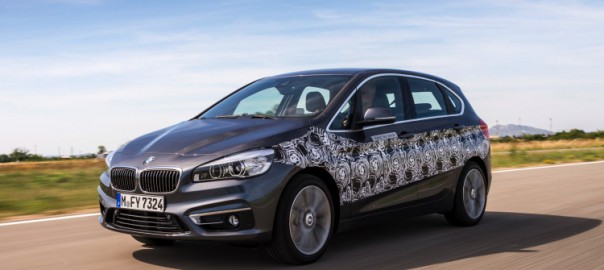
The newest niche to be conquered by BMW is filled by the 2 Series Active and Gran Tourers.
These front-wheel drive hatchbacks mark a couple of firsts for BMW, namely the front-wheel drive and transverse engine mounting. These two cars aren’t going over very well with enthusiasts, but are doing great in sales in Europe. Well, BMW has decided that the new 2 Series Active Tourer is doing well enough that it wants to give it a new model. An eDrive plug-in hybrid model.
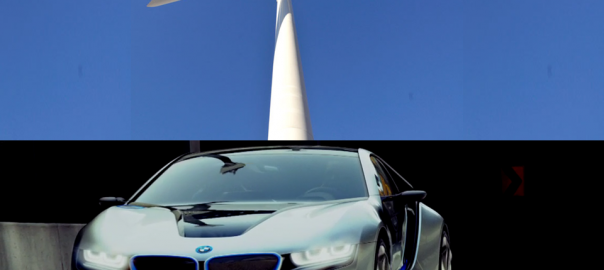
The 2 Series Active Tourer eDrive will feature BMW’s 1.5 liter three-cylinder TwinPower engine, transversely mounted powering the front wheels through a six-speed automatic, and an 88hp / 136 Nm/100 lb-ft of torque electric motor, powering the rear wheels through a two-speed transmission. This essentially makes the 2 Series Active Tourer eDrive a backwards i8, as the i8 uses a similar setup, but with the engine at the rear and motor at the front. Compared to a 225i xDrive model, this adds some 150 kg or 330 pounds. The gasoline engine produces 100 kW/136 hp and 220 Nm/162 pound-feet of torque/electric.
Like the i8, the 2 Series AT eDrive will deliver its power instantaneously, thanks to the torque fill effect of the electric motors adding power while the turbocharger gathers boost. This will shuttle the 2 Series AT eDrive from 0-62 mph in 6.5 seconds. Not bad for a front-wheel drive hybrid.