Daily Archives: December 23, 2014

Renault ZOE: Commuter Road Test – Eddie

  Eddie Pictured standing in front of the Renault ZOE

Eddie Pictured standing in front of the Renault ZOE

Retired accountant Eddie Dewson knows how to crunch numbers and make them add up, which is why he was first attracted to the Renault ZOE. A £5000 Plug-IN Car Grant from the government means the ZOE is more affordable than many of its petrol- and diesel-powered rivals, so the cost of the ZOE was already appealing to Eddie.

When Eddie then looked at the standard specification of the ZOE Dynamique Intens, it didn’t take a calculator to work out how much better kitted out the Renault is next to its rivals for the same price. He notes: ‘The ZOE has a very high spec, which includes a reversing camera and air conditioning that is excellent thanks to the powerful fan – something you need for driving in and around London.’

However, 71-year old Eddie isn’t so easily swayed by the equipment list and wasn’t a senior accountant for a global company without looking at all of the facts and figures before making his decision.

‘I was really intrigued by the possibility of charging the ZOE at home,’ says Eddie. ‘We’re lucky to have a driveway and off-street parking at home in Reigate, so having the Wallbox fitted for free made complete sense. When you look at the cost of charging the ZOE overnight with off-peak electricity, it really starts to make a big difference to running costs.’

This is a big consideration for Eddie and his wife Marie. As very active and involved grandparents, they spend a lot of time driving into London to see their kids and many of their 10 grandchildren. Initial worries about the range of an electric car were soon dismissed by Eddie as he started to drive the ZOE and he found the range on a full charge was more than enough to drive into and around London and then back home on a single charge.
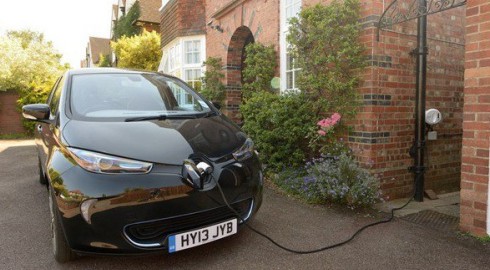
A shot of the Renault ZOE charging in front of houseA shot of the Renault ZOE charging in front of house

Eddie says: ‘Charging the ZOE couldn’t be simpler at home. Just plug in the socket and the car does the rest. In the morning, it’s ready to go and it’s great being able to step into a car that’s already at the right temperature to cope with the weather, hot or cold, thanks to the pre-conditioning offered with the ZOE.

‘I also found the range wasn’t affected much by using the air conditioning, so trips into London are easy. If I do need to top up the charge, there are loads of charging points all over London and the Renault’s R-Link made it easy to find them.’

As a keen driver, Eddie enjoyed the ZOE’s zesty performance and comments: ‘There’s surprisingly strong acceleration off the mark and the Renault is happy to cruise on the motorway too. You certainly don’t notice any lack of an engine other than how quiet the ZOE is compared to other cars. Even using the performance, though, the battery doesn’t run down and with the regenerative braking that gets a lot of use in London traffic it’s easy to maintain the range of the car. It’s also fun to drive the ZOE in any kind of conditions and on any road, so it just works as a great car regardless of what sort of power it uses.’

With the performance to Eddie’s liking, how does it fair with his grandchildren? ‘They loved it,’ smiles Eddie. ‘Not just because it’s different but because it looks good and there’s plenty of space in the back seats and boot. It’s easy to fit three kids in the back seat safely, which is perfect for taking the grandchildren out.’

Eddie also notes the ZOE’s doors open far wider than most superminis’ and says: ‘The doors are a generous size and give a large opening. This is important for me as I have restricted movement in one knee, so it’s great to be able to get in and out of the ZOE so easily.’

Along with the practical side of the ZOE, Eddie returns his accountant’s mind to the financial element: ‘When you factor in the ZOE can travel into the Congestion Zone for free, it makes a big difference to the running costs.’

Compare the ZOE to a Volkswagen Polo 1.2 TSI BlueMotion five-door, which is a car any accountant would consider a solid financial bet, the ZOE soon emerges as the winner. Using the HonestJohn Fuel Calculator for Eddie’s 10,000-mile per year driving, we can see the more expensive Polo would cost more than £2000 per year more than the ZOE with the cost of paying the Congestion Charge included. Even without this cost, it would take the Polo 18 months just recoup its higher list price next to the ZOE’s.

Those are just the sort of figures to make any accountant smile, but what really impressed Eddie the most was the overall ability of the ZOE. When it comes to the crunch, the Renault ZOE adds up.
New car road test: Renault ZOE

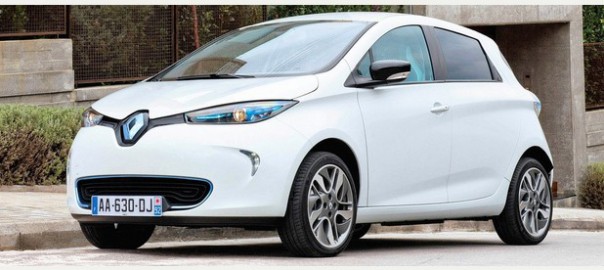
Renault’s ZOE aims to provide an affordable solution to those who quite like the idea of a practical electric car. Andy Enright reports (August 2014).

BACKGROUND

IF you’ve ever hankered after an electric car, there might have been a few impediments to an impending purchase. The first wave of electric cars looked nothing more than mobility scooters. Never a good look. Then came a second generation of vehicles that looked more like cars but which carried price tags that read like a bad joke. Electric cars were either cheap and horrible or expensive and barely adequate. Renault, with its fun Twizy lightweight city car, the Fluence Z.E. saloon and even a battery-powered Kangoo van, is looking to change that. Other manufacturers may offer an electric model, maybe two, but Renault is going all-out on this one. The best and most relevant of the lot so far looks to be its ZOE supermini.

DRIVING EXPERIENCE

The ZOE is designed for city driving so the steering has been geared to offer a smooth, effortless feel. Likewise, the throttle pedal doesn’t offer too much in the way of resistance but the brake responds to a good hoofing, which seems a little odd at first. Like all electric cars, the ZOE feels eerily quiet as it pulls away, with no discernible engine noise other than a faint whine. This usually means you’ll hear every bump and thump from the road, though Renault has done a good job on chassis refinement and the ride quality is excellent. To prevent pedestrians waltzing out in front of its silent approach, the ZOE emits a sound at low speeds but you can barely hear it at all inside the vehicle. This “Z.E. Voice” can be switched between three different sounds or completely switched off.

Handling is as good as you’d imagine for a car with such a low centre of gravity. The synchronous electric motor with rotor coil has a power output of 65kW, equivalent to 88hp, and instantly delivers maximum torque of 220Nm. Acceleration and pull-away are responsive from low speeds, while its top speed is limited to 84mph.

DESIGN & BUILD

Remember this moment, because it might just be the time that electric car technology finally flirted with the mainstream. Most people would walk past the ZOE and not take it for anything other than Renault’s latest cute little car. Rather refreshingly, its design inspiration doesn’t appear to be a Jolly Cab from Total Recall.

Instead, it’s pertly styled with a large underbumper that some have compared to the protruding lip of a surly toddler, but with its curvaceous flanks and neat one-box shape, it’s quite a good-looking thing.

The fascia is decidedly futuristic with a digital strip in place of the traditional clocks and a moulded centre stack dominated by a large colour touch screen. Some of the plastics aren’t going to give Audi designers anything much to think about but being built down to a price is very much the point of this car. It’s no bad thing. The view out is extremely good as you sit rather high but a lack of seat height adjustability might prove an issue for taller drivers. As with most superminis, space in the back is more mini than super but access is good thanks to the standard five-door layout and there’s more than enough room back there for the kids. One substantial plus point is the 338-litre boot, which extends to 1,225 litres by folding the one-piece rear bench.

MARKET & MODEL

The ZOE is offered in three trim levels – Expression, Dynamique Zen and Dynamique Intens – and all feature the multimedia system, R-Link, as standard. Drivers can control its functions without taking their eyes off the road via a 7in display, steering wheel-mounted controls and voice recognition. It also delivers integrated connectivity with motoring services and applications available from the R-Link Store.

Programmable pre-conditioning heats or cools ZOE’s cabin when the vehicle is charging, so when the driver gets into the car, the cabin is just the right temperature and battery charge is saved. As a further neat touch, this can be activated remotely via the owner’s smartphone on Dynamique Zen and Dynamique Intens versions.

The base ZOE Expression comes with an on-the-road price of around £14,000, after the Government Plug-in Car Grant deduction, while the Dynamique Zen and Intens versions cost just over £15,000. You’ll need to add battery hire to that, which comes in from around £70 per month.

Standard equipment on the Expression includes R-Link voice-controlled TomTom satellite navigation, USB input, AUX-in, SD multimedia and Bluetooth, climate control, cruise control, a Renault keycard and speed limiter function. The Dynamique Intens and Dynamique Zen models get automatic lights and wipers, a better stereo, leather trim for the steering wheel, electric rear windows and rear parking sensors. The Intens gets a rear parking sensor and a dark interior finish, whereas the Zen gets a pale interior with Teflon-coated upholstery and an active scent diffuser.

COST OF OWNERSHIP

Once you’ve paid the upfront cost of the car, you’ll still need to budget around £70 per month for the hire of the battery. This covers you for 36 months and up to 7,500 miles per year and adds just over £2,500 to the three-year costs of running the ZOE. This brings with it a bunch of its own calculations. Add the £2 per day additional electricity costs and this would buy you maybe 750 miles of travel per month in a diesel supermini, or to put it another way, more than your ZOE battery hire agreement is buying you.

Renault quotes a 130-mile range but in real-world conditions that will shrink to around 60 miles in cold weather and 90 miles when it’s a bit warmer. Three key technologies assist in giving the car a respectable range; bi-modal regenerative braking, a heat pump and Michelin Energy E-V tyres. Customers also get the clever Chameleon charger. Patented by Renault, it is compatible with all power levels from 3kW up to 43kW. Charging batteries at a charging station can take between 30 minutes and nine hours, with 80% of full battery power achieved within 30 minutes using a Rapid Charger 43kW AC power source.

Where the ZOE scores a knockout blow is if you need to travel into congestion zones. London offers 100% exemption while Westminster Council offers four hours’ free parking and a number of charging points. Renault still hasn’t fully got round the issue that most urban drivers have to leave their cars parked on the street so have no way of recharging from a home power point.

SUMMARY

The Renault ZOE is another step towards the electric vehicle becoming a genuinely practical mode of transport for the average motorist. There are still a number of caveats but most of these are due to the inherent nature of electric vehicles themselves rather than any flaw in the ZOE, which is a likeable little thing and might just be the most attractive electric vehicle currently on sale.

The ZOE is capable of most average commutes but the arithmetic still works out in favour of small diesel superminis on a pure costs basis. The gap is small, though, and many drivers will be willing to pay a small premium for the ZOE’s smooth ride, silent acceleration and feel-good vibe. If it works for you, why not?

Source: Derby Telegraph

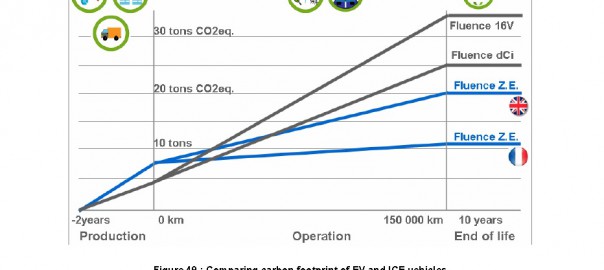
Fluence Emissions (Image: Renault)

Electric Car Life-Cycle Analysis

Renault Fluence ZE Vs Diesel, Gas Models

Fluence Emissions (Image: Renault)

The environmental impact of plug-in electric cars is a source for much debate these days. They use less energy on a wells-to-wheels carbon basis than the vast majority of new cars sold in North America, even if they’re recharged on coal-heavy electric grids.

But the manufacturing impact is greater–and the degree to which that is the case has been hotly debated for several years now. Proper life-cycle analyses of electric cars are hard to do, and expensive.

They require a great deal of careful investigation into the sources of the materials, the transportation of the raw materials and parts before they reach the assembly plant, and then the carbon impact of that assembly process.

Now, however, thanks to a tip from a reader, we’ve got a nice model of a comprehensive lifecycle analysis that compares the electric version of a car to its non-electric counterpart.

The car is the Renault Fluence ZE, the electric conversion of a French compact sedan not sold in North America. That analysis, titled “Fluence and Fluence ZE: Life Cycle Assessment” (PDF) is now three years old, but it remains an excellent model for looking at gasoline versus electric propulsion.

The Fluence ZE was developed specifically for the now-defunct Better Place project in Israel, which proposed to sell electric transportation by the kilometer, just as mobile-phone service is sold by the minute. That project collapsed into bankruptcy for a number of reasons, and the Fluence ZE is essentially a defunct model – although it lived on for a while longer in Korea as a Samsung vehicle.

But the analysis done by Renault concludes that the Fluence ZE has lower lifetime carbon emissions than either a diesel or a gasoline Fluence, not only on the French grid (which is substantially nuclear) but also the coal-heavy U.K. grid.

While the Fluence ZE is now gone, its legacy lives on in the form of an analysis – one that other automakers would do well to emulate.

Source: Green Car Reports

Renault picks up two awards at 2014 Green Apple Awards

  • Kangoo Z.E. electric van and Clio both pick up awards
  • Green Apple Awards now in their fourth year
  • 2014 is third year that Renault has won Green Apple Awards

Renault has won two environmental awards at the 2014 Green Apple Awards at a ceremony held at the Houses of Parliament in London this week.

The Renault Kangoo Z.E electric van was awarded the Green Apple Automotive Industry Bronze Award whilst the Renault Clio was named Runner Up in the Small Family Cars category.

These two accolades build on Renault’s success in previous Green Apple Awards. Last year, the Renault ZOE electric car took the Overall Winner prize as well as being named Best Small Family Car and in 2012 Renault was applauded with two awards for its commitment to zero emissions motoring.

Commenting on awarding the Kangoo Z.E. van the Automotive Industry Bronze Winner prize, a spokesperson for The Green Organisation said:

“The Renault Kangoo Z.E. Van was the market’s first all-electric light commercial vehicle. This purpose-built van has zero tailpipe emissions, is cheap to run and easy to charge. It has instant torque, making it rather quick – but at the same time very quiet and smooth to drive.”

The awards are organised by the Midlands-based The Green Organisation and were judged by members of the Midland Group of Motoring Writers.

Midland Group chairman Ian Donaldson said:

“When The Green Organisation asked us for our current green champions we wanted to go further than some other awards and look beyond the official figures and rank our favourites in the real world, taking into account how they performed in our hands.”

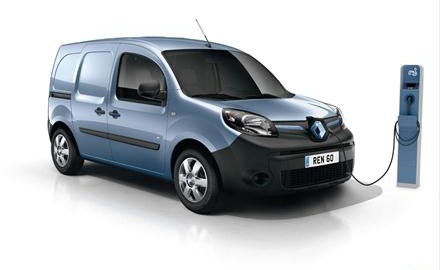
The Renault Kangoo Van Z.E. is the world’s first 100%-electric van produced directly by a mass-market vehicle manufacturer. It provides zero tailpipe emissions and silent motoring that is ideal for commercial use within urban environments. The 44kW electric motor and 22kWh lithium-ion battery provide 226Nm of torque, available from rest, which allows for smooth, linear acceleration.

The official range of 105 miles means that the vast majority of van users’ daily driving can be done on one charge. Kangoo Van Z.E. is available in four versions – Kangoo Van Z.E., Kangoo Van Maxi Z.E. (2 seats), Kangoo Maxi Crew Van Cab, and Kangoo Van Z.E. Maxi Crew Van (5 seats) – and is priced from £12,995 (+ VAT, after Plug in Van Grant) complete with a four-year/100,000-mile warranty and four years’ roadside assistance.

Putrajaya Formula E Grand Prix : Malaysian round

Malaysian round delivers great performances and on-track action

Renault Electric Show during the 2014 & 2015 Formula E championship, at Putrajaya, Malaysia (Image: Renault)
Renault ZOE Electric Show during the 2014 & 2015 Formula E championship, at Putrajaya, Malaysia (Image: Renault)

November 22: Spectacular fightbacks, fiercely-contested racing and a host of popular attractions combined to create a fantastic atmosphere at this Saturday’s Putrajaya ePrix. The second ever race in the history of the FIA Formula E Championship served to confirm the growing enthusiasm for the new racing category. In the heart of the “World’s First Intelligent Garden City”, the 20 Spark-Renault SRT01_E drivers once again put on a very high quality sporting spectacle.

Following the success of the inaugural round of the FIA Formula E Championship in Beijing in September, all of the teams and partners involved in the new series were looking for further confirmation in Putrajaya.

A key player since the start of the project, the Renault Sport teams had not rested on their laurels since the opening race. Their never-ending search for complete reliability, maximum safety and optimized architecture led them to strengthen the gearbox installation in order to meet the demands of racing on the streets of Malaysia’s administrative centre.

Mission accomplished, as once again the Spark-Renault SRT01_E race cars experienced no technical problems during this, the second ever ePrix. The single-seaters also proved to be robust and safe again, as the drivers who went off the Putrajaya circuit would confirm. The characteristics of the circuit equally enabled the drivers to show off their skills, as fans were treated to a series of closely-contested battles and incredible fightbacks throughout the 31 race laps.

Before the start, the enthusiastic crowd was thrilled by a brand-new electric vehicle on-track demo, showcasing the performances of the Renault ZE range. Many spectators also took the opportunity to test drive the brand’s flagship models, ZOE and Twizy, in the eVillage during the day.

In a dramatic, incident-packed day, Nicolas Prost (e.dams Renault) relinquished pole position to Oriol Servia (Dragon Racing), following the penalty he was given in Beijing. On lap five, Sam Bird (Virgin Racing) got past the Catalan and held the lead until he came into the pits to change cars. Third in Formula Renault 3.5 Series in 2012, the British driver retook the lead four laps from the end when he overtook Daniel Abt (Audi Sport ABT), who was on a different strategy. He went on to secure the win, ahead of Lucas di Grassi (Audi Sport ABT) and Sébastien Buemi (e.dams-Renault), both of whom had fought their way through the field from the back of the grid.

The Brazilian continues to lead the championship standings going into the next round at Punta del Este, in Uruguay, on December 13.

Kuan Kim Luen, CEO of TC Euro Cars, Renault’s sole franchise holder for Malaysia:

“Electric vehicles are set to play a key role in Renault’s development in Malaysia. What we saw today makes us proud and gives us a lot of confidence for the future. Not only did we witness a very exciting race but there was also a great performance from the two e.dams-Renault cars, which finished third and fourth! Renault, which is involved in a major EV car sharing programme, was also here with a fleet of ZOE and Twizy cars for members of the public to try out in test sessions, not forgetting the Renault Electric Show. It was without doubt a fantastic day for Renault, both on and off the track!”

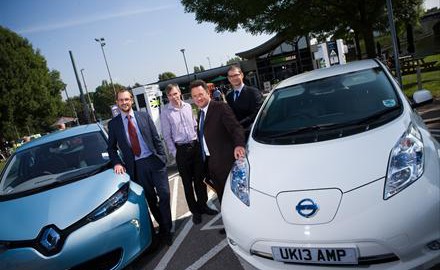
Launch of Rapid Charge Network (Image: Renault)

Renault-Nissan Alliance sells its 200,000th electric vehicle

  • Renault-Nissan EVs have driven 4 billion kilometres and enjoy 58 per cent of zero-emission global market share
  • Nissan LEAF remains best-selling EV ever; Renault led in Europe last month
  • Alliance launches monthly video series introducing electric vehicle owners from around the world sharing their personal stories with their zero-emission car

The Renault-Nissan Alliance has sold its 200,000th electric vehicle and has a leading 58 per cent market share for zero-emission cars.

Together, Renault and Nissan EVs have driven approximately 4 billion zero-emission kilometres – enough to circle the earth 100,000 times. Renault-Nissan’s EVs represent 200 million litres of fuel saved – enough to fill about 80 Olympic-sized swimming pools. Alliance EVs also represent 450 million kg of CO2 that has not been emitted while driving.

The Alliance sold its 200,000th EV in early November, about four years after the launch of the Nissan LEAF, the world’s first mass-market electric vehicle. Nissan LEAF remains the best-selling electric vehicle in history.

From January through the first week of November of this year, the Alliance sold about 66,500 EV units—an increase of about 20 per cent from the same period last year. The Alliance sells about two out of three electric vehicles worldwide, including Twizy, Renault’s two-seater urban commuter vehicle and the Nissan e-NV200 van on sale in Europe and Japan.

“Renault and Nissan’s electric vehicles are the zero-emission volume leaders – and, most important, they enjoy high satisfaction rates from customers around the world,”

said Carlos Ghosn, Chairman & CEO of the Renault-Nissan Alliance.

“Based on positive owner feedback and the increasing demand for cars that run on renewable energy, it’s no surprise that EV sales are accelerating – particularly in regions where the charging infrastructure is well developed.”

To capture what the first 200,000 consumers love about their electric vehicles, the Renault-Nissan Alliance is launching a series of videos featuring EV owners on three continents. “I Made the Switch” tells why people bought their electric vehicles and how switching to a zero-emission vehicle has changed their lives. The first video features Chris Beers, a software engineer from Holliston, Massachusetts, USA, one of many Americans who powers his Nissan LEAF with clean solar energy. To see the video, click here: www.multivu.com/players/English/7381531-renault-nissan-electric-vehicle-sales/

USA and Japan lead the world in EV ownership

In the United States, the Alliance’s biggest electric vehicle market, there are more than 750 quick chargers in operation. Nissan is working with its dealers and charging partners to increase that number to 1,100 by mid-2015. The quick chargers are able to charge a LEAF from zero to 80 per cent capacity in about 30 minutes.

This year, Nissan also launched its “No Charge to Charge” program, which provides free access to selected charging stations for two years with the purchase or lease of a new Nissan LEAF. “No Charge to Charge” is currently active in 12 U.S. markets, and Nissan plans to expand to additional markets by mid-2015.

In Japan, the Alliance’s second-biggest EV market, there are more than 2,900 quick chargers in operation. Nissan and Japan’s three other top automakers have pledged to work together to raise that number to 6,000 by March 2015.

In Europe, the UK is the most advanced market in terms of electric vehicle infrastructure. Today, the quick charging network already covers 87 per cent of the UK’s motorways.

Nissan LEAF is the world’s best-selling electric vehicle; Renault led in Europe in October

With six electric vehicle models on the road, the Renault-Nissan Alliance is the only global car group with a full range of 100 per cent electric vehicles – and they can be fully charged with purely renewable energy.

Yokohama, Japan-based Nissan has sold a cumulative 148,700 units worldwide since December 2010, when Nissan LEAF went on sale. Nissan LEAF has collected industry honors including the 2011 World Car of the Year, European Car of the Year 2011 and Car of the Year Japan 2011-2012. The electric vehicle has the highest global customer satisfaction rate for any Nissan vehicle ever.

The top markets for Nissan LEAF are the United States with about 67,000 sales since its launch, Japan with about 46,500 units and Europe with about 31,000 units.

In the United States, LEAF is on track to be the top electric vehicle in 2014, outselling all other electric and plug-in hybrid vehicles. Sales so far this year are up 35 per cent, and Nissan LEAF has enjoyed 21 consecutive record sales months and has already shattered its own yearly U.S. sales record with two months to go. In addition to LEAF, Nissan also sells the e-NV200 van, which went on sale in Europe in June and in Japan in October.

Meanwhile, Boulogne-Billancourt, France-based Renault has sold a cumulative 51,500 electric vehicles worldwide since its first model the Kangoo Z.E. went on sale in October 2011. Kangoo Z.E. was voted International Van of the Year 2012. Renault recently delivered its 5,000th Kangoo Z.E. to La Poste, France’s national postal service and operator of the country’s largest corporate fleet. An additional 5,000 units will be delivered in the coming years.

In addition to Kangoo Z.E. and Twizy, Renault’s zero-emission range also includes the ZOE subcompact and the Fluence Z.E. sedan. In South Korea, the Fluence Z.E. is sold as the SM3 Z.E. under the Renault Samsung Motor badge. Like Nissan LEAF, ZOE enjoys the highest satisfaction rate of Renault’s Global product lineup.

Renault’s top markets in Europe – its main electric vehicle market – are France, Germany and the United Kingdom. In October, Renault regained the number one EV position in Europe with a market share of 31 per cent. ZOE was the most popular vehicle with a 23 per cent market share.

About the Renault-Nissan Alliance

The Renault-Nissan Alliance is a strategic partnership between Paris-based Renault and Yokohama, Japan-based Nissan, which together sell one in 10 cars worldwide. The companies, which have been strategic partners since 1999, sold 8.3 million cars in nearly 200 countries in 2013. The Alliance also operates strategic collaborations with automakers including Germany’s Daimler, China’s Dongfeng, and India’s Ashok Leyland and has a majority stake in the joint venture which owns Russia’s top automaker, AVTOVAZ.