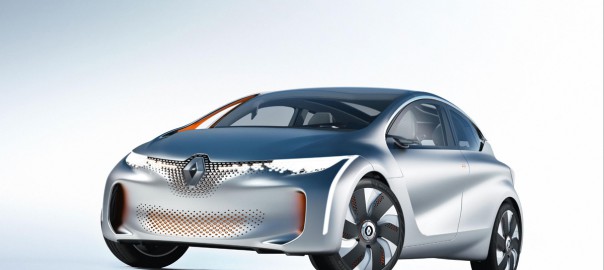

WITH 1 LITRE/100KM, EOLAB IS A SHOWCASE FOR RENAULT’S INNOVATIONS IN FAVOUR OF THE ENVIRONMENT AND RISES TO THE CHALLENGE OF ULTRA-LOW FUEL CONSUMPTION
Renault presents EOLAB, a new plug-in hybrid (PHEV) prototype which explores ways to deliver ultra-low fuel consumption. It boasts NEDC combined cycle consumption of 1 litre/100km, equivalent to 22g of CO2/km.
To achieve such low figures, the designers focused their efforts on three main areas: minimising weight, refining aerodynamics and using “Z.E. Hybrid” technology for all, a brand new initiative which permits zero emissions motoring during everyday use.
As an innovative showcase with an environmental core, EOLAB includes a very high number of technological advances that are destined to be carried over gradually to vehicles available in the showroom. As a consequence, EOLAB underlines the undertaking of Renault – already a pioneer in the field of zero-emission mobility thanks to its range of electric vehicles – to take even greater steps to produce affordable models that have an increasingly smaller carbon footprint.
Technologies geared to achieving ultra-low fuel consumption for all
For Renault, the purpose of EOLAB is to remain true to the company’s DNA by ensuring that ultra-low fuel consumption becomes a reality for as many people as possible. This in turn means making its technologies available at a price that people can afford. EOLAB features materials such as magnesium and aluminium, which are extremely light and also much cheaper than titanium. Meanwhile, the notion of such a car being produced in large numbers within the next 10 years was dialled into the plan from the very start.

100 technological advances for future Renaults
EOLAB is much more than just a styling exercise or a mere shop window. Conceived around a B-segment platform, the prototype incorporates around 100 new, realistic technological developments that are designed to be introduced gradually on upcoming Renault vehicles.
EOLAB’s recipe
The EOLAB prototype’s exceptional fuel economy – namely 1 litre/100km – is the fruit of work on three main fronts: refined aerodynamics, weight saving and Z.E. Hybrid technology (petrol/electricity):
- The car’s shape was designed to slice through air efficiently, while movable devices such as an active spoiler and lateral vanes perform the same way as ailerons.
- A weight saving programme brought the car’s mass down to just 400kg, thanks in particular to a multi-material body shell combining steel, aluminium and composites, as well as a remarkable magnesium roof that tips the scales at barely 4kg. Saving weight was a virtuous circle since it enabled the size, and therefore the cost of the prototype’s chief assemblies (engine, batt
ery, wheels, brakes, etc.) to be kept low, thereby financing the decision to employ certain more costly materials; - Z.E. Hybrid technology: this new, compact and affordable hybrid power unit combines ultra-low fuel consumption with zero-emission mobility for journeys of less than 60km and at speeds of up to 120kph. In coming years, Z.E. Hybrid technology will become complementary to Renault’s zero-emission electric vehicle range.
EOLAB Concept: a concept car to capture the imagination
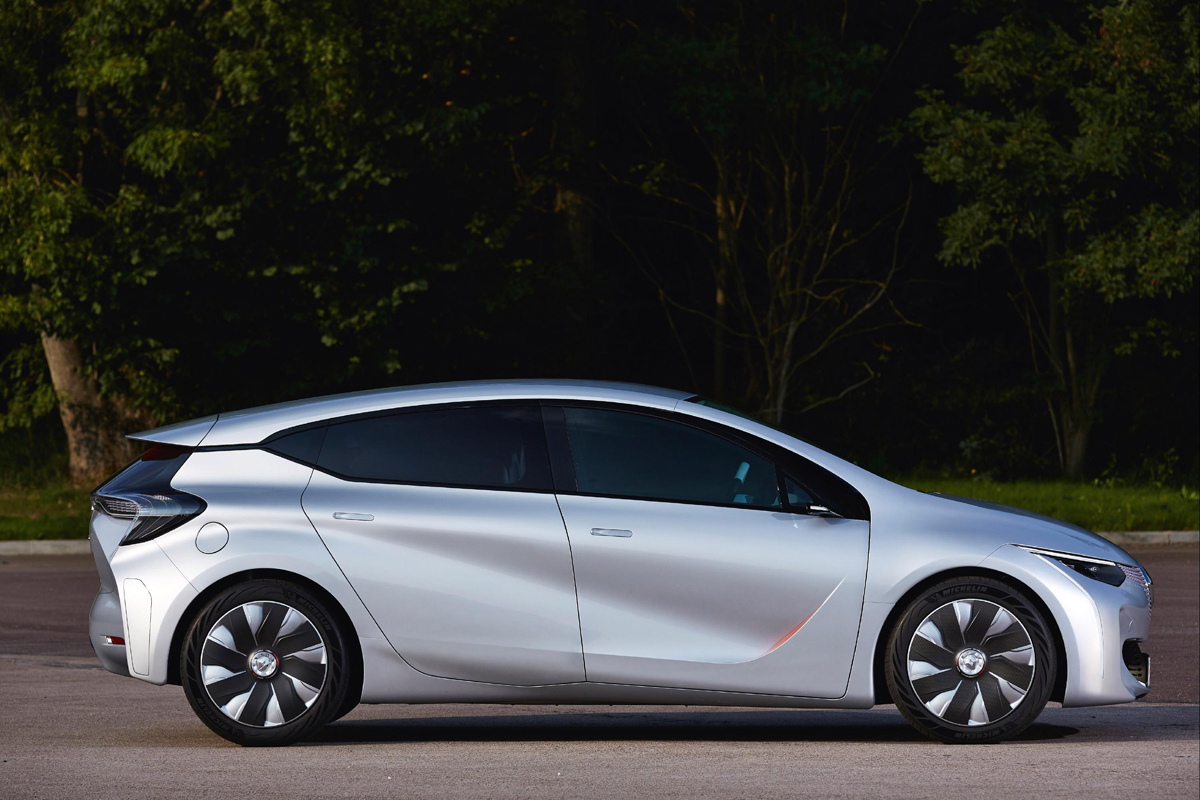
Renault’s designers were closely involved with the EOLAB project from its very early days. In the case of EOLAB Concept, they pushed the design parameters to perfect the car’s styling and paid significant attention to detail in order to optimise aerodynamics and weight. With its sloping roof and breathtakingly slender rear end, the concept car’s true purpose is well masked: beneath its seductively designed shell, everything is geared towards frugality. It demonstrates that Renault is able to add a touch of dream-like magic to a prototype whose fundamental mission is to achieve ultra-low fuel consumption.