“After experiencing first-hand the savings that my Mitsubishi Outlander PHEV, I would urge any business and company car driver to seriously consider making the change – in my opinion, it is highly unlikely that they will regret it.”
FOR quite some time, electric and plug in hybrid vehicles have been available to companies and individuals across the UK.
However, despite the ever-increasing network of charging points and leasing options that make “green” cars affordable, many businesses are still opting for combustion engined vehicles when it comes to making their choice of company car.
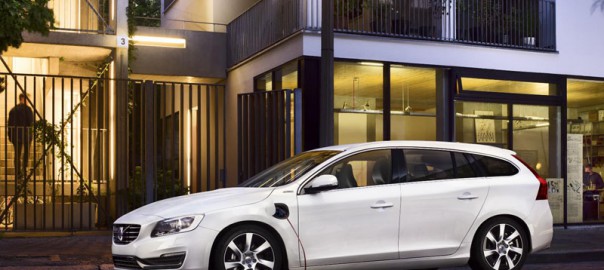
So to perhaps open the minds of staunch petrol and diesel engine buyers, we thought we’d compare electric vehicles with plug in hybrids.
The finalists for the Green Car of the Year 2015 have been announced, and what is most striking about the list is that only one of the cars is a sole electric vehicle.
Fuel efficiency has been improving year-on-year, but it is surprising to see the diesel Audi A3 TDi and Volkswagen Golf 2.0 TDI make the shortlist. Diesel engines are more fuel efficient than their petrol counterparts, but while CO2 emissions have been pushed down over time, the nitrogen dioxide given off by diesel engines has resulted in pollution levels in London that the EU has described as excessive.
The inclusion of the Honda Fit (known as Jazz in the UK) 1.5 litre Earth Dreams was a similar surprise as while it offers an estimated combined EPA MPG of 41 and clever i-VTEC (Intelligent Variable Valve Timing and Lift Electronic Control) technology to improve engine efficiency, it remains a petrol car, with all the non-green credentials that entails.
The Chevrolet Impala Bi-Fuel makes a greater claims to being green with its 3.6-litre hardened engine that can use the cleaner Compressed Natural Gas (CNG) as an alternative to fuel, with drivers able to drive for 150 miles around a city without a single drop of conventional petrol.
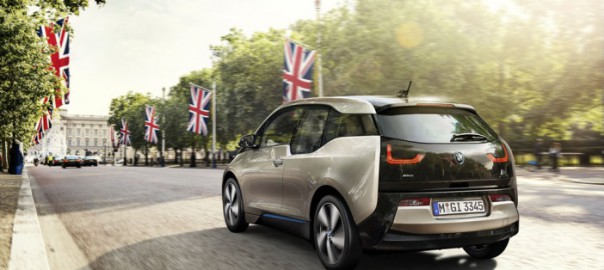
However, the only truly green car in the list is the BMW i3 that has been designed from the ground up to be a purely electric vehicle (EV). Rather than refitting an existing model, BMW used data from millions of miles driven by volunteers in its electric Minis and 1 Series to create an electric car designed for the city. The company built the car using aluminum, magnesium and CFRP to bring its weight down to 1,200kg including batteries, which allows it to cover up to 100 miles from a single charge.
Green Car Journal says that the finalists are selected for their achievements in raising the bar in environmental performance and availability to mass markets, but with the recent improvements in electric car technology the awards should exclude all diesel and petrol engines at this point. Companies such as BMW have a wide range of new cars available, and if organisations want to push other manufacturers to follow suit and build truly green EV cars, then their green credentials need to be celebrated in awards like these.
It’s a common environmentalist trope that we’re addicted to oil. The analogy is simple: Our dependence on the stuff and the inability to kick it is similar to a junkie’s addiction to dope. Naysayers to the idea will point out that unlike addicts who put substances into their body, fossil fuel abuse is just a dramatic progressive talking point and not really rooted in true addictive behavior. However, there are other addictions — porn and gambling come to mind — that don’t require the introduction of drugs or alcohol to the body either and the behavior of a drug or alcohol addict and gas-and-oil abuser are strikingly similar.
For instance, most addicts will tell that you that their drug of choice worked in the beginning. The booze or pills or dope helped mask the pain, discomfort, lack of self-esteem or any number of underlying issues with addiction. The problems began when the self-medication stopped working and caused more harm than help. A non-addict quits at that point; whereas the alcoholic or junkie continues on, often to the point of destruction.
Likewise, oil worked in the beginning. It helped build countries. It made life in rural lands and the suburbs more convenient. It kept us warm in the winter. Airplane travel made the world smaller and opened up places to the average person. Petroleum products and plastics offered a vision of a Utopian future for mankind. And then 100 years of unfiltered, barely regulated carbon and other emissions pumped into the atmosphere started to change our climate and yet, like the addict, we aren’t able to quit.
At the first sign of trouble, a lot of addicts, afraid of quitting what has worked until then, will try and control the addiction. Maybe only drink on weekends or cut back on the number of pills. Aware of the issue, the addict first try’s to mitigate the action needed to deal with the addiction, though to no avail. The disease is there and trying to outsmart it is futile.
We oil addicts do the same. We raise gas mileage requirements in cars, though not right away (50 mpg by 2025). We say we will drive less. We recycle what we can. We talk about the need go solar or be wind-powered but we continue to drill for oil and gas and jump for joy when gas prices come down (as they have recently). But, like the drug addict or alcoholic, we still use.
So how does an addict stop and stay stopped? Addiction recovery comes in many sizes and shapes though the ones that work have one basic tenet: abstinence. Whether you go to a 12-step program or try something else, the defining thing for addicts in recovery is that they don’t use anymore. Not one bit. Their addiction is a crisis, like a house on fire. And, first things first, you need to put out the fire. You can figure out how it started (and how you’re going to live clean) later. The first step is stopping.
Likewise, for oil abusers. Cutting back nominally isn’t going to cut our addiction or stop climate change. That action has to be more than gradual, more than cursory. It needs to be radical and treated like the crisis that it is. We need to stop now, completely. Subtle gestures, like recycling my coffee cup lid isn’t going to cure what ails us and waiting too long, as with any addict, spells an unpleasant result.
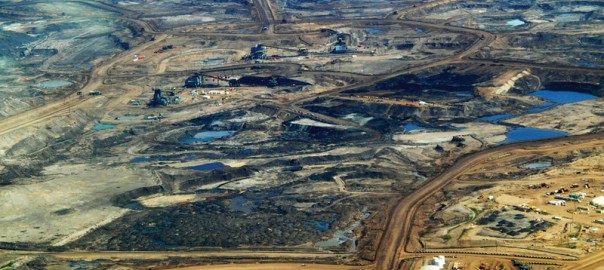
Big Oil’s days are numbered – but the industry could still take us all down with it. From divestment to disruption, Jess Worth explores how the transition to an oil-free future is being hastened.
Leave the oil in the soil! Indigenous representatives from communities resisting oil extraction all over the world marched together at the front of the recent 400,000-strong New York climate march (Image: J. Pope/Bold Nebraska)
In September 2014, the $860 million Rockefeller Foundation made an historic announcement. Timed to coincide with massive marches for climate action all over the world, the fund revealed it was going to divest from fossil fuels. Following in the footsteps of the World Council of Churches, the British Medical Association and Stanford University, the latest major institution to make such an announcement is also the most symbolic. Because the Rockefeller fortune owes its very existence to oil.
The Rockefeller story is also the story of the rise and fall of the first ‘oil major’. Standard Oil, founded by John D Rockefeller in 1870, soon came to control the burgeoning US oil industry, from extraction to refining to transportation to retail.
It built an unprecedented monopoly that ultimately became so publicly despised that the US government stepped in and broke it up – birthing Exxon, Mobil and Chevron, among others. But by then, Standard had already set the Western world on a path to oil dependence that we are still shackled to, chain-gang-style, today.
The forced break-up created the Rockefeller millions. A century later, those millions are being used to make a dramatic point: we are witnessing the beginning of the end of the oil age.
A 2013 MIT study concluded that in the United Kingdom more people suffer premature deaths from breathing in auto emissions than from auto accidents
Back in the 1980s, I interned at the EPA. An older employee told a story of a public hearing to illustrate how Americans are confused in their thinking about risk. The EPA was proposing a cleanup solution for a toxic waste dump which would reduce risk of premature death down to one in one million residents.
A local resident stood up and passionately argued that any risk was unacceptable, no matter the cost. “EPA has to reduce risk to zero,” she exclaimed to rousing applause.
Following the hearing, she went outside and lit up a cigarette – increasing her risk of premature death much greater than living next to this superfund site.
Americans are great at hating some risks and ignoring others.
One risk that we have collectively ignored is the health impact of automobile emissions.
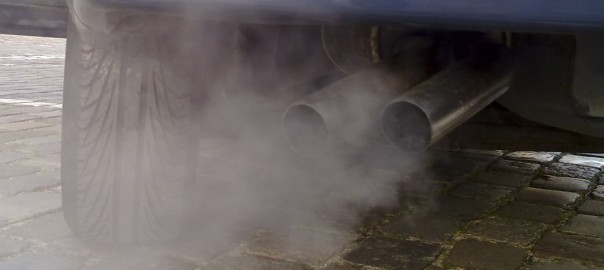
Where there is combustion, there are bi-products which severely impact the human respiratory system. These emissions can cause coughing, lung irritation, lung cancer and cardiovascular disease. They can cause or contribute to premature death in the young, the elderly and individuals with respiratory issues, such as asthma, as well as cause pulmonary problems in developing fetuses.
Cars are a significant source of these pollutants. In a number of states, including my home state of New Jersey, car and truck emissions are the largest source of air pollution – greater than the power sector or industry. And in all states, pollution is elevated close to roads. The US EPA, asserts that the concentration of Nitrogen Oxide is 30 to 100 percent greater closer to highways.
So how dangerous are these emissions? Probably greater than you think.
A 2013 MIT study concluded that in the United Kingdom more people suffer premature deaths from breathing in auto emissions than from auto accidents. Closer to home, the California Air Resource Board estimates that more than 9000 California deaths a year are caused by air pollution from cars and trucks. And the American Lung Association and Environmental Defense Fund released a study in May that argues that a transition to electric cars in California would prevent 600 heart attacks and 38,000 asthma attacks annually in that state alone.
It’s almost universally agreed now that climate change is caused by humans and it’s on track to wreak havoc on the planet.
Scientists release new studies every year (if not every month) demonstrating the effects climate change has already had on the Earth and projecting the damage it will cause in the future. Storms, droughts, floods, famines, and mass extinctions are just a few of the consequences in store for our home if humans don’t do something about the problem – and fast.
We’ve put together these charts, taken from some of these studies, to help you visualize just how real the effects of climate change are. These are just a few of the reasons you should be very, very afraid.
Nothing is left unscathed.
As this chart from the Intergovernmental Panel on Climate Change’s (IPCC’s) March 2014 working group report shows, climate change will hit everything from the polar ice caps to our bank accounts.
The colorful icons show what kinds of effects have been observed so far around the world, and the little bars next to the icons show how much confidence scientists have that the effects were caused by climate change. In the Arctic and other parts of North America, for example, scientists have high confidence that glaciers, snow, ice, and permafrost are melting due to global warming.
But warming doesn’t just impact weather: It changes the environments in which we grow our foods, changes the ecosystems in which the fish we eat live, increases the likelihood of wildfire, erodes the coastlines, and causes drought that robs populations of their water sources.
Climate Change Impacts (Image: Business Insider)
…
Sea levels will rise.
As sea ice continues to melt, all that excess water will cause sea levels to rise. This spells disaster for coastal areas, which will inevitably flood as the water level creeps up.
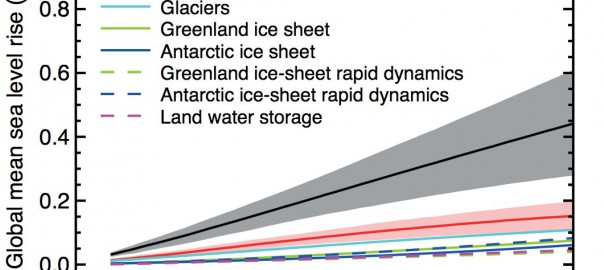
This IPCC Fifth Assessment chart shows how much sea level rise scientists expect will be caused by a variety of different factors, including the melting of large ice chunks like the Greenland and Antarctic ice sheets. The chart also factors in thermal expansion – water’s tendency to increase in volume as it gets warmer.
The gray section on the chart shows how much sea levels will rise when all of these factors are lumped together. This projection shows sea levels rising by nearly half a meter (that’s 1.5 feet) or more by 2100.
Global Mean Sea Level Rise (Image: Business Insider)
So analysts and car company leaders see a steady decline for sales of diesels here in Europe – diesels that have commanded half of the new-vehicle market for decades. We are heading into the age of the hybrid and the plug-in hybrid. That realization in Paris was without question, surreal.
I am very, very excited about my new electric BMW i3. In the interests of accurate journalism, I ought to point out that it’s still not here, despite what I said a month or two back, but that’s probably because it’s being recharged somewhere on the way from Germany. Badoom tsch!
But I’m still very excited. Why, though? Why would I be so sleepless over a car that’s going to traumatise me with this new syndrome of ‘range anxiety’, a very polite name for ‘battery tyranny’? Why, when I’ve recently driven La Ferrari LaFerrari – a car that harnesses the wonder of electricity in a very intelligent and sustainable way – am I worked up about humming around in an overpriced battery-powered aircon unit? It troubles me.
I’m taking a lot of stick about this car. A number of people have pointed out that buying an electric car but continuing to work on Top Gear is somehow not very ecological. But who said it was? I’m not interested in the ecology, I’m buying it because I’m a car enthusiast, and I’m really not going to sleep better in the knowledge that Nick Clegg is pleased with me. Quite the opposite, to be honest. Doesn’t explain why I’m jumpin’ about it, though.
Someone on Twitter was also having a pop at my credentials as a car fan. How could I deny the passion of driving, they asked?
Well, look. There’s more than one way to be excited by cars. I love daft supercars, but I also like a Rolls-Royce Ghost for its serenity and sense of detachment. A whisper-quiet electric car may expose a new facet to this thing that used to be called ‘motoring pleasure’. We’ll have to see.
I’ve said it before, but the electric car thing is a bit of a public experiment, and I’m keen to take part in it. But, having said that, I never got very excited about taking part in experiments in the chemistry lab at school, except the one where I heated up Clive Kingston’s metal ruler in a bunsen burner and then left it on his desk. So that still doesn’t explain it.
What intrigues me is that the electric car has been around almost as long as the car itself. Even within my own lifetime, it’s been kicking around on the back burner (an analogy that needs work, because obviously it would be on an electric ceramic hob) in the form of milk floats and meals-on-wheels delivery vans. But I never considered anything like that for a moment.
But all of a sudden, an electric car is a bit cool. Why? I suppose because the environmental pretence makes it quite fashionable. Driving an electric car is being the change you want to see in the world, or whatever hipsters say, and sneaking around town in complete silence, mowing down unsuspecting pedestrians, places you in that sector of society that embraces change instead of resisting it. It’s the fuzzy edge, the avant garde. And that’s me. You should see some of the shapes I throw out on the floor.
But there’s something else. For decades, an electric car was simply that – a car powered by a useless battery and an electric motor, but in every other respect just like a car. The only other thing anyone ever recharged was a toothbrush.
Now, though, we recharge everything, even vacuum cleaners, so it seems perfectly humdrum. Not only that, the act of plugging in your car has become part of the culture of being connected. It’s not just about electricity, it’s about intelligent devices.
To put it another way, an electric car used to be like Richard Hammond. You fed him some baked beans, and he carried on being another irritating Brummie bloke. Now it’s more like Professor Brian Cox. You ply him with exotic French wines, and he explains stuff about quantum physics.
This, I’ve now realised, is what it’s all about. I’m sad enough to sleep with the i3 order form next to my bed, and looking at it last night, I noticed that I’d held back on posh trim and phat alloys, and spent all my money on things like satnav, jam assist, driving assistant plus, internet capability, online entertainment, smartphone compatibility, DAB, and so on and so on. I can play computer Battleships in a traffic jam and watch YouTube clips from Battle of Britain in the privacy of my own car.
That’s why it seems to be, suddenly, a thing of wonder. It’s not really a car at all. It’s a giant iPad. Being a car is just one of its apps.