Category Archives: Opinion

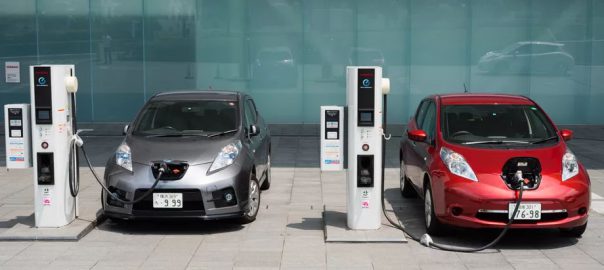
Electric cars charging in Milton Keynes (Image: T. Larkum)

The Guardian view of the car industry: an electric future

The world is moving faster than we think towards more automated vehicles powered by renewable energy

Gone are the days when cars made in Britain were British. Monday’s sale of Vauxhall/Opel to Peugeot meant only the transfer of two large English factories from the German subsidiary of an American firm to a French company, accompanied by the ritual promises that jobs would be safe. These seem insubstantial, given that the new management plans to save €1.7bn a year from the old Opel operation, while the Vauxhall factories made a heavy loss after the pound’s post-referendum slide. Yet the contortions of government policy which once accompanied threats to the car industry went quite unseen this time. But there is one small aspect of the deal in which it appears that Mrs May’s industrial strategy might be an intelligent deployment of very limited resources. The future of the car industry is clearly electric, and the development of battery technology – something the government plans to support – will be vital.

Electric cars charging in Milton Keynes (Image: T. Larkum)

Against the protectionism practised by the Chinese government, which is determined to dominate the world market, and to supplant the Japanese and Korean firms which now provide most of the world’s batteries, any effort by the British government is likely to prove inadequate. Especially a British government which has ended its own participation in the single market; but at least it is playing in the right game.

At the moment, wholly electric cars are still a tiny minority of those on the road, but their number is growing very fast as they become more affordable and more practical. Their advantages to society are obvious: they pollute far less than internal combustion engines, and use less energy too. A city of electric cars will be cleaner and quieter than our present stinking streets. And at some stage in the next decade, their advantages to private drivers will become overwhelming. The electric car will become a mainstream status symbol and it is the buyers of internal combustion vehicles who will feel like weird outsiders. The Dutch parliament has considered a measure which would make all cars sold there electric by 2025. A recent thinktank report suggests that 10 years after that a third of all the vehicles sold in the world will be electric.

New electric cars must travel further and need less time to recover from their journeys than those that can be bought today, when long journeys are still fraught with anxiety. This means lighter batteries that hold more charge and can be charged more quickly; they are appearing already and the huge amounts of global investment make it likely that progress will continue and technology will supply what the market needs.

Stepping back for a moment, the rise of electric and largely automated cars might change the world around us almost as profoundly as the internal combustion engine did. Part of this is their obvious role in transportation. All-electric traffic will be faster, reversing the trend of the last century. Lighter cars will accelerate and brake more quickly, while increasing automation will mean traffic moves more freely. If those trends continue, the private car might disappear altogether, replaced by a network of hired autonomous vehicles, at least within cities. The beginnings of this development are already visible in the reluctance of young people to learn to drive.

Less obvious, but just as important, are all the symbolic values of cars. It’s not just for Bruce Springsteen that they embody freedom, autonomy and power. The car that you own says almost as much about your social position and your aspirations as the clothes you wear. Car ownership was for much of the world a mark of status in the way that owning a horse made you a knight. The coming revolution threatens far more than the vehicle manufacturing industry. If cars do come to be valued for their usefulness, not as means of ostentation, the motor car would become only a status symbol for the rich, as useless, if still as loved, as the private horse now is.

Source: The Guardian
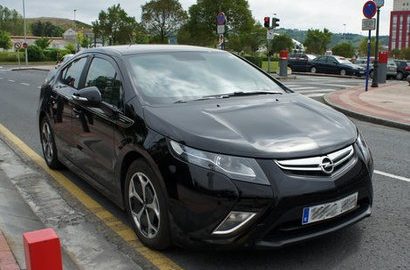
Vauxhall Ampera EREV

UK budget announcement on electric vehicles doesn’t go far enough

Specialist management consultancy Baringa Partners has responded to the UK Chancellor’s Budget announcement of support for electric vehicles (EVs) saying the support doesn’t go far enough.

Policies should be designed to support the roll-out of rapid charging access across the UK, according to Baringa. While the Chancellor’s announcement of support for the development of batteries for electric cars will go some way to alleviating customers’ fears about range, more work is needed to change the perception that electric vehicles are not as reliable as their petrol and diesel peers.

Vauxhall Ampera EREV

“The Chancellor’s announcement of funding for research into batteries for electric vehicles is a positive first step, but it doesn’t go far enough” said Natalie Bird, Senior Consultant at Baringa. ““The transport sector trails the energy and industrial sectors on decarbonisation. Despite significant uptake in electric cars since 2011, the rate of eligible vehicle registrations slowed substantially last year. Although the UK’s 2050 Greenhouse Gas target theoretically allows for later action, the combination of pressing air quality issues, consumer interest in electric vehicles and advances in self-driving technology provides a real opportunity today to kick-start the decarbonisation of the transport sector, which will reap long-term benefits.”

Ms Bird added that in these early stages, bolder policies that reduce costs and influence public perception are needed if the Government wants to see more people get behind the electric wheel. This means providing more certainty to investors, producers and consumers about the vision for the future of the market. In the longer run, the Government may need to shift the balance of policy away from direct subsidies and towards more technology neutral mechanisms such as a wider carbon tax for the transport sector, to discourage the use of conventional vehicles.

The Government should also recognise the ongoing evolution of the wider transport landscape and the potential shift away from private vehicle ownership towards greater use of ‘on-demand’ flexible modes of travel such as car sharing schemes, and ensure policies take this into account. This may be accelerated by self-driving technology, which in turn could dramatically transform road transport demand patterns, and it would be good to recognise that link in the Industrial Strategy Challenge Fund.

Source: Renewable Energy Magazine

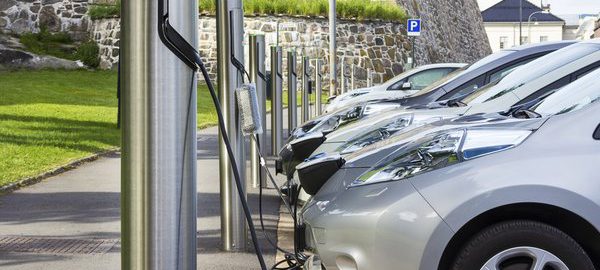
EV Charging Station (Image: Shutterstock)

We’re probably underestimating how quickly electric vehicles will disrupt the oil market

Unpredictably rapid growth happens pretty predictably

Just about every analyst agrees that the electric vehicle market is poised for rapid growth. But how rapid?

It’s not an idle question. The rate of EV growth will have huge implications for oil markets, auto markets, and electric utilities. Yet it is maddeningly difficult to predict the future; forecasts for the EV market are all over the place.

I don’t think the wide range of projections means that we’re blind here, though — I think we can make educated guesses. Specifically, I think history justifies optimism, the belief that the high-end projections (like those in a new study I discuss below) are closer to the truth.

Let’s walk through it.

EVs could do serious damage to oil — or not much

Transportation accounts for a huge portion of US carbon emissions. As recently as 2014, it was behind the electricity sector — 26 percent of US emissions to electricity’s 30 percent. But as Vox has reported, and the US Energy Information Administration (EIA) just confirmed, as of 2016, they have crossed paths. “Electric power sector CO2 emissions,” EIA writes, “are now regularly below transportation sector CO2 emissions for the first time since the late 1970s.”

This is happening because power sector “carbon intensity” — carbon emissions per unit of energy produced — is falling, as coal is replaced with natural gas, renewables, and efficiency.

The only realistic prospect for reducing transportation sector emissions rapidly and substantially is electrification. How much market share EVs take from oil (gasoline is by far the most common use for oil in the US) will matter a great deal.

EV Charging Station (Image: Shutterstock)

However, as Rice University’s Dan Cohan explains in The Hill, EV forecasts are all over the map.

The EIA’s “Annual Energy Outlook 2017” is much more bullish about EVs than in previous years — its forecast for the EV market is “nearly double its forecast from last year, and nearly 10 times its forecast from 2014.” It no longer thinks hybrids or plug-in hybrids will play a major role. It believes EVs are ready.

Read more: Vox

Ten ways the electric car revolution will transform the global economy

The world has begun a rapid switch to electric vehicles. In the first half of this year, worldwide sales were up 57 per cent to 285,000, despite low oil prices, and there are now more than 1m electric cars on the world’s roads for the first time ever.

Last February, Bloomberg New Energy Finance (BNEF) forecast that electric vehicles would account for 35 per cent of new car sales by 2040, and perhaps more under certain scenarios.

The reason for this bullishness is not just that battery costs are plummeting – down 65 per cent in the past five years – it is also that electric vehicles outperform internal combustion cars in so many key areas. They drive more smoothly and accelerate better; they can be charged without a trip to the petrol station; they require less maintenance; they help solve air quality problems; and they increase the autonomy of oil-importing countries.

The rapid uptake of electric vehicles has given established car companies a huge shock. Tesla, the upstart technological leader, expected to produce 85,000 vehicles this year, has a market value of $32bn. That’s more than half of the value of General Motors, which makes nearly 120 times as many vehicles.

All of the incumbent car companies are racing to adjust their strategies, putting electric vehicles at their heart. Volkswagen, still reeling from the “Dieselgate” scandal, is intending to invest $11.2bn over the next decade to push electric vehicles to 25 per cent of its sales.

Read the full list of ten: LinkedIn

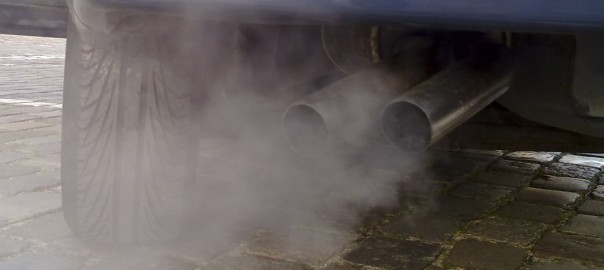
Car exhaust pollution (Image: Wikipedia)

The Solution to Air Pollution is Already Here

The overwhelming cause of air pollution in large cities is vehicle emissions (see DEFRA Website), and the answer is already here. Accelerate adoption of Electric Vehicles (EVs), including cars, buses and ancillary vehicles.

For any EV driver, you will already know that traffic jams are much less stressful than in a petrol or diesel car. Each time you stop, you just stop. You don’t produce any emissions or waste any further energy. This was a delightful and unexpected insight to me when I got my first EV; that part of the stress of a traffic jam for me was the sheer sense of waste – not only was I burning fuel but it was achieving nothing.

Car exhaust pollution (Image: Wikipedia)

A government genuinely committed to delivering clean air could achieve an enormous amount by designing fiscal “carrots” to allow serious growth of EVs to actively reduce air pollution. For example:

Come on Theresa. I know you are busy, but this is too important to leave to chance.

Source: LinkedIn

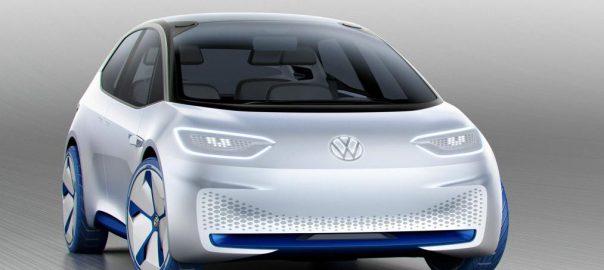
Volkswagen ID Concept electric car (Image: VW)

Hybrids ‘likely to be a passing phase’ as EV technology advances quickly

Hybrids are likely to be a passing phase in car technology that will be surpassed by electric vehicles in a matter of a few years, predicts Glass’s.

The vehicle data provider says that EV technology is advancing so quickly that a new hybrid vehicle being bought today could be effectively obsolete by the time it reaches the end of its normal life.

Volkswagen ID Concept electric car (Image: VW)

Rupert Pontin, director of valuations, said:

“Hybrids are designed to solve two of the problems that EVs have faced in recent years – high cost and low range.

“However, there are very clear signs that these issues are being resolved very quickly. For example, the revised Renault Zoe announced at Paris Motor Show has a 250-mile range and costs £17,000.

“Similarly, the new battery in the BMW i3 lasts around 190 miles and Volkswagen is claiming that its ID, which will come to market in 2020, will go up to 373 miles between charges and be priced competitively.

“The fact is that vehicles such as this effectively remove the rationale for hybrids. Within a few years, hybrids could be seen as little more than a curiosity and this will undoubtedly affect their values.”

Read more: Fleet News

Tesla Model S on charge (Image: Tesla)

Electric Cars Could Send Oil Companies Into ‘Death Spiral’

Economists and reporters have been saying that electric cars could actually kill the oil industry for a little while now, but it hasn’t made a lot of real-world impact so far. But now Fitch, an enormously influential financial ratings agency, is issuing dire warnings over electric cars.

Tesla Model S on charge (Image: Tesla)

It actually seems impossible at this point to overstate just how screwed the oil industry as we know it appears to be by electric vehicles. “Resoundingly negative,” “serious threat,” and “investor death spiral” were all actual terms used by Fitch Ratings in a report detailing the future of oil in a world of electricity, the Financial Times says:

“An acceleration of the electrification of transport infrastructure would be resoundingly negative for the oil sector’s credit profile,” says the Fitch report.

“In an extreme scenario where electric cars gained a 50 per cent market share over 10 years about a quarter of European gasoline demand could disappear.”

The “death spiral” scenario entails a situation in which nervous investors start selling all of their assets attached to oil companies, the Fitch report says, making loans more expensive, which depresses the companies’ value further, which makes investors more nervous, which makes them sell, which makes loans more expensive, which depresses the oil companies’ value further, and on and on.

The electric car could completely eliminate the oil industry, and it won’t even take a complete lack of gasoline-powered cars to do it.

Read more: Jalopnik

Red Tesla Model S (Image: T. Larkum)

What’s Driving The Move To Electric Vehicles?

Tesla may be the catalyst driving electric cars. But just about every car maker in the world is developing either an all-electric car or a hybrid vehicle that runs on both electricity and petroleum. That’s good news for the environment, especially as such vehicles approach price parity with traditional ones.

Red Tesla Model S (Image: T. Larkum)

As electric cars continue to improve, so do the efficiencies — or the ability to input a unit of energy and to realize more output. In fact, traditional cars running on an internal combustion engine have a 30 percent efficiency rate. The rest is lost to heat, sound and energy. Just refining a gallon of gasoline takes 7 kilowatts-hours per gallon, says Thor Hinckley, an electric vehicle and renewable energy expert with CLEAResult, a consulting specializing in energy efficiency.

But vehicles that run on electricity have an 80 percent efficiency rate, or they convert 80 percent of those Btus to energy, he explains. The efficiencies are greater because of the superiority of the electric motor over that of the internal combustion engine — not because one unit of energy is better than another.

“With an efficiency difference that great, anything will be cleaner than burning gasoline,” says Hinckley. Obviously, burning a Btu of wind, solar or hydro is cleaner than burning the same unit of coal. But even if coal is used to generate the electricity to drive the car, he says that emissions are 20-30 percent less than a comparable vehicle running on petroleum. That’s huge.

Read more: Forbes

Bill McKibben: The Question I Get Asked the Most

The questions come after talks, on twitter, in the days’ incoming tide of email—sometimes even in old-fashioned letters that arrive in envelopes. The most common one by far is also the simplest: What can I do? I bet I’ve been asked it 10,000 times by now and—like a climate scientist predicting the temperature—I’m pretty sure I’m erring on the low side.

It’s the right question or almost: It implies an eagerness to act and action is what we need. But my answer to it has changed over the years, as the science of global warming has shifted. I find, in fact, that I’m now saying almost the opposite of what I said three decades ago.

Then—when I was 27 and writing the first book on climate change—I was fairly self-obsessed (perhaps age appropriately). And it looked like we had some time: No climate scientist in the late 1980s thought that by 2016 we’d already be seeing massive Arctic ice melt. So it made sense for everyone to think about the changes they could make in their own lives that, over time, would add up to significant change. In The End of Nature, I described how my wife and I had tried to “prune and snip our desires,” how instead of taking long vacation trips by car we rode our bikes in the road, how we grew more of our own food, how we “tried not to think about how much we’d like a baby.”

Some of these changes we’ve maintained—we still ride our bikes, and I haven’t been on a vacation in a very long time. Some we modified—thank God we decided to have a child, who turned out to be the joy of our life. And some I’ve abandoned: I’ve spent much of the last decade in frenetic travel, much of it on airplanes. That’s because, over time, it became clear to me that there’s a problem with the question “What can I do.”

The problem is the word “I.” By ourselves, there’s not much we can do. Yes, my roof is covered with solar panels and I drive a plug-in car that draws its power from those panels, and yes our hot water is heated by the sun, and yes we eat low on the food chain and close to home. I’m glad we do all those things, and I think everyone should do them, and I no longer try to fool myself that they will solve climate change.

Because the science has changed and with it our understanding of the necessary politics and economics of survival. Climate change is coming far faster than people anticipated even a couple of decades ago. 2016 is smashing the temperature records set in 2015 which smashed the records set in 2014; some of the world’s largest physical features (giant coral reefs, vast river deltas) are starting to die off or disappear. Drought does damage daily; hundred-year floods come every other spring. In the last 18 months we’ve seen the highest wind speeds ever recorded in many of the world’s ocean basins. In Basra Iraq—not far from the Garden of Eden—the temperature hit 129 Fahrenheit this summer, the highest reliably recorded temperature ever and right at the limit of human tolerance.

July and August were not just the hottest months ever recorded, they were, according to most climatologists, the hottest months in the entire history of human civilization. The most common phrase I hear from scientists is “faster than anticipated.” Sometime in the last few years we left behind the Holocene, the 10,000 year period of benign climatic stability that marked the rise of human civilization. We’re in something new now—something new and frightening.

Read more: Ecowatch

Tesla Powerwall display (Image: T. Larkum)

Energy companies are dead already, they just haven’t realised it

“The stone age came to an end, not for lack of stones, and the oil age will end, but not for lack of oil” (Sheikh Yamani OPEC co-founder and former Saudi Arabian oil minister)

Electricity companies around the world will begin to go bankrupt by 2018, even while they generate profits. It sounds absurd doesn’t it? However, hear me out.

Tesla Powerwall display (Image: T. Larkum)

By now everyone has read the headlines. “Tesla Powerwall changes everything, electricity death spiral, energy storage revolution, the Kodak moment for electricity etc.” This was the hype of 2015.

In 2016, reality set in, many households realised a $A17,999 5kW SolarEdge system with a 7kWh Tesla Powerwall would take about 17 years to pay back. These were sobering figures considering most equipment warranties are only 10-12 years. However, in just 2 years this payback equation will be radically different. It will rock the very foundations of modern society, creating and destroying fortunes across the planet.

Read more: Renew Economy