Category Archives: News, Reviews and Comment

Jaguar I-PACE Electric Car (Image: T. Larkum)

My First Jaguar I-PACE Experience

On Friday I had my first taste of the new Jaguar I-PACE as I took my family for a test drive.

I was intrigued to see what it’s like as I think it would be fair to say that the motoring press have been raving about it, the first all-electric production car from the Jaguar Land Rover group.
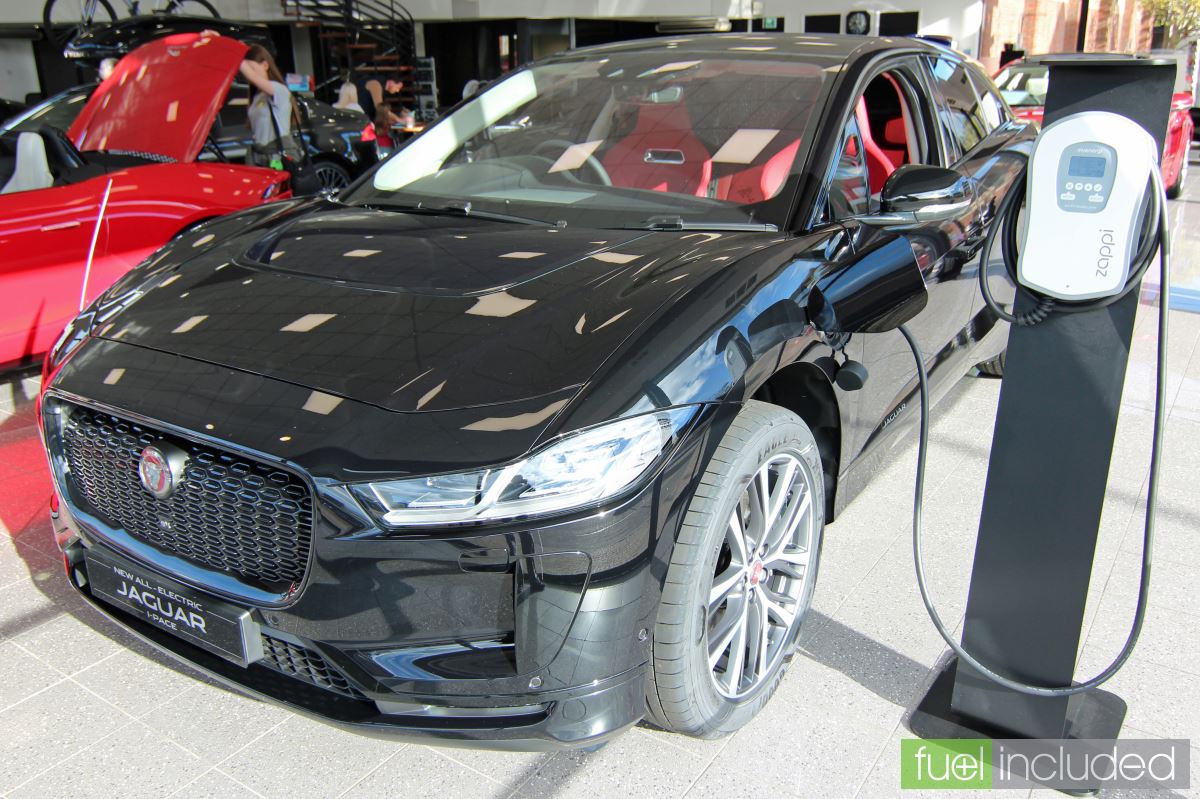
Jaguar I-PACE Electric Car (Image: T. Larkum)

It turns out it is a nice car to sit in and drive; it’s very comfortable, has a decent (though not huge) boot and lots of features. My family particularly liked the rear seat heaters, air conditioning and USB ports.

It accelerates nicely and pretty quietly, and has a decent range – somewhere between 250 and 300 miles (with the usual caveats over driving style, ambient temperature, etc). Overall a pretty good car.

However, I couldn’t help but feel a bit disappointed as I was expecting something a little more special. I guess I’m a bit spoilt, driving a BMW i3 and having driven the Tesla Model S a number of times. But it pretty much seemed like just another Jaguar but this time with an electric powertrain.
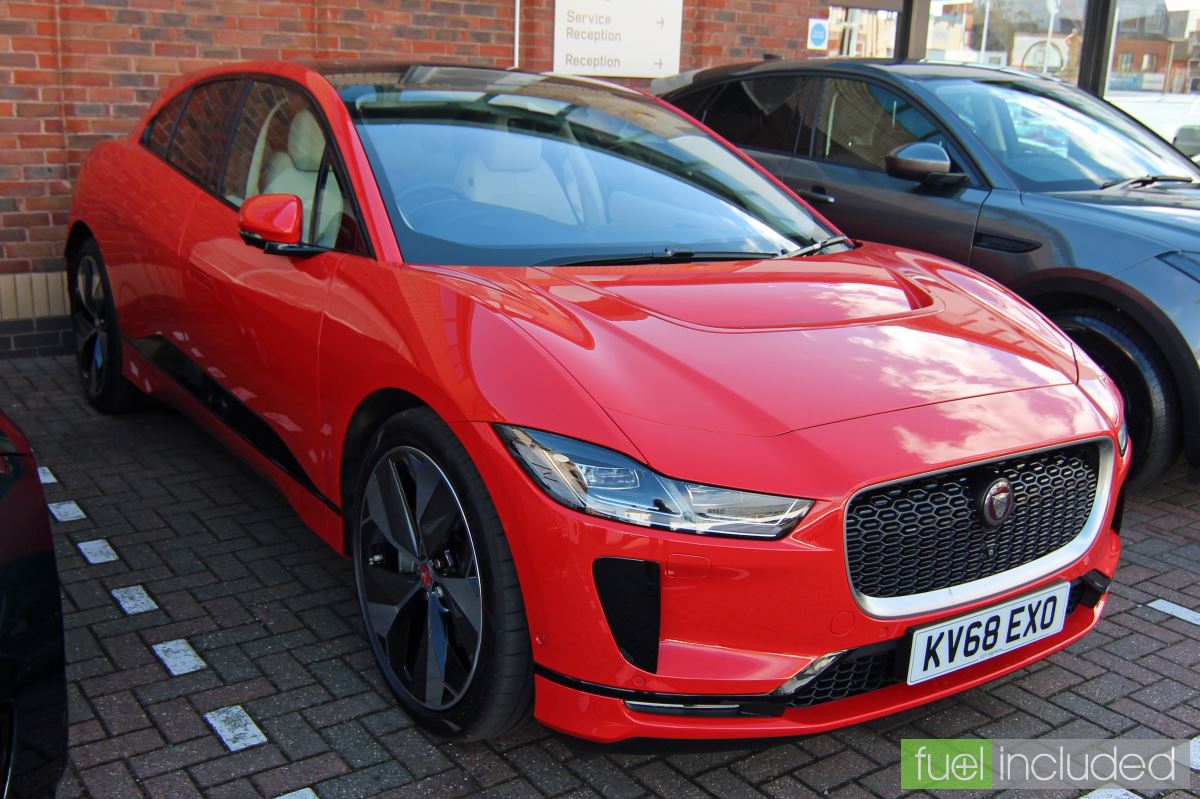
Jaguar I-PACE Electric Car (Image: T. Larkum)

While almost any car can be improved by going electric, I had hoped for a more ‘clean sheet’ design. For example, it had a huge console between the driver and passenger as though it had a gearbox and transmission tunnel, where on the i3 there is space, and a flat floor.

Anyway, if you are in the market for a Jaguar then do consider the I-PACE as it’s certainly the best Jaguar available. It has good looks, electric performance and a decent range so it’s well worth a look.

My thanks to David at Guy Salmon Jaguar Northampton for giving us the test drive.

Diesel and petrol ban should come much faster, say MPs

A ban on sales of new petrol and diesel cars should be brought forward by eight years to 2032, MPs have said.

The government’s current plans to ensure all new cars are “effectively zero emission” by 2040 were “vague and unambitious”, a report by Parliament’s business select committee said.

It also criticised cuts to subsidies and the lack of charging points.

The government said it aimed to make the UK “the best place in the world” to own an electric vehicle.

However, the report from the Business, Energy and Industrial Strategy committee said the government’s deeds did not match the ambitions of its words.

The committee’s chairwoman, Rachel Reeves MP, said the government’s targets gave “little clarity or incentive to industry or the consumer to invest in electric cars.”

‘Zero means zero’

Earlier this year the prime minister said that all new cars and vans should be “effectively zero emission” by 2040.

The government’s Road to Zero Strategy said it wanted “almost every car and van” in the UK to be zero emission by 2050. However it was unclear which, if any, hybrid models were being included.

The committee said “zero should mean zero” and called for the government to bring forward “a clear, precise target for new sales of cars and vans to be truly zero emission by 2032”.

The UK was among the top 10 countries for electric vehicle sales in 2017, and has around 14,500 public charging points. However, in its report the committee said the country was far from electric vehicle ready.

Read more: BBC

Reduce emissions or build more electric cars

The European Parliament has approved a draft law to reduce emissions of carbon dioxide from new cars by 20 per cent by 2025 and 40 per cent by 2030.

The proposal, a hard-won compromise between environmentalists and auto industry advocates, would reduce emissions from petrol and diesel cars and an increased focus on electric cars. MEPs set target of 30 per cent of new car and van sales to be electric by 2030.

One amendment passed by the parliament concerned a bonus system, whereby companies would be allowed a lower CO2 reduction target if they produced a certain proportion of electric cars.

However, if manufacturers fail to produce enough electric vehicles to meet the proposal’s benchmark, they would be obliged to reduce emissions beyond the 40 per cent target in order to compensate.

Carbon emissions from cars and vans have been a contentious subject of discussion in Europe since 2015, when Volkswagen was found to have rigged diesel engines to pass emissions tests. Many diesels were subsequently discovered to be more pollutant than had been believed. Some cities recommended banning older diesels altogether; while the Danish government recently proposed a full ban on new petrol and diesel cars by 2030.

Read more: Government Europa

How much does servicing an electric car cost – and is it cheaper?

A new study by automotive data experts Cap HPI has revealed the average servicing and maintenance costs for electric cars. It shows that EVs cost, on average, 23 percent less to run than petrol vehicles over a three-year/60,000-mile period.

For smaller cars, the gap gets wider still. An electric Renault Zoe will set you back £1,100 in servicing and maintenance over three years, but a Vauxhall Corsa 1.0 90 Design costs nearly £1,500. That’s more than 35 percent extra.

The Nissan Leaf, currently the best-selling EV in the UK, costs just under £1,200 over three years. Compare that to the VW Golf 1.0 TSI at £1,429 and you’re staring at a saving of nearly 20 percent.

The number of electric vehicles on the road has jumped by 128 percent over the past three years, with more than 21,000 drivers taking the leap between April 2015 and April 2018. Purchasing costs are still notably higher than a comparable petrol-powered car, but servicing is where you can potentially claw that back.

Read more: Motoring Research

Severe Flooding, Against a Background of Wind Turbines: November 2012, Tyringham, Bucks. (Image: T. Larkum)

We’re Absolutely Screwed Unless We Switch to Electric Vehicles

A new report from the United Nations offers a terrifying and stark forecast of the immediate consequences of climate change—far worse than previous thought, as The New York Times put it.

One particular noteworthy point offered up is a call for cities to transition to electrification, and fast.

The report, issued on Monday by the UN’s Intergovernmental Panel on Climate Change, said worsening food shortages, wildfires, and more, can be expected as soon as 2040, unless the world dramatically transforms the global economy at a speed and scale that has “no documented historic precedent,” the Times reported. How comforting.

Severe Flooding, Against a Background of Wind Turbines: November 2012, Tyringham, Bucks. (Image: T. Larkum)

Here’s more from the Times:

The report “is quite a shock, and quite concerning,” said Bill Hare, an author of previous I.P.C.C. reports and a physicist with Climate Analytics, a nonprofit organization. “We were not aware of this just a few years ago.” The report was the first to be commissioned by world leaders under the Paris agreement, the 2015 pact by nations to fight global warming.

The authors found that if greenhouse gas emissions continue at the current rate, the atmosphere will warm up by as much as 2.7 degrees Fahrenheit (1.5 degrees Celsius) above preindustrial levels by 2040, inundating coastlines and intensifying droughts and poverty. Previous work had focused on estimating the damage if average temperatures were to rise by a larger number, 3.6 degrees Fahrenheit (2 degrees Celsius), because that was the threshold scientists previously considered for the most severe effects of climate change.

Read more: Jalopnik

How to approach driving in the face of climate change

Can you be an environmentalist and still drive a car?

The question came to mind last week, when the United Nations’ Intergovernmental Panel on Climate Change released a report that gave us 12 years to stave off cataclysmic climate change. If the world’s governments, businesses and people don’t act and act dramatically, global warming could rise more than 1.5 C and cause droughts, famine, floods and heat.

It’s a dire prediction.

As a driver, it forces you to think about your culpability. The automobile, after all, is a significant contributor to climate change. The Environmental Protection Agency maintains that cars and trucks account for 14 per cent of greenhouse gas emissions. So, you can either draw up a list of “10 Cars You Should Drive Before the Apocalypse”, or you can take a hard look at what you drive, how much you drive and whether you should be driving at all.

I’ve decided to do both. Some dream drives, some environmental action. A little sweet and a little sour.

SAY NO TO THE SUV

Sport-utility vehicles are behemoth gas-guzzlers, and their ever-soaring world-wide popularity is depressing. They’ve never been to my taste. Car makers are supposed to be introducing electric SUVs in 2019. But really, does the world need the SUV that much? Can’t we get by with fewer? Looking at their sales figures, the answer is no.

DRIVE HYBRID
I’m in the market for a new car. An electric, or at the very least a hybrid, increasingly seems like the more responsible choice. Of course, the most responsible choice (environmentally speaking) would be to hole up in a cement box and live on insects, water and music. To some people, the very act of owning an automobile is an assault on our climate and the future of the planet. We could shut down the automobile sector entirely, but that would trigger a global economic collapse and social unrest that could cause – you guessed it – Armageddon. I think I’ll go electric or hybrid – maybe a Tesla Model S, Volvo XC, BMW i3 or a Camry Hybrid LE.

Read more: Globe and Mail

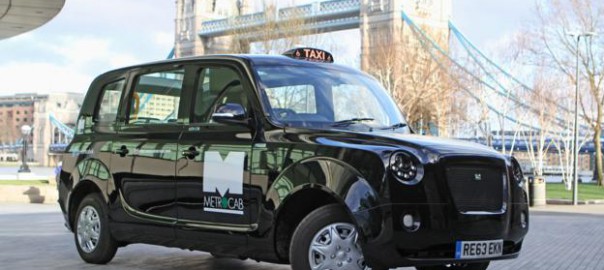
The release of the Metrocab, a battery-powered taxi capable of zero emissions, is one of the efforts to clean up the city’s transport (Image: Metrocab)

Electric vehicles halve drivers’ exposure to toxic emissions says Kings College London

Zero emission capable taxis can halve a driver’s exposure to toxic exhaust pollutants, according to new research.

The study into air quality by King’s College London’s Environmental Research Group (ERG) monitored drivers of both diesel and electric taxis, measuring particulate matter and nitrogen dioxide inside and outside of their working environments.

It found that drivers of diesel taxis are exposed to pollution levels 1.8 times higher than those driving an electric model.

The research programme, partly funded by electric taxi firm LEVC, also set out to understand whether there are certain behaviours professional drivers can adopt to minimise their exposure to air pollution.

The release of the Metrocab, a battery-powered taxi capable of zero emissions, is one of the efforts to clean up the city’s transport (Image: Metrocab)

Ten London taxi drivers took part and provided 390 hours of air pollution data.

In-vehicle concentrations were measured over a period of four full working days during summer 2018. Initial analysis found that while cab drivers face the same level of exposure to poor air quality as other commercial vehicle drivers, and experience double the exposure at work compared to outside of work, their choice of vehicle made a very significant difference.

Average exposure to nitrogen dioxide and black carbon during a standard shift was 1.8 times higher for drivers of the older diesel taxis compared to those in all-new electric cabs.

Read more: Fleet News

Renault Cements Zoe’s Bestseller Status With “Iconic” Special Edition

It’s no secret that the Renault Zoe is Europe’s best-selling electric vehicle, with more than 110,000 units sold since launching at the end of 2012.

To celebrate that sales milestone, Renault has given its electric supermini a special edition version fittingly called “Iconic.” Unveiled at the Paris Auto Show, the Zoe Iconic comes with exclusive exterior and interior features.

On the outside, the special edition EV sports a Highland Grey paintwork and, 17-inch aluminum wheels, and Iconic badges on the front fenders. Inside, the Zoe Iconic gains a grey-colored upholstery, “Iconic” sill plates, as well as a double bottom accessory for the luggage compartment that frees up loading space by storing the cables.

2018 – Renault ZOE

The Renault Zoe Iconic is available both with the new R110 electric motor or the older Q90 unit (a version of the R90 equipped for fast charging). The former produces 80 kW (109 PS/108 hp) and 225 Nm (166 lb-ft) of torque, while the latter makes 68 kW (92 PS/91 hp) and an identical peak torque.

The added power helps the Zoe equipped with the R110 motor cover the 80-120 km/h (50-70 mph) sprint two seconds faster than with the smaller unit. Conversely, the 0 to 100 km/h acceleration takes 11.6 seconds, and top speed is limited at 135 km/h (84 mph).

Read more: Car Scoops

BMW i3 120Ah (Image: BMW)

BMW to cease production of the i3 Range Extender

The i3 REx is forced into extinction in Europe due to the longer range possible from the latest pure-electric variant of BMW’s hatchback

The BMW i3 is now an electric-only model in Europe, as the range extender versions have been deleted from the line-up.

BMW i3 120Ah (Image: BMW)

The range extender, which uses a two-cylinder 650cc petrol engine to provide additional charge to the drive battery, has effectively been made redundant by the improved, longer-range pure-electric version of the i3 unveiled at this week’s Paris motor show.

The i3’s battery has been boosted to 42.2kWh from 33kWh provide 193 miles of range under new WLTP cycle. That’s 34 miles more than the older version could manage and is sufficient, according to BMW, to negate the need for the range extender version, which offered a claimed driving range of 231 miles under the outgoing, less-accurate NEDC test.

In a statement, BMW said: “The Range Extender i3 will cease production and we will only sell the pure-electric version going forward. With the gains in pure-electric range, together with the increasing availability of rapid charging facilities we believe the customer demand is shifting to an pure-electric model.”

Read more: Autocar

Denmark embraces electric car revolution with petrol and diesel ban plan

COPENHAGEN (Reuters) – Denmark has proposed a ban on the sale of new petrol and diesel cars from 2030 and hybrid from 2035, joining international efforts to promote electric-only vehicles to reduce air pollution and combat climate change.

The government has previously come under fire for increasing tax on electric cars in 2016, sending sales down from more than 3 percent of all new cars to almost zero, but now aims to follow the example being set in an increasing number of countries.

“It is a big ambition that will be hard to achieve. But that’s exactly why we need to try,”

Danish Prime Minister Lars Lokke Rasmussen told parliament on Tuesday.

The plan requires parliamentary approval to become law and will be presented to parliament next week.

Britain and France have both pledged to ban new petrol and diesel cars from 2040 in move that could hit the wealth of oil producers and transform a car industry in which global carmakers are scrambling to adapt to the brave new world of electric vehicles.

Read more: Reuters