Today, government announced details of 12 UK cities shortlisted to share £35 million of funding to promote ultra-low emission vehicles (ULEVs).
Bidding to be the UK’s first ‘Go Ultra Low Cities’, the shortlisted authorities have until 31 August 2015 to finalise their submissions, with the winning cities announced in the autumn.
Set up by The Office for Low Emission Vehicles (OLEV) and the Department for Transport (DfT), the £35 million Go Ultra Low City Scheme will deliver a step-change in the uptake of ultra-low emission vehicles. The programme will reward cities that demonstrate most potential to achieve ‘exemplar status’ – becoming internationally outstanding examples for the adoption of ULEVs in a local area.
The 12 cities and authorities shortlisted for official Go Ultra Low status and a share of the £35 million funding are: City of York Council; Department for Regional Development of Northern Ireland; Dundee City Council; Greater London Authority; Leicester City Council; Milton Keynes Council; North East Combined Authority; Nottingham City Council; Oxford City Council Sheffield City Council; West of England; West Yorkshire Combined Authority.
Minister of State for Transport Baroness Kramer said,
“This funding is an unequivocal signal from government that we are committed to making ultra-low emission vehicles a practical and viable choice for more people.
“Today’s shortlist of 12 Go Ultra Low Cities from across the country is an important part of our effort to improve air quality and establish the UK as a global leader in the uptake of low and ultra-low emissions vehicles. This can help to transform people’s quality of life in their cities and is an important step towards our 2050 vision when almost every car, bus and van in the UK will be an ultra-low emission vehicle.”
The scheme rewards cities that show how their plans could be rolled out across the UK, and how their initiatives complement other schemes in their city, such as wider transport policies like the Low Emission Bus and Taxi Schemes.
Those cities that address local air quality issues, particularly in relation to NO2 and other particulate matter, will also be considered favourably.
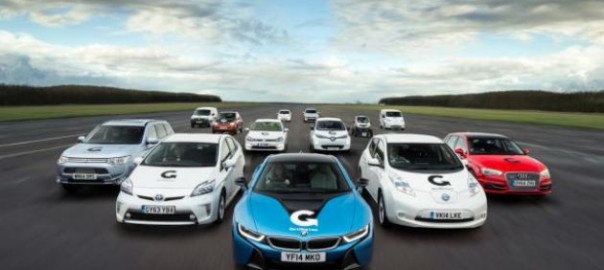
The Go Ultra Low campaign is the first of its kind, bringing together the Department for Transport (DfT), the Office for Low Emission Vehicles (OLEV), the Society of Motor Manufacturers and Traders (SMMT) and a consortium of seven car manufacturers – Audi, BMW, Mitsubishi, Nissan, Renault, Toyota and Volkswagen.
Source: Next Green Car, 11 March 2015


