Category Archives: Buying a new car

The beginner’s guide to buying an electric car

Electric cars are coming – although it’s fair to say that they’re not for everyone quite yet. The UK plans to ban the sale of new petrol and diesel vehicles from 2030, but ahead of that deadline there remains legitimate concern among buyers about how an electric car might suit their lifestyle.

Chief among these apprehensions are “range anxiety” (how far an electric car can travel before the battery needs recharging) and the state of the UK’s public charging infrastructure, while there’s also a big question mark over how long the batteries will last.

Electric car lease UK

In which case you might be forgiven for thinking that, for various reasons, electric cars (EVs) won’t catch on, but that the 2030 ban on petrol and diesel means they have to be taken seriously.

It won’t be an easy transition, but there are plenty of positives. Electric cars are easy and relaxing to drive, pleasingly swift off the mark and generally emissions-free in use. They are also generally much cheaper to run than petrol or diesel models, especially if you are able to charge them at your home using as yet untaxed electricity.

There’s a lot of misinformation concerning electric cars, much of it spewed by organisations which should really know better. Or at least do some proper research before sounding off.

Read more: msn

It’s Time to Go Green!

If you would like to know more about Solar Panels and the PowerBanx range of home battery systems, and get a free instant quote, please complete our online form:

Demand for used electric cars grows

Second-hand EV sales double in last quarter, so what’s driving used demand as new electric sales falter?

A spike in demand for used EVs has been reported by the Society of Motor Manufacturers and Traders, which says the number of pre-owned battery electric vehicles (BEVs) changing hands doubled in the third quarter of this year.

A rise of 99.9 per cent in used EV sales mean battery-electric cars have now reached a record 1.8-per cent share of the second-hand market, in part thanks to prices that have fallen due to the increasing availability of company-owned electric cars being ‘de-fleeted’. A recent report by online car retailer Auto Trader said the average price of a used BEV was around £32,000 at the end of October, with used prices for electric models appearing to stabilise at around 20 per cent below the levels recorded this time last year. Relatively cheap used-EV options range from three-year-old Renault Zoes, which are now undercutting similarly aged petrol Clios by around £500, and three-year-old Jaguar I-Pace EVs that undercut internal-combustion powered F-Pace models by almost £4,000, according to recent Auto Trader figures.


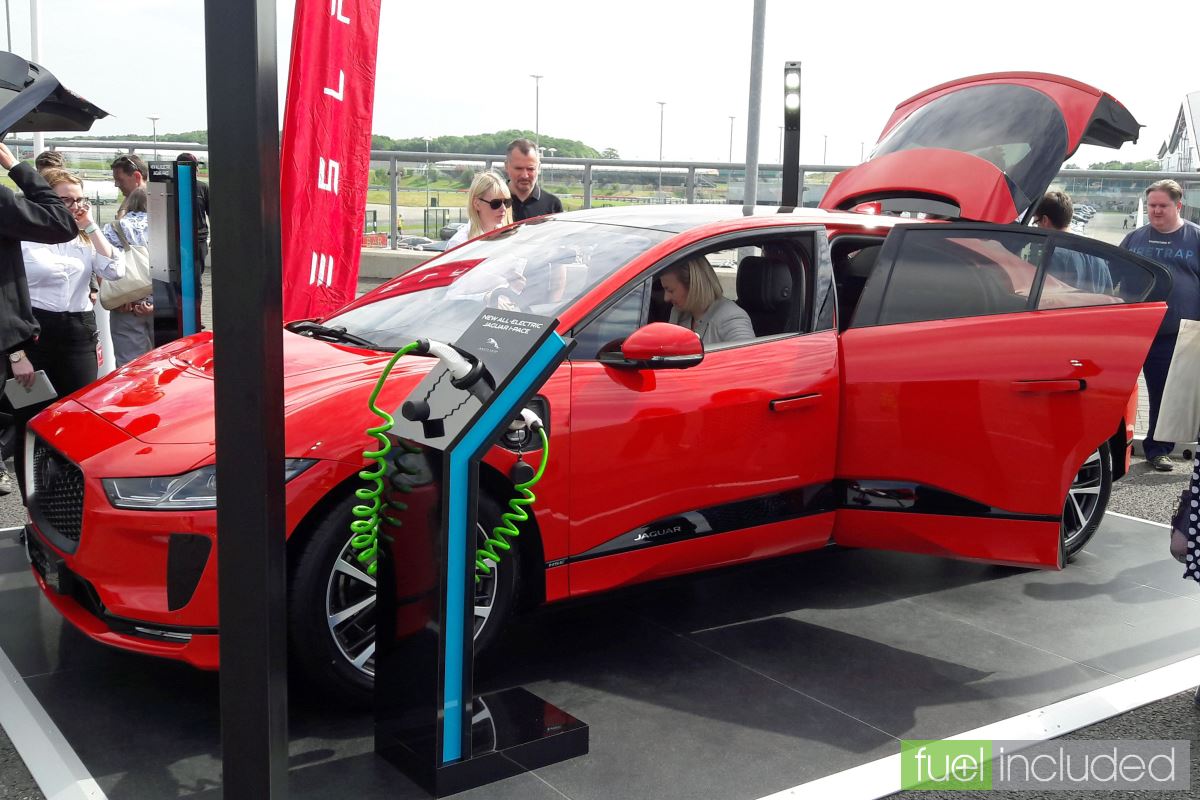
Jaguar I-PACE at Fully Charged Live show (Image: T. Larkum)

With around 750,000 EVs sold into the fleet market in the past three years now fuelling a used-EV sales mini-boom, the government’s approach of stimulating company BEV sales through large benefit-in-kind tax discounts for company drivers appears to be being vindicated as the fastest way to reduce the UK’s tailpipe emisssions.

Read more: AutoExpress

It’s Time to Go Green!

If you would like to know more about Solar Panels and the PowerBanx range of home battery systems, and get a free instant quote, please complete our online form:
Car dealers ‘already seeing drop in aftersales uptake due to increased electric car sales’

  • Car dealers are being urged to prepare for increased EV sales
  • EMaC predicts those without robust processes will risk losing aftersale revenue
  • It estimates some dealers have already seen aftersales absorption drop 50 to 60%

Car dealers are being urged to prepare for the acceleration of EV sales in 2024 by having processes in place to secure aftersales work.

EMaC, which specialises in automotive retentions, estimates that some car dealers are already seeing 50 to 60% fewer aftersales absorption rates because of increased EV sales.

Manufacturers will be facing pressure next year to ensure that more than a fifth (22%) of their cars sold are electric, which will gradually increase to 100% by 2035 under the ZEV mandate.

However, with fewer consumables in an electric vehicles, car dealers could lose out if they aren’t prepared with processes that can ensure aftersales work from each sale, said EMaC.

Serkan Obuz, EMaC director for maintenance plans, commented: ‘With EVs already accounting for one in six of all new cars sold, franchised dealers run the risk of taking a major hit to their workshop revenues unless they have processes in place ahead of the ZEV mandate.

‘Across the sector, we estimate dealers without strong retention strategies are already seeing aftersales absorption rates reducing to around 50-60% because of increased EV sales.

Read more: CarDealer

It’s Time to Go Green!

If you would like to know more about Solar Panels and the PowerBanx range of home battery systems, and get a free instant quote, please complete our online form:

Mazda MX-30 EV (Image: Mazda)

Cheapest electric cars: UK’s most affordable EVs

Tempted by an electric car, but worried about the price? Well, here we reveal the cheapest EVs on sale, and some of them are more affordable than you might think…

Electric cars are not known for their low purchase cost yet, because they’re still relatively new to our roads. However, as more cars are launched and the years go by, this is slowly starting to change.

Manufacturers are beginning to expand their horizons by producing body styles to suit the needs (and wallets) of a wider variety of buyers. This means there are now many more cars to choose from, including different sizes of electric car and electric SUV.

Some models have been on the market for several years now too, which means that there are some great discounts available.


Citroen Ami (Source: uk-mediacitroen.com)

So, which are the cheapest electric cars on sale? Here, we name the 16 cheapest cars and show you how much you can save on each of them by using our Target Price deals and our free What Car? New Car Buying service.

You can follow the links below to read our full review of each model and see our latest deals.

Read more: WhatCar

It’s Time to Go Green!

If you would like to know more about Solar Panels and the PowerBanx range of home battery systems, and get a free instant quote, please complete our online form:

Electrifying 641bhp Hyundai Ioniq 5 N is yours from £65,000

The Ioniq 5 N is the most powerful Hyundai ever, and based on the same platform tech as the Kia EV6 GT

We like the Hyundai Ioniq 5 here at Auto Express – so much so we awarded it our overall Car of the Year back when it launched in 2021. Now there’s a hotter Ioniq 5 N version, and it’s priced from £65,000.

To this point, Hyundai’s range of sporty N models consisted only of petrol models; the i20 Ni30 N and Kona N. The Ioniq 5 N is a different proposition altogether, however, with its all-electric drivetrain serving up 641bhp and 740Nm of torque.

We’ve driven the Ioniq 5 N in prototype form already and came away pleased with the car’s performance, as well as its engagement – something not many sporty EVs have managed to combine to date. Order books for the Ioniq 5 N are open now; priced from £65,000 it’s around £3,000 more expensive than its slightly less powerful Kia EV6 GT sibling.

Powered by an 84kWh battery, the Ioniq 5 N utilises a dual-motor set up to go from 0-62mph in 3.4 seconds with the car’s N Launch Control and boost mode engaged. The Ioniq 5 N tops out at 161mph.

To help optimise stability in the corners, Hyundai has given the Ioniq 5 N a clever e-LSD (limited-slip differential) in the rear motor, with a torque vectoring system that features 11 different settings.

Read more: AutoExpress

It’s Time to Go Green!

If you would like to know more about Solar Panels and the PowerBanx range of home battery systems, and get a free instant quote, please complete our online form:

Salary sacrifice drivers choose an electric vehicle to ‘save money’

Almost eight out of 10 drivers said that they chose an electric vehicle (EV) in order to save money, according to new research from Tusker.

Furthermore, 89% of EV drivers said that they were satisfied with their car, while two-thirds (66%) of petrol drivers want to order an EV in the next four years with costs a key motivator for drivers to make the switch.

Tusker says that oil prices have risen in the UK in 2023, driving the cost of petrol up to its current average of £1.56/ litre across the UK.

The current uncertainty in the Middle-East could drive prices even higher in the coming months.

Conversely, the cost of EV charging has dropped by up to 19% at peak times, and 15% for off-peak charging, says Tusker.

BMW iX3
BMW iX3

In a like-for-like comparison a driver of a VW Golf 1.5 TSI driving 10,000 miles per year would pay £1,491.39 in fuel. A VW ID3 driving the same distance would cost just £741.35 in charging, says Tusker, equating to a saving of £750.04.

Even if the ID3 driver charged exclusively at more expensive public rapid charging stations, the ID3 driver would still enjoy £255.39 in savings at the end of the same period, it added.

Paul Gilshan, CEO of Tusker, said: “Our survey has shown that our drivers value the cheaper running costs of EVs, and that value for money is a priority for many.

Read more: FleetNews

It’s Time to Go Green!

If you would like to know more about Solar Panels and the PowerBanx range of home battery systems, and get a free instant quote, please complete our online form:

A tyre company has been shortlisted for the £1m Earthshot prize

Enso Tyres’ ultra-durable compound for EVs – which helps reduce tyre emissions – recognised in climate solutions competition

The automotive industry rarely makes environmental headlines for positive reasons. But here comes a rare ray of sunshine: a tyre company has been listed for the 2023 Earthshot Prize.

Enso, a start-up company specialising in tyres for electric cars, has been recognised in the ‘Clean Our Air’ category for its work in trying to reduce particulate emissions from tyres. Enso’s approach is simple – increase tyre durability to decrease emissions (presumably at the expense of grip, although the tyres are A-rated for wet grip, so maybe something truly innovative is afoot).

Already in use in some electric taxis and delivery vehicles, trials by Transport for London suggest vehicles using Enso tyres have 35 per cent less particulate matter emissions and travel 10 per cent further.

TopGear.com has already seen them in action, helping a Renault Zoe to set a hypermiling world record back in 2021. Drive an LEVC taxi? You can buy a set of Enso tyres for £299. The rest of us will have to wait longer: Enso is hoping to be in a position to manufacture a million tyres a year by 2026.

Figures from Imperial College London suggest tyres “emit six million tonnes of pollution each year and more airborne particulate matter than all tailpipes combined”.

Read more: TopGear

It’s Time to Go Green!

If you would like to know more about Solar Panels and the PowerBanx range of home battery systems, and get a free instant quote, please complete our online form:
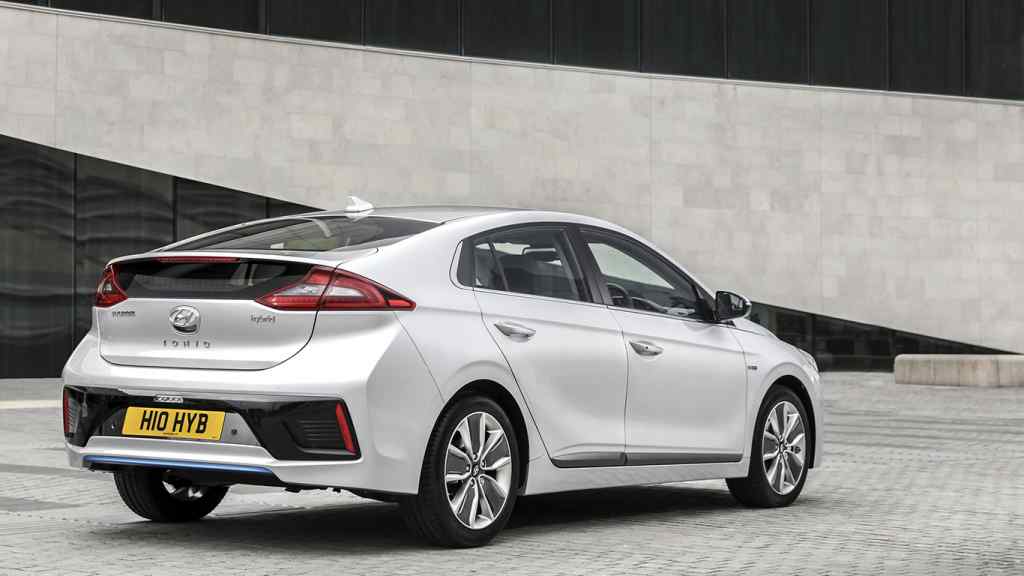
Most efficient electric cars

We crunch the numbers on the electric cars on sale today to see which come closest to hitting their advertised figures

Plenty of electric cars have impressive claimed range figures but managing to achieve them is another story. With the increasing number of EVs to choose from, buyers are hunting for the most energy-efficient electric cars to really make the most of their batteries between charges.

Electric car efficiency is measured by calculating its miles per kilowatt hour used, shortened to mpkWh. For example, a Volkswagen ID 3 with a 77kWh battery would require an efficiency of 4.5mpkWh to achieve its officially rated 347 miles of range.

Tesla Model 3 Unveil (Image: Tesla)

A vehicle’s efficiency is affected in several different ways, with aspects such as weight proving to be a key factor in positively or negatively impacting range.

The Audi Q8 E-tron, for example, is powered by a 106kWh battery, but weighs a staggering 2585kg, meaning it can deliver only around 2.9mpkWh.

Larger, SUV-style electric cars are also usually impacted more by drag, which reduces their range compared with sleeker, more aerodynamic sports cars and hatchbacks.

The range and efficiency of electric cars are also heavily influenced by the weather conditions and outside temperatures. Warmer temperatures mean a battery’s chemical reactions can occur faster and offer higher range, whereas colder weather requires more energy, reducing range.

Read more: Autocar

It’s Time to Go Green!

If you would like to know more about Solar Panels and the PowerBanx range of home battery systems, and get a free instant quote, please complete our online form:

UK EV market entering ‘new phase’, says SMMT

The Society of Motor Manufacturers and Traders (SMMT) has said that the UK electric vehicle (EV) market has now left the ‘early adopter’ phase.

The trade association stated that the UK EV market is now “entering a new phase” as it is anticipating the clean mobility solution to reach an almost 18% market share by the end of 2023.

EVs in the UK have been growing in popularity due to a number of incentives and legislation, particularly the 2030 ban on the sale of fossil fuel powered internal combustion engines (ICEs).

The result, according to SMMT, has seen more than 800,000 EVs registered – a staggering 21-fold increase since 2018 when it had a market share of 0.7%.

The electrification of fleets is said to be “leading” the transition, SMMT said, but the end of private consumer incentives is currently undermining mass market demand.

Highlighting this issue, the trade body’s research shows that two thirds of drivers want to go electric but are being held back by lack of incentives and infrastructure. However, when drivers do adopt an EV, nine in 10 state they would “never go back” to a conventionally fuelled vehicle.

One of the biggest issues in the adoption of EVs cited by SMMT is affordability and uncertainty regarding the availability of a nationwide charging network.

Read more: Current+

It’s Time to Go Green!

If you would like to know more about Solar Panels and the PowerBanx range of home battery systems, and get a free instant quote, please complete our online form:

NEW ELECTRIC PEUGEOT 3008 CROSSOVER GETS 435-MILE RANGE AND DRAMATIC STYLING

There will be hybrid power available, too

Peugeot is replacing its highly successful 3008 crossover with an all-new model with electrification to the fore. The new all-electric E-3008 model is the latest chapter in the French brand’s shift to a fully electric future, something it plans to achieve by 2030.

Helping differentiate the new 3008 from its predecessors is a fastback design featuring a sloping roofline with an integrated spoiler. This is said to funnel airflow over the rear window in a bid to reduce drag and enhance the car’s aerodynamic efficiency.

The three-claw design that has become a signature of Peugeot is seen more vividly in the new car, with LED daytime running lights forming an extension of the headlight units into the front bumper. In the E-3008 EV, the Peugeot emblem is surrounded by a mesh effect that includes body-coloured sections to blend in with the bodywork.

Three different electric powertrains

Two batteries will be available in the E-3008, starting with a 73kWh unit that will feature in the single- and dual-motor versions providing 326 miles of driving range on the WLTP test cycle. The single-motor version has up to 207bhp, reaches 62mph in 5.4 seconds from rest and a top speed of 105mph.

Peugeot will offer an all-wheel-drive version with two motors using the same battery and managing to achieve the same driving range. Peak power climbs to 315bhp, while 0-62mph in only 3.9 seconds.

Read more: Driving

It’s Time to Go Green!

If you would like to know more about Solar Panels and the PowerBanx range of home battery systems, and get a free instant quote, please complete our online form: