Category Archives: Buying/Leasing

The beginner’s guide to buying an electric car

Electric cars are coming – although it’s fair to say that they’re not for everyone quite yet. The UK plans to ban the sale of new petrol and diesel vehicles from 2030, but ahead of that deadline there remains legitimate concern among buyers about how an electric car might suit their lifestyle.

Chief among these apprehensions are “range anxiety” (how far an electric car can travel before the battery needs recharging) and the state of the UK’s public charging infrastructure, while there’s also a big question mark over how long the batteries will last.

Electric car lease UK

In which case you might be forgiven for thinking that, for various reasons, electric cars (EVs) won’t catch on, but that the 2030 ban on petrol and diesel means they have to be taken seriously.

It won’t be an easy transition, but there are plenty of positives. Electric cars are easy and relaxing to drive, pleasingly swift off the mark and generally emissions-free in use. They are also generally much cheaper to run than petrol or diesel models, especially if you are able to charge them at your home using as yet untaxed electricity.

There’s a lot of misinformation concerning electric cars, much of it spewed by organisations which should really know better. Or at least do some proper research before sounding off.

Read more: msn

It’s Time to Go Green!

If you would like to know more about Solar Panels and the PowerBanx range of home battery systems, and get a free instant quote, please complete our online form:

Demand for used electric cars grows

Second-hand EV sales double in last quarter, so what’s driving used demand as new electric sales falter?

A spike in demand for used EVs has been reported by the Society of Motor Manufacturers and Traders, which says the number of pre-owned battery electric vehicles (BEVs) changing hands doubled in the third quarter of this year.

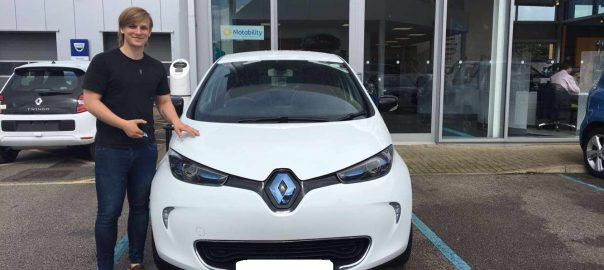
A rise of 99.9 per cent in used EV sales mean battery-electric cars have now reached a record 1.8-per cent share of the second-hand market, in part thanks to prices that have fallen due to the increasing availability of company-owned electric cars being ‘de-fleeted’. A recent report by online car retailer Auto Trader said the average price of a used BEV was around £32,000 at the end of October, with used prices for electric models appearing to stabilise at around 20 per cent below the levels recorded this time last year. Relatively cheap used-EV options range from three-year-old Renault Zoes, which are now undercutting similarly aged petrol Clios by around £500, and three-year-old Jaguar I-Pace EVs that undercut internal-combustion powered F-Pace models by almost £4,000, according to recent Auto Trader figures.


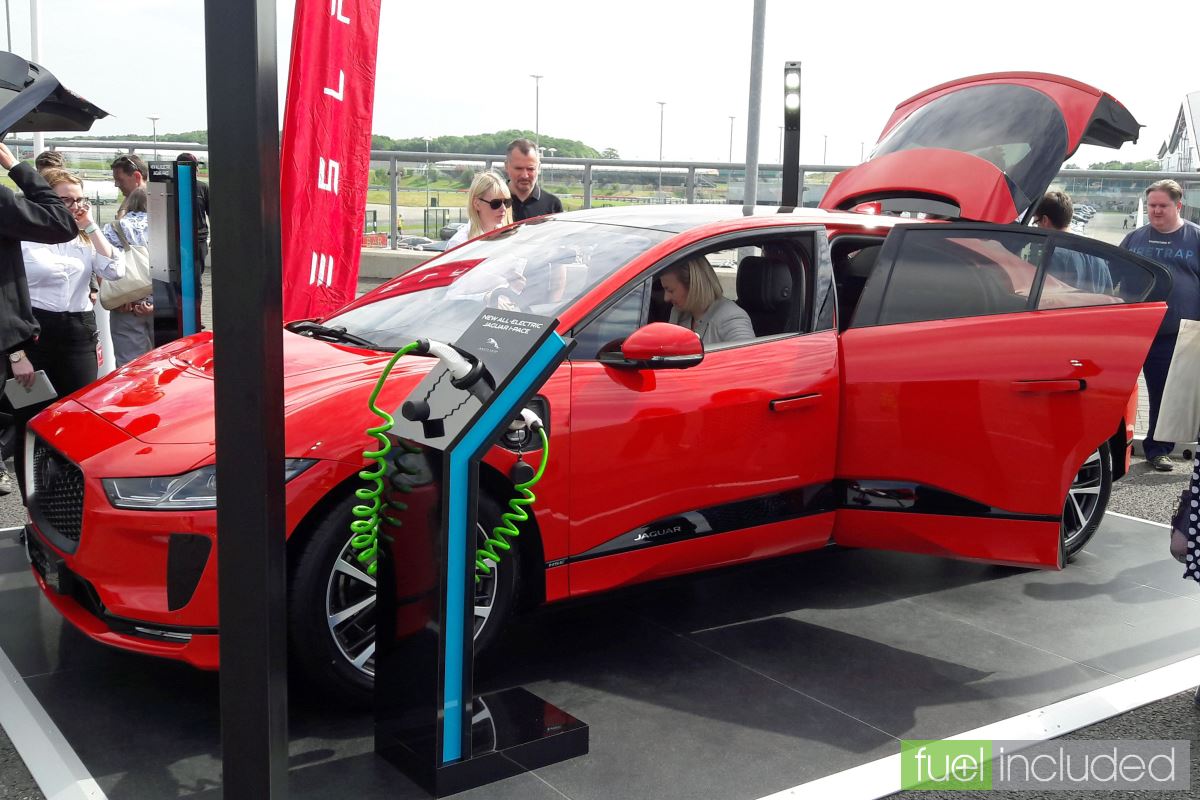
Jaguar I-PACE at Fully Charged Live show (Image: T. Larkum)

With around 750,000 EVs sold into the fleet market in the past three years now fuelling a used-EV sales mini-boom, the government’s approach of stimulating company BEV sales through large benefit-in-kind tax discounts for company drivers appears to be being vindicated as the fastest way to reduce the UK’s tailpipe emisssions.

Read more: AutoExpress

It’s Time to Go Green!

If you would like to know more about Solar Panels and the PowerBanx range of home battery systems, and get a free instant quote, please complete our online form:
Car dealers ‘already seeing drop in aftersales uptake due to increased electric car sales’

  • Car dealers are being urged to prepare for increased EV sales
  • EMaC predicts those without robust processes will risk losing aftersale revenue
  • It estimates some dealers have already seen aftersales absorption drop 50 to 60%

Car dealers are being urged to prepare for the acceleration of EV sales in 2024 by having processes in place to secure aftersales work.

EMaC, which specialises in automotive retentions, estimates that some car dealers are already seeing 50 to 60% fewer aftersales absorption rates because of increased EV sales.

Manufacturers will be facing pressure next year to ensure that more than a fifth (22%) of their cars sold are electric, which will gradually increase to 100% by 2035 under the ZEV mandate.

However, with fewer consumables in an electric vehicles, car dealers could lose out if they aren’t prepared with processes that can ensure aftersales work from each sale, said EMaC.

Serkan Obuz, EMaC director for maintenance plans, commented: ‘With EVs already accounting for one in six of all new cars sold, franchised dealers run the risk of taking a major hit to their workshop revenues unless they have processes in place ahead of the ZEV mandate.

‘Across the sector, we estimate dealers without strong retention strategies are already seeing aftersales absorption rates reducing to around 50-60% because of increased EV sales.

Read more: CarDealer

It’s Time to Go Green!

If you would like to know more about Solar Panels and the PowerBanx range of home battery systems, and get a free instant quote, please complete our online form:

Mazda MX-30 EV (Image: Mazda)

Cheapest electric cars: UK’s most affordable EVs

Tempted by an electric car, but worried about the price? Well, here we reveal the cheapest EVs on sale, and some of them are more affordable than you might think…

Electric cars are not known for their low purchase cost yet, because they’re still relatively new to our roads. However, as more cars are launched and the years go by, this is slowly starting to change.

Manufacturers are beginning to expand their horizons by producing body styles to suit the needs (and wallets) of a wider variety of buyers. This means there are now many more cars to choose from, including different sizes of electric car and electric SUV.

Some models have been on the market for several years now too, which means that there are some great discounts available.


Citroen Ami (Source: uk-mediacitroen.com)

So, which are the cheapest electric cars on sale? Here, we name the 16 cheapest cars and show you how much you can save on each of them by using our Target Price deals and our free What Car? New Car Buying service.

You can follow the links below to read our full review of each model and see our latest deals.

Read more: WhatCar

It’s Time to Go Green!

If you would like to know more about Solar Panels and the PowerBanx range of home battery systems, and get a free instant quote, please complete our online form:

Electrifying 641bhp Hyundai Ioniq 5 N is yours from £65,000

The Ioniq 5 N is the most powerful Hyundai ever, and based on the same platform tech as the Kia EV6 GT

We like the Hyundai Ioniq 5 here at Auto Express – so much so we awarded it our overall Car of the Year back when it launched in 2021. Now there’s a hotter Ioniq 5 N version, and it’s priced from £65,000.

To this point, Hyundai’s range of sporty N models consisted only of petrol models; the i20 Ni30 N and Kona N. The Ioniq 5 N is a different proposition altogether, however, with its all-electric drivetrain serving up 641bhp and 740Nm of torque.

We’ve driven the Ioniq 5 N in prototype form already and came away pleased with the car’s performance, as well as its engagement – something not many sporty EVs have managed to combine to date. Order books for the Ioniq 5 N are open now; priced from £65,000 it’s around £3,000 more expensive than its slightly less powerful Kia EV6 GT sibling.

Powered by an 84kWh battery, the Ioniq 5 N utilises a dual-motor set up to go from 0-62mph in 3.4 seconds with the car’s N Launch Control and boost mode engaged. The Ioniq 5 N tops out at 161mph.

To help optimise stability in the corners, Hyundai has given the Ioniq 5 N a clever e-LSD (limited-slip differential) in the rear motor, with a torque vectoring system that features 11 different settings.

Read more: AutoExpress

It’s Time to Go Green!

If you would like to know more about Solar Panels and the PowerBanx range of home battery systems, and get a free instant quote, please complete our online form:

Salary sacrifice drivers choose an electric vehicle to ‘save money’

Almost eight out of 10 drivers said that they chose an electric vehicle (EV) in order to save money, according to new research from Tusker.

Furthermore, 89% of EV drivers said that they were satisfied with their car, while two-thirds (66%) of petrol drivers want to order an EV in the next four years with costs a key motivator for drivers to make the switch.

Tusker says that oil prices have risen in the UK in 2023, driving the cost of petrol up to its current average of £1.56/ litre across the UK.

The current uncertainty in the Middle-East could drive prices even higher in the coming months.

Conversely, the cost of EV charging has dropped by up to 19% at peak times, and 15% for off-peak charging, says Tusker.

BMW iX3
BMW iX3

In a like-for-like comparison a driver of a VW Golf 1.5 TSI driving 10,000 miles per year would pay £1,491.39 in fuel. A VW ID3 driving the same distance would cost just £741.35 in charging, says Tusker, equating to a saving of £750.04.

Even if the ID3 driver charged exclusively at more expensive public rapid charging stations, the ID3 driver would still enjoy £255.39 in savings at the end of the same period, it added.

Paul Gilshan, CEO of Tusker, said: “Our survey has shown that our drivers value the cheaper running costs of EVs, and that value for money is a priority for many.

Read more: FleetNews

It’s Time to Go Green!

If you would like to know more about Solar Panels and the PowerBanx range of home battery systems, and get a free instant quote, please complete our online form:

Tips for buying a used EV: Experts say electric is now the fastest selling second-hand fuel type with prices hitting ‘rock bottom’

  • September saw an end to a year of plunging EV values – experts say it could be a ‘turning point’ for prices
  • Demand is showing signs of recovery because prices are now so low that they’ve become more affordable
  • These are the year-old EVs that are cheaper than their petrol equivalents. Five used EV buying tips below 

With electric car values plummeting in the last 12 to 18 months, experts say that used prices have crashed so low that drivers are starting to snap them up quicker than second-hand petrol and diesel models.

This is Money has been tracking the falling value of electric vehicles (EVs) since the downward spiral began towards the end of 2021 – recently revealing the 30 battery models worst hit that have shed between 30 per cent and 50 per cent of their value in one year.

But now businesses monitoring the second-hand market say used EV prices have bottomed out – and ultimately aren’t expected to drop much lower.

With prices at rock bottom – and in some cases now cheaper than petrol alternatives – could you be tempted to make the switch? If so, we have tips you need to follow when hunting for a second-hand EV.


Cap Hpi, which analyses the used vehicle market, says that values across all fuel types fell by 1.9 per cent – an average of £420 – from August to September, based on three-year-old models with 60,000 miles on the clock.

Read more: ThisisMoney

It’s Time to Go Green!

If you would like to know more about Solar Panels and the PowerBanx range of home battery systems, and get a free instant quote, please complete our online form:
What is the ZEV Mandate?

New legislation being implemented in 2024 will require car manufacturers to meet targets for new electric car sales, which could result in big discounts being available…

In September 2023, the UK Government announced that the ban on the sale of new petrol and diesel cars would be pushed back from 2030 to 2035.

However, at the same time, it confirmed that the Zero-Emission Vehicle (ZEV) Mandate that was previously only a proposal would be implemented from 2024. And this could mean that the transition to electric cars still happens quite quickly.

Here’s everything you need to know about the mandate – and how it could potentially save you a lot of money on an electric vehicle (EV).

What is the ZEV mandate?

The ZEV Mandate is a legal requirement for car manufacturers to meet targets for new EV sales in the UK.

This means that in 2024, 22% of cars sold by each manufacturer must be fully electric. This will then rise to 28% in 2025, 33% in 2026, 38% in 2027, 52% in 2028, 66% in 2029 and 80% in 2030.

The Government is still finalising the targets between 2030 and 2035. However, it’s rumoured that the mandate will rise to 84% in 2031, 88% in 2032, 92% in 2033, 96% in 2034 and 100% in 2035.

If car makers exceed their EV annual sales targets, they can bank allowances for use in future years or trade them with other firms that have fallen short. In 2024, manufacturers can borrow up to 75% of their annual target.

Read more: WhatCar

It’s Time to Go Green!

If you would like to know more about Solar Panels and the PowerBanx range of home battery systems, and get a free instant quote, please complete our online form:

The world needs cheap electric cars. That spells trouble for big carmakers

In 1913, Henry Ford’s moving assembly line transformed carmaking. Ford’s groundbreaking innovation drastically reduced the time it took to assemble a car, enabling mass production and slashing vehicle prices.

More than a century later, carmaking is undergoing a similarly seismic shift. Only this time, Ford Motor Company (F) is scrambling to catch up, rather than leading the charge.

Electric vehicles represent a fundamental shift in the technologies and manufacturing processes that have turned Ford and rivals such as Toyota (TM) and Volkswagen into the biggest car companies on the planet.

Established automakers have been racing to adapt at an enormous financial cost, but are still miles behind Tesla (TSLA) and a crop of new Chinese competitors, including BYD and Xpeng (XPEV).

The world needs affordable EVs more than ever as electric cars will play a big role in hcelping countries cut planet-heating pollution. But can automakers in Europe and the United States — where governments are already planning to ban or limit the sale of new gas and diesel cars — deliver them?

“Ultimately, some of these car companies that have been the cornerstone of how we’ve thought about cars for the last 100 years will be a fraction of their size in future,” said Gene Munster, a managing partner at Deepwater Asset Management.

Read more: CNN

It’s Time to Go Green!

If you would like to know more about Solar Panels and the PowerBanx range of home battery systems, and get a free instant quote, please complete our online form:

New AutoMotive: Why we’re refusing to throw in the towel and get the UK back on track to 2030

Last week, Rishi Sunak confirmed that he will reverse certain green targets. Amongst several policies that Sunak was willing to cut or delay, the phase out of petrol and diesel cars was put on the chopping block, with a confirmed five-year delay despite the [Conservative] government’s original target.

This move is not only unpopular with motorists, industry, and the wider public – it also raises economic concerns and threatens vital aspects of Britain’s industrial strategy moving forward.


From January 2018, no more new diesel taxis will be licensed in London

Electric vehicles are undeniably cheaper to run, contribute to improved air quality due to their lack of tailpipe emissions, and are increasingly preferred by drivers over their combustion counterparts. Our data at New AutoMotive shows that the UK could achieve an 85% electric vehicle (EV) market share by 2028 and is making consistent progress toward the goal of 300,000 public charge points. The UK is also the fifth best prepared nation for the EV transition, thanks to sensible and fact-driven policies implemented by Sunak’s predecessors.

Reacting to the news, the UK motor industry has criticised plans to water down policies. Kate Brankin, the chair of Ford UK, noted that the industry has already made considerable investments to meet the 2030 deadline, with a $50 billion commitment from Ford alone.

We were clear in our response that delaying the 2030 deadline would pull the rug out from under motorists and industry, and would deal a hammer blow to the UK’s leadership on climate change.

Read more: Current+

It’s Time to Go Green!

If you would like to know more about Solar Panels and the PowerBanx range of home battery systems, and get a free instant quote, please complete our online form: