Category Archives: Electric Vans

News and reviews of electric vans (including plug-in hybrids).

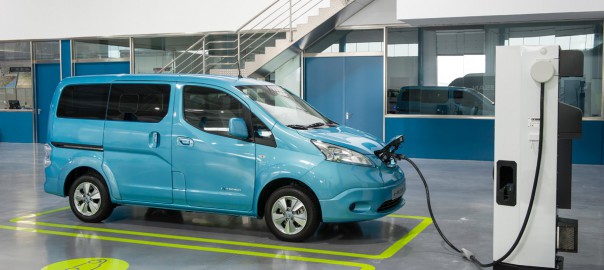
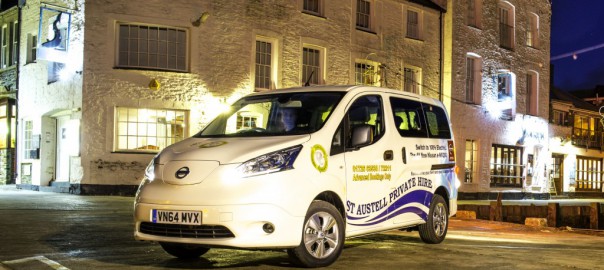
C&C's Nissan e-NV200 Electric Taxi (Image: Nissan)

Taxi company hails new Nissan e-NV200

https://www.youtube.com/watch?v=1sMsAzT1G50

A PIONEERING Cornwall taxi company has taken delivery of one of the first all-electric Nissan e-NV200 Combi models to arrive in the UK.

St Austell-based C&C Taxis added the award-winning van to its six-strong fleet of 100% electric Nissan LEAFs earlier this month.

The five-seater Combi – Next Green Car’s LCV of the Year – has since clocked up more than 1,000 miles across the Duchy.

Already C&C’s fleet manager, Mark Richards, is sure the company’s onto another winner, calculating that, just like each LEAF on the fleet, the e-NV200 Combi will save £10,000 in fuel bills per year.

And the additional versatility and practicality the e-NV200 Combi – added to the LEAF’s winning formula of low cost, zero emissions motoring – has convinced him to commit to a long-term strategy of phasing out the company’s remaining diesel vehicles and replacing them all with EVs.

Mark said: “We’ve had such great success with our LEAFs we decided we were going to buy an e-NV200 the minute we learnt it was going to be launched.

“Now we have one, we’re absolutely delighted with it. It does everything the LEAF does but is much bigger and offers more space.”

“We’ll definitely be ordering more.”

Priced from £17,855 – incorporating £5,000 Government Plug-in Car Grant (PICG) – the e-NV200 Combi is capable of covering 106 miles on a single charge and can be charged from zero to 80% full in as little as 30 minutes.

Meanwhile, running costs are as low as two pence per mile and users also benefit from low maintenance costs that make for unrivalled total cost of ownership – £1,200 lower than a conventional diesel van over four years.

Source: Nissan Insider

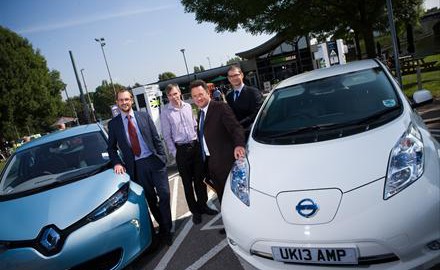
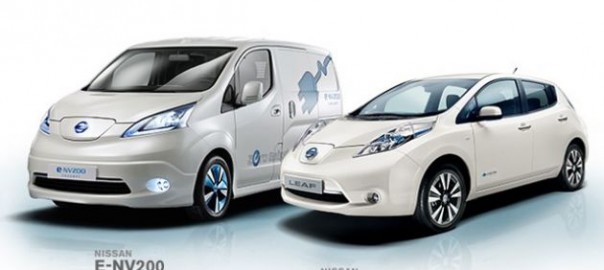
Nissan e-NV200 electric van and Leaf electric car (Image: Nissan)

Nissan – ULEV manufacturer of the year

Nissan has been named Ultra Low Emission Vehicle (ULEV) Manufacturer of the Year at the Energy Saving Trust’s Fleet Hero Awards.

The brand picked up the honour for its ongoing leadership of the ULEV sector in the face of growing competition from other carmakers.

The awards judges were impressed that the pioneering 100 percent electric Nissan LEAF – the world’s bestselling electric car – is becoming ever more popular with fleet operators and business car drivers everywhere.

And they applauded Nissan’s continued commitment to electric vehicle technology with the launch earlier this year of the all-electric e-NV200 van, a vehicle with the potential to revolutionise the commercial vehicle sector.

Next Green Car were equally impressed with the e-NV200 which won the Next Green Car Awards LCV category earlier this year.

Philip Sellwood, chief executive of the Energy Saving Trust, said:

“The Fleet Hero Awards is one of the key events on the sustainable transport calendar and they go from strength to strength each year.

“This year’s winners show just what is possible for running efficient fleets and supplying innovative products and services. They are the pioneers setting the standards for others to follow.”

Receiving the award at a ceremony at the Institute of Directors in London, Barry Beeston, Corporate Sales Director at Nissan Motor (GB), said:

“We are absolutely delighted to have been honoured in this way by the Energy Saving Trust.

“The LEAF and the e-NV200 have picked up dozens of industry awards between them but this award is particularly special as it recognises the contribution Nissan has made to the success of electric vehicles in the UK and our ongoing commitment to providing the fleet sector with desirable and practical vehicles which offer a simple and cost effective solution to lowering emissions.”

Source: Next Green Car

Renault picks up two awards at 2014 Green Apple Awards

  • Kangoo Z.E. electric van and Clio both pick up awards
  • Green Apple Awards now in their fourth year
  • 2014 is third year that Renault has won Green Apple Awards

Renault has won two environmental awards at the 2014 Green Apple Awards at a ceremony held at the Houses of Parliament in London this week.

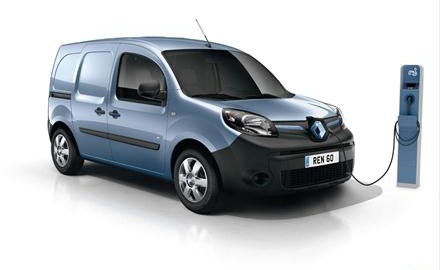
The Renault Kangoo Z.E electric van was awarded the Green Apple Automotive Industry Bronze Award whilst the Renault Clio was named Runner Up in the Small Family Cars category.

These two accolades build on Renault’s success in previous Green Apple Awards. Last year, the Renault ZOE electric car took the Overall Winner prize as well as being named Best Small Family Car and in 2012 Renault was applauded with two awards for its commitment to zero emissions motoring.

Commenting on awarding the Kangoo Z.E. van the Automotive Industry Bronze Winner prize, a spokesperson for The Green Organisation said:

“The Renault Kangoo Z.E. Van was the market’s first all-electric light commercial vehicle. This purpose-built van has zero tailpipe emissions, is cheap to run and easy to charge. It has instant torque, making it rather quick – but at the same time very quiet and smooth to drive.”

The awards are organised by the Midlands-based The Green Organisation and were judged by members of the Midland Group of Motoring Writers.

Midland Group chairman Ian Donaldson said:

“When The Green Organisation asked us for our current green champions we wanted to go further than some other awards and look beyond the official figures and rank our favourites in the real world, taking into account how they performed in our hands.”

The Renault Kangoo Van Z.E. is the world’s first 100%-electric van produced directly by a mass-market vehicle manufacturer. It provides zero tailpipe emissions and silent motoring that is ideal for commercial use within urban environments. The 44kW electric motor and 22kWh lithium-ion battery provide 226Nm of torque, available from rest, which allows for smooth, linear acceleration.

The official range of 105 miles means that the vast majority of van users’ daily driving can be done on one charge. Kangoo Van Z.E. is available in four versions – Kangoo Van Z.E., Kangoo Van Maxi Z.E. (2 seats), Kangoo Maxi Crew Van Cab, and Kangoo Van Z.E. Maxi Crew Van (5 seats) – and is priced from £12,995 (+ VAT, after Plug in Van Grant) complete with a four-year/100,000-mile warranty and four years’ roadside assistance.

Launch of Rapid Charge Network (Image: Renault)

Renault-Nissan Alliance sells its 200,000th electric vehicle

  • Renault-Nissan EVs have driven 4 billion kilometres and enjoy 58 per cent of zero-emission global market share
  • Nissan LEAF remains best-selling EV ever; Renault led in Europe last month
  • Alliance launches monthly video series introducing electric vehicle owners from around the world sharing their personal stories with their zero-emission car

The Renault-Nissan Alliance has sold its 200,000th electric vehicle and has a leading 58 per cent market share for zero-emission cars.

Together, Renault and Nissan EVs have driven approximately 4 billion zero-emission kilometres – enough to circle the earth 100,000 times. Renault-Nissan’s EVs represent 200 million litres of fuel saved – enough to fill about 80 Olympic-sized swimming pools. Alliance EVs also represent 450 million kg of CO2 that has not been emitted while driving.

The Alliance sold its 200,000th EV in early November, about four years after the launch of the Nissan LEAF, the world’s first mass-market electric vehicle. Nissan LEAF remains the best-selling electric vehicle in history.

From January through the first week of November of this year, the Alliance sold about 66,500 EV units—an increase of about 20 per cent from the same period last year. The Alliance sells about two out of three electric vehicles worldwide, including Twizy, Renault’s two-seater urban commuter vehicle and the Nissan e-NV200 van on sale in Europe and Japan.

“Renault and Nissan’s electric vehicles are the zero-emission volume leaders – and, most important, they enjoy high satisfaction rates from customers around the world,”

said Carlos Ghosn, Chairman & CEO of the Renault-Nissan Alliance.

“Based on positive owner feedback and the increasing demand for cars that run on renewable energy, it’s no surprise that EV sales are accelerating – particularly in regions where the charging infrastructure is well developed.”

To capture what the first 200,000 consumers love about their electric vehicles, the Renault-Nissan Alliance is launching a series of videos featuring EV owners on three continents. “I Made the Switch” tells why people bought their electric vehicles and how switching to a zero-emission vehicle has changed their lives. The first video features Chris Beers, a software engineer from Holliston, Massachusetts, USA, one of many Americans who powers his Nissan LEAF with clean solar energy. To see the video, click here: www.multivu.com/players/English/7381531-renault-nissan-electric-vehicle-sales/

USA and Japan lead the world in EV ownership

In the United States, the Alliance’s biggest electric vehicle market, there are more than 750 quick chargers in operation. Nissan is working with its dealers and charging partners to increase that number to 1,100 by mid-2015. The quick chargers are able to charge a LEAF from zero to 80 per cent capacity in about 30 minutes.

This year, Nissan also launched its “No Charge to Charge” program, which provides free access to selected charging stations for two years with the purchase or lease of a new Nissan LEAF. “No Charge to Charge” is currently active in 12 U.S. markets, and Nissan plans to expand to additional markets by mid-2015.

In Japan, the Alliance’s second-biggest EV market, there are more than 2,900 quick chargers in operation. Nissan and Japan’s three other top automakers have pledged to work together to raise that number to 6,000 by March 2015.

In Europe, the UK is the most advanced market in terms of electric vehicle infrastructure. Today, the quick charging network already covers 87 per cent of the UK’s motorways.

Nissan LEAF is the world’s best-selling electric vehicle; Renault led in Europe in October

With six electric vehicle models on the road, the Renault-Nissan Alliance is the only global car group with a full range of 100 per cent electric vehicles – and they can be fully charged with purely renewable energy.

Yokohama, Japan-based Nissan has sold a cumulative 148,700 units worldwide since December 2010, when Nissan LEAF went on sale. Nissan LEAF has collected industry honors including the 2011 World Car of the Year, European Car of the Year 2011 and Car of the Year Japan 2011-2012. The electric vehicle has the highest global customer satisfaction rate for any Nissan vehicle ever.

The top markets for Nissan LEAF are the United States with about 67,000 sales since its launch, Japan with about 46,500 units and Europe with about 31,000 units.

In the United States, LEAF is on track to be the top electric vehicle in 2014, outselling all other electric and plug-in hybrid vehicles. Sales so far this year are up 35 per cent, and Nissan LEAF has enjoyed 21 consecutive record sales months and has already shattered its own yearly U.S. sales record with two months to go. In addition to LEAF, Nissan also sells the e-NV200 van, which went on sale in Europe in June and in Japan in October.

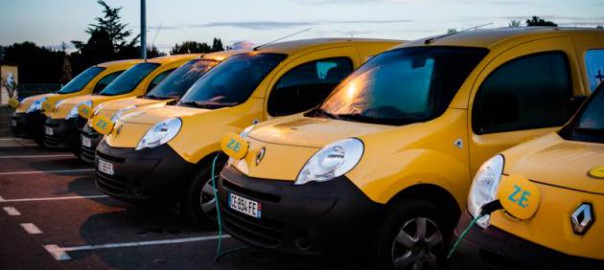
Meanwhile, Boulogne-Billancourt, France-based Renault has sold a cumulative 51,500 electric vehicles worldwide since its first model the Kangoo Z.E. went on sale in October 2011. Kangoo Z.E. was voted International Van of the Year 2012. Renault recently delivered its 5,000th Kangoo Z.E. to La Poste, France’s national postal service and operator of the country’s largest corporate fleet. An additional 5,000 units will be delivered in the coming years.

In addition to Kangoo Z.E. and Twizy, Renault’s zero-emission range also includes the ZOE subcompact and the Fluence Z.E. sedan. In South Korea, the Fluence Z.E. is sold as the SM3 Z.E. under the Renault Samsung Motor badge. Like Nissan LEAF, ZOE enjoys the highest satisfaction rate of Renault’s Global product lineup.

Renault’s top markets in Europe – its main electric vehicle market – are France, Germany and the United Kingdom. In October, Renault regained the number one EV position in Europe with a market share of 31 per cent. ZOE was the most popular vehicle with a 23 per cent market share.

About the Renault-Nissan Alliance

The Renault-Nissan Alliance is a strategic partnership between Paris-based Renault and Yokohama, Japan-based Nissan, which together sell one in 10 cars worldwide. The companies, which have been strategic partners since 1999, sold 8.3 million cars in nearly 200 countries in 2013. The Alliance also operates strategic collaborations with automakers including Germany’s Daimler, China’s Dongfeng, and India’s Ashok Leyland and has a majority stake in the joint venture which owns Russia’s top automaker, AVTOVAZ.
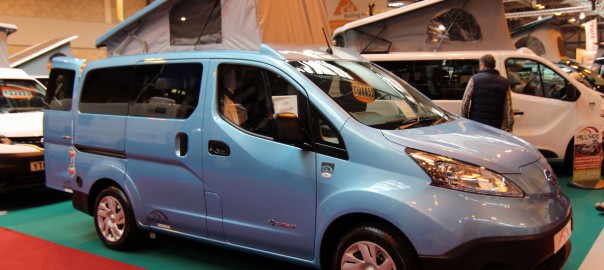
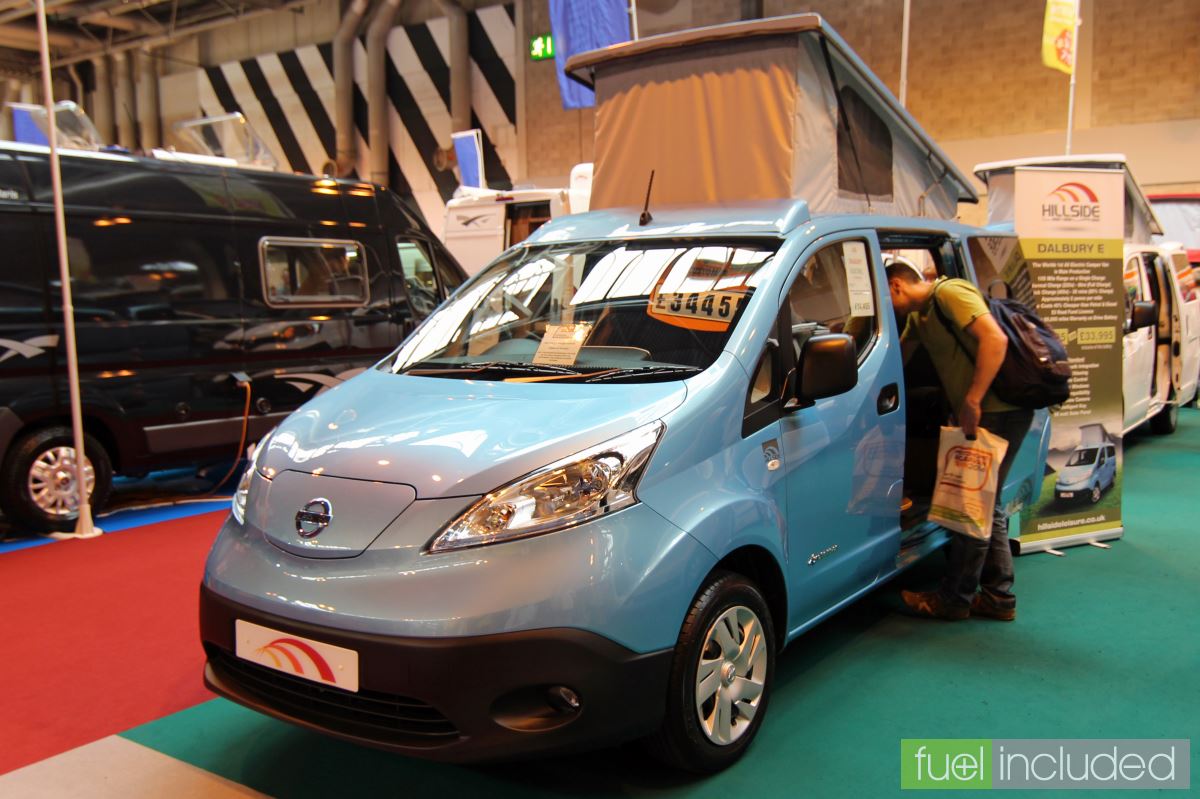
Hillside Leisure's Dalbury electric campervan (Image: T. Larkum)

A World First… Hillside’s Dalbury e-NV200 Campervan

Hillside Leisure's Dalbury electric campervan (Image: T. Larkum)
Hillside Leisure’s Dalbury electric campervan (Image: T. Larkum)

In October our family visited the Motorhome and Caravan Show at the National Exhibition Centre (NEC), Birmingham. Although we have a general interest in motorhoming, and have taken a number of holidays by motorhome, I had a particular aim to see the new all-electric Dalbury campervan being launched by Hillside Leisure.

Dalbury campervan - note pop-up roof (Image: T. Larkum)
Dalbury campervan – note pop-up roof (Image: T. Larkum)

It is claimed to be the World’s First Electric Campervan, and is based on the Nissan e-NV200 electric van which is itself derived from the Nissan Leaf electric car. From a little bit of Googling it does seem like it really is the world’s first production campervan, in other words if you exclude private conversions of conventional campervans.

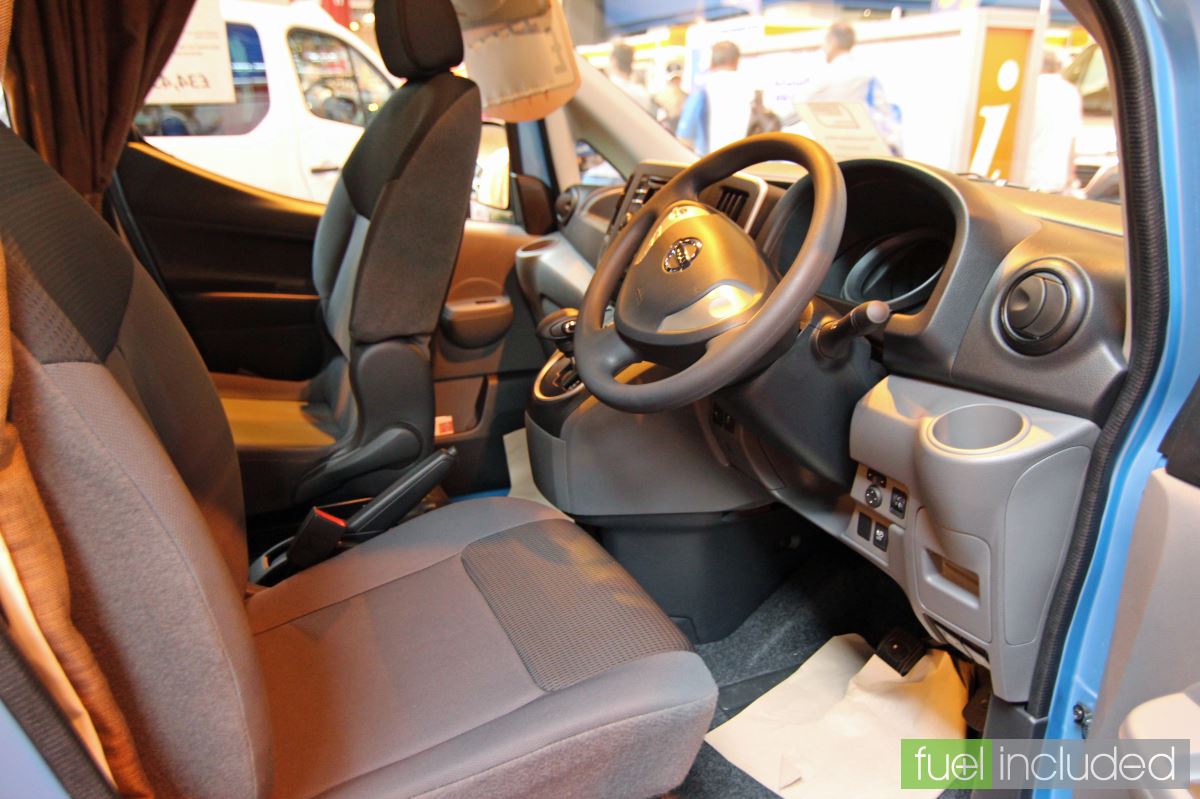
Driver's compartment with passenger's seat reversed (Image: T. Larkum)
Driver’s compartment with passenger’s seat reversed (Image: T. Larkum)

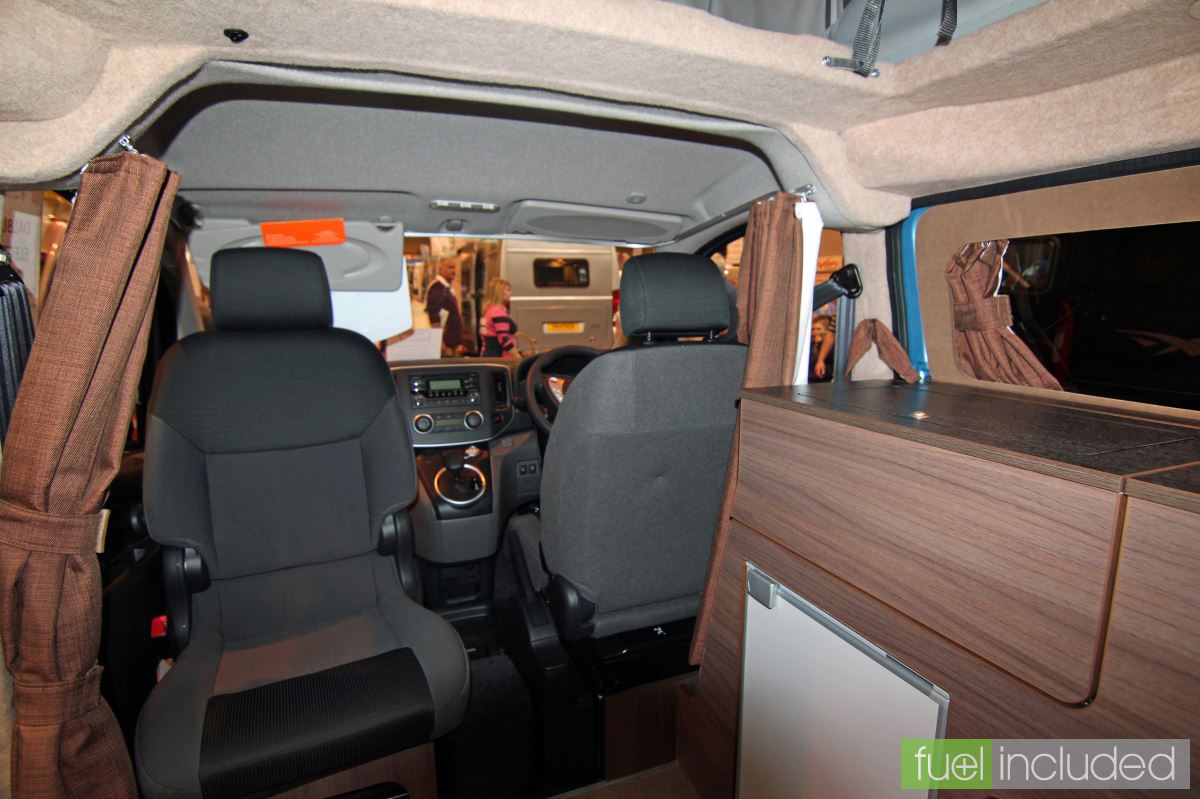
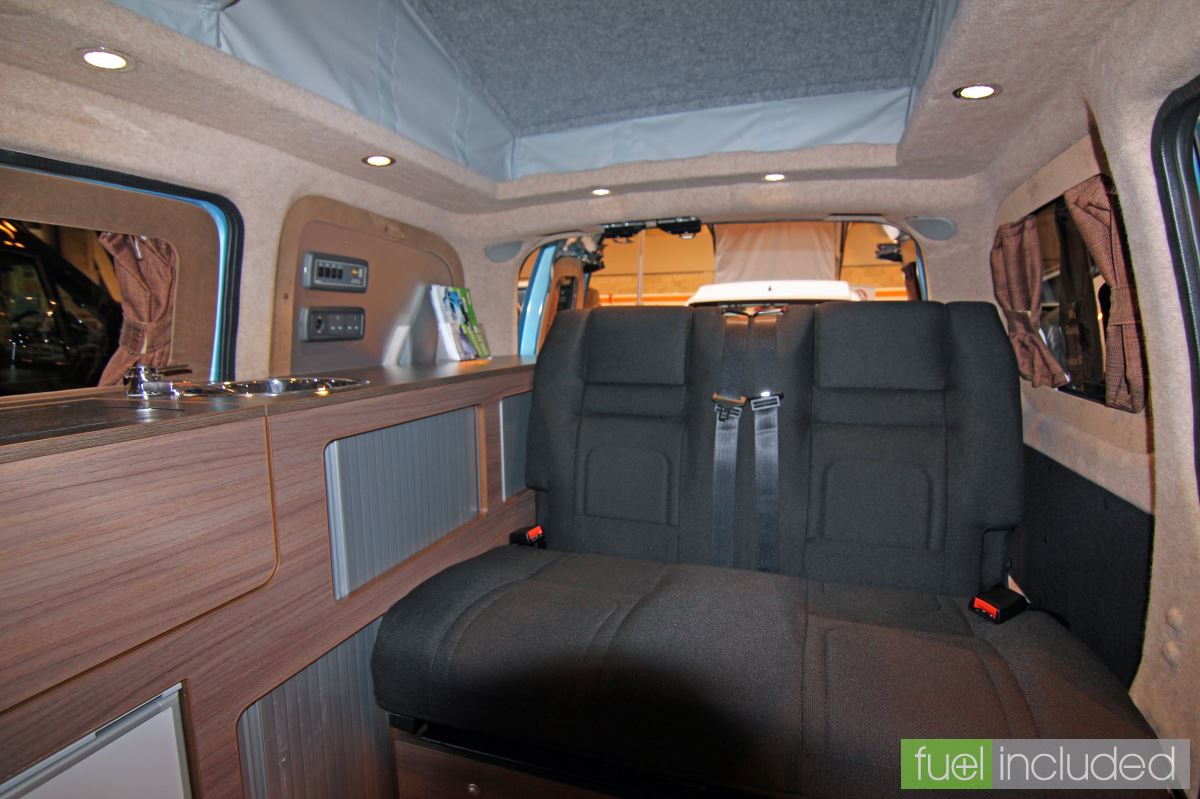
I was pretty impressed with it as a package. There are the usual driver and passenger seats up front, except that the passenger seat is able to rotate around to face the rear. The large sliding door on the left side provides good access to the central ‘lounge’ area; here there is a large bench seat with two seatbelts that folds down to convert into a bed when required.

Lounge with view looking forward (Image: T. Larkum)

Along the inside wall opposite the door are the camping facilities inside a fitted wooden unit. Top left is a cutlery/storage drawer which slides to the left to reveal a twin gas ring stove; underneath this is the fridge. Top right is the sink with hot and cold taps; below it is storage. Further right/back are the electrical sockets and controls with more storage below. Opening the rear doors provides access to the gas bottles and water tank.

Lounge with view looking to the rear (Image: T. Larkum)

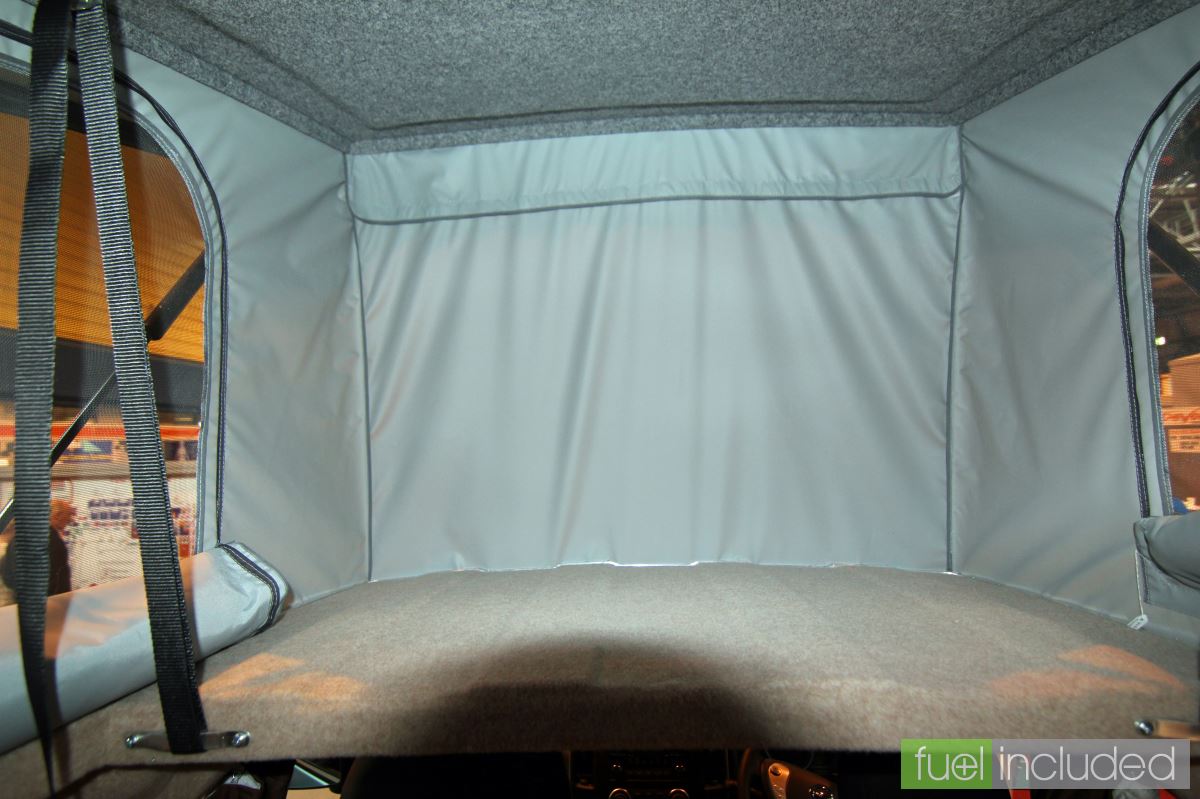
Above the lounge is a pop-up roof that provides enough room to in the vehicle to stand up. In addition, bed boards can be fitted so that two people (realistically, children) can sleep there, so providing the vehicle with 4 sleeping berths in total.

View through the rear doors (Image: T. Larkum)

Overall, we were very impressed with the Dalbury. It would be ideal for a couple to use for motorhoming though, at a push, it could take a family of four (at least if the children are young). It certainly represents an attractive idea: take a touring holiday, driving from one campsite to another each day, charging up overnight, and never paying for fuel!

A look inside the pop-up roof (Image: T. Larkum)

Even better, I think it would be a good daily driver that also holds the promise of weekending away whenever you want, particularly for a couple. It’s small enough to be a primary vehicle, with parking being straightforward so it can be used for shopping and other errands. Unlike other campervans the fuel cost is so low that you wouldn’t hesitate to use it for commuting. Come the weekend you put in your bedding and fill the fridge and you can weekend away at virtually no more cost than staying at home.

We liked it a lot, and are looking at opportunities for hiring it to try it out ‘in the wild’. Roll on the good weather!

2014 Has Seen a Rise in Electric Vehicles

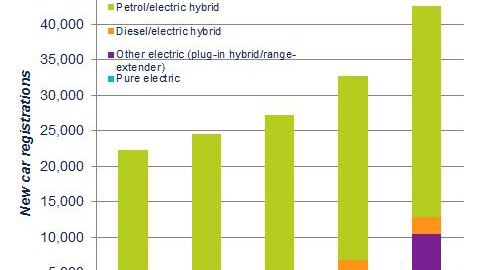
Electric and Hybrid Registrations to 2014

The Society of Motor Manufacturers and Traders reports on October 2014 registrations:

  • Rising demand for alternatively-fuelled vehicles continues, with market up more than 50% in both month and year-to-date.
  • 2014 has seen a significant rise in registrations of alternatively-fuelled vehicles (AFVs). With two months still remaining in the year, registrations are already 12,000 ahead of the full-year total for 2013.
  • Petrol-electric hybrid cars have long been the most popular choice for AFV buyers, but other variants are gaining in popularity. Registrations of pure electric cars have more than doubled over last year, while those of plug-in hybrid and range-extended models look set to quadruple by the end of 2014.
  • Key to this surge in popularity is a constantly increasing range of models available: in 2011 buyers were restricted to just six plug-in models. Now there are 20 to choose from, in a range of body styles including coupés and SUVs.
Nissan e-NV200 Combi Electric Van (Image: Nissan)

Nissan e-NV200 Combi first drive review

The passenger version of Nissan’s new electric van is a niche vehicle, but could hold appeal for growing families who need the space

Nissan e-NV200 Combi Electric Van (Image: Nissan)

Aerodynamic revisions, a wider front track, lower centre of gravity and a faster-reacting drivetrain; all the stuff you’d expect Autocar to write about. Only here it relates to a van, or in correct parlance a LCV (Light Commercial Vehicle), the Nissan e-NV200.

What’s really significant here is that drivetrain, those enhancements coming thanks to a battery pack and electric motor borrowed from the Nissan Leaf, making the e-NV200 the working class addition to Nissan’s push for greater electrification of its line-up.

While a couple of small pallets will fit in the back of the panel version there is at least a model with rear seats and windows. In the UK that will be the Nissan e-NV200 Combi, us Brits denied the plushest (relatively speaking) Evalia model, which brings MPV-like niceties such as picnic tables on the back of the front seats and proper plastic moulded door cards on the rear sliding doors.

UK-spec Combis start at £22,895 – or £17,895 if you want to lease rather than own the battery pack. Four grades are available, Tekna Rapid bringing the most car-like specification as standard, with alloy wheels, a multi-function steering wheel, auto lights and wipers and Nissan’s pre-heating or cooling CarWings system linked to your smartphone. Even it comes with push-stud fixings and rough material panels in place of those Evalia door cards and nowhere to picnic.

Most, Nissan admits, will be sold to taxi firms and fleet users, but it’s not unreasonable to expect the odd Leaf buyer who’s after a bit more space for a growing family eyeing the e-NV200 with a glimmer of desire.

The Leaf absolutely dominates the plug-in EV marketplace, Nissan having shifted 110,000 of them worldwide, and it hopes the e-NV200 will do much the same in the LCV arena. It arguably makes even more sense here too, as business operators with fixed or predictable mileage routes aren’t quite so stymied by range anxiety issues.

Range is 106 miles in perfect conditions, which is plenty given Nissan’s claims that some 35 per cent of vans don’t cover more than 80 miles a day. A growing urban and nationwide charging network and the e-NV200’s 80 per cent, 30-minute fast charge potential – which rises to as much as 12 hours if you plug into a conventional plug at home for a 100 per cent charge – help.

The ability to run in low emission zones and operate in near silence in noise-sensitive areas are also obvious advantages. As are lower servicing and running costs and the appealing tax and Congestion Charge avoidance potential of a plug-in over a diesel NV200 – Nissan equating these to around £16,127 for a London user over four years. That mileage would easily cover the school run; the additional space inside and the massive boot clearly useful if you’ve outgrown your family Leaf.

The revised aerodynamics up front bring some Leaf-like looks too, the nose stretching by 160mm to house the charging socket behind the central flap. Just 50mm is to house it, some 80mm accountable for high-speed crash protection and the remaining 30mm to pass pedestrian impact tests.

The re-profiled bumper mates with wider front wings, the e-NV200’s front track some 40mm wider than its diesel relation. That’s thanks to the adoption of the Leaf’s front axle, which is specifically designed to house the electric motor.

Craig Paterson, vehicle layout specialist at Nissan’s Technical Centre Europe, says this has been done to keep costs reasonable, the e-NV200’s drivetrain as unchanged from the Leaf as possible, down to things like motor mounts, even though the e-NV200 wasn’t originally conceived as a plug-in EV.

The battery pack is modified slightly to fit under the floor, that bringing the centre of gravity down over its diesel relation, although the kerb weight rises by around 230kg as a result.

What is it like?

Get in and it’s like a van, the upright driving position with its excellent view and the steering wheel position both screaming ‘commercial vehicle’. Depending on specification, there are some Leaf refinements: the centre console containing Leaf-like detailing, air-conditioning controls and central screen.

The instruments too are similar, at least the details of battery capacity and driving modes – operated by both the Eco button and the gearstick. That stick is more conventional than the Leaf’s somewhat awkward button-shaped shifter, the auto stick offering Drive and B modes. The latter ups the energy scavenging regenerative effect to the point where with planning you can drive the e-NV200 around town without touching the brake pedal.

Like the Leaf it’s not silent, the electrical noise more obvious in the larger interior of the e-NV200, which is less insulated for sound.

Neither can the e-NV200 hide its van status, the plastics superficially looking okay, but undeniably built to last rather than provide appealing tactile quality. The drive is, somewhat unsurprisingly, van-like, although that low centre of gravity gives it a more stable feel in corners over its diesel relation, while the electric motor’s instantaneous response is always amusing.

It’ll manage the 0-62mph dash in 14 seconds, while top speed is 76mph – try to achieve these figures often, though, and you’ll be looking for a charger fairly quickly. Refinement is good, wind noise more obvious in the absence of dominant engine noise, the loss of vibration from the diesel motor the most significant gain. The steering steers and the brakes stop, which is pretty much all you could ask here, the suspension too riding decently.

Should I buy one?

The Nissan e-NV200 is all very predictable. It does everything a Leaf does, but with masses more space and a bit less sophistication on the road. If that appeals to you – and we can see why it might to some – then the e-NV200 Combi is the most practical EV you can buy.

Source: Autocar

Double GreenFleet win for all-electric e-NV200

Double GreenFleet win for all-electric Nissan e-NV200 van

NISSAN, the global market leader in electric vehicles, is celebrating a memorable double win after picking up two of the top honours at the prestigious GreenFleet Awards 2014 in Warwickshire.

The first success came as the trailblazing e-NV200 100 per cent electric van – a vehicle capable of helping fleet van operators slash both carbon emissions and whole-life costs – was named Industry Innovation of the Year.

The evening soon got even better as the brand also received the Outstanding Achievement award, in partnership with British Gas and Hitachi Capital Commercial Vehicle Solutions, for its hugely successful tri-party pilot of the e-NV200 on the British Gas fleet.

Presenting the award for Industry Innovation, the GreenFleet judges noted the ‘rarely-seen levels of anticipation’ that had surrounded the launch of the e-NV200 and said the model would lead a revolution in UK fleets.

Colin Boyton, Sales and Marketing Manager at GreenFleet Events, said:

“The e-NV200 is a fantastic vehicle and I truly believe it will shape the eCV market from here on.”

The potential to inspire industry-wide change was also the deciding factor in the judges’ decision in the Outstanding Achievement award.

The three-way partnership project saw British Gas pilot 28 Nissan e-NV200 vans throughout the winter to determine the future viability of 100% electric vehicle technology as part of its 13,000 home service vans fleet. The project was a huge success and led to British Gas placing an order for 100 vehicles.

Colin said:

“This project stands out from the crowd and is exactly what the fleet sector needed, in terms of proving EV viability. We hope that in awarding the project this accolade others will sit up and take notice, and if they achieve a fraction of what has been achieved here, it will be all the more worthwhile.”

Collecting Nissan’s honours from awards host Quentin Willson, Nissan Motor GB Corporate Sales Director Barry Beeston said:

“We are absolutely delighted to see the e-NV200 being honoured in this way.

“The e-NV200 is a model with the potential to transform fleets, with running costs of just two pence per mile contributing to significantly reduced whole-life costs, not to mention the environmental benefits.”

Source: Nissan Insider

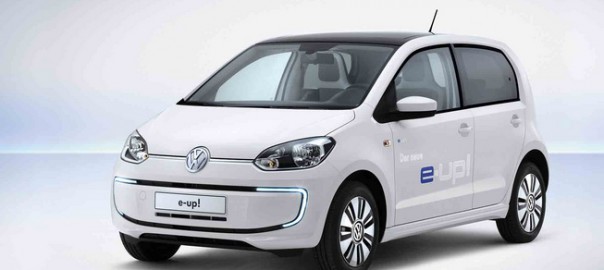
Volkswagen e-UP (Image: VW)

2014 Next Green Car Awards fetes VW e-Up!, Tesla Model S

The California-made Tesla Model S was one of about a dozen models given props by the Next Green Car Awards. And the prizes ran the gamut between conventional, diesel, plug-in and battery-electric powertrains because who doesn’t like variety?

Leading off in the Next Green Car awards was the Volkswagen e-Up!, which took home the City Car award:

“With the e-up!, Volkswagen has produced a high quality, practical and affordable electric city car which is perfect for zero-emission urban driving where space is a premium.”

Americans may associate “Family Estate” cars with huge, fake-wood-paneled station wagons of the ’70s and ’80s (and with Clark Griswold), but NGC gave the Family Estate award to the far-more-fun Audi A3 Sportback e-tron plug-in hybrid.

“As the first plug-in hybrid estate car, the A3 Sportback e-tron perfectly combines conventional fuel practicality for long distance driving with zero-emission motoring for urban trips.”

The Mitsubishi Outlander Plug-in Hybrid, Nissan e-NV200 Combi and Mercedes-Benz B-Class Electric were also all given props.

“The Outlander PHEV sets the SUV bar high offering plug-in capability for the price of a diesel. With a 5% BIK rate, you can see why the Outlander is the UK’s most popular plug-in hybrid.”

“With the e-NV200, Nissan has broken new ground offering an affordable and practical zero-emission alternative to the ubiquitous diesel van.”

“Powered by Tesla know-how, the Mercedes electric B-Class brings electric mobility to the compact MPV class for the first time. High on quality, long on range, and zero on emissions.”

Finally, the Tesla took home the top-of-the-line “Executive” prize.

“Simply the most beautiful and technologically advanced electric car on the market, the Model S combines a gadget-packed interior with an exhilarating electric driving experience.”

Read more: Autoblog, Next Green Car

La Poste Renault Kangoo ZE (Image: Renault)

La Poste & Renault enter partnership

Philippe Wahl, Chairman and Chief Executive Officer of La Poste group, and Carlos Ghosn, Chairman and Chief Executive Officer of the Renault group, have signed into a partnership to pursue and strengthen their cooperation on the search for eco-mobility solutions.

Since the launch of France’s low-carbon vehicle project in January 2009, La Poste group, which has the country’s largest industrial fleet with some 69,000 vehicles, has equipped itself with a complete range of electric vehicles, including small light commercial vehicles, quads, three-wheelers and electrically assisted bicycles.

The Renault group and La Poste group are working together in a wide range of fields on forward-looking issues independently of their business relations. By signing the new partnership agreement, the two French companies are pursuing their collaborative efforts on the search for eco-mobility solutions. Through research work and studies, the two groups will develop pilot projects on new mobility solutions and continue to foster the sustainable mobility of the present and future, focusing on four main areas:

1. Improving vehicle range to accelerate rollout

The two companies plan to dialogue and share information on their tests and study programs to improve the range of the clean vehicles produced by Renault that are currently part of the La Poste fleet. R&D projects have already been initiated in this area. The “MobilHyTest” range extension falls within the scope of today’s partnership.

2. Making vehicles used in urban areas cleaner

Current projects concern research into solutions for parcel delivery needs in urban, peri-urban and rural areas for 5 m3 to 17 m3 vehicles. A key player in urban logistics, La Poste every day tackles the same equation of meeting the growing demands arising from e-commerce by delivering parcels in city centers while limiting the harmful impacts stemming from traffic and parking. The aim is to generate solutions for a cleaner and quieter urban logistics better adapted to its environment, and also to improve the working conditions of mail delivery and collection staff.

3. Working on different sizes of electric vehicles

The two groups will conduct a watch, carry out tests, and dialogue on new vehicles measuring up to 17 m3 for mail use and in respect of competition law. Several new ideas have already emerged, including in the 8 m3 segment, the “service” vehicle segment and the small urban vehicle segment.

4. Contributing to future road mobility with the advent of connected vehicles

Through their collaborative work, Renault and La Poste are making an active contribution to the development of connected and communicating light commercial vehicles by 2020, as well as to their management and monitoring in professional contexts.

Source: Renault