Category Archives: e-Up

UK electric car sales risk falling further behind after Sunak U-turn, analysts say

Country already trails well behind Europe and PM’s backtracking on climate policies could widen the gap

The UK has fallen well behind the rest of Europe in the growth of electric vehicle sales and risks falling further back after Rishi Sunak’s “screeching U-turn” on its climate policies, according to industry analysts.

UK sales of electric vehicles grew by 31% in the 12 months to July, one of the slowest rates of growth in Europe, according to data analysed by Cornwall Insight and the law firm Shoosmiths.
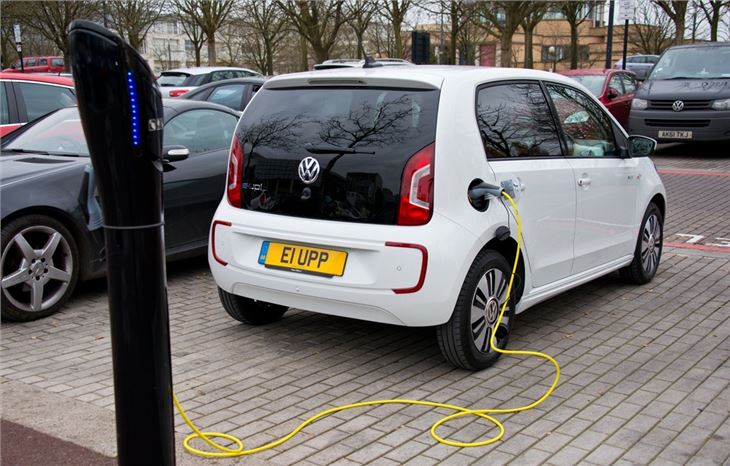
The research revealed the UK’s electric vehicle (EV) growth rate fell well behind the near 61% increase in sales across the 27 EU nations. The report blamed a lack of public charging infrastructure in the UK, and warned that the government’s decision to delay a ban on the sale of new combustion engine vehicles could shake investor confidence.

The prime minister announced plans to push back the ban on new fossil fuel vehicles from 2030 until 2035 as part of a significant watering down of the government’s key climate policies designed to help Britain become net zero by 2050.

The unexpected U-turn has led to confusion among carmakers and electric vehicle infrastructure investors by raising uncertainty over how soon British drivers will make the switch to electric options. This could further delay expansion of charging networks, according to the report.

Read more: TheGuardian

It’s Time to Go Green!

If you would like to know more about Solar Panels and the PowerBanx range of home battery systems, and get a free instant quote, please complete our online form:

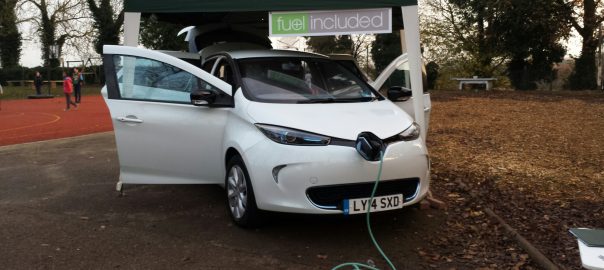
Best value small electric cars 2023: Volkswagen e-up! vs Renault Zoe

Finding a cheap electric car isn’t very easy, so we’ve done the hard work for you

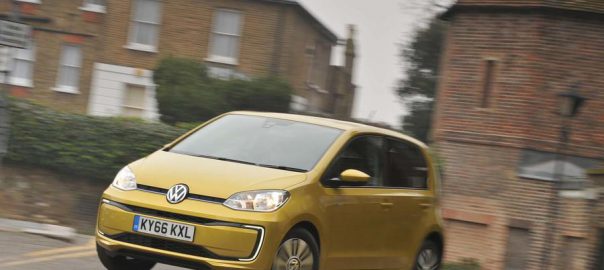
Finding a cheap electric car is still very difficult, but look in the right places and there are bargains to be had. Nowhere is that more clear than with our first contender, the Volkswagen e-up!. At the time of writing, we found an offer for the VW Group’s smallest EV for just £167.99 per month on a two-year deal.

Renault Zoe Volkswagen e-up!
Contract type: Personal Contract Hire (PCH) Personal Contract Hire (PCH)
Monthly cost: £206 £168
Length of contract: 36 months 24 months
Initial payment: £1,853 £1,513
Mileage allowance: 5,000/year 5,000/year

The dinky e-up! punches well above its weight when it comes to interior design. The finish is superb for such a small car, and the overall layout is well thought-out, right down to the neat smartphone cradle on top of the dash which, once an app has been installed, lets your own device act as the car’s infotainment system. A USB port hidden around the back of the mount keeps your phone charged on the move.

Volkswagen e-Up charging outside the Experience Centre (Image: T. Larkum)

The fully-electric model first joined the up! range in 2013, but an update four years ago increased the battery capacity to 36.8kWh, which allows for a 159-mile range. The 80bhp output doesn’t sound like much, but at 1,235kg, the e-up! is much lighter than most EVs. As a result, accelerating to 30mph feels livelier than you might expect.

Read more: AutoExpress

It’s Time to Go Green!

If you would like to know more about Solar Panels and the PowerBanx range of home battery systems, and get a free instant quote, please complete our online form:

Volkswagen e-Up charging outside the Experience Centre (Image: T. Larkum)

These are the 10 cheapest electric cars currently on sale today

From Mazda to Mini, Vauxhall to Volkswagen, these are the EVs to buy on a budget

“The Fortwo is like a hypercar. And not just ‘cos it’s a two-seater. We mean that it’s great in its chosen environment, and pretty rubbish elsewhere. In crowded streets it’s agile like a little kitten, as parkable as your shoes, fresh-breeze clean and as cheap as the coffee you drink on the way to work. But stray far beyond the ring road and it’s slow, wobbly and short on range. Use it as intended and you won’t find much wrong with the execution.”

Volkswagen e-Up charging outside the Experience Centre (Image: T. Larkum)

“The 500 is small, but if you don’t need space it could be your only car. That’s because it’ll go far enough on a charge to make motorway trips tenable. Whereas the Honda e or Mini Electric would have to be second cars to anyone who ever drives beyond conurbations rather than just within them. It’s not as fun to drive as those are, mind. It’s trying harder to feel normal. With a stylish, recognisable design and a quality feel. So the recipe’s been re-cast for health and welfare, but it still looks and tastes like la cucina della nonna.”

“The e-Up is certainly a frumpier, subtler EV than a Honda e or Mini Electric or even a Renault Zoe, but there’s a huge amount to be said for VW’s ‘just a good car, but electric’ approach – it’s what made the e-Golf such a sleeper hit. It’s also kept the e-Up relevant, recommendable, and ready for a new dawn in the small car world.”

Read more: Top Gear

It’s Time to Go Green!

If you would like to know more about Solar Panels and the PowerBanx range of home battery systems, and get a free instant quote, please complete our online form:
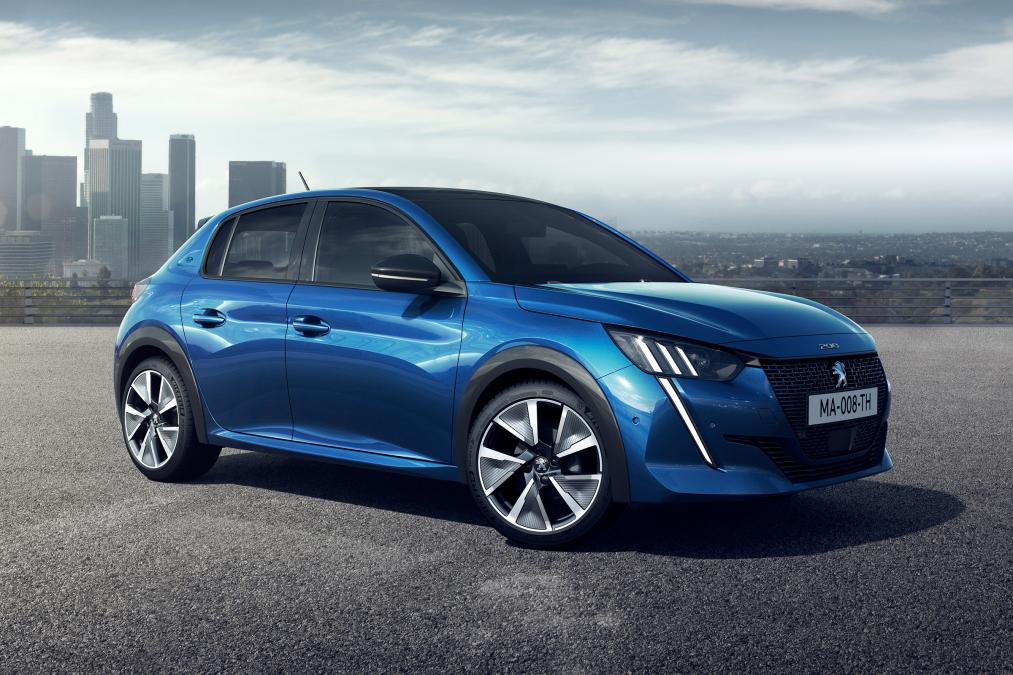
Peugeot e-208 (Image: Peugeot)

2020 set to be year of the electric car as sales soar

Experts are predicting that 2020 will be the year of the electric car as sales continue to rise.

Figures released today by the Society of Motor Manufacturers and Traders (SMMT) show that the number of battery-electric vehicles registered in November increased by 228.8 per cent compared to the same month in 2018 – with over 4500 new EVs hitting the roads.

So far this year, nearly 14,000 electric cars have been registered in the UK, compared to 38,500 plug-in hybrids and nearly 80,000 hybrids. Mild hybrids have also seen a dramatic increase in popularity, with registrations of mild-hybrid diesels increasing by more than 450 per cent last month.

Peugeot e-208 (Image: Peugeot)

Car manufacturers are rushing to launch new electric cars in a bid to meet new emission targets set by European Union legislators. By 2021, they face strict fines if their average CO2 emissions for each car exceed 95g/km. By selling more electric vehicles (with zero tailpipe emissions) and hybrids (with reduced tailpipe emissions), average CO2 emissions will drop.

Kia recently admitted that it has 3000 customers on a waiting list for the e-Niro – something it says it intends to clear in the first half of 2020, despite previously having to halt orders as it couldn’t keep up with demand.

Volkswagen is set to launch its new electric ID range with the ID.3 hatchback, while the Volkswagen Up, SEAT Mii and Skoda Citigo city cars are also going electric-only for 2020. Vauxhall’s new Corsa is available as a pure-electric model, as is the closely-related Peugeot 208.

Read more: Honest John

It’s Time to Go Green!

If you would like to know more about Solar Panels and the PowerBanx range of home battery systems, and get a free instant quote, please complete our online form:

VW e-Golf (Image: Volkswagen.co.uk)

Tesco and VW plan free electric car charging points

Free charging for electric cars will be available for customers at some Tesco stores from next year.

Tesco, in partnership with Volkswagen, plans to install almost 2,500 charging bays at up to 600 stores by 2020.

A standard 7kW charger will be available for free, but drivers will have to pay for a faster service.

Customers will be able to leave their cars to charge while doing their shopping, which should give time for a “substantial” free charge, VW said.

VW e-Golf (Image: Volkswagen.co.uk)

How long it will take to fully replenish the battery will depend on the type of car. A company called Podpoint will build the charging facilities for VW and Tesco.

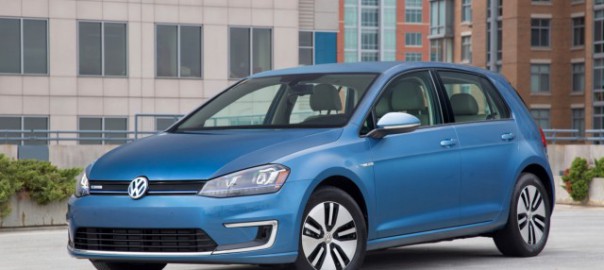
Volkswagen has two electric vehicles on the market in the UK, the e-Golf and the e-Up. It has sold about 1,350 of the cars since they went on sale four years ago, but has plans for a massive expansion.

By 2020 it wants to offer an electric version of all its models.

Read more: BBC

Volkswagen Golf GTE (Image: T. Larkum)

The Germans are Coming!

Volkswagen e-Up charging outside the Experience Centre (Image: T. Larkum)

The biggest manufacturers of all-electric cars sold in Europe are Nissan with their Leaf in 1st place in terms of sales (and e-NV200 van in 5th), Tesla with their Model S in 2nd place, and Renault with their ZOE in 3rd place. These manufacturers are, of course, Japanese, American and French respectively. What is interesting is that there is only one German entrant in the top 5, BMW with their i3 at 4th place, despite the fact that German manufacturers dominate the European market for fossil-fuelled cars.

Volkswagen Passat GTE (Image: T. Larkum)

The Germans do make electric cars – Mercedes has the B Class Electric and Volkswagen has the e-Golf and e-Up – but they appear to make no effort to market them. Historically they have also had lacklustre range and high prices. The bottom line is that they haven’t sold in significant numbers.

Volkswagen Passat GTE (Image: T. Larkum)

German Plugin Hybrids (PHEVs)

Instead it seems that German manufacturers have decided that the plugin hybrid (PHEV) combining an electric drivetrain with a conventional petrol engine is what people want. Or at least they see it as an intermediate step towards full electrification. Considering PHEVs, the top 10 sales now include Mercedes with the C350e in 2nd place (after the Mitsubishi Outlander), the BMW 330e in 4th place and the Volkswagen Golf GTE at 6th place.

Volkswagen Passat GTE (Image: T. Larkum)

In fact, Volkswagen has arguably embraced PHEVs more than any other manufacture. They currently offer both of their two biggest selling cars, the Passat and the Golf, in PHEV form as the ‘GTE’. Both of them offer the ability to commute (up to about 20 miles) on electricity with the option of using petrol for longer distances – they also have pretty good 0-60 times too.

Volkswagen Golf GTE (Image: T. Larkum)

VW on the Rise

With these cars in the vanguard, and with the e-Up and newly improved e-Golf to come, Volkswagen may soon make significant inroads into plugin sales in the UK.

Volkswagen Golf GTE (Image: T. Larkum)

These were some of the thoughts that came to me looking at the row of EVs charging outside the Milton Keynes Electric Vehicle Experience Centre (EVEC). Of the eight cars, three were from Volkswagen (so nearly 40%). We ourselves are looking to start offering VW plugins soon, and I’m sure we’ll see VW as an EV brand on the rise from here on.

Volkswagen Golf GTE (Image: T. Larkum)

As ever, if you want to test drive any of the cars mentioned here just get in touch.

f

Electric cars charging in Milton Keynes (Image: T. Larkum)

Electric Cars to Test Drive at the Experience Centre – How Many Can You Name?

There weren’t cars only on display inside the Electric Vehicle Experience Centre (EVEC) at the launch. There were also a large number charging up outside, presumably getting ready for test drives for the public for the opening the next day.

Electric cars ready for free test drives in Milton Keynes (Image: T. Larkum)

The large numbers and broad range of EVs available was impressive.

How about a quick quiz: can you identify them all? The answers are given below.

Electric cars ready for free test drives in Milton Keynes (Image: T. Larkum)

Of course, whether you own an EV or are considering your first, you’re welcome to test drive any of the vehicles on show for free. Just get in touch and we’ll help arrange it.

Answers to the Quiz: these are the electric cars waiting to give test drives (from nearest the camera to furthest away):

  1. Renault ZOE ZE40
  2. Nissan Leaf
  3. Volkswagen e-Up
  4. Mitsubishi Outlander PHEV
  5. Kia Soul EV
  6. BMW i3
  7. Volkswagen Passat GTE
  8. Volkswagen Golf GTE

f

2017 Volkswagen e-Up review

What is it?

The Volkswagen e-Up is the pure-electric version of VW’s popular Up city car. When it was launched the EV market was still in its early stages, but now, three years on, the alternative-fuel market is bigger and continuing to grow.

The e-Up has received a light update to keep it fresh, but nothing mechanical has changed. The main alterations are a revised front bumper and rear light clusters, and aside from that it’s all very familiar. As such, its claimed range stays at 99 miles and it’s powered by the same 18.7kWh lithium-ion battery pack that generates 81bhp and 155lb ft of instantly available torque. For a full charge, expect a three-point plug to take around nine hours, although a fast-charger will take 30 minutes to provide 80%.

Although electric cars are growing in popularity, the usual caveat applies: the compromises that their limited range and our still-limited infrastructure bring means they have to suit your lifestyle. Still, if you’re after a city car, you’re unlikely to be covering big miles, so is the e-Up the ideal electric car?

What’s it like?

This is no standalone electric model like the Nissan Leaf or BMW i3. Being based on the five-door Up means the e-Up is very familiar in appearance and dynamics.

That’s no bad thing. The Up is one of the best city cars you can buy, so it’s a great grounding to base an electric car on. With instant torque, off the line the e-Up feels much sharper than its petrol-powered equivalent, and its silent cruising makes it relaxing to drive through congested cities.

Read more: Autocar

2016 Volkswagen e-Golf

VW To Focus On Electric and Plug-In Hybrid Tech

The Volkswagen diesel-emission cheating scandal has caused executive heads to roll, cars to be yanked off sale, and regulators to pore over real-world emission data with a laser-like focus.

2016 Volkswagen e-Golf

It has made the future of the VW Group as the world’s largest carmaker seem far more perilous than it did just one month ago.

This morning, the company’s board of directors released a statement laying out its plans to move forward, even as it cuts capital investments by 1 billion Euros ($1.14 billion) to cope with the crisis.

It contains a laundry list of adjustments to VW’s planned future technology investments, including more focus on electrified drivetrains.

Read more: Green Car Reports

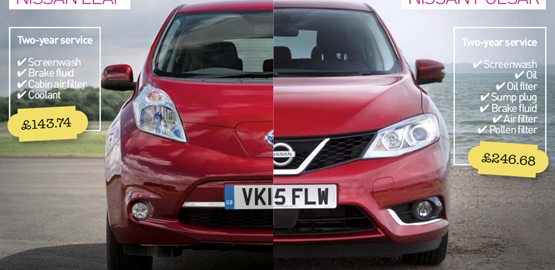
Electric vehicles offer big savings on servicing

At last some data to confirm what most EV owners already suspected

When fleets compare electric vehicle (EV) costs with diesel, most of the emphasis is put on the P11d price and fuel. However, there are also significant differences in service and maintenance costs. Put simply, servicing and maintenance of a fully-electric vehicle is estimated to cost between 25% and 40% less than that of a petrol or diesel car.

“There are fewer parts that will require maintenance in an EV,” explains Chris Chandler, principal consultant, fleet consultancy, at leasing giant Lex Autolease.

Unlike petrol or diesel vehicles, which have dozens of moving components in their engine and transmission, EVs have a simple drivetrain, typically consisting of just three parts: an on-board charger, inverter and motor.

When Ford unveiled its Focus electric car in America in 2012, it listed more than 20 items used in petrol and diesel cars but not in EVs that require inspection, maintenance or replacement over a vehicle’s 10-year/150,000-mile life.

These included the alternator, power steering fluid (it uses electrical assistance), radiator and assorted pipework, spark plugs, starter motor, thermostat, timing belt and a water pump.

screenshot140_w555_h555_unk

This makes an EV cheaper and means there are fewer moving parts to go wrong, resulting in improved reliability and on-road times.

On top of this, EVs require no oil changes, spark plugs, air filter, transmission fluid, exhaust pipe or radiator hoses, all of which can add to the service, maintenance and repair (SMR) costs of a petrol or diesel vehicle.

The relative simplicity of an EV’s drivetrain is reflected in its SMR costs, according to Nissan. It says that both the Leaf and Nissan e-NV200 cost “considerably less to service and maintain than diesel or petrol alternatives”.

Read more: Fleet News