Category Archives: Sales

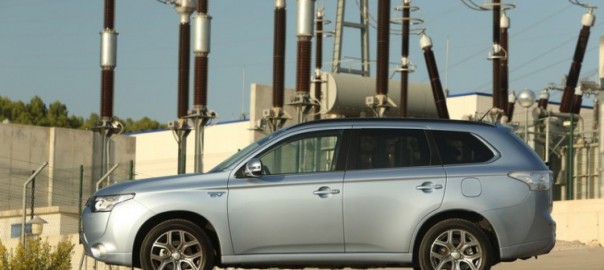
Mitsubishi Outlander PHEV

UK’s Top 20 Plug-In Electric Cars – Mid-2015

Mitsubishi Outlander PHEV remains the best selling plug-in car in the UK according to latest RAC Foundation report on plug-in car grant claims.

Mitsubishi Outlander PHEV

The Japanese plug-in hybrid, through the end of June, noted 12,066 registrations out of 35,241 total. That’s more than one third of all plug-ins sold in the UK.

The ratio in Q2 was even higher – 41% (2,293 out of 5,568).

With the newly refreshed, 2016 Mitsubishi Outlander PHEV coming, things become even more exciting.

Here are some interesting comments from Steve Gooding, director of the RAC Foundation:

“The march of Mitsubishi continues with the latest data showing the Outlander plug-in hybrid extending its lead over the Nissan Leaf as the most popular ultra-green car in the UK.

“The success of the Outlander looks to be down to three things: a high-profile advertising campaign, good range, and probably most importantly competitive pricing which makes it as affordable to buy as the diesel equivalent.

“But that price is dependent on the government grant. Ultimately all ultra-green cars will have to stack up commercially when the grants are withdrawn. What ministers must ensure is that both consumers and manufacturers have a clear idea of when and how the scheme will come to an end.

“The interesting question is whether Mitsubishi are making money from this model or using it as a loss leader to gain market share and drive out competitors.

“It is worth noting that the growth in the number of ultra-low carbon vehicles on the road slowed significantly in the latest quarter compared with the previous. This is probably due to seasonal variations in car buying volumes but industry and ministers will be keeping a keen eye on the trends to make sure demand isn’t stalling.”

Read more: Inside EVs

Renault ZOE EV

More than half of 18-24-year-olds keen to go electric

Electric vehicles are a young person’s game, according to new research which found that 18-24-year-olds are more likely to go electric than any other age group.
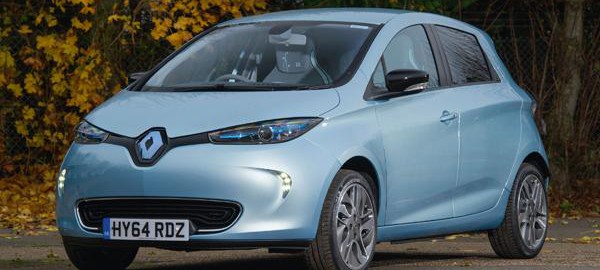
front-tracking_renault_zoe_AutoExpress

More than half of 18-24-year-olds (51.8%) said they would consider acquiring an electric car, significantly more than the 31% of 35-44-year-olds and 33.9% of those aged between 45-54.

The cost of going electric won’t break the bank either with personal lease deals for Renault’s Zoe [pictured] starting from £183 a month.

The less encouraging news though is 60% of the 770 UK motorists, surveyed by van leasing and facilities management company Direct365, are completely uninterested in going electric.

Read more: Direct365 via Contract Hire and Leasing

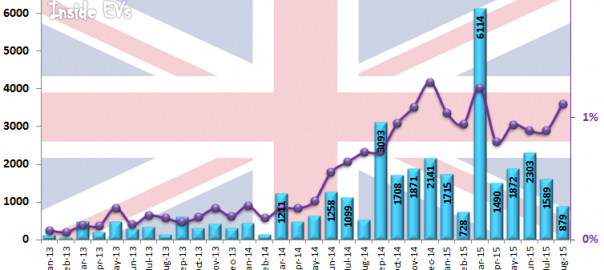
Plug-in Car Registrations in UK – August 2015 (Image: Inside EVs)

Plug-in Sales in UK Exceed 1%, up in August

I’m not surprised – I see more plug-ins on the roads every week.

August is typically one of the slowest month for car sales in the UK, although in relation to previous years it still brings solid growth of some 71% more plug-in electric car registrations (879 total).

Market share of plug-ins stands at 1.11%, which is third highest ever.

Plug-in Car Registrations in UK – August 2015 (Image: Inside EVs)

In August, approximately 578 registrations were PHEVs and 301 BEVs.

So far this year, sales of PHEVs in the UK are about twice the volume of BEVs (over 11,000 vs nearly 5,500).

Next up is September, and we expect at least some 5,000 plug-ins to be sold.

Source: Inside EVs

2016 Nissan Leaf

Milestone reached of One Million plug-in cars sold

A key milestone to celebrate!

Plug-in electrified vehicles (PEVs) have transcended one million sales worldwide.

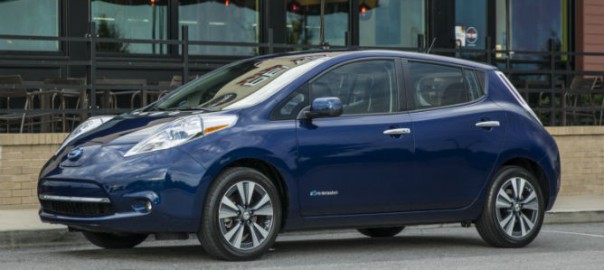
2016 Nissan Leaf
2016 Nissan Leaf

Included in this count are highway legal, light-duty all-electric cars and plug-in hybrids sold in markets around the globe.

Plug-in cars started in negligible volumes last decade, but the mass-market began just less than five years ago. The first half million came in July 2014, and now one year and two months later another half million have been sold.

In December 2014 HybridCars.com reported 712,000 plug-in sales globally, and nearly 300,000 more sales have taken place over the past nine months.

As of August 2015 the count was 985,000 less Japanese sales numbers which were not reported yet, and as of mid-September, an estimated 1,004,000 PEVs have been sold consisting of 62 percent battery electric and 38 percent plug-in hybrids.

Read more: Hybrid Cars

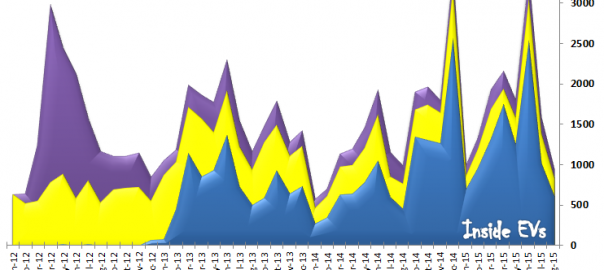
Renault BEV Sales Worldwide – August 2015 (Image: Inside EVs)

Renault Sold Over 30,000 ZOEs Through August 2015

I’m not surprised – it is a fab car! I’m coming up 35,000 miles in mine.

Renault-ZOE_2013_wallpaper_3f_cs

Sales of Renault electric cars (like most plug-ins in Europe) are growing almost every month, year-over-year, so far, although August was up just 9% at 828 units. An additional 113 via the city-quadricycle EV, the Twizy.

In eight months, Renault has sold nearly 12,500 electric cars and over 1,550 Twizy.

Renault ZOE hit 30,000 in August

Renault’s flagship, ZOE is already over 30,400 sales, with cumulative sales over 10,000 in eight months of this year.

Renault BEV Sales Worldwide – August 2015 (Image: Inside EVs)

Renault Kangoo Z.E. isn’t doing that well and with just around 2,200 sales is few hundreds below 2014 results. This may be as a result of the Nissan e-NV200.

Source: Inside EVs

Why don’t we drive more electric vehicles?

A report from the National Academy of Sciences looks at barriers and adoption.

One of the more challenging jobs the auto industry has right now is explaining to consumers that the future isn’t going to be like the past. We desperately need to reduce vehicle carbon emissions in order to avoid turning the planet into a hellscape, and that means turning to cars with some kind of energy storage other than hydrocarbons we’ve dug up from the ground and then distilled. That’s where people get confused and the message stalls, a problem laid out in a recent report from the National Academy of Sciences.

For many decades cars have been simple things with internal combustion engines. They burned gasoline or sometimes diesel and occasionally even liquified natural gas. Sometimes they had turbochargers or superchargers to ram more air into the combustion chamber, and very occasionally that combustion chamber was something odd like a Wankel rotary engine. Now, the need to reduce carbon emissions and improve air quality means many more options when it comes to a vehicle’s powertrain.

One surefire way to get that message across is to give people an EV experience, according to Pam Fletcher, the chief engineer for EVs at General Motors (GM):

“The people that have owned and lived with EVs can understand it, they’ve seen how the vehicles work for them, It’s part of the learning curve and more people will understand it over time,” she said. “It’s hard to explain to people the benefits if they haven’t had that experience.”

Read more: Ars Technica

Plug-in Car Grant Scheme Extended

The Government has announced that its Plug-in Car Grant will continue until at least February 2016.

Revealed this week (Wednesday 26th August), the grant will remain open to motorists looking to buy a new ultra-low emission vehicle (ULEV) until early 2016 at a minimum. A longer term plan will be drawn up and announced after the Government’s November spending review.

The grant, which offers motorists up to £5,000 of the price of an electric car, has been extended for all categories of vehicle and aims to build on the recent growth of the plug-in car market.

Before this announcement, the plan was to run the scheme until 50,000 grants had been awarded but, with around 40,000 grants already made and sales of ULEVs accelerating, forecasts were coming in for the scheme to have reached its limit around November 2015. As a result of the extension, all plug-in cars with CO2 emissions of 75 g/km of under will remain eligible for the grant until February.

Transport Minister Andrew Jones MP said:

“I’m pleased to announce today that the government is maintaining the current levels of grant, even as we move past the milestone of 50,000 vehicles. The UK is now the fastest growing market for electric vehicles in Europe. We will continue to invest to help make this technology affordable to everyone and to secure the UK’s position as a global leader.”

Hetal Shah, Head of Go Ultra Low, the Government backed campaign to promote ultra low-emission vehicles, said:

“Continuing the Plug-in Car Grant at current levels is positive news for everyone, as it encourages zero-emission motoring and secures more funding for a greater number of ULEV buyers. This announcement demonstrates the government’s commitment to supporting the growth of the ULEV market. If we are to meet ambitious targets for ULEV uptake, continued investment is paramount.”

Mike Hawes, SMMT Chief Executive, said:

“With British buyers taking to ultra-low emission vehicles faster than anyone else in Europe, the extension of the Plug-in Car Grant is good news. The market for these vehicles remains small, however, so it is essential that government continues to provide effective incentives for their uptake – including the Plug-in Car Grant and other measures.”

With more choice of plug-in vehicles than ever, the number of grants awarded is expected to continue increasing rapidly. Ranges from the likes of Audi, BMW, Mitsubishi, Renault, Toyota and Volkswagen all feature zero or low-emission models and sales have increased to the extent that 2014’s ULEV sales figure was passed in 2015 with six months to spare.

Source: Next Green Car

Electric Cars Fast Charging (Image: BusinessCarManager.co.uk)

On the brink of an electric car revolution?

Electric car sales have fallen short of predictions, but the global push to cut carbon emissions and improved techology could see them poised to hit the mainstream, says Renault-Nissan’s head, Carlos Ghosn

Carlos Ghosn, the fast-talking head of the Renault-Nissan alliance, is not keen to be drawn on targets for electric car sales. A 2011 prediction of 1.5m Renault-Nissan electric vehicles by 2016 turned out to be wildly optimistic. The group just passed the 250,000 mark.

Ghosn was not alone. President Barack Obama predicted 1m electric cars in the US by 2015: in January the total was 280,000. Virgin boss Richard Branson, adept as ever at grabbing headlines, said this week that “no new road cars will be petrol driven” within 20 years, calling combustion engines “complicated and antiquated”.

Unlike Branson, Ghosn does not want to stick his neck out. But as head of the companies which sell more than half the electric cars in the world, what Ghosn thinks about how fast the market will grow matters.

Transport contributes 23% of global greenhouse gas emissions, so the fundamental driver will be the ambition of the world in tackling climate change, Ghosn told the Guardian in an interview. “When we know exactly where the EU, US, China will be heading in 2030, I can tell you exactly how much electric cars will be needed,” he says, referring to a crunch UN summit in Paris in November.

Read more: The Guardian

250k electric vehicles sold by Renault-Nissan Alliance

  • Historic EV milestone reached in early June
  • Alliance sells half of all EVs globally
  • EV sales up nearly 15 per cent through May vs. same period last year
  • Nissan LEAF remains world’s best-selling EV
  • Frenchman from Bordeaux bought 250,000th Alliance EV: a Renault ZOE

PARIS/YOKOHAMA (June 24th, 2015)—The Renault-Nissan Alliance, the world’s leader in zero-emission mobility, has sold its 250,000th electric vehicle: a white Renault ZOE sold to a French engineer.

The Alliance reached the historic milestone in early June, four-and-a-half years after the launch of the Nissan LEAF, the world’s first mass-market zero-emission vehicle. The Alliance today accounts for half of the electric vehicles sold worldwide. Nissan LEAF remains the best-selling electric vehicle of all time, with more than 180,000 units sold.

From January through May, the Alliance sold about 31,700 EVs — up nearly 15 per cent over the same period of last year.

“Demand for our electric vehicles continues to grow thanks to government incentives and the expanding charging infrastructure,”

said Carlos Ghosn, Chairman and CEO of the Renault-Nissan Alliance.

“The positive response of our customers is also driving demand.These vehicles enjoy some of the highest levels of satisfaction rates from our customers around the world.”

Frenchman from Bordeaux takes delivery of 250,000th EV

The 250,000th owner is Yves Nivelle, a computer engineer, who traded in his 21-year-old diesel car for the subcompact Renault ZOE. Nivelle bought his EV after the French government introduced an environmental bonus in April to allow owners of older, polluting diesel cars to trade them in and get a rebate of €10,000 on a new EV.

“The government’s environmental bonus was a big factor in my decision to get an EV,” Nivelle said. “But I have to say, I was convinced the first time I drove the car. It’s a real pleasure to drive and it feels good to do my part for the environment.”

Alliance has full range of six 100% EVs; Renault leads in Europe

With six models on the road, the Renault-Nissan Alliance is the only global car group with a full range of 100% electric vehicles. In addition to the LEAF, Nissan also sells the e-NV200 van, which has been on sale in Europe and Japan since last year. In addition to the ZOE, Renault also sells the RenaultKangoo Z.E van, the SM3 Z.E. sedan and the Twizy, a two-seater urban commuter vehicle.

Yokohama, Japan-based Nissan has sold 185,000 electric vehicles worldwide since December 2010, when the Nissan LEAF went on sale. LEAF has collected numerous industry honors, including the 2011 World Car of the Year, European Car of the Year 2011, and Car of the Year Japan 2011-2012. The LEAF is sold in 46 markets. Nissan’s top EV markets are the United States, with about 80,000 sales since LEAF’s launch, Japan with about 53,500 units, and Europe with about 41,500.

Renault, based in Boulogne-Billancourt, France, has sold 65,000 electric vehicles worldwidesince its first model, the Kangoo Z.E., went on sale in October 2011. Kangoo Z.E. was voted International Van of the Year 2012.

Renault was the No.1 EV brand in Europe for the last two months, with a market share of 26 percent. Renault’s top markets are France, the United Kingdom, Germany and Norway. In France, where ZOE is the most popular EV with almost half the market, the government’s environmental bonus allows drivers to lease the ZOE, including the battery, for as little as €99 a month.

The Renault-Nissan Alliance was recently chosen as the official passenger-car provider for the United Nation’s COP21 climate conference in Paris from November 30th to December 11th. The Alliance will provide a fleet of 200 EVs to shuttle delegates to the annual conference.It will be the first time the U.N. will use a zero-emission fleet for its entire passenger car shuttle at a COP event.
Keeping up with the Joneses with an electric car

Finally electric cars become aspirational!

New research released today by Go Ultra Low has found that the majority of car buyers aspire to own high-tech, ultra-low emission electric vehicles to score social points over their neighbours and peers.

According to Go Ultra Low, it is clear that many UK drivers aspire to the cost benefits, style and convenience of electric motoring. The survey found that 67% of the population identified alternatively-fuelled vehicles as a purchase consideration.

Three quarters of motorists said that running costs were the biggest consideration when choosing their next car, making the argument for switching to ultra low emission vehicles even more compelling.

Hetal Shah, Head of Go Ultra Low, said:

“Our research shows that, after purchase price, the top things motorists look for in a new car are affordable running costs, comfort, space and style. The huge variety of electric vehicles now on the market is changing motorists’ concept of desirability.

The majority of consumers surveyed aspiring to the new breed of quiet, refined, technology-packed plug-in vehicles. We’re confident that this year alone we’ll see thousands more motorists up and down Britain plugging-in to this growing trend.”