Category Archives: Sales

Electric cars: What’s happened to the ads?

Something has gone missing in the UK’s drive towards zero-carbon motoring: advertising.

The DNA of the UK’s car fleet is changing. Whereas every car once had a tailpipe, that is no longer the case. Total UK car sales have declined recently, and a more detailed look at the figures reveals some interesting trends.

On the graph electric vehicles (which includes all hybrids) are represented by the yellow curve, while petrol and diesel sales are represented by the red and blue curves respectively. You can clearly see just how dramatic the recent plunge in new diesel sales has been. And it’s equally clear that electrified vehicle (EV) sales are beginning to increase quite dramatically, albeit from a low base.

This rise in EV sales is impressive on a number of levels. Clearly there is a pre-existing level of demand for electrified vehicles; it turns out that some people want environmentally friendly cars that have dirt-cheap running costs and are often quite cool to boot.

However, demand can be induced – in particular, by companies’ marketing efforts. Spend more on advertising a particular product or set of products, and more will be demanded; this is after all what advertising is for.

This leads to interesting questions: are car manufacturers themselves trying to increase demand – and if they’re not, why not?

Read more: ECIU
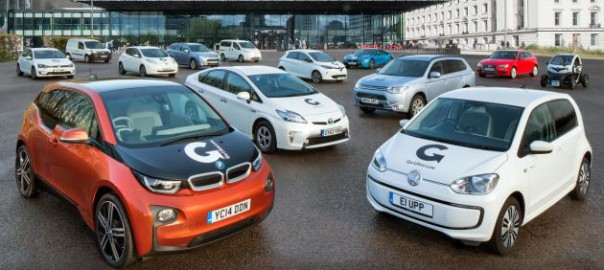
Ultra-low emission registrations up 386% on first quarter of 2014 (Image: OLEV)

185,000 Plug-In Cars Were Sold In Europe In First Half Of 2018

June was the second-best month all time for plug-in electric car sales in Europe with more than 38,000 units put on the road.

With year-over-year growth of 37% in June, market share jumped to 2.4% (2.2% for the first half of the year).

The total sales in the first six months nearly hit 185,000 (43% more than a year ago) and it’s expected that more than 400,000 is possible in all of 2018.

Ultra-low emission registrations up 386% on first quarter of 2014 (Image: OLEV)
Ultra-low emission registrations up (Image: OLEV)

The top five best selling models in Europe – for the year are:

  • Nissan LEAF – 3,377 and 17,944 YTD
  • Renault ZOE – 3,425 and 17,016 YTD
  • BMW i3 – 2,002 and 11,301 YTD
  • Volkswagen e-Golf – 1,447 and 9,796 YTD
  • Mitsubishi Outlander PHEV – 2,174 and 9,662 YTD

Renault ZOE this time managed to beat Nissan LEAF and close the gap a little bit in the race for the best selling model.

As usual, the last month of the quarter brings some decent numbers from Tesla – 2,105 Model S and 1,829 Model X in June and 7,699 and 5,600, respectively for the year-to-date.

Read more: Inside EVs

HMRC to publish advisory fuel rate for 100% electric cars

HMRC will introduce an advisory fuel rate (AFR) for pure electric cars from September 1 at 4 pence per mile (ppl).

It is a partial victory for fleet representative body ACFO, which has been campaigning for AFRs for both pure electric cars and plug-in hybrids.

The new rate, called the Advisory Electricity Rate (AER), has been set at 4p per mile and will be published alongside AFRs for petrol, diesel and LPG (liquefied petroleum gas) cars based on engine size.

Plug-in hybrid and hybrid cars will continue to be treated as either petrol or diesel models for mileage reimbursement purposes.

AFRs apply where employers reimburse employees for business travel in their company cars, or require employees to repay the cost of fuel used for private travel. They are deemed to be tax and National Insurance-free. AFRs are reviewed quarterly and similarly, the new AER will be kept under review.

In notifying ACFO of the introduction of the new rate, HMRC said:

“HMRC will accept that if employers pay up to the Advisory Electricity Rate of 4p per mile when reimbursing their employees for business travel in a fully electric company car there is no profit – there will be no taxable profit and no Class 1 National Insurance to pay.

“On a similar basis to Advisory Fuel Rates, employers can use their own rate which better reflects their circumstances if, for example, their cars are more efficient, or if the cost of business travel is higher than the guideline rate.

“However, if they pay a rate that is higher than the Advisory Fuel Rate and can’t demonstrate the electricity cost per mile is higher, they will have to treat any excess as taxable profit and as earnings for Class 1 National Insurance purposes.”

For many years, ACFO has been calling on HMRC to publish official tax-free company car AFRs for plug-in vehicles. It has been ACFO’s belief that the absence of defined mileage reimbursement rates was a handicap to some organisations including plug-in vehicles on their choice lists.

Read more: Fleet News

Cheap Motoring

Tax policy for electric vehicles makes ‘zero sense’

Gerry Keaney, chief executive of the British Vehicle Rental and Leasing Association (BVRLA), has called on Government to “get its act together” and address the “obvious failures” in its short-term tax policies for electric cars.

The current company car tax and VED rates act as “a positive disincentive” to fleet operators and drivers who want to take an electric car as a company car, Keaney told delegates as the BVRLA’s annual Fleet Technology Congress.

The company car tax band for zero emissions vehicles is currently scheduled to increase over the next two years to a high of 16% in 2019/20, before dropping to 2% the year after. The BVRLA wants the Government to accelerate the introduction of the 2% band.

Cheap Motoring

“Short-term tax policy relating to electric cars today makes zero sense to anybody,” Keaney said. “It doesn’t reflect any sort of connected thinking between an air quality objective, between the diesel campaign that’s going on, between the tax harmonisation objectives.”

He urged the Government to take action in November’s Budget because “if it wants to make a difference, that is the single biggest thing it can do to accelerate the take-up of electric cars”.

Once the Government has addressed its short-term tax policy it needs to look at the longer-term because as the take-up of electric vehicles grows, the tax yield from both company cars and private cars will decline rapidly, Keaney said.

“There needs to be a grown-up discussion in the UK about what is going to replace the current tax yield that comes from cars when looking to tax electricity, for example. How is electricity going to be taxed? What is the role it’s going to play? How is it going to be addressed?”

Keaney repeated calls from the Fleet Industry Manifesto, put together by Fleet News, fleet operators’ association ACFO and the BVRLA in 2015, for the Government to consider road pricing to replace fuel duty.

“Road charging is politically unacceptable today,” Keaney said.

“But actually, as the tax yield from hydro-carbons declines, there needs to be a discussion, and we need to be part of that, on how we top up the Exchequer’s coffers.”

Read more: Fleet News

Electric cars charging in Milton Keynes (Image: T. Larkum)

Here’s what charging your electric car will look like in 2030

EVs to hit 11 percent of new car market by 2030, with up to 40 million charging stations worldwide.

A new study finds that electric vehicles (EVs) and their charging stations are poised to see explosive growth over the next decade.

At the same time, utilities, car companies, and other businesses are pursuing a variety of charging strategies — many of which will be very cheap and possibly even free for consumers.

By 2030, EVs are projected to comprise 11 percent of the new car market, with up to 40 million charging points worldwide, according to a new study by Greentech Media (GTM), a division of Wood Mackenzie.

Electric cars charging in Milton Keynes (Image: T. Larkum)

So power demand for EV charging will soar, led by China, North America, and Europe.

To reach this kind of exponential growth in charging infrastructure, GTM explains, “utilities, along with manufacturers, oil and gas giants and sector-specific specialists, will need to test new business models.”

One of the most innovative business models comes from a U.S. startup, Volta Charging, which bills itself as “the largest free electric car charging network in the US.” It has raised nearly $60 million to create an EV charging network that shows video ads, providing revenue designed to allow free charging for customers.

So far “sponsored stations have delivered over 22 million free electric miles,” the company says, “saving over 9 million pounds of CO2.”

Read more: Think Progress

Fuel Included BMW i3 on static display (Image: T. Larkum)

Renault Zoe Climbs To #1 In Germany

The German plug-in electric car (PEV) market grew 23% in June, to 5,709 registrations, with plug-in hybrids (+25%) and fully electric cars (+21%) growing at a similar pace. In 2018, all-electrics are reaching 1% share, while plug-in hybrids have also grown their share to 1%, resulting in a total PEV share of 2%.

But the most interesting story on the fuels mix is the Titanic-like drop of diesel vehicles sales. In June, their sales sank 16%, to the benefit of all other kinds of fuels. Diesel now represents only 31% of the market. At this pace, diesel sales could be tot in this market by 2021. Inconceivable? Well, in 12 months, diesel lost 9% share, going from 40% to 31%.

Fuel Included BMW i3 on static display (Image: T. Larkum)

Looking at June best sellers, BMW had a 1–2 win, with the i3 scoring 509 units, a new year best, while the 225xe Active Tourer registered 500 units, a new record for the German MPV.

The Renault Zoe was 3rd, while the surprise of the month was the #5 Mini Countryman PHEV. With 300 deliveries, it had its best result ever in Germany.

Just outside the top 5, the VW e-Golf registered only 290 deliveries, its worst performance in 11 months. Is the German brand already starting the sunset mode of its BEV hatchback?

Read more: Clean Technica

Electric cars can be a very effective way to save you money on motoring (Image: Go Ultra Low)

Electric car registrations grow 25% in first half of 2018

Sales of pure electric and plug-in hybrid vehicles have risen every month so far this year, with one being registered every nine minutes in the UK.

The first half of 2018 saw 28,054 registered to drivers, a 25% increase on the same period in 2017 – which was the most successful year-to-date for the plug-in car market.

Plug-in hybrids delivered the highest volume of registrations, with more than 21,000 having arrived on UK roads in 2018 so far.

Electric cars can be a very effective way to save you money on motoring (Image: Go Ultra Low)

The figures, released by Go Ultra Low, show Nissan’s Leaf continues to be the most popular pure electric car. A further 1,501 took to the roads in Q2, taking the total number of new Leaf registrations in 2018 to 3,511.

The latest figures reveal an increasing appetite for pure electric and plug-in hybrid vehicles among private and business motorists. Following a strong performance in the first three months of the year, the second quarter of 2018 saw a further 14,655 cars find homes, a 10% increase on Q1. This takes the total number of pure electric and plug-in hybrid cars registered to date to 161,409.

Read more: Fleet News

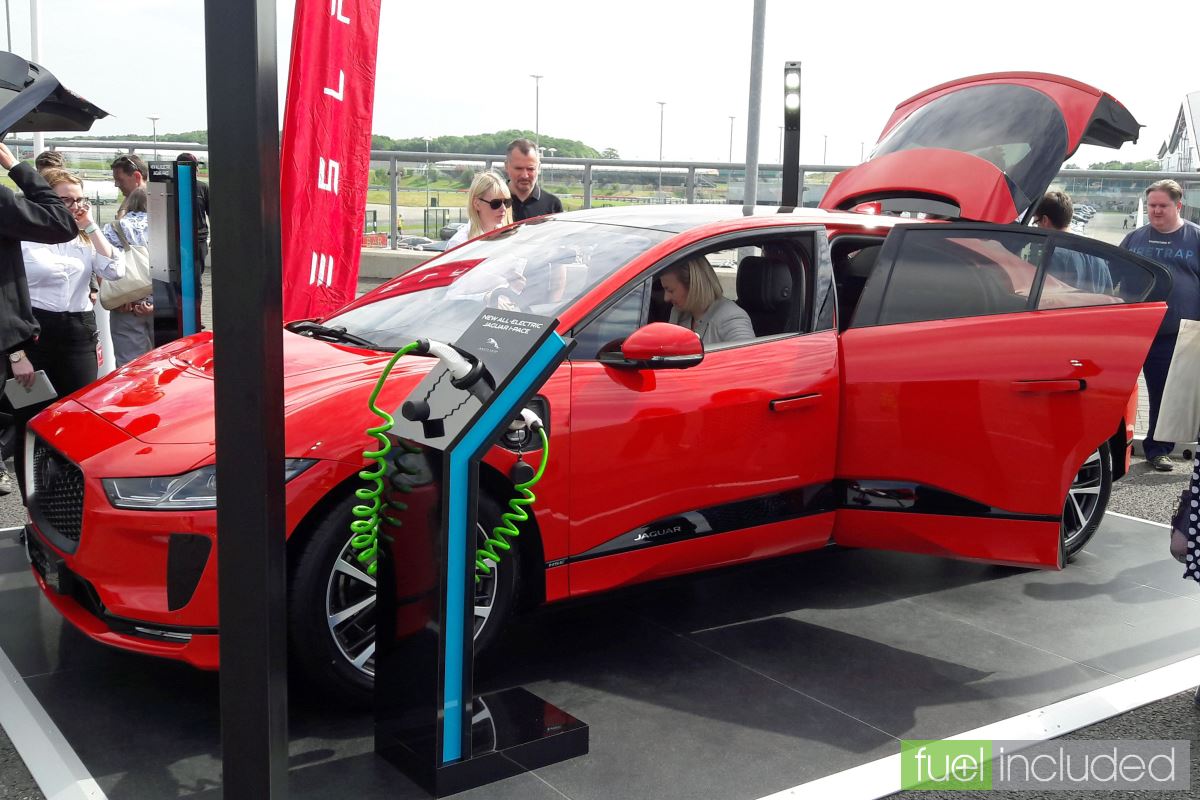
Jaguar I-PACE at Fully Charged Live show (Image: T. Larkum)

Survey: Half of young people want electric cars

Half of young people in the UK would like to own an electric car – compared with just a quarter of their parents, a survey suggests.

The research comes from motoring group the AA, which says myths about electric vehicles are putting off many drivers.

This matters because cleaning up air pollution and tackling climate change both depend on mass acceptance of electric vehicles (EVs).

Young people seem to be more accepting of the technology than older people.

Jaguar I-PACE at Fully Charged Live show (Image: T. Larkum)

But too many still hold needless fears, the AA says.

It comes as the government has announced a target for 50% of all new vehicle sales to be in the ultra-low emissions category by 2030.

The opinions were revealed in an AA/Populus poll of 10,293 drivers.

Read more: BBC

Cheapest Electric Cars UK (Image: Fuel Included)

Buyers are snapping up electric runarounds – and some are worth 30% more than a year ago

  • New data shows that 11 second-hand cars have increased in value in the last year
  • That’s despite each one having another 12,000 miles put on the clock
  • Of the appreciating models, the biggest increases came for old electric cars
  • The list also includes petrol and petrol-hybrid older vehicles

If you want to buy a car that will rise in value, you usually need to go for something classic or exotic – not a £6,000 runaround.

But new figures reveal a handful of family cars bucking the usual price trend and they all share one attribute, they are electric.

Cheapest Electric Cars UK (Image: Fuel Included)
Cheapest Electric Cars in the UK (Image: Fuel Included)

The Renault Zoe is top of a list compiled by price specialist HPI of second hand cars that are rising in value – and someone who bought one this time last year could potentially now sell it for 30 per cent more.

This means that if you had bought an average Renault Zoe in July 2017 for £6,300 and spent the past year putting 12,000 miles on the clock it should now be worth £1,900 more, says HPI.

Read more: This Is Money

OVO Vehicle-to-Grid (V2G) charging (Image: T. Larkum/Fuel Included)

National Grid set to tackle electric vehicle boom with ‘smart charging’

There could be as many as 11 million electric vehicles on British roads by 2030 and 36 million by 2040, in what would be a major upheaval for the UK’s energy system.

National Grid’s latest report on the future energy system overshoots the Government’s own targets which call for an end to petrol and diesel car sales by the same year.

The acceleration of the electric vehicle market will bolster demand for electricity, which is already in relatively tight supply, but the dual growth in battery storage will dramatically reduce the amount of new power generation projects which will be needed.

This time last year National Grid data estimated that the electric cars could increase peak demand electricity by as little as 8GW by 2030.

In its latest report the same amount is likely to be needed only by 2040 if consumers charge vehicles at off-peak times and through vehicle-to-grid technology.

OVO Vehicle-to-Grid (V2G) charging (Image: T. Larkum/Fuel Included)

Fintan Slye, of National Grid, said the growth of electric vehicles is one of the major trends in the system operator’s scenario planning which is used within the industry to inform decision making.

“We are already operating in an exciting period of change – a trend which is set to continue, certainly up to 2050 and beyond,”

he said, meaning that National Grid’s work balancing energy supply and demand “will become increasingly complex”.

National Grid expects “smart” energy use, which uses digital algorithms to charge and release energy from storage at the most cost effective time, will play a major role in shaping the energy system by the end of the next decade.

Read more: Telegraph