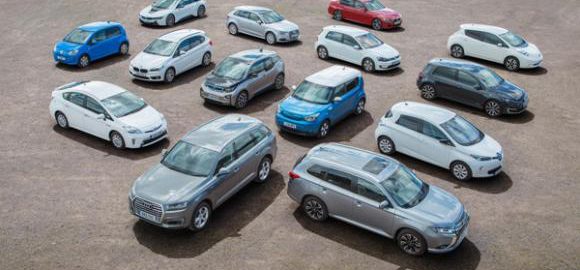
The European passenger plug-in vehicle market scored some 37,000 registrations in April, growing 30% compared to the same period last year, a good performance considering that the overall market is still in the red (-1% in April).
In April, fully electric vehicles (BEVs) jumped 70% year over year (YoY), to some 24,000 deliveries, and were responsible for 65% of all plug-in sales in the month. The BEV share of the overall auto market was 1.8%. Adding plug-in hybrids (PHEVs) to the tally, the share jumps to 2.8%, and that makes the 2019 plug-in vehicle (PEV) share 3.0% so far (2.0% for BEVs alone), above the 2.5% result of 2018.
Electric Car Line-up (Image: Go Ultra Low)
Looking at other fuels, diesel sales continue their never-ending slide, dropping 12% YoY. Their share dropped from 36% to the current 33%.
The big news in April was the Renault Zoe beating the Tesla Model 3, while the BMW i3 rounded out the spots on the podium.
Interestingly, except for the waiting-for-the-62kWh-version Nissan Leaf and the recently added Tesla Model 3, all the remaining top 5 best sellers had +50% growth rates, which is good news and proof that, unlike the USA, the Model 3 isn’t drying up sales from other EVs.
One-in-five company car drivers are ready to switch to a pure electric vehicle (EV), but that move may not come soon enough for some of Europe’s carmakers who face big fines for failing to meet CO2 targets from 2020.
A Fleet News poll suggests significant interest in electric powertrains, with 43.8% of respondents saying they will choose either a mild hybrid (12.2%), a plug-in hybrid (10.2%) or a pure EV (21.4%) as their next company car.
Diesel remains the powertrain of choice for 42.6% and one-in-nine (11.2%) said they will opt for petrol.
Electric cars can be a very effective way to save you money on motoring (Image: Go Ultra Low)
In the retail market, the interest in electric motoring is even greater. A little fewer than two-in-five drivers (39%) say they are considering an EV as their next purchase, approaching three times the 15% who said the same in 2017, according to research from Close Brothers Motor Finance.
Its Britain Under the Bonnet report also found a drop in concerns about the cost, range and charging time of EVs, in comparison to last year.
Electric vehicles (EVs) have been around for well over 150 years – considerably longer than their petrol and diesel fuelled cousins. But it’s only in the last couple of years or so that drivers and car-makers have begun to realise the potential for an electric car revolution. Technological advances in battery construction and rapid charging mean that, for the first time since the 1870s, electricity has the chance to displace fossil fuels as the driving force behind the world’s transport systems.
Is an all-electric future likely?
Replacing billions of petrol cars with electric vehicles obviously won’t happen overnight, but many analysts are predicting that an all-electric future is becoming increasingly inevitable. Many European countries have signed ambitious EV targets into law, with France and the UK both aiming to ban the sale of fossil-fuelled cars by 2040. And sales of EVs are booming around the world, with 70% growth in 2018 alone.
For years, electric cars were available from only a handful of companies – Tesla of course, plus the BMW i3, the Nissan Leaf or Toyota’s Prius being the most famous examples. But now almost every car company on the planet is stepping into the ring.
At the 2019 Geneva Motor Show, electrification was everywhere. Dozens of new electric models were on display as big-name brands ramp up production for mass markets, including Volkswagen, Porsche, Volvo and Audi. Mercedes’ parent company, Daimler, has announced that they too would have electric versions of its entire fleet by 2022, including popular models like the newly introduced smart car.
“ Exhaust emissions from fossil fuel transport cause 53,000 premature deaths per year in the US alone, and are especially harmful to children, the elderly, and low-income communities.”
Electric vehicles are going mainstream in a big way. But will they truly be able to topple the might of the petrol engine? And why might consumers be persuaded that their next car should fill up at a wall plug rather than a petrol pump?
Values of used pure electric cars surged 11 over the past year with growing demand and limited supplies hitting the market.
The performance is in marked contrast to the overall used car market which rose just 1.5%.
Whilst internal combustion engines (ICEs) are stumbling, their electric powered counterparts are thriving.
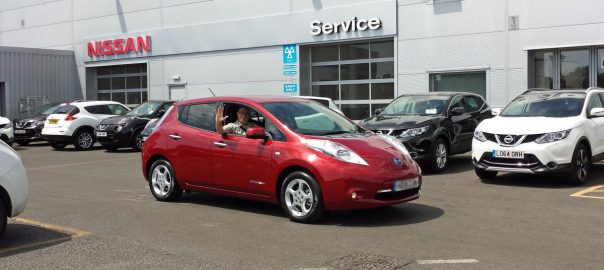
Nissan Leaf collection in St Albans (Image: T. Larkum)
With an average sticker price of £21,560 in April, used alternatively fuelled vehicles (AFVs) grew at a rate of 4.7%, up from last month’s 3.7% and, indeed, the highest rate of growth since August 2018. But the star of the show is pure electric; at £23,361, the highest price to date, EVs are growing at a double-digit rate (11%), according to the latest Auto Trader Retail Price Index.
The surging prices of low-emission vehicles can be attributed to supply and demand. On Auto Trader, the UK’s largest automotive digital marketplace, AFVs currently account for just 1% of stock listed, whilst petrol and diesel account for 52% and 47% respectively.
The only thing sure about electric cars is they will eclipse the internal combustion engine—one day.
The timing, however, is the topic of fierce and wildly divergent speculation. At the moment, only one in 250 cars on the road is electric. Battery electric cars comprise 2.1% of new global auto sales (about 2 million passenger vehicles). Electric vehicle (EV) sales should hit 2.7 million in 2019 even as the broader auto market declines (paywall).
But guesses about the timing of gas guzzlers’ eclipse are all over the map. Quartz assembled several of the top projections to gauge the size of the discrepancy. Optimists such as Bloomberg New Energy Finance (BNEF) in its 2019 Electric Vehicle Outlook report see the total EV stock soaring to 548 million by 2040, or about 32% of the world’s passenger vehicles. Bears, such as ExxonMobil and the oil cartel OPEC, put that day far into the future. Exxon’s most recent predictions, the most pessimistic (or optimistic?), show the global stock of EVs reaching only 162 million by 2040. That’s 70% lower than BNEF’s base case.
How can these predictions be so divergent?
Two assumptions make all the difference in EV adoption models, says Colin McKerracher, head of advanced transport for BNEF. The first is price parity. EV’s sticker price is expected to exceed conventional cars’ until the mid-2020s. Right now, electric vehicles are more expensive than conventional counterparts thanks to their pricey batteries and relatively small EV manufacturing capacity. No one is sure how far battery costs, the biggest expense in making EVs, can fall (they’ve already dropped 85% since 2010), and when EVs will achieve the same economies of scale as combustion engines have secured over the past century. The price of oil changes the total cost of ownership as well (New York City says EVs’ lower fuel and maintenance costs already makes them the cheapest option for its fleet).
A new scheme has been launched to recognise dealerships skilled at selling and servicing electric vehicles.
The Electric Vehicle Approved scheme will encourage car dealers to develop their expertise in servicing electric vehicles, as the country continues to move towards a zero-emission future backed by the government’s comprehensive £1.5 billion Road to zero strategy.
The standard for electric vehicle dealer accreditation has been developed by the National Franchised Dealers Association (NFDA) and the Energy Saving Trust (EST).
Successful dealerships will be known as ‘Electric Vehicle Approved’ and recognised for their commitment to training, quality advice and effective service.
Future of Mobility Minister Jesse Norman said: “Record levels of ultra-low emission vehicles on our roads are good news, as we seek to end the sale of new conventional diesel and petrol cars and vans by 2040.
“The accreditation recognises businesses with knowledge, capability and commitment to electric vehicles, and will help to encourage more car owners to switch to a greener alternative.”
Following a pilot scheme, in which the electric vehicle skills of 12 dealerships were audited, it is estimated there will be 130 Electric Vehicle Approved sites across the UK by the end of 2019.
Uncertainty among customers and poor advice from dealers have been identified as a key barrier to electric vehicle ownership. The scheme therefore aims to help create a trusted brand, increasing the confidence of drivers looking to buy an electric vehicle.
They are on the cusp of potentially dominating tech era
It’s no secret that the world is heading in the direction of pollution-free electric vehicles with many European and Asian countries already pledging to go electric within the next 20 to 30 years. However, it’s possible that this transition could be fast-tracked by our spending habits and constant need of the latest technology.
This is still the case, despite Tesla going through its fair share of criticisms in recent months. There being dips in sales, issues with their battery providers, controversy through chief executive Elon Musk’s Twitter usage and of course, underwhelming first quarter revenue returns. All of this has caused many investors to lose faith in the company. The only question we have to ask ourselves now is, is this loss of faith justified or a premature bailout during troubled times?
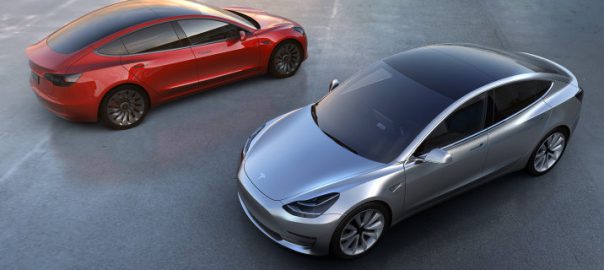
Tesla Model 3 (Image: Tesla)
Despite all the criticism involving Tesla, electric cars are still widely considered the future. But before investors or business owners planning to switch to electric could seriously consider anything to do with this so called “future,” we need to consider why electric cars are on the cusp of potentially dominating tech era.
The Changing Times
The last decade was all about the smartphone revolution, and before it was the dotcom era. Now, in 2019, it is believed the smartphone era is ending.
Therefore, we could slowly move our sights on to the next big technological advancement. Already, Uber has invested over $500 million into electric and driverless cars. Just imagine how much money ride-share companies like Uber would save annually not paying drivers.
What’s more, businesses that use many vehicles daily can also potentially save a ton of cash. This is because unlike gasoline cars, electric vehicles require less maintenance. This highlighted on Tesla’s website: “Tesla cars require no traditional oil changes, fuel filters, spark plug replacements or emission checks. As electric cars, even brake pad replacements are rare because regenerative braking returns energy to the battery, significantly reducing wear on brakes.”
In addition, our obsession for revolutionary technology, especially upgrading technology regularly, is something that can really make electric vehicles fast track from the future to present sooner than expected. It has become almost unusual for consumers to allow technology to linger around for too long nowadays.
Registration figures across Europe in March show electrified cars pass 100k mark, while diesel hits its lowest point since 2000
Europe’s new car market declined by another 3.6% last month – the seventh consecutive monthly fall, with factors such as the diesel city ban, falling consumer confidence and Brexit uncertainty blamed.
Figures released by analysis firm Jato Dynamics show that 4.13 million new cars were registered across the continent in the first quarter of this year, down 3.2% year-on-year. 19 of the 27 countries listed posted declines, with the UK market dropping by a modest 3.4%.
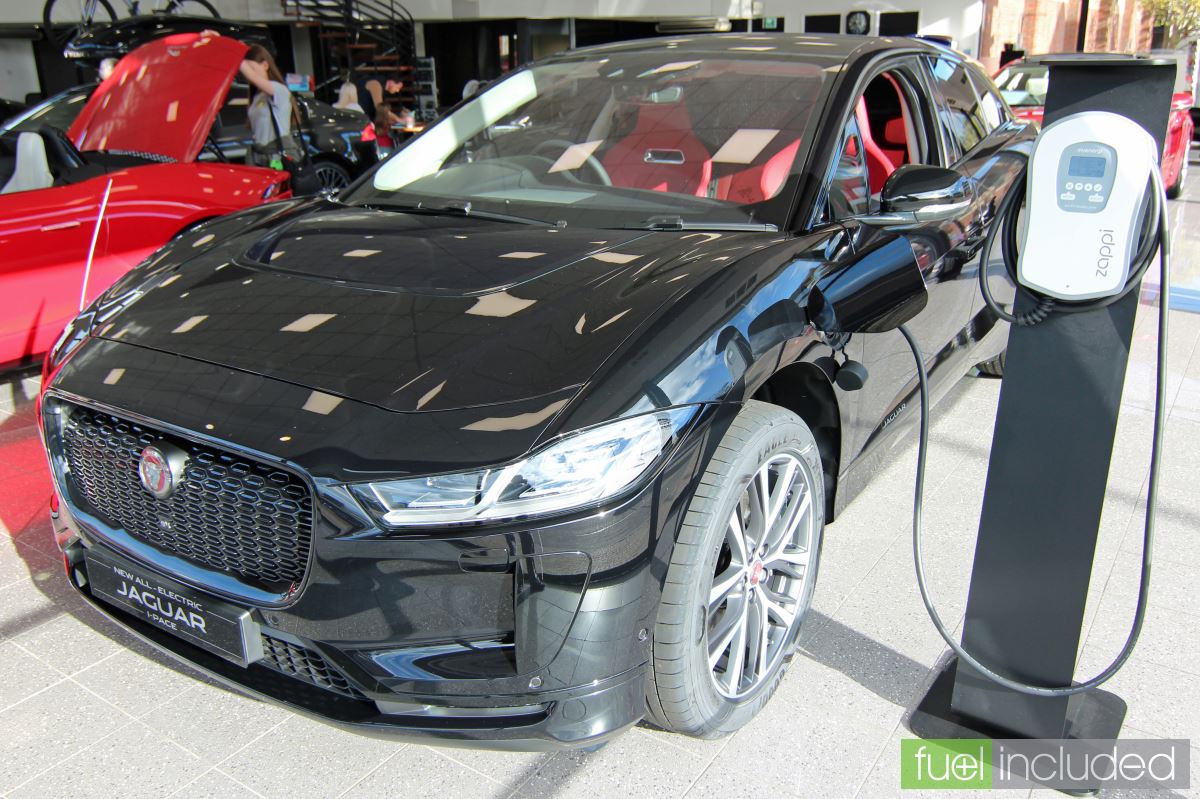
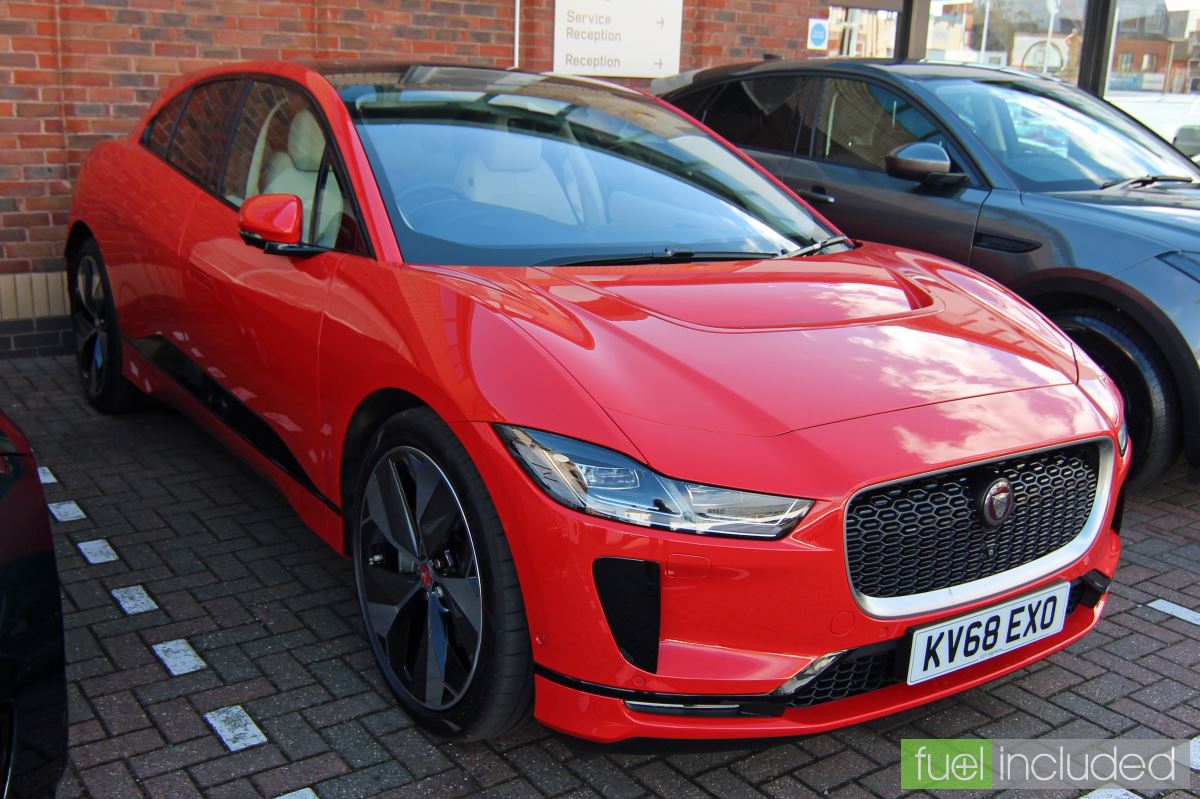
Jaguar I-PACE Electric Car (Image: T. Larkum)
Diesel demand is down significantly again, with a 31.2% market share in March. That’s down from the same month last year (36.2%) and much lower than March 2017 (44.8%).
There is good news, however, as last month saw registrations of electrified vehicles (BEVs, PHEV and traditional hybrids) passing the 100,000 mark for the first time, with 125,400 registered. Demand grew by 31%, driven by demand from Holland, Spain, Norway and Germany in particular.
Leading car buying website says the zone has upped interest – particularly for plug-in hybrids.
The introduction of London’s new ultra-low emission zone (ULEZ) has triggered consumer interest in electric and hybrid cars, according to one of Britain’s leading new-car websites.
Designed to improve air quality in the capital, the ULEZ sees vehicles failing to meet the required emissions standards charged extra to enter the Congestion Charge zone. Petrol-powered cars must comply with at least the Euro 4 standard to avoid the £12.50 charge, while diesels need to meet the much more recent Euro 6 standard.
Figures from Carwow show how the ULEZ’s arrival earlier this month caused noticeable spikes in Londoners’ searches for electric, hybrid and plug-in hybrid vehicles. Inside the M25, Carwow says quote requests for plug-in hybrid vehicles risen 25 percent since the beginning of April, while interest in electric cars has risen 14 percent. Demand for standard hybrid vehicles, such as the Toyota Prius, also increased, but only by around six percent.
Choosing an electric car over its combustion-engine equivalent will soon be just a matter of taste, not a matter of cost.
Every year, BloombergNEF’s advanced transport team builds a bottom-up analysis of the cost of purchasing an electric vehicle and compares it to the cost of a combustion-engine vehicle of the same size. The crossover point — when electric vehicles become cheaper than their combustion-engine equivalents — will be a crucial moment for the EV market. All things being equal, upfront price parity makes a buyer’s decision to buy an EV a matter of taste, style or preference — but not, for much longer, a matter of cost.
Every year, that crossover point gets closer. In 2017, a BloombergNEF analysis forecast that the crossover point was in 2026, nine years out. In 2018, the crossover point was in 2024 — six years (or, as I described it then, two lease cycles) out.
The crossover point, per the latest analysis, is now 2022 for large vehicles in the European Union. For that, we can thank the incredible shrinking electric vehicle battery, which isn’t so much shrinking in size as it is shrinking — dramatically — in cost.
Analysts have for several years been using a sort of shorthand for describing an electric vehicle battery: half the car’s total cost. That figure, and that shorthand, has changed in just a few years. For a midsize U.S. car in 2015, the battery made up more than 57 percent of the total cost. This year, it’s 33 percent. By 2025, the battery will be only 20 percent of total vehicle cost.