Category Archives: Electric Cars

News and reviews of the latest electric cars (full electrics and plug-in hybrids).

Nissan Leaf (Image: Qurren/Wikipedia)

Leasing customers look to snap up EVs before subsidies end

Personal leasing customers are rushing to electric vehicles (EVs) ahead of next month’s expiration of the £3,500 subsidy for plug-in vehicles.

Latest figures from Leasing.com show that pure EVs accounted for 5% of all leasing enquiries in January – almost twice that of their share of the overall new car market (2.7%).

The Nissan Leaf proved to be the most popular all-electric model in January. With a range of around 168 miles, the 110kW N-Connecta 40kWh Nissan Leaf derivative proved most popular, ahead of the Tesla Model 3.

Nissan Leaf (Image: Qurren/Wikipedia)

The Plug-in Car Grant (PICG) is spread evenly across the term of the lease and can reduce the monthly cost of a 36-month contract by around 25%, or £100 a month, according to the British Vehicle Rental and Leasing Association (BVRLA).

Leasing.com and the BVRLA are calling for the grant to be extended to continue to acceleration the uptake of zero-emission vehicles

Paul Harrison, head of strategic partnerships at Leasing.com, said: “Leasing customers are responsible for the purchase of tens of thousands of electric vehicles each year and the PICG is vital in helping more consumers make the transition from petrol or diesel to electric vehicles.”

“Now that hybrid vehicles appear to have been added to the government’s ban, and speculation it could happen as early as 2032, more urgently needs to be done to continue to incentivise the uptake of electric vehicles by consumers.”

Read more: Motor Trader

It’s Time to Go Green!

If you would like to know more about Solar Panels and the PowerBanx range of home battery systems, and get a free instant quote, please complete our online form:

OVO Vehicle-to-Grid (V2G) charging (Image: T. Larkum/Fuel Included)

Electric vehicles could turn solar households into autonomous energy units

Many discussions abound on how Australia can reach renewable energy targets of 50 per cent and much more. Many experts believe achieving this goal will depend on the availability of a low cost, bulk energy storage infrastructure.

Pumped hydro has received much attention in this regard. While technically feasible, bulk storage still requires transmission and distribution infrastructure that is not only costly but will take considerable time to implement.

A far simpler and cost effective route is the bottom-up approach of turning each house into an autonomous energy unit.

OVO Vehicle-to-Grid (V2G) charging (Image: T. Larkum/Fuel Included)

The use of solar panels in homes and small industry has proven to be remarkably successful. The uptake of rooftop solar has been so good that the grid, as well as losing a portion of their market to solar, is becoming unable to use all of the exportable household solar energy generated during clear days.

Without some form of energy storage, solar panels can provide only around 30% of daily household energy, leaving the grid to supply the rest. Solar hot water systems can bring the total solar contribution to around 45% of energy requirements.

However, to reach greater household energy autonomy requires storage.

The missing element to achieving high levels of renewable energy has emerged in the form of the Electric Vehicle (EV). EVs not only provide transportation, but also have significant battery storage capacity.

Read more: The Driven

It’s Time to Go Green!

If you would like to know more about Solar Panels and the PowerBanx range of home battery systems, and get a free instant quote, please complete our online form:

How running electric vehicles can save organisations money

Eight years ago, Fleet News produced a supplement boldly called “2012: The Year of The Electric Car”.

While there was growing evidence at that time that the technology was about to break through into the mainstream, it turned out we were – as is sometimes the case – ahead of our time.

However, current political, environmental and technological circumstances suggest that with the dawn of the new decade, battery electric vehicles (BEVs) will now really start to gain a firm foothold in the UK fleet sector.

Part of the reason for this should be that the adoption of BEVs also has the potential to save fleets thousands of pounds per vehicle each year.

This is why it is important that organisations look beyond the P11D price or leasing cost premium that BEVs carry over petrol or diesel vehicles to look at wholelife costs, says Helen Lees, head of electric vehicles and connected services at Groupe PSA.

“We are trying to focus our customers’ minds on the total cost of ownership of EVs,” she says.

“Even if you have to pay more up front, or even if your monthly rental is a little higher, the reduced running cost through electricity is much cheaper than petrol or diesel; there is a reduced service, maintenance and repair (SMR) cost from the fact there are fewer mechanical working parts so there is less to replace on every service, and that can change the perception of pricing in the customers’ minds.”

Read more: Fleet News

It’s Time to Go Green!

If you would like to know more about Solar Panels and the PowerBanx range of home battery systems, and get a free instant quote, please complete our online form:

Red Tesla Model S (Image: T. Larkum)

Let’s spark the electric car revolution now — there’s no time to stall

For those of you thinking that electric cars didn’t exist before Elon Musk and Tesla, think again.

Those stepping out into the manure-strewn streets of Manhattan in 1897 could have hailed a battery fuelled, as opposed to horse drawn, taxi. In 1900, more than 1,000 electric cars were made in the US, 28 per cent of total American car production that year.

A few years later, however, Henry Ford produced the petrol-powered Model T and the electric starter motor replaced the hand crank. From that point on, the electric car was seemingly doomed: not enough power, not enough range and, as petrol stations proliferated, not enough charging points.

Red Tesla Model S (Image: T. Larkum)

To be fair, electric vehicles still managed to flourish in niche areas. The humble milk float had a maximum speed of around 15mph, could travel roughly 25 miles (following a seven-hour charge) and blocked the streets of Britain for decades. Floats were cheap to run and could easily be charged at the milk depot after the day’s deliveries (a model that could be used in the 21st century if we end up with huge fleets of self-driving cars). Still, floats could never compete with a Ford or, for that matter, a Ferrari.

Tesla, however, can. And, increasingly, so can other manufacturers of electric cars, one reason why the Government is now planning to ban the sale of petrol and diesel cars by 2035. Range is less of an issue than it once was. The cars — unlike milk floats — are quick. Fuel-wise, they’re incredibly efficient: they don’t rely on the controlled explosions taking place in an internal combustion engine (which creates too much by the way of heat and too little by the way of miles). And, over time, the maintenance bills will be a lot lower: no gearboxes to go wrong, no spark plugs to clean, no engine oil to be changed.

Read more: Standard

It’s Time to Go Green!

If you would like to know more about Solar Panels and the PowerBanx range of home battery systems, and get a free instant quote, please complete our online form:

Solar Charge Points charging electric cars (Image: T. Larkum)

EDF acquires Pod Point securing its role in the UK EV market

EDF has confirmed its long-rumored acquisition of electric vehicle (EV) charging company Pod Point, in a move that sees it cement its position in the UK EV space.

The energy supplier has purchased the charging company together with Legal and General, which is taking a c.23% stake in EDF’s newly-formed joint venture. This follows the finance giant purchasing a share in Pod Point last March.

EDF says that the acquisition will bring benefits including reduced costs to customers, through the combination of EDF’s energy solutions and Pod Point’s 62,000 chargers in the UK currently.

Solar Charge Points charging electric cars (Image: T. Larkum)
Pod Point Solar Charge Points charging electric cars (Image: T. Larkum)

The acquisition follows its purchase of battery storage and EV charging infrastructure firm Pivot Power last November as it seeks to grow in the EV space, both in the UK and Europe.

Simone Rossi, UK CEO of EDF said EVs will be “crucial” to reducing carbon emissions and fighting climate change.

“With the addition of charge points, we can help our customers to reduce their carbon footprints and benefit from lower fuel costs by going electric. The additional electricity demand from EVs will require urgent investment in low carbon generation from renewables and nuclear.”

Erik Fairbairn, Pod Point CEO & founder said that this was an “incredibly exciting next chapter” for the company.

“By joining up with EDF we can take things to the next level and accelerate our national roll out of charging points and make it even easier for drivers across the UK to go electric. I’m immensely proud of what the Pod Point team has already achieved but think it is only a fraction of what we will now be able to do with EDF.”

Read more: Current News

It’s Time to Go Green!

If you would like to know more about Solar Panels and the PowerBanx range of home battery systems, and get a free instant quote, please complete our online form:

Charging with an Ohme smart charging cable

Electric Vehicle Consumer Code launched for domestic installers and suppliers

A consumer code for installers and suppliers of electric vehicle (EV) charge points has been launched by Renewable Energy Assurance Ltd (REAL).

REAL also operates a number of other codes and certifications, including the Renewable Energy Consumer Code (RECC). A 50% discount on membership of the Electric Vehicle Consumer Code (EVCC) will be offered for the first year for installers who are already RECC members, with Joju Solar and Caplor Energy the first two EVCC members.

Charging with an Ohme smart charging cable
Charging at home

The EVCC applies to suppliers and installers of domestic EV charge points whether acting on their own account or as a sub-contractor.

It spans pre-sale activities, contracts, installation and completing the work, after-sale activities and complaints handling and the dispute resolution process.

It has been designed to dovetail with the Institute of Engineering and Technology’s Code of Practice for Electric Vehicle Charging Equipment Installation (the IET Code), as well as the current Electric Vehicle Homecharge Scheme.

Read more: Solar Power Portal

It’s Time to Go Green!

If you would like to know more about Solar Panels and the PowerBanx range of home battery systems, and get a free instant quote, please complete our online form:
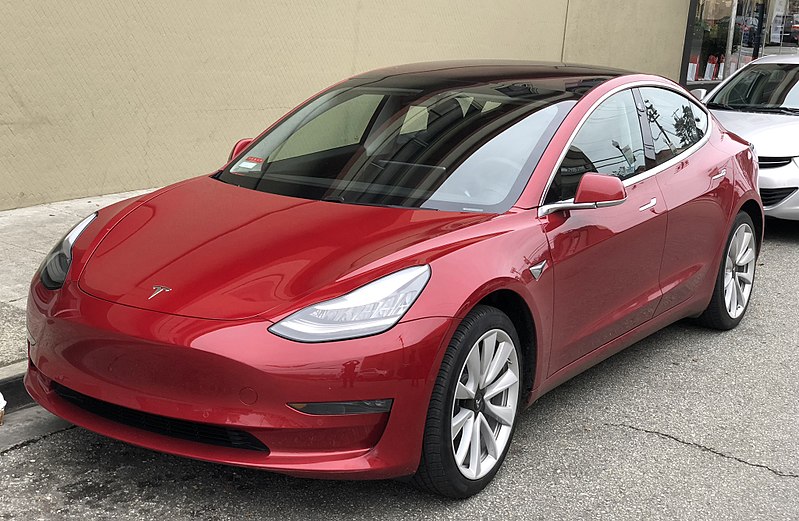
Tesla Model3 (Image: Wikimedia/Carlquinn)

Coronavirus outbreak impacts production of electric vehicles

The coronavirus outbreak in China is expected to have an impact on the auto industry in the United States.

That’s according to a new analysis from the Lansing-based Anderson Economic Group.

“It’s a very bad situation,” says Patrick Anderson, Principal and CEO of the group. “I think it’s going to cascade out into the United States in terms of certain parts and certain models fairly quickly.”

Millions of people in China have been quarantined because of the virus outbreak. Many factories closed, though some – like Tesla’s assembly plant in Shanghai – have started to reopen.

Tesla Model3 (Image: Wikimedia/Carlquinn)

Anderson says the economic impacts for carmakers will mostly be felt within China, but he says companies may have to substitute parts in North America to continue production of certain vehicles.

He says the hardest hit part of the industry will be electric vehicles, because China makes many of the batteries that go into the vehicles, and those batteries can’t be quickly sourced from elsewhere.

“I think the effect of this is partially going to identify for people how fragile the supply chain is for battery-electric vehicles,” Anderson says.

Read more: Michigan Radio

It’s Time to Go Green!

If you would like to know more about Solar Panels and the PowerBanx range of home battery systems, and get a free instant quote, please complete our online form:
Cheap Motoring

We All Can Benefit from More Electric Vehicles

Environmental advocates and consumer groups are often at odds with investor-owned electric utilities.

In fact, NRDC is currently opposing electric utilities in several active lawsuits. However, we all agree that electrifying our nation’s cars, trucks, and buses can benefit everyone and that the transition must benefit communities most in need of relief from pain at the pump and from toxic, vehicular air pollution.

The Edison Electric Institute, Illinois Citizens Utility Board, National Consumer Law Center, Natural Resources Defense Council, and Sierra Club have issued a joint statement underscoring that agreement. The full statement is available here and is reproduced below. This is a landmark accord that unites these groups for the first time on the shared goal of electrifying our transportation system and ensuring those benefits are shared broadly.

Cheap Motoring

This is important because transportation is now the largest source of carbon pollution in the nation.

Electric utilities are currently investing $1.4 billion in programs designed to accelerate the electrification of the transportation sector, largely helping to speed the deployment of charging infrastructure for electric vehicles (EVs). Nearly $1 billion of that collective investment is in programs that prioritize under-served communities, and $345 million is allocated directly to disadvantaged communities and low-income customers.

And the largest utility transportation electrification programs approved to-date will speed the deployment of zero-emission trucks, buses, port equipment, and other vehicles that emit dangerous diesel pollution that disproportionately harms low-income communities.

Utility investments to accelerate transportation electrification also pay broader dividends. Multiple studies reveal that widespread EV charging can provide billions of dollars in reduced utility bills resulting from the fact that EV charging brings in new revenue in excess of associated costs, money that is returned to all customers in the form of lower rates and bills.

Read more: NRDC

It’s Time to Go Green!

If you would like to know more about Solar Panels and the PowerBanx range of home battery systems, and get a free instant quote, please complete our online form:

Tesla Model3 (Image: Wikimedia/Carlquinn)

Car tax 2020: How employers could help you save 40 percent on a new car with tax changes

CAR TAX changes are coming into effect in 2020 and your employer could be the answer to getting a brand new vehicle for a cheap price tag.

Car tax rules for company vehicles are set to change this year which will see a complete ban on benefit-in-kind rates as rates are dramatically cut. The updates will slash benefit-in-kind rates to zero percent from 16 in a massive win for those wishing to get involved with the electric car revolution ahead of 2035’s petrol and diesel ban.

Changes to the rates will see some of the most popular EV’s on the market go for budget prices as the government aims to increase the uptake of the machines.

A premium Tesla Model 3 is estimated to cost around £530 under a 48-month contract. However, company car owners could see a 42 percent discount by paying just £307 per month.

Tesla Model3 (Image: Wikimedia/Carlquinn)

Discounts would also come into force across the affordable market with Renault’s Zoe around 32 percent cheaper.

The city runaround is estimated to cost around £270 per month through a finance deal but a slash in benefit-in-kind rates for company car owners could see motorists paying just £184 per month.

Read more: Express

It’s Time to Go Green!

If you would like to know more about Solar Panels and the PowerBanx range of home battery systems, and get a free instant quote, please complete our online form:

Alternatively fuelled vehicle sales continue to smash records, as charge point roll-out accelerates

Sales of battery electric vehicles (BEVs) have continued to soar, exceeding the 100,000 mark in January 2019.

Sales were up 203.9% compared to 2019, according to new statistics from the Society of Motor Manufacturers and Traders (SMMT), with 4,0054 BEVs registered during the month compared to 1,334 in the year previously.

However, plug-in hybrids (PHEVs) outperformed BEVs for the first time since May 2019, with 4,788 registered in the month.

Combined, alternatively fuelled vehicle registrations reached 11.9% of the market in January, which the SMMT says is the highest on record and is up from 6.8% the year prior.

The figures come in a week where it was announced the government will seek to bring the phase-out of petrol and diesel vehicles to 2035, and include hybrids within this for the first time.

Mike Hawes, chief executive SMMT, said:

“While ambition is understandable, as we must address climate change and air quality concerns, blanket bans do not help short-term consumer confidence.

“To be successful, government must lead the transition with an extensive and appropriately funded package of fiscal incentives, policies and investment to drive demand. We want to deliver air quality and environmental improvements now but need a strong market to do so.”

As sales of electric vehicles increase, the amount of charging infrastructure across the UK also does. By the end of 2019, there were 17,000 public charge points recorded on Zap-Map and over 10,500 charging locations.

Read more: Current News

It’s Time to Go Green!

If you would like to know more about Solar Panels and the PowerBanx range of home battery systems, and get a free instant quote, please complete our online form: