Category Archives: Electric Cars

News and reviews of the latest electric cars (full electrics and plug-in hybrids).

Milton Keynes 'Mushrooms' Charging Hub (Image: T. Larkum)

Government to finance connection costs for 350kW chargers across strategic road network

A new government fund is to help pay for connection costs to enable the installation of high-powered charging (HPC) at motorway sites across England.

The Rapid Charging Fund – which was first announced in the 2020 Budget – will be available to fund a portion of costs at strategic sites where upgrading connections to meet future demand for HPC is “prohibitively expensive and uncommercial”, supporting several governmental ambitions.

Milton Keynes 'Mushrooms' Charging Hub (Image: T. Larkum)
Milton Keynes ‘Mushrooms’ Charging Hub (Image: T. Larkum)

One such ambition is that by 2023, six HPC points between 150kW and 350kW will be available at motorway service areas in England, with some larger sites having up to 10-12 chargers.

Secondly, by 2030 this network is expected to be “extensive”, with the government planning for there to be 2,500 HPC points across England’s motorways and major A roads. This increases to 6,000 by 2035, the date the government is consulting on to ban sales of new petrol and diesel vehicles.

Timing and delivery of the funding is to be confirmed in due course, the government said. No details as to how much funding will be available has been disclosed.

It listed expectations it had for new chargepoints to make them easy to use and hassle-free, including that they are able to take credit and debit card payments and will be available 99% of the time.

Read more: Current News

It’s Time to Go Green!

If you would like to know more about Solar Panels and the PowerBanx range of home battery systems, and get a free instant quote, please complete our online form:

Nissan Leaf 3.Zero e+ (Image: Nissan)

UK: Stealthy police use electric cars to hunt poachers

The Gloucestershire Constabulary is putting the country’s largest police fleet of electric cars to new tactical use.

On Twitter, they described their latest ops against illegal poachers with the electric vehicles being central to their strategy.

To catch unwanted hunters, the police on Gloucestershire tweeted that the officers lay waiting in “unmarked electric cars patrolling and listening for gunshots, utilising their quiet running”.

Nissan Leaf 3.Zero e+ (Image: Nissan)

It is an unusual use for electric cars and followed a string of poaching incidents which left local deer shot but left alive. The police reports speak of “appalling acts of cruelty” leading them to come up with what we’d like to call Operation Smart Charge.

Read more: Electrive

It’s Time to Go Green!

If you would like to know more about Solar Panels and the PowerBanx range of home battery systems, and get a free instant quote, please complete our online form:

Number of diesel cars on UK roads falls for first time in 25 years

There were 111,000 fewer diesel cars in the UK in 2019 than the year before as people switched from polluting vehicles to greener ones

The UK has reached a motoring milestone, passing ‘peak diesel’ as the number of diesel cars on the roads fell for the first time in at least 25 years.

There were 111,000 fewer diesel cars in the UK in 2019 than the year before as people switched from polluting vehicles to greener, electric ones, according to government figures.

Although sales of diesel vehicles have been falling for a while this is the first time that the total number on the roads has declined, according to data from the Department for Transport.

“These figures hint at a motoring milestone – the possibility that we have hit or even passed ‘peak diesel’,” said Steve Gooding, director of the RAC Foundation.

Collapse in diesel sales

“This was due to the collapse in sales of new diesel cars together with the scrapping of older diesels, which have either come to the end of their useful lives or whose owners fear increasing restrictions on their use because of air quality concerns,” he said.

Read more: iNews

It’s Time to Go Green!

If you would like to know more about Solar Panels and the PowerBanx range of home battery systems, and get a free instant quote, please complete our online form:

2020 Renault Zoe (Image: Renault)

Renault Zoe GT Line review: Electric vehicle perfect for essential journeys

Mirror Motoring’s Colin Goodwin has found the Renault Zoe electric vehicle the perfect runner in lockdown to go and visit his mum and – with no off-street parking – found it easy to charge up away from home

There’s only one essential journey that I have to make and that’s to care for my 94-year-old mum.

She’s only 10 miles away and for this I’ve been using a new Renault Zoe that was delivered a few days before the lockdown started.

2020 Renault Zoe (Image: Renault)
The improved Renault Zoe has a longer range and posher interior (Image: Renault)

This is the longest period that I’ve run an electric car and it’s proving to be a very interesting experience as I live in a terraced street with no off-street parking.

That means I cannot charge the car at home.

This leaves me with three options: our local mini Waitrose which has a Polar public charging point; my pal Jim’s wallbox charger; or public charging points while out on my travels.

Anyway, this is the third generation Zoe and its range has been extended to 245 miles thanks to a 52kWh battery.

There’s also a new front bumper and LED headlamps.

Other changes to the car’s lines bring its styling more into line with the latest Clio and Captur models.

The more significant changes, however, have taken place inside.

Many of the hard plastics have been replaced by soft-touch materials. There’s also more brightwork which lifts the perceived quality.

There are three grades of Zoe to choose from, starting with the entry-level Play (106bhp R110 motor), the Iconic (R110 or 133bhp R135 motor) and top-spec GT Line (R135 motor only).

Read more: Mirror

It’s Time to Go Green!

If you would like to know more about Solar Panels and the PowerBanx range of home battery systems, and get a free instant quote, please complete our online form:

Tesla Cybertruck (Image: Tesla)

Why Electric Vehicles Are Going To Take Over The World

Interesting times in the electric vehicle market, as more and more carmakers try to position themselves in what looks like a second phase of growth.

In the luxury market segment, the announced launch of Tesla’s Cybertruck has galvanized a market that, in the United States, buys two million vehicles each year. What at first looked like a prototype of a prototype, has turned out to be a completely revolutionary design that combines a unique-looking vehicle with much lower manufacturing costs than expected. With more than half-a-million orders on its books, the company is now prioritizing its production over the Roadster.

Tesla Cybertruck (Image: Tesla)

The reason is simple: the Roadster appeals to a relatively marginal market and, from a target audience point of view, does not contribute much to the segments in which the brand already had significant appeal, whereas the Cybertruck, if successful, could allow it to dominate a very important and iconic part of the market that is fundamental to achieving mass popularity in a country like the United States.

In the economy segment, Volkswagen has announced plans to launch a family of electric vehicles priced at below $22,000, targeting city dwellers and not originally designed for the US, which was originally going to be launched under the Seat brand. Affordable mobility is an important segment that could shift a lot of units.

Read more: Forbes

It’s Time to Go Green!

If you would like to know more about Solar Panels and the PowerBanx range of home battery systems, and get a free instant quote, please complete our online form:

Asda electric delivery vehicle (Image: Asda)

Asda rolls out electric vehicle fleet in a bid to boost online capacity

Asda has rolled out a fleet of electric vehicle in a bid to boost its online delivery capacity, amid the increasing demand on online services due to the Coronavirus (COVID-19) pandemic.

Used in 48 stores

The new fleet of electric vehicles will be used to ferry orders from stores to click-and collect points, freeing up traditional delivery vans to focus on home deliveries.

Asda electric delivery vehicle (Image: Asda)

The initiative will enable stores to collectively ramp up the number of available click and collect slots by over 7,000 per week, to reach more than 34,000 slots.

The electric vehicles, which can be charged on-site, have a 40 miles single charge range, and are fully road-legal.

Read more: Supply Chain Analysis

It’s Time to Go Green!

If you would like to know more about Solar Panels and the PowerBanx range of home battery systems, and get a free instant quote, please complete our online form:
Electric cars could cut total CO2 by 12 per cent, Nottingham study shows

Total carbon emissions in the UK will be cut by almost 12 per cent if the country exclusively uses electric cars in future, a new study shows.

Research by Nottingham Trent University shows that 42 million tons of CO2 (MtCO2) will be removed from the atmosphere in the UK – a reduction of 11.89 per cent of the UK’s 351.5 MtCO2 total emitted last year.

The analysis offsets the increase in carbon emissions for the electricity grid which is required to power the country’s 32 million cars and taxis if they were switched to electric vehicles.

The switch to electric cars is found to save 14 per cent from the total carbon emissions, but will also cause an increase in carbon emissions from electric power stations of about 2.1 per cent for the additional electricity needed, making the net savings to be about 11.89 per cent.

The research – by PhD candidate George Milev, from the School of Architecture, Design and the Built Environment – considers fully electric cars currently used in the UK, including the Tesla Model 3, Nissan Leaf, Jaguar I-Pace, and more.

“These are encouraging findings and show just how much impact the switch to electric cars could have,” said researcher Mr Milev.

“In the wake of the Covid-19 pandemic, we are regularly seeing reports on how the environment has benefitted from the decreased use of combustion engines.

“If and when the UK moves exclusively to electric car usage, we will similarly see real benefits in the dramatic reduction in levels of CO2.”

Read more: Westbridgford Wire

It’s Time to Go Green!

If you would like to know more about Solar Panels and the PowerBanx range of home battery systems, and get a free instant quote, please complete our online form:

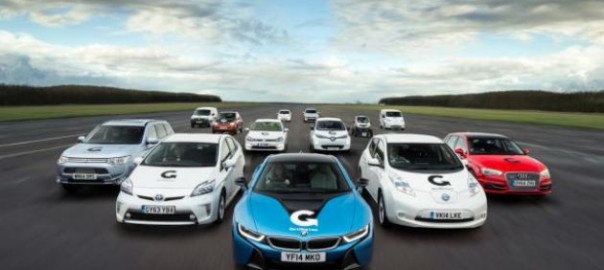
Go Ultra Low members boast 15 ULEVs across a range of segments (Image: OLEV)

Should I buy an electric car?

So you’ve been thinking about making the switch to an electric car, but you’re still unsure whether the time is quite right. After all, the Government keeps on providing fiscal incentives to go electric, while seemingly clobbering drivers of petrol and diesel cars with taxes, so the financial case is already strong.

The thing is, are electric vehicles (EVs) good enough, is the charging infrastructure widespread enough, and do the financial incentives really offset the higher initial price of an electric car? With this advice guide, you can make an informed choice about whether or not the time is right for you to make the change.

Go Ultra Low members boast 15 ULEVs across a range of segments (Image: OLEV)
(Image: OLEV)
  • Electric cars are more expensive than conventional ones
  • But a range of grants and subsidies are available
  • Electricity is cheaper than petrol or diesel
  • There are some very compelling tax breaks, too
  • An EV could well save you money overall
  • Driving an electric car is enjoyable
  • They’re usually fast and very quiet
  • Also very easy and relaxing to drive
  • They usually come with lots of equipment and technology
  • And obviously, they’re good for the environment

Low running costs/subsidies/grants

It’s true that electric cars are expensive to buy compared with petrol or diesel cars, but that’s not the full story. If you think about how much your car will cost overall during the lifetime of the car, then the reduced running costs could well make up that difference, and then some. The good news is that an electric car can save you cash in a wide variety of ways, and once you add them all up, the cumulative savings can be really compelling.

Obviously, the first saving you’re going to make is on fuel. An electric car might not be able to travel as far as a combustion-engined car when they are both fully filled/fully charged, but charging a car up with electricity is much cheaper than filling it with petrol or diesel.

How much cheaper? Well, that depends on a number of things. If you’re charging at home, what sort of electricity tariff are you on? Are you charging overnight or at peak time? Or, if you’re regularly relying on public chargers, what are you paying in terms of subscriptions to providers, and in terms of power costs? Also, how much charge can your electric car hold? The variables are numerous.

Read more: CarWow

It’s Time to Go Green!

If you would like to know more about Solar Panels and the PowerBanx range of home battery systems, and get a free instant quote, please complete our online form:
Cheap Motoring

The impact of Covid-19 on the electrification of transport: a UK perspective

Will the pandemic set back the work of the last 5 years another 20 years?

The global economy is facing an unprecedented downturn due to Covid-19. All major researchers and banks are forecasting global GDP drops, and the IMF is predicting the worst recession since the Great Depression. Global stock market performance indicators by sector highlight a 35% year to date drop (at time of writing) in share prices in the automotive sector, which has been hit hard by disruptions to global supply chains, the halt of factories, and the sharp drop in demand caused by the lockdown. The expected economic impact is grim, and the global economy faces some tough challenges in the coming years.

Cheap Motoring

Historically, the UK’s —and indeed Europe’s— track record at driving decarbonisation and investment in future emission-reduction measures during a recession, when the focus shifts to jobs and economic recovery, has not been good.

If the EU emission targets are changed, if the automotive sector reduces their focus on Electric Vehicle (EV) production, if the Energy industry does not maintain its drive, innovation and investment to decarbonise transport and if Government scales back its spending or subsidies on EVs (like China has been considering) or delays its ambitions—all of which are possible given the challenges of the current crisis—the UK could see a significant trough in EV adoption.

There is a mounting body of breath-taking evidence indicating that nature is the real winner in this crisis. For the first time we as consumers realise what it could feel like to achieve clean air in our cities. Our perspective on working and commuting has changed as we have rapidly adjusted to working from home. This is why industry and government must not lose momentum. Investment into the electrification of transport can become a lever to stimulate our economies and industry back to life.

Read more: Baringa.com

It’s Time to Go Green!

If you would like to know more about Solar Panels and the PowerBanx range of home battery systems, and get a free instant quote, please complete our online form:

Battery EV sales beat out diesel, scooping up 32% of the market

Battery electric vehicles (BEVs) outsold all fuel types except petrol cars in April 2020 as the new car market saw sales plummet -97.3%.

Only 4,321 new cars were registered in April, according to new figures from the Society of Motor Manufacturers and Traders (SMMT), coming in a 156,743 less than the same month a year prior.

Of these, 1,374 were BEVs, making it the second most popular vehicle type and taking home 31.8% of the market, following closely behind petrol (1,553).

Diesel, however, saw 1,079 registrations, marking the first occasion BEVs have outperformed either petrol or diesel cars in new sales.

Whilst sales of BEVs only dropped 9.7% in the month, sales of petrol and diesel cars fell 98.5% and 97.6% respectively due to COVID-19 restrictions, allowing for BEVs to pip diesel to the post.

The SMMT is predicting that the BEV market will double in 2020 to 77,300 units as a result of new models bolstering the market. In April, the Tesla Model 3 was the best-selling model across all the fuel types, followed by the Jaguar I-Pace. The Nissan Leaf also made an appearance in the top ten as the eighth best selling car of April 2020.

Read more: Current News

It’s Time to Go Green!

If you would like to know more about Solar Panels and the PowerBanx range of home battery systems, and get a free instant quote, please complete our online form: