Category Archives: Electric Cars

News and reviews of the latest electric cars (full electrics and plug-in hybrids).

Charging Station in Sunderland (Image: Fastned)

12m drivers considering an electric car in next two years

Uswitch estimates drivers will save a combined £4bn a year.

An estimated 12 million British drivers are considering buying an electric vehicle in the next two years, according to new research. The study of more than 2,000 UK adults by comparison site Uswitch found 30.7 percent of drivers expect to look into the prospect of an electric car over the next two years, while some are already convinced.

Just over one in 10 (11 percent) of respondents said they would be buying an electric vehicle (EV) in the next 24 months, suggesting electric power is about to become much more popular. According to figures from the Society of Motor Manufacturers and Traders (SMMT), electric cars have accounted for 4.7 percent of all new cars registered over the first seven months of this year.

Charging Station in Sunderland (Image: Fastned)

But the figures suggest that is about to increase, and if all those considering an EV do make the switch to battery power, Uswitch estimates they could save a fortune. In fact, with an estimated average saving of £329 a year, the company thinks those drivers could save a combined total of £4 billion in fuel alone every year.

Overall, Uswitch’s research suggests petrol and diesel car owners spend an average of £74.86 a month on fuel. However, the study found electric car drivers were only adding an average of £30.90 a month to their bills by charging their vehicles. When adjusted for average mileage, the company reckons electric vehicle owners save £27.48 a month over their fossil fuel-powered peers.

And Uswitch says EV drivers could save even more if they think about how and when they charge. Simply by charging at home with a 7 kW wallbox, Uswitch says a 100-mile charge will be around £2 cheaper than charging at a motorway service station – although it will take longer. And by being on the best tariff, Uswitch says EV drivers could save up to £92 a year.

“Electric vehicles are becoming increasingly popular, and 12 million drivers could soon be swapping their petrol or diesel car for a more environmentally friendly one,” said Sarah Broomfield, energy expert at Uswitch.com. “The good news for these drivers is that EVs come with an additional financial benefit too — they cost far less to fuel than a petrol or diesel car.

“However, charging costs can vary depending on your energy tariff. If you are still on your supplier’s standard variable tariff, charging your car could cost an additional £7.69 a month unless you switch to a more competitive fixed-term deal.”

Read more: msn

It’s Time to Go Green!

If you would like to know more about Solar Panels and the PowerBanx range of home battery systems, and get a free instant quote, please complete our online form:

IONITY rapid charge points at Leeds Skelton Lake Services (Image: IONITY)

Transitioning to EVs could create 30,000 jobs says SPEN

The transition to electric vehicles (EVs) could create around 30,000 new jobs along with other economic benefits across the UK.

According to a new report by the University of Strathclyde’s Centre for Energy Policy and supported by SP Energy Networks (SPEN), if the investment in upgrading the network to allow a 99% EV uptake by 2050 in the UK was made, this would not only create tens of thousands of jobs but increase GDP by 0.16%.

Jobs would be created in the network, construction and service sector supply chains, with the average wages within these increasing by 0.1% thanks to the investment as well. Additional roles will be created in related areas as well, such as developers of bodywork and delivery drivers for EV companies.

IONITY rapid charge points at Leeds Skelton Lake Services (Image: IONITY)

Scott Mathieson, director of Network Planning and Regulation at SPEN, said the company’s work is “far more than just keeping the lights on.”

“Investing in EV infrastructure and adoption of EVs will help shift a post-COVID 19 economy onto a pathway for a green economic recovery.

“This robust analysis demonstrates why providing the right environment for greater investment in the infrastructure to support EVs now is so crucial to creating a much-needed economic stimulus and enabling the UK to meet Net Zero targets. By working together, we can help develop a better future, quicker.”

The report comes after it was revealed that 45% of young people consider sustainable sectors like the EV sector, offer more secure career paths and over half of young people want a job that helps to protect the planet.

Professor Karen Turner, director of the Centre for Energy Policy at the University of Strathclyde highlighted that the transport sector decarbonising will be key to the UK hitting its binding net zero by 2050 target.

Read more: Current

It’s Time to Go Green!

If you would like to know more about Solar Panels and the PowerBanx range of home battery systems, and get a free instant quote, please complete our online form:
Hurricane evacuations and electric cars—here’s what we know

On Tuesday, Ars took a look at how Houston handles hurricanes, particularly in light of the city’s botched response to Hurricane Rita in 2005. Back then, millions of Houstonians poured onto the roads to escape the storm’s grasp only to find impenetrable traffic. Senior Technology Editor Lee Hutchinson was one of them, describing a “stupid fucking shambolic evacuation” that crept along at an average of 6.7mph (10.8km/h) for nearly an entire day and night in brutal Texan heat and humidity. Many just ran out of fuel on the road, a consequence of idling bumper to bumper for hours and hours with the AC running.

FURTHER READING
Science and steely nerves spared Houston from a nightmare hurricane evacuation
In the comments, a reader asked a question that provoked a long discussion in the Ars office that morning—what does this mean for electric vehicles?

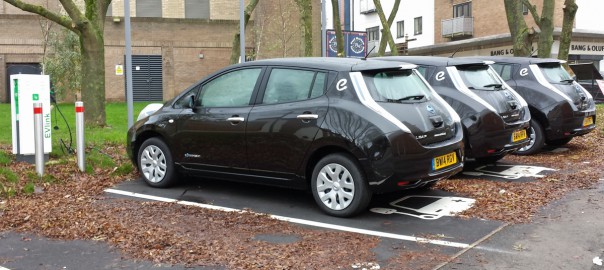
e-Car Club Nissan Leafs in Northampton (Image: T. Larkum)

Don’t sweat it
As it happens, sitting in stationary or walking-pace traffic for 20 hours is the kind of thing at which an EV excels. Unlike a car with an idling engine, an EV’s battery only has to energize the electric motor when motion is actually called for. Add in regenerative braking that recovers some of that energy instead of wasting it as heat, as friction brakes do, and it’s advantage EV.

That still applies even if the outside weather is hotter than body temperature. As all EV drivers know (and many EV critics like to point out), turning on the climate control in an electric car has a negative effect on your predicted range.

But keeping cool is unlikely to require more than 2kW, since the electric air conditioning condensers used by EVs require less energy to operate than the belt-driven versions in conventionally powered vehicles. Running a Tesla AC continuously in a heat wave will eventually deplete its battery, but only sometime after your neighbor’s thirsty V8 freedom-mobile runs dry.

In an ideal world, as long as your evacuation destination is within range when you set off, the wrath of Mother Nature should not dissuade you from going electric—thereby helping to save Mother Nature.

But we don’t live in an ideal world; we live in one that’s warming, with increasingly destructive storms from which people will need to flee. Those who don’t have the range to evacuate on a single charge will need to stop and plug in.

Read more: ars Technica

Government to set legally binding air quality targets

The Government is planning to set new air quality targets under its Environment Bill to help reduce public exposure to fine particulate matter (PM2.5).

The UK currently falls short of WHO recommended limits of PM 2.5s, which are produced by vehicle engines and known to damage the lungs and heart.

The Government said it is fully committed to tackling air pollution and that is independent of being a member of the EU.

The Department for Environment, Food & Rural Affairs (Defra) long-term targets will be supported by interim targets to ensure the UK stays on track with the Government’s five-year trajectory.

George Eustice, Environment Secretary, said: “The targets we set under our Environment Bill will be the driving force behind our bold action to protect and enhance our natural world – guaranteeing real and lasting progress on some of the biggest environmental issues facing us today.

“I hope these targets will provide some much-needed certainty to businesses and society, as we work together to build back better and greener.”

To set the targets, which will also apply to any future Governments, Defra said it will use “an evidence-led process in collaboration with independent experts and stakeholders to make sure these are strong, meaningful and environmental outcome focused”.

To hold the Government to account, the new environmental watchdog, the Office for Environmental Protection, will also report annually on the progress that has been made in improving the natural environment in accordance with these targets.

Once proposed targets are developed, businesses, communities and civil society will have an opportunity to share their views in response to a public consultation that is expected in early 2022.

Legislation to reach net-zero carbon emissions by 2050 and the UK’s presidency of COP26 in November 2021 will also keep the UK at the forefront of international work on air quality.

Whilst investment into alternative fuel power will have a greater long-term impact, TRL is calling for an increased focus on immediate short-term actions such as wider uptake of Clean Air Zones (CAZs) and Low Emission Zones (LEZs).

Multiple CAZ plans have been either put on hold, or cancelled as councils consider alternative options in the wake of Covid-19.

Read more: Smart Transport

It’s Time to Go Green!

If you would like to know more about Solar Panels and the PowerBanx range of home battery systems, and get a free instant quote, please complete our online form:

Tesla Model 3 (Image: Tesla.com)

Global Plug-In Electric Car Sales July 2020: The Market Takes Off

Tesla exceeds 200,000 YTD, while 9 other brands sold more than 10,000 passenger plug-in cars.

After about a year of relatively low growth or noticeable decline inf global plug-in electric car sales, July 2020 finally brings us a strong bounce up.

With close to 248,000 sales (the 4th best monthly result ever), sales improved by 76% year-over-year, and market share is up too, at 3.7% (7% decline in the overall car sales helped a little bit).

All-electric cars hold the majority of plug-in car sales (64% and 67% YTD), although growth of 63% year-over-year in July is significantly lower than in the case of plug-in hybrids (up 106% year-over-year).

During seven months of 2020, almost 1.2 million passenger plug-in cars were sold globally, which is 5% than a year ago at this point, but the perspective is positive as Europe is booming and China has returned to growth.

Tesla Model 3 (Image: Tesla.com)

Model rank
The top selling models last month were:

Tesla Model 3 – 22,461 (#1 YTD: 164,800)
Renault ZOE – 9,410 (#2 YTD: 46,511)
Tesla Model Y – 7,540 (#11 YTD: 20,955)
Wuling’s Hong Guang MINI EV – 7,348 (outside top 20)
Hyundai Kona Electric – 6,257 (#4 YTD: 25,549)
The Model 3 is pulling forward quickly and is so far ahead that we can already assume it’s the best-selling car of the year 2020, just like in 2019.

Renault ZOE is really strong and clearly stands out from the rest of the pack. The time will tell whether it will be caught by others, like Model Y or Wuling’s Hong Guang MINI EV (with over 50,000 orders).

By the way, Hyundai Kona Electric passed the Volkswagen e-Golf and is now targeting the Nissan LEAF.

Read more: Inside EVs

It’s Time to Go Green!

If you would like to know more about Solar Panels and the PowerBanx range of home battery systems, and get a free instant quote, please complete our online form:

Fiat 500 Electric (image: fiat.co.uk)

Fiat 500 Review

The third-generation Fiat 500 city car has arrived, more than half-a-century and six million sales after Italy’s favourite small car first launched. It marks a historic turning point too – this 500 is all-electric, which should be no surprise given the Fiat’s trendsetting past.

For the time being, Fiat will also continue to sell the mild-hybrid petrol ‘old’ 500 for customers who want a cheaper small car, but the ‘new’ 500 will come with just one zero-emissions powertrain. The la Prima special edition is the only one available from launch and costs a rather significant £26,995 including the government Plug-in Car Grant (PiCG) and a home wallbox charger. That’s a lot for a Fiat 500, and puts the car close on price to the upmarket MINI Electric and Honda e.

Fiat 500 Electric (image: fiat.co.uk)

Like other electric cars, if you can stomach the high price – or more likely find an affordable finance deal – the running costs start to pay dividends immediately. Tax is free, company-car drivers have much smaller bills and recharging the battery pack costs under £10. The 500’s large 42kWh also gives it an edge over the MINI and Honda, with a range of 199 miles – just over 50 more than those two. The Renault ZOE can go even further, however, with a range of almost 250 miles.

With 117bhp and instant pulling power, the 500 feels effortlessly quick around town, getting up to speed in next to no time. It also boasts a sharp turning circle and its ride can even soak up potholes, making it an ideal urban runaround. Its range and up to 85kW fast charging should also make longer trips relatively straightforward.

Fiat has been careful to preserve the 500’s unmistakable design, despite the car growing in every direction. Perhaps most impressively, the addition of a large battery pack hasn’t made the cute Fiat look too tall – it’s only gained 26mm in height. Meanwhile, features like split LED headlights that the bonnet intersects lend a modern look, and the lack of a grille points to the past, when the engine was mounted in the back.

Clean lines extend to the interior, where there’s now less clutter and a wider fascia. There’s also a far more powerful infotainment system, thanks to the arrival of U Connect 5, with a digital instrument display and high-definition 10.25-inch touchscreen. Occupants will enjoy more space and there’s a better driving position, but the boot remains compact at 185 litres.

Safety also takes a leap forward, thanks to new sensors that will offer the latest autonomous emergency braking, lane keeping and blind-spot monitoring to help avoid collisions.

Read more: CarBuyer

It’s Time to Go Green!

If you would like to know more about Solar Panels and the PowerBanx range of home battery systems, and get a free instant quote, please complete our online form:

BMW i3 120Ah (Image: BMW Group)

BMW And VW Ramping Up i3 And e-Golf Production Due To COVID Disruption, Rising Demand

Demand for electric cars is on the rise in Europe and elsewhere around the world, prompting BMW to ramp up production of the i3 and VW to build the e-Golf for longer than originally planned.

BMW has significantly increased production capacity compared to the original plan for the second half of 2020 at its Leipzig plant in Germany. The company is extending shifts and shortening breaks to increase the number of vehicles built per day from 114 to 130.

BMW i3 120Ah (Image: BMW Group)

In addition, the automaker has cancelled the one-week summer break for the i3 assembly line. Automobilwoche reports the decisions are motivated by increasing demand and the need to recuperate the long production stoppage in the second quarter of the year caused by the COVID-19 outbreak. In the first half of 2020, BMW built just over 12,500 i3 EVs, while in the entire 2019 calendar year production reached 38,937 units.

As for the VW e-Golf, production will continue at the Transparent Factory in Dresden until Christmas, contrary to initial plans. However, e-Golf production ended for good at the Wolfsburg plant on July 23.

VW currently makes 74 e-Golfs every day but aims to reach an output of 80 vehicles per day. Mind you, this will only continue until Christmas, when the Dresden plant will be converted to build the ID.3 starting January 2021.

Read more: CarScoops

It’s Time to Go Green!

If you would like to know more about Solar Panels and the PowerBanx range of home battery systems, and get a free instant quote, please complete our online form:

Tesla Model 3 (Image: Tesla.com)

Electric showdown: Tesla Model 3 vs Polestar 2

We pit the world’s most popular electric car against its first true rival to see if the sales charts are due a shake-up

The year is 2010 and I’m explaining to you that, a decade from now, Volvo’s almost-unknown motorsport partner will be wrestling for supremacy with an American car company whose only product to date is an electric take on the Lotus Elise. You laugh, because it all just sounds so implausible. Tesla Motors will soon become the first US manufacturer to go public since Ford in 1956 and Polestar is starting to flex its appeal here in Europe, building go-faster versions of Volvo’s regular but increasingly attractive saloons. But the two hottest mass-market properties in an emerging low-carbon world order by 2020? Come on. Surely the German and Japanese giants would never let that happen…

Yet here we are, at Millbrook Proving Ground in Bedfordshire, with a Tesla Model 3 and a Polestar 2. The former needs scant introduction. The reptilian-eyed Model 3 remains the most popular electric car in both North America and China – and before Renault refreshed the Zoe, Europe also. Some treble, that. People gravitate towards Tesla because its cars tend to go further and charge faster than anything else, and even the lowliest Model 3 – the Standard Range Plus, which at £40,490 is the most junior Tesla and uses one motor, not two – can out-accelerate even something as rapid as Honda’s Civic Type R. Tesla also sets itself apart from established manufacturers ideologically, but you could write a book on that subject alone. The takeaway is that, for those keen to wean themselves off petrol, the Model 3 is one hell of a package.

Tesla Model 3 (Image: Tesla.com)

One thing it never had was a true rival, until now. The 2 is an electric car of Chinese, Swedish and, yes, British provenance (Polestar has a research and development base just off the M69, adjacent to where Rolls-Royce plc makes aeronautical fan cases) whose deadpan presence gives it the aura of something that could have escaped from a clandestine military facility. At £51,900 when fitted with the Performance Pack (which adds Brembo brakes, 20in wheels, gold detailing and, if you hadn’t heard, manually adjustable Öhlins dampers), it costs roughly what this Model 3 costs, and the quoted 292 miles of WLTP range certainly isn’t buried by the 329 miles of its rival.

Back to top
True, were you to go for the Long Range version of the Model 3 rather than the Performance tested here, you would cut the price from £56,490 to £46,990 and extend your one-hit reach by 19 miles. But equally, if you ditched the Performance Pack, the 2 would cost a near-identical amount.

As for pace, the Model 3 Long Range can accelerate from 0-60mph in 4.4sec and the 2 takes 4.7sec, so regarding the one metric that the EV evangelists just love to quote, there’s little in it. Or at least that would be true were our Model 3 not a Performance. Its 3.4sec sprint time is closer to that of the McLaren F1 than the 2, but in broad terms, these cars are still deliciously closely matched.

Read more: Autocar

It’s Time to Go Green!

If you would like to know more about Solar Panels and the PowerBanx range of home battery systems, and get a free instant quote, please complete our online form:

West Sussex Council Fleet Goes Electric With Renault ZOE (Image: Renault)

Number plate changes will see electric car prices fall by over £2,000 in five percent drop

NUMBER plate changes introduced from Monday will see electric car prices dramatically fall by over £2,000, according to experts at Octopus Electric Vehicles.

Number plate changes will ensure a spate of discounts on older models with some electric cars set to fall by £2,208 on average in a 4.7 percent decline. DVLA plate launches usually lead to a dramatic boost in sales for the market with experts predicting September could be the best month for the industry in 2020 after months of lockdown.

Dealerships often sell a lot of their older stock to make room for the latest models and plates which cleaves customers able to secure great deals.

An Octopus Electric Vehicles spokesperson told Express.co.uk: “For those looking for a September bargain, EVs are already being offered with discounts of five percent on average.

West Sussex Council Fleet Goes Electric With Renault ZOE (Image: Renault)

“That’s over £2,000! – as the new registration plates come in.

“Not only that but with running costs at just a couple of pence a mile.

“Potentially saving drivers thousands of pounds a year, EVs really are a no brainer for those watching the pennies.”

Electric car sales have boomed so far in 2020 with sales up 174.6 percent year on year.

July recorded another major surge for fully electric models with sales up a massive 259.4 percent when compared to last year.

Changes in electric car tax have helped the cars finally get off the ground while plug-in hybrid grants have offered extra incentives.

Read more: Express

It’s Time to Go Green!

If you would like to know more about Solar Panels and the PowerBanx range of home battery systems, and get a free instant quote, please complete our online form:

Volvo Polestar 2 (Image: Volvocars.com)

First Drive In The 2021 Polestar 2 Electric Car

We’ve been promised an electric future, and slowly but surely, it’s starting to appear over the horizon.

Manufacturers have been able to develop technologies to quell range anxiety, and work with power providers to create robust charging infrastructure. Government support, most visibly in the form of tax credits to consumers, has helped to lower the effective retail price gap between electric and gas vehicles. Demand is building.

As with all trends in the automotive industry, economics drive the direction of change. Developing and selling EVs has not yet turned into a profitable activity, even if Tesla stock prices give a different impression. Established car makers have been forced to get creative to try to leverage their existing assets to build a new electrified future, and find themselves in competition with startups (like Tesla), who can sometimes be decidedly nimble and focused on the task.

Volvo recognized the need to move to electrification early, and has committed to hybrid, plug-in hybrid and all-electric vehicles. At the same time, they wanted to get the startup advantage – a clean slate, fresh identity, and certain tax benefits, and the Polestar brand was born.

Volvo Polestar 2 (Image: Volvocars.com)

Polestar was founded in 1996 as a race engineering company, and became the official Volvo tuning partner in 2009. Volvo bought Polestar in 2015, and there have been “Polestar Engineered” trim levels and packages since then. Polestar became a separate company again in October 2017, now owned jointly by Geely (Volvo’s parent company) and Volvo, with the mission of becoming a “pure performance electrified brand.” Polestar’s home office is in Gothenburg, Sweden, and the Polestar production center is in Chengdu, China. Polestar 1 was the company’s first vehicle, a halo car with a total run of 1,500 units over three years beginning in 2019. The 2021 Polestar 2 is now arriving in the United States with the target of selling 2,000 units this year and tens of thousands next year.

By splitting off from Volvo (on paper, at least), Polestar is able to reset the counter on the US Government’s Federal Electric Vehicle Tax Credit. According to the Environmental Protection Agency’s FuelEconomy.gov, “All-electric and plug-in hybrid cars purchased new in or after 2010 may be eligible for a federal income tax credit of up to $7,500. The credit amount will vary based on the capacity of the battery used to power the vehicle. State and/or local incentives may also apply.” This tax credit lasts until a manufacturer has sold 200,000 qualifying vehicles, and then quickly sunsets and expires in the subsequent four quarters. Volvo has been eating into its 200,000 credits with its plug-in hybrids. With a fresh start and its own VIN run, Polestar will get a running start at Federal and state credits, where available, giving it an advantage over the obvious target, Tesla.

None of this matters unless the Polestar 2 is any good.

Read more: Forbes

It’s Time to Go Green!

If you would like to know more about Solar Panels and the PowerBanx range of home battery systems, and get a free instant quote, please complete our online form: