Category Archives: Electric Cars

News and reviews of the latest electric cars (full electrics and plug-in hybrids).

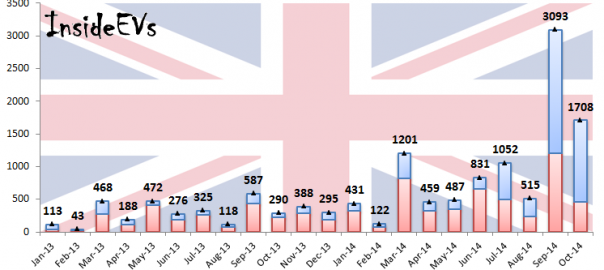
Plug-in Car Registrations in UK (Image: InsideEVs)

Plug-in Car Sales Strong In UK – 1,700 In October

After the record September, last month (October) sales of plug-in cars remain strong in the UK compared to previous periods.

1,708 units sold is the second best result overall, from which 463 are all-electric cars and 1,245 plug-in hybrids (preliminary data). Plug-in hybrids now dominate the British EV market.

Plug-in Car Registrations in UK (Image: InsideEVs)

Plug-in cars were almost 1% (0.95%) from 179,714 total passenger car registrations in October.

After 10-months of 2014, over 10,000 EVs were sold in UK – 4,963 all-electric and 5,548 plug-in hybrids.

Source: Inside EVs

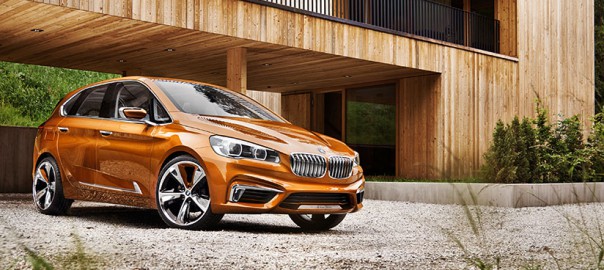
BMW 2-Series Active Tourer Plug-in Hybrid (Image: BMW)

BMW 2-series Active Tourer gets plug-in hybrid in 2015

It’s all change in BMW world on various levels. The 2-series Active Tourer is the first front-wheel drive BMW. The brand’s first MPV, too. And in 2015, it’ll join the ranks of BMW’s burgeoning plug-in hybrid set.

The technology will be shared with the next X1 – and what’s unusual about Munich’s solution is that it powers the rear wheels.

Yes, that’s right: the 2015 BMW 2-series Active Tourer eDrive will be four-wheel drive.

The plug-in hybrid story

While almost all rival hybrids drive the front wheels, BMW’s eDrive concept connects to the rear wheels via a 102bhp/184lb ft electric motor.

According to sources from within Munich’s corridors of R&D, this application offers distinct traction and weight distribution benefits, along with four-wheel torque vectoring.

Decoded: the new BMW people carrier will be quicker and sharper driving, as well as cleaner. And four-wheel drive may well tempt away buyers of regular SUVs to try this taller-riding BMW.

BMW initially showed the Active Tourer as a concept car powered by a plug-in hybrid unit. BMW quoted 113mpg and 60g/km CO2 emissions, although these numbers will be diluted for production, we expect.

A lithium ion battery packs offers a zero-emissions EV range of up to 20 miles, while the 1.5-litre three-cylinder engine takes over when the battery is depleted.

Source: Car Magazine

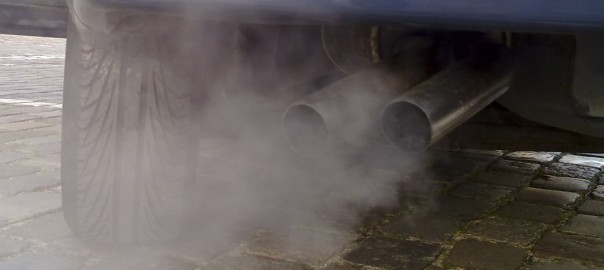
Car exhaust pollution (Image: Wikipedia)

Should electric vehicles be compulsory in city centres?

The subject of making electric vehicles compulsory in city centres in the UK, and indeed many other areas of the world, is one which keeps popping up time and time again. The Liberal Democrat party in the UK has been pushing for greater adoption of electric vehicles within city centres and, don’t shout this, a ban on diesel and petrol vehicles. This is now something of a hot topic and one which will continue to appear in the political domain as we approach general and local elections.

How would you feel about making city centres a no-go area for petrol and diesel vehicles? Is electric vehicle technology of sufficient reliability to support such a dramatic and controversial move?

Air pollution

If we look back 40 or 50 years ago the argument was whether vehicles powered by diesel and electric were making any contribution to air pollution whatsoever. The situation today is very different and all parties agree that non-electric vehicles are pumping out a number of pollutants which are causing major problems within city centres with regards to air pollution. The quality of air in and around city centres is impacted more than any other areas simply because there is limited space, limited airflow and the pollutants tend to hover over the city like a bad smell.

Air pollution within city centres has been linked to an array of health conditions such as asthma and other breathing issues. When you bear in mind the cost and the impact of such health conditions on the individual and health services, perhaps we should now be looking towards diesel and petrol free city centres?

Quote from ElectricForum.com:

“The reputation of BMW is based upon luxury therefore many people are now asking the question, would you buy an electric powered BMW? Is BMW Daimlers joint-venture just a way to placate the green movement? Would an electric BMW be a mass-market seller?”

Infrastructure investment

What came first, the chicken or the egg? There is no doubt that local government and federal government investment in charging networks across the UK and other countries has increased dramatically of late. However, there is a feeling among some experts that the actual investment required to create a suitable and reliable infrastructure has not yet been reached. The argument being, do local authorities invest now and push motorists towards electric vehicles within city centres or do they wait for a gradual transfer and then invest?

If you take a step back and look at the overall cost of air pollution not only in terms of cold hard cash but also health issues, perhaps these do far outweigh the potential investment required to create a reliable recharging network infrastructure?

How will motorists react?

When it boils down to the nitty-gritty politicians will only push through potentially controversial issues which will have the support of the masses. It is an interesting debate as to whether motorists are now moving towards electric vehicles en-masse and would support such a ban in city centres. Let’s not forget, motorists have been a cash cow for many governments around the world in relation to road taxes and the heavy levies cast upon petrol and diesel.

Would any political party be brave enough to take the risk of losing votes by banning petrol/diesel vehicles in city centres in favour of electric vehicles? Politicians can shout and scream about the environment, pollution, etc but the bottom line is they will not push through any controversial changes until they are sure they will not impact their core voting public. When that will be remains to be seen.

Source: Electric Forum

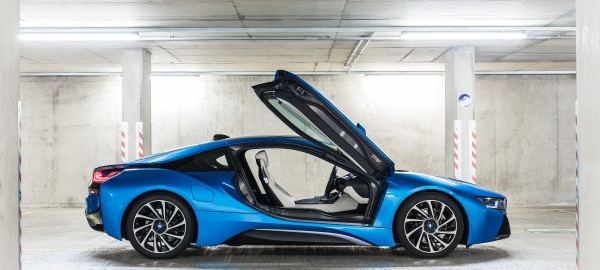
BMW i8 (Image: BMW)

BMW praises British-built i8 engine

The BMW i8 has become something of an iconic car ever since the company showed it off as a concept back in 2009 at the Frankfurt Motor Show.

The car represents the German manufacturer’s first attempt at a pug-in hybrid supercar. The sustainably-focused sports car is part built in BMW’s wind-powered factory in Dusseldorf and has a design focus on using sustainable materials.

However, the car’s engines are produced at BMW’s Hams Hall manufacturing facility near Birmingham. The new three-cylinder engine is capable of powering the i8 from 0 to 60mph in less than 4.5 seconds, all while the vehicle delivers as much as 135mpg.

Transport minister Baroness Kramer said that the engine is a perfect demonstration of the UK’s commitment to the low-carbon transport. She said:

“The British-made engine for this ground-breaking car demonstrates that the UK automotive industry is at the forefront of the production of high-quality, low emission car technology. As our recent commitment to invest £500 million in ultra-low emission vehicle design, production and adoption shows, we want the UK to be a world leader in the global transition to ultra-low emission motoring.”

Read more: Next Energy News

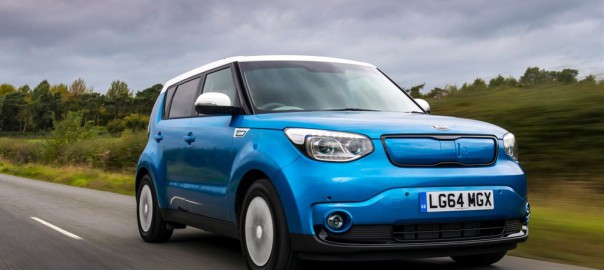
Kia Soul EV

Kia Soul EV arrives in the UK

Kia’s new electric Soul has gone on sale in the UK, priced from £24,995 after a government grant of £5,000.

That places it £3,445 above the price of the range-topping model of the existing combustion Soul range, with the Soul 1.6 CRDi Maxx priced at £21,550.

Despite being one of the least aerodynamic electric cars we’ve yet seen, Kia says its new battery-powered crossover can deliver a range of 132 miles per charge – 8 miles more than the official range of rival model, the Nissan LEAF.

Developed in co-operation with SK Innovations, the Soul EV’s 27kWh lithium-ion polymer batteries are a high energy density solution, delivering 200 watt-hours per kilogram of weight, helping it to deliver that outstanding range.

The Soul EV is also spritely for its vehicle class, with its electric motor developing 81.4 kilowatts – the equivalent of 109bhp in a combustion-engined model – with 285 Nm of torque available immediately upon drive-away.

That gives the car a 0-60mph time of 10.8 seconds and a top speed of 90mph, comparable with the rest of the Soul range.

Recharging takes 10-13 hours for a full charge from a standard UK domestic supply although this can be reduced using a branded wallbox which comes with the Soul EV as standard.

The Soul EV can also be rapid charged in 30 minutes to 80 per cent battery capacity.

To fit in a new battery drivetrain beneath the floor, Kia has slightly compromised the rear-seat legroom by 80mm and lost 31 litres of boot space, bringing its total luggage capacity to 281 litres.

The Soul EV is well equipped though with standard equipment including eight-inch touch-screen with European mapping, reversing camera and charging point locator, automatic air conditioning with the driver-only function, heated front seats, a smart key with a motor start-stop button, projection headlights with LED daytime running lamps, privacy glass on the rear windows and tailgate and 16-inch lightweight alloy wheels.

In-car entertainment includes a DAB RDS radio with MP3 compatibility, steering wheel-mounted controls, USB and AUX ports and Bluetooth with voice recognition and music streaming. Safety is taken care of by Anti-lock Brakes with Emergency Brake Assist, Electronic Stability Control, Vehicle Stability Management, Hill-start Assist, Emergency Stop Signalling, a Tyre Pressure Monitoring system and six airbags.

Kia is likely to supply no more than 200 Soul EVs in the UK, already reporting that supply from its factory in Korea will be ‘extremely limited’.

A network of 13 specially trained UK dealers will sell the Soul EV.

Source: Green Car Website

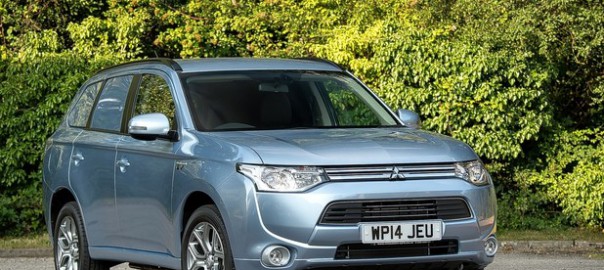
Mitsubishi Outlander PHEV

Mitsubishi Outlander PHEV’s Winning Turn

MITSUBISHI’S hugely successful Outlander plug-in hybrid SUV has picked up yet another trophy after the company was voted the best plug-in hybrid electric vehicle manufacturer at the recent Green Fleet Awards.

The awards recognises the manufacturer of either a commercial or consumer plug-in hybrid electric vehicle (PHEV) that demonstrates the best performance and best suitability for purpose in its class. Short-listed alongside the Mitsubishi Outlander was the Toyota Prius and the Volvo V60.
Advertisement

Clive Messenger, head of corporate sales at Mitsubishi UK said:

“We are absolutely delighted that we have won PHEV Manufacturer of the Year at the GreenFleet Awards. The Outlander is an exciting new vehicle, at the forefront of a new era in fleet and company car use.”

The car is a full-sized family 4×4 SUV that uses both electric and petrol power.

However, it boasts an impressive range in zero-emission mode, being capable of doing more than 32 miles on a charge – more than the average commute. That means if an owner only uses it for shorter trips and tops up the battery overnight at home, in theory, it should be able to run almost without petrol.

Such an impressive electric range gives the vehicle phenomenal environmental credentials. It emits just 44g/km of CO2 and the official combined fuel consumption figure is 148mpg.

Source: Stoke Sentinel

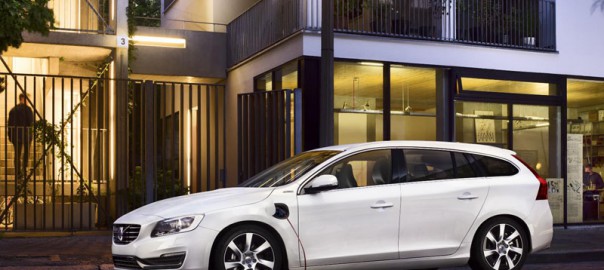
Volvo V60 Diesel Plug-in Hybrid

The benefits of electric and plug-in hybrid company cars

“After experiencing first-hand the savings that my Mitsubishi Outlander PHEV, I would urge any business and company car driver to seriously consider making the change – in my opinion, it is highly unlikely that they will regret it.”

FOR quite some time, electric and plug in hybrid vehicles have been available to companies and individuals across the UK.

However, despite the ever-increasing network of charging points and leasing options that make “green” cars affordable, many businesses are still opting for combustion engined vehicles when it comes to making their choice of company car.

So to perhaps open the minds of staunch petrol and diesel engine buyers, we thought we’d compare electric vehicles with plug in hybrids.

Read more: Business Car Manager

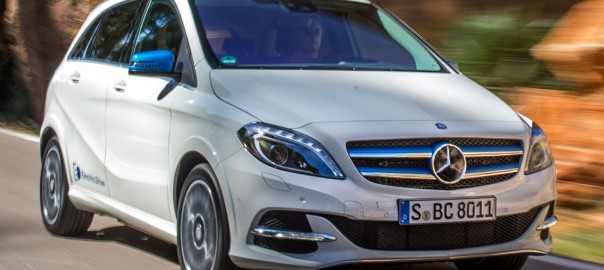
Mercedes B Class Electric

Mercedes-Benz B-class Electric Drive first drive review

Exceptionally refined with punchy overtaking abilities and impressive ride and handling. Premium driving experience at expense of ultimate usability

What is it?

This is the Mercedes-Benz B-class Electric Drive, the manufacturer’s pure electric version of the newly facelifted B-class.

Rather than follow the lead of the BMW i3 and build an electric car around an all-new architecture, this EV is based on the standard production car, which has needed the minimum of amount engineering changes.

Taking inspiration from the original A- and B-class models, the new-generation car has the option of a ‘sandwich’ version of the rear half of the car’s platform.

Called the ‘Energy Space’ by Mercedes, raising the floor in the rear half of the cabin frees up underfloor space, which, in the EV, accommodates the lithium-ion battery pack. This space is also used by the natural gas-powered version of the B-class to accommodate three gas tanks.

The upshot is that the B-class is as effectively as spacious as the mainstream versions, which means a good 500-litre boot, generous head and legroom and the option of a fold-forward front passenger seat, which allows loads well over two metres long to be swallowed.

The electric drive system has been sourced from Tesla (interestingly, the day this production car was launched to the press was same day Daimler disposed of its four per cent stake in Tesla, which it had held since 2009).

The B-class Electric Drive has a three-mode operation. Economy Plus – designed for constant steady-speed journeys – reduces the output of the motor to just 83bhp and top speed to 68mph. Economy reduces output to 132bhp and Sport offers the motor’s full 179bhp. However, the two Economy modes can be overridden and full power and torque accessed by the driver using the kickdown function.

If the ‘Collision Prevent Assist Plus’ system is added as an optional extra, this B-class acquires a very neat radar-assisted recuperative braking system. Using information from the radar about the state of traffic ahead, the car can use battery-charging braking to slow itself or, when the road ahead is clear and/or downhill, switch to ‘sailing mode’ which doesn’t use any battery power.

Fully recharging the B-class via a 16-amp home wall socket will take around nine hours if the battery is empty. Using a 400-volt three-phase electricity supply (rather more common in Asia than Europe), the car can be recharged in just three hours.

What is it like?

Very impressive indeed. In terms of all-round refinement and pace, the electric B-class is far better than its internal combustion engine sister cars. Indeed, the car’s effortless torque and near-silent progress puts it in a category of its own.

This car has the refinement that would shame some luxury models and the kind of effortless overtaking ability that would trouble some hot hatches.

What’s most disorientating is that these two sides of motoring excellence are delivered in a humble-looking baby MPV. It’s hard to work out why, but even the steering response and ride quality of the electric B-class is markedly better than what we experienced with the all-wheel-drive B220 and the gas-powered B200.

On the wider issue of the facelift, there’s no doubt that B-Class looks much better. The somewhat melted appearance of the original version has been fixed thanks to a much more taught front bumper design and wheels that now properly fill the arches.

It’s also a handy size, well-packaged and nicely finished inside. The big, tablet-sized screen on the dashboard might look a little clunky, but is ideally placed and the graphics and presentation of Mercedes-Benz’s sat-nav system is first rate.

Should I buy one?

There’s no doubt this is a delightful car to drive, genuinely enjoyable and satisfying. The downside, of course, is the limited range of the electric B-class and – without a supply of industrial three-phase electricity – the lengthy recharge time.

True, being able to replenish the battery overnight would be fine for anybody whose daily mileage is less than 100 miles.

The price of this car (post government grant) is just about that of a B220 diesel with an automatic transmission. In terms of driving pleasure it is leagues ahead.

As odd as may seem, any lover of driving ability will love the B-class, regardless of its market position as a truly ‘green’ MPV.

Source: Autocar
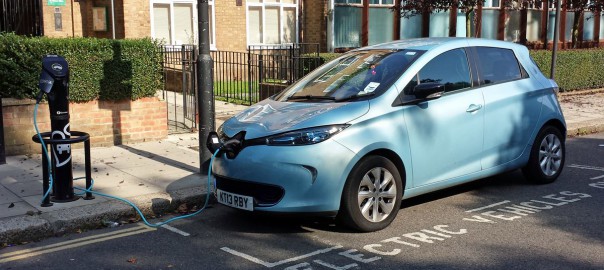
Slow Charging the ZOE at Highgate (Image: T. Larkum)

People’s Climate March – Part 1

Fast Charging the ZOE at Toddington (Image: T. Larkum)

On 21 September I had a bit of an adventure, travelling down to London to attend the People’s Climate March – my first ever protest march.

I have been concerned about climate change for about three years, and have blogged about climate and energy for the last two. Wanting to know more about the scientific understanding of it I completed an online educational course ‘Climate Change in 4 Dimensions’ earlier this year. While I would highly recommend the course, learning more about the subject has only reinforced my concerns. The scientific conclusions are clear – the climate is changing fast, it’s caused by human carbon dioxide emissions, and it’s going to have major impacts on our lives and especially on the lives of our children and grandchildren.

Having made many changes in my lifestyle to reflect my concerns – including installing solar panels on our house, switching to a renewable energy supplier, and buying and blogging about my Renault ZOE electric car – it seemed to me that the next natural step was to become more active politically. I’m not sure what direction that will take long-term, but I felt it was necessary to start by ‘standing up to be counted’ and attending the first ever Climate March.

Slow Charging the ZOE at Highgate (Image: T. Larkum)

I toyed with the idea of going by train but somehow it seemed most appropriate to go by electric car. I therefore headed out along my regular and familiar route down the M1 towards London, stopping as usual at the Toddington Services fast charger on the way. I then drove into north London and parked up at a slow charger in Highgate (the same one I had used previously when attending a rock concert in Kentish Town).

Tesla Model S in Highgate (Image: T. Larkum)

I walked south from where I parked to Kentish Town underground station so I could take the tube down into central London. On the way I was surprised to pass two electric cars – clearly they are more popular in London than in Northampton – and I took that to be a good omen.

The first was a navy blue Tesla Model S parked on Highgate Road, in a bus lane outside a restaurant. It’s a big, good-looking car – though I don’t imagine that most people can tell it’s electric.

Renault ZOE in Highgate (Image: T. Larkum)

Then a few minutes later I saw a ZOE, much like mine apart from being white. It was just parked in a side road, probably in front of the owner’s house, looking perfectly natural.

Climate March poster on the Underground (Image: T. Larkum)

The trip on the underground was uneventful, heading to Temple for the start of the march. I was encouraged on the way to see a couple of posters by the escalators publicising the event. I anticipated that would mean the march would be well-attended, and so it transpired.

[Part 2]