Category Archives: Electric Cars

News and reviews of the latest electric cars (full electrics and plug-in hybrids).

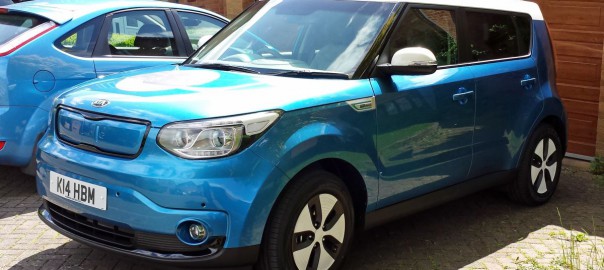
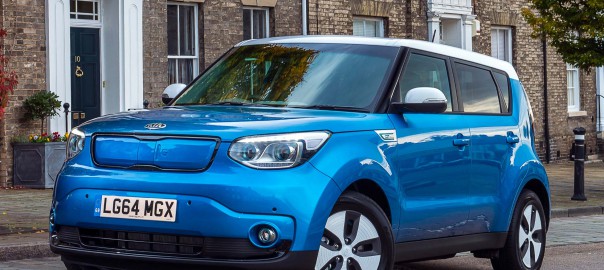
Kia Soul EV (Image: Kia)

Kia Soul EV review

Driving the Kia Soul EV round central London made petrol and diesel power seem so yesterday. You actually feel sympathy for people driving around in Bentleys. Kia says it has been working on electric vehicles for 30 years, but only now thinks the time is right to make one available to the public. Kia, which now sells nearly three million cars a year, is starting in a typically small way with intended annual sales expected to be around a couple of hundred.

If you need a compact electric SUV crossover hatchback, the Kia Soul is it. As with all Kias, the Soul EV has a seven year warranty which should give confidence about the life of the battery pack.

Performance

With acceleration to 60 mph taking 10.8 seconds the Kia Soul EV has adequate performance for a town car especially with town planners’ mania for traffic lights. Performance is smooth and serene and in mode B the regenerative braking is strong. Drive and Brake modes can also be operated in Eco mode to help maximise the car’s range. Maximum speed is claimed to be 90 mph but there was no opportunity to verify this.

The permanent magnet synchronous AC electric motor produces 109 bhp from 2,730 rpm to 8,000 rpm, while maximum torque of 211 lbs ft arrives instantly and continues until 2,730 rpm. Claimed class-leading energy density of 200 Wh/kg gives the car a projected range approaching 132 miles.

Handling

The rack and pinion power steering is quick and light and the car’s shape (and reversing camera) makes it easy to manoeuvre into parking spaces. A button push makes the steering even lighter for parking. The 275 kg battery pack has actually improved the handling of the Soul. Not only has it lowered its centre of gravity but the weight distribution of the Soul EV has been altered slightly too.

It is several percentage points less front heavy though you don’t really notice a difference on a slow speed town drive. The suspension settings felt stiffer which helped cornering precision. Braking, with large discs front and rear, was predictable and progressive.

Read more: Next Green Car
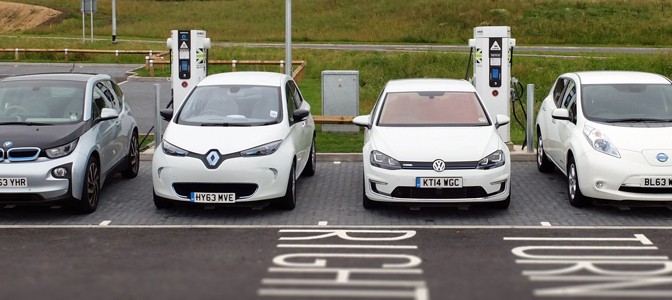
Electric Cars Fast Charging (Image: BusinessCarManager.co.uk)

Five reasons why electric vehicles will go mass-market

Over the last 100 years there have been a number of attempts from electric vehicle enthusiasts to push them into the mass market. Unfortunately the vast majority of these attempts have failed for a variety of reasons, often out of the control of the market itself, but today we stand in a very different place and electric vehicles will eventually go mass-market. We hereby list five reasons why electric vehicles are here to stay in the longer term: –

1. Technology

There have been enormous leaps in electric vehicle technology over the last 10 years which not only offer greater efficiency but also give the driving public greater confidence. This technology continues to advance at breathtaking speed not only in the area of electric vehicles themselves but also battery technology. In many ways the development of new technologies is putting gasoline vehicles in the shadows and grabbing the headlines.

2. Industry and government expenditure

While the electric vehicle market has made numerous attempts to crack the mass market, the majority of which failed, today is very different. The industry itself and governments around the world have literally invested billions upon billions of dollars and gone beyond the point of no return. In previous attempts there was a definite lack of incentives from governments around the world and indeed many governments paid lip service to the industry without cold hard cash. The simple fact is that too much money has been spent for the EV industry to fail this time round!

Quote from ElectricForum.com: “While the electric vehicle market seems to be dominated by the likes of Tesla, General Motors, Nissan, etc, there is a rather unknown entity sneaking up on the sidelines in the shape of Chinese electric car manufacturer BYD.”

3. Battery technology

One of the major problems of the last decade has been the relatively slow development of battery technology in relation to electric vehicles. This was in many ways overlooked by the industry as more focus and more investment was placed upon actual car technology as opposed to battery technology. It was only when the general public began to have major concerns about battery power and efficiency that both governments and the industry switched part of their investment towards battery technology.

4. Journey capacity

In tandem with new electric vehicle technology and battery technology we now have a greater emphasis upon extended journey capacity. The introduction of various electric vehicle recharging networks across the world has also added to this more positive picture with journey capacity in excess of 100 miles now commonplace among some of the more popular vehicles. There is still some way to go, more investment is required but there is no doubt that journey capacity concerns are certainly reducing.

5. Electric vehicles have lost that stigma!

In the early years the electric vehicles we saw on the roads were, how can we put it, very different in look and style and often embarrassing. This created something of a stigma which hovered over the electric vehicle industry for many years although thankfully this stigma has now gone. In many cases it is difficult to tell at a distance whether a vehicle is powered by traditional gasoline/diesel or whether indeed it is powered by electric. This in itself is probably the most compelling reason why electric vehicles will eventually crack the mass market, the fact they fit the hopes and aspirations of the motoring public and there is no embarrassment in driving one today!

Source: Electric Forum

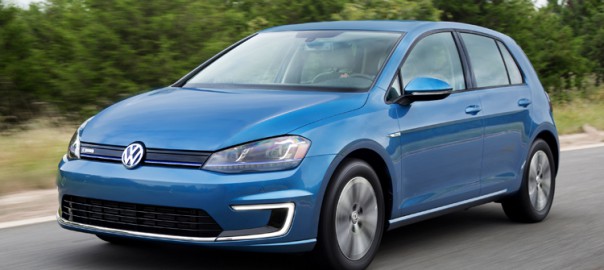
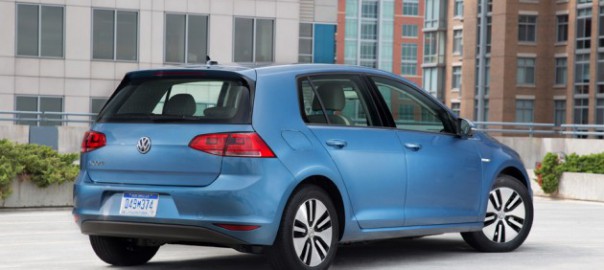
Volkswagen e-Golf

2015 Volkswagen e-Golf: Volkswagen Enters the Electric Car Game

About 10 years ago alternative fuel vehicles became become a hot topic as gas prices peaked and consumers started focusing on miles-per-gallon as a primary factor when shopping for a new car. Automakers quickly rallied around their preferred routes to improve fuel efficiency. Some took the hybrid/electric path, some talked up fuel cells, other brands (primarily European car companies) continued to tout diesel as the answer to our fuel efficiency quandaries. But things have changed in recent years, with most automakers realizing they can’t stick to a single alt fuel strategy. The wide range of consumer demands and government regulations related to fuel efficiency requires a comprehensive alternative fuel plan, one that incorporates multiple solutions.

Volkswagen is a shining example of a modern car company embracing this multi-pronged approach. VW has long been the leader in the diesel segment. Year-to-date, over 23% of all Volkswagen sales in the U.S. have featured clean diesel technology, a much higher percentage than overall industry sales for diesel, which make up barely 3% of the total U.S. market. But in the last two years the German automaker has displayed a flurry of activity around plug-in hybrids and electric vehicles, including the revolutionary XL1 and the new all-electric 2015 Volkswagen e-Golf. We recently had an opportunity to visit Volkswagen’s factories in Wolfsburg and Braunschweig to take a closer look at the new e-Golf and hear Volkswagen’s plans for electrification. Just a few years ago we couldn’t have imagined such an experience with VW, yet the company’s rapid progress in the field of electric cars is impressive.

Because VW has multiple variants of the Golf (diesel, all-electric or plug-in hybrid), and because the Golf now utilizes VW’s new modular platform, the automaker can shift assembly line configuration in short order. It has the ability to produce up to 1,100 alt fuel Golfs per day, though as of now only about 70 e-Golfs are being assembled daily. They went on sale in select U.S. states in early November. If demand warrants it Volkswagen can easily shift that number (up or down) to match consumer interest. This flexibility makes sense in a world where gas prices can pivot on a geopolitical headline or natural disaster. But it also begs the question – is Volkswagen building these electric variants because it sees a need to meet broadening consumer demand? Or is it simply positioning itself to address future regulatory requirements? The answer may not matter, as enhanced production flexibility is the wave of the future. Automakers that don’t master it will be at a major competitive disadvantage.

Volkswagen Automotive Group’s ‘modular toolkit’ production system, utilizing four major platforms to address the entire group’s vehicle needs, continues to roll out across brands and models. The all-new 2015 Golf is one of two early vehicles built off the new MQB platform and already on sale in the U.S. (the 2015 Audi A3 is the other one). Because of this system Golf production, including body styles and drivetrain configurations, can be shifted almost instantaneously. However, production capacity and flexibility is only half the battle. One of the main hurdles Volkswagen’s new e-Golf will face is an electric car market saturated with vehicles offered at the same price and touting the same battery range.

Source: Forbes

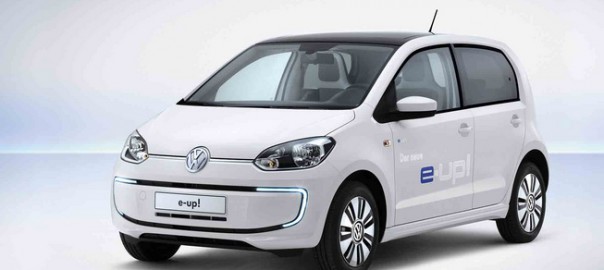
Volkswagen e-UP (Image: VW)

2014 Next Green Car Awards fetes VW e-Up!, Tesla Model S

The California-made Tesla Model S was one of about a dozen models given props by the Next Green Car Awards. And the prizes ran the gamut between conventional, diesel, plug-in and battery-electric powertrains because who doesn’t like variety?

Leading off in the Next Green Car awards was the Volkswagen e-Up!, which took home the City Car award:

“With the e-up!, Volkswagen has produced a high quality, practical and affordable electric city car which is perfect for zero-emission urban driving where space is a premium.”

Americans may associate “Family Estate” cars with huge, fake-wood-paneled station wagons of the ’70s and ’80s (and with Clark Griswold), but NGC gave the Family Estate award to the far-more-fun Audi A3 Sportback e-tron plug-in hybrid.

“As the first plug-in hybrid estate car, the A3 Sportback e-tron perfectly combines conventional fuel practicality for long distance driving with zero-emission motoring for urban trips.”

The Mitsubishi Outlander Plug-in Hybrid, Nissan e-NV200 Combi and Mercedes-Benz B-Class Electric were also all given props.

“The Outlander PHEV sets the SUV bar high offering plug-in capability for the price of a diesel. With a 5% BIK rate, you can see why the Outlander is the UK’s most popular plug-in hybrid.”

“With the e-NV200, Nissan has broken new ground offering an affordable and practical zero-emission alternative to the ubiquitous diesel van.”

“Powered by Tesla know-how, the Mercedes electric B-Class brings electric mobility to the compact MPV class for the first time. High on quality, long on range, and zero on emissions.”

Finally, the Tesla took home the top-of-the-line “Executive” prize.

“Simply the most beautiful and technologically advanced electric car on the market, the Model S combines a gadget-packed interior with an exhilarating electric driving experience.”

Read more: Autoblog, Next Green Car

The Fast Lane Reviews 2015 Kia Soul EV

A US-centric review by The Fast Lane.

The 2015 KIA Soul EV is the all electric version of the new KIA Soul. With a range of 94 miles and a 105 MPGe this new electric car is KIA first crack at an EV. Like many other manufacturers KIA plans to sell the 2015 KIA Soul EV only in California which of course begs the question: Are electric cars the wave of the future? You find out by checking out Roman’s first drive review of the new 2015 KIA Soul EV.

Volkswagen e-Golf (Image: VW)

The Brilliance of VW’s New Electric Golf

The E-Golf doesn’t make much of a statement. In fact, part of its charm is that the “e” features are decidedly low key. Perhaps what’s true of wearable devices such as fitness trackers and smart glasses is also true of electric cars: They will fully arrive only when they stop announcing themselves to the world and just resemble “normal” products. From this perspective, the electric Golf might be downright futuristic.

The car looks like a regular Golf and has all the German engineering Volkswagen likes to brag about: tidy fit and finish, tight gaps between body panels, and more room than one would expect. It even drives like a regular Golf, particularly between zero and 30 miles per hour, when it’s peppy. Ticking up to 65 mph on Manhattan’s West Side Highway took a bit of prodding, but the car showed no problem zipping out in front of an pushy taxi cab at a light change.

Bells and whistles are scarce. The control panel doesn’t fill up with animated leaves and butterflies when the driver pilots with particular efficiency. The center-stack screen isn’t usurped by a flow chart of the car’s vitals.

The Volkswagen’s take on e-monitoring is Teutonic in its simplicity. A single gauge—the analog kind—with a needle tilts into a green area when the brakes are recharging the battery and ticks the other way when one steps on the accelerator. A tad to the right, the Golf displays a digital number showing how many more miles the car will go before it goes to sleep, just like an overworked iPhone (AAPL). And then there’s the speedometer: The Golf almost seems embarrassed that it doesn’t burn dead dinosaurs.

Read more: Business Week

Renault presents EOLAB, a new ultra-low fuel consumption prototype

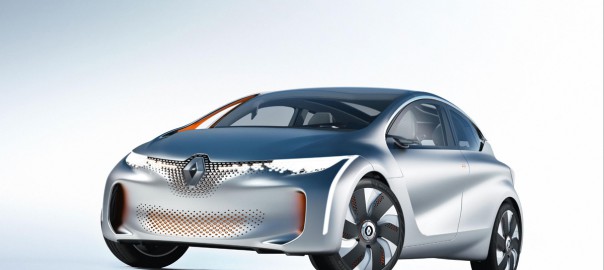
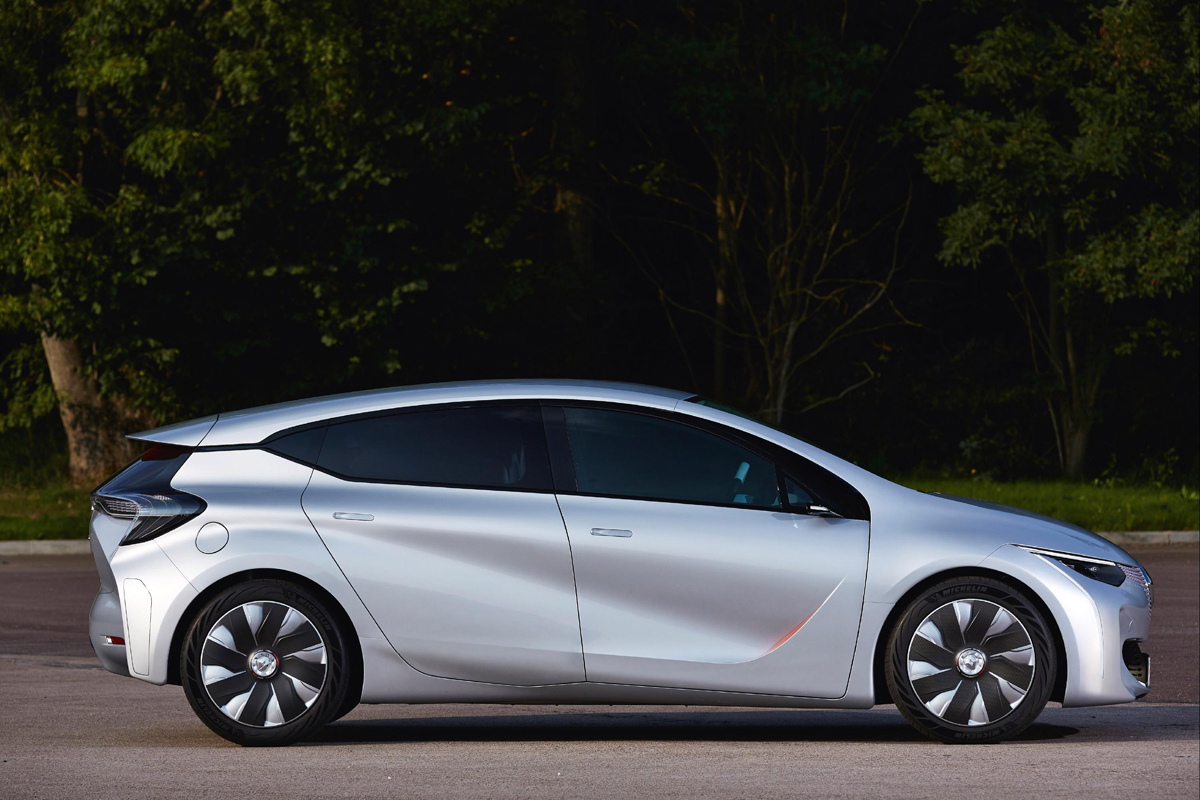
Renault EOLAB Ultra-Low Fuel Consumption Prototype (Image: Renault)

WITH 1 LITRE/100KM, EOLAB IS A SHOWCASE FOR RENAULT’S INNOVATIONS IN FAVOUR OF THE ENVIRONMENT AND RISES TO THE CHALLENGE OF ULTRA-LOW FUEL CONSUMPTION

Renault presents EOLAB, a new plug-in hybrid (PHEV) prototype which explores ways to deliver ultra-low fuel consumption. It boasts NEDC combined cycle consumption of 1 litre/100km, equivalent to 22g of CO2/km.

To achieve such low figures, the designers focused their efforts on three main areas: minimising weight, refining aerodynamics and using “Z.E. Hybrid” technology for all, a brand new initiative which permits zero emissions motoring during everyday use.

As an innovative showcase with an environmental core, EOLAB includes a very high number of technological advances that are destined to be carried over gradually to vehicles available in the showroom. As a consequence, EOLAB underlines the undertaking of Renault – already a pioneer in the field of zero-emission mobility thanks to its range of electric vehicles – to take even greater steps to produce affordable models that have an increasingly smaller carbon footprint.
CHR2784_Renault_EOLAB_Renault_cs

Technologies geared to achieving ultra-low fuel consumption for all

For Renault, the purpose of EOLAB is to remain true to the company’s DNA by ensuring that ultra-low fuel consumption becomes a reality for as many people as possible. This in turn means making its technologies available at a price that people can afford. EOLAB features materials such as magnesium and aluminium, which are extremely light and also much cheaper than titanium. Meanwhile, the notion of such a car being produced in large numbers within the next 10 years was dialled into the plan from the very start.
CHR2795_Renault_EOLAB_Renault_cs

100 technological advances for future Renaults

EOLAB is much more than just a styling exercise or a mere shop window. Conceived around a B-segment platform, the prototype incorporates around 100 new, realistic technological developments that are designed to be introduced gradually on upcoming Renault vehicles.

EOLAB’s recipe

The EOLAB prototype’s exceptional fuel economy – namely 1 litre/100km – is the fruit of work on three main fronts: refined aerodynamics, weight saving and Z.E. Hybrid technology (petrol/electricity):

  • The car’s shape was designed to slice through air efficiently, while movable devices such as an active spoiler and lateral vanes perform the same way as ailerons.
  • A weight saving programme brought the car’s mass down to just 400kg, thanks in particular to a multi-material body shell combining steel, aluminium and composites, as well as a remarkable magnesium roof that tips the scales at barely 4kg. Saving weight was a virtuous circle since it enabled the size, and therefore the cost of the prototype’s chief assemblies (engine, batt
    ery, wheels, brakes, etc.) to be kept low, thereby financing the decision to employ certain more costly materials;
  • Z.E. Hybrid technology: this new, compact and affordable hybrid power unit combines ultra-low fuel consumption with zero-emission mobility for journeys of less than 60km and at speeds of up to 120kph. In coming years, Z.E. Hybrid technology will become complementary to Renault’s zero-emission electric vehicle range.

EOLAB Concept: a concept car to capture the imagination

Renault’s designers were closely involved with the EOLAB project from its very early days. In the case of EOLAB Concept, they pushed the design parameters to perfect the car’s styling and paid significant attention to detail in order to optimise aerodynamics and weight. With its sloping roof and breathtakingly slender rear end, the concept car’s true purpose is well masked: beneath its seductively designed shell, everything is geared towards frugality. It demonstrates that Renault is able to add a touch of dream-like magic to a prototype whose fundamental mission is to achieve ultra-low fuel consumption.

Tar Sands in Alberta (Image: Wikimedia/Howl Arts Collective)

The scale of electricity use by fossil fuel refining

This is a fascinating episode of Robert Llewellyn’s (highly recommended) Fully Charged show. Ostensibly it’s a review of the rather dull Lexus is300h (just another hybrid) but actually the second half is an analysis of how much electricity is used in refining petrol and diesel fuels. He comes up with a figure of 4.5kWh of electricity wasted to refine one gallon.

This video is set to start at that point:

It gives a UK perspective on the well-known quote from Revenge of the Electric Car, usually attributed to Elon Musk (CEO of Tesla Motors) but really from the film’s director Chris Paine:

“you have enough electricity to power all the cars in the country if you stop refining gasoline. You take an average of 5 kilowatt hours to refine gasoline, something like the Model S can go 20 miles on 5 kilowatt hours. You basically have the energy needed to power electric vehicles if you stop refining.”

Kia Soul EV (2015) first drive review

Are electric cars the future? It’s a subject that’s very much open to debate. Some drivers are absolutely sold on the idea, while others question their limited range and how green they really are.

The same is true with manufacturers. A few are jumping head first into the electric car revolution, while others are avoiding it in favour of small capacity, turbocharged petrol engines, or even hydrogen power. Some, like Kia, are being cautious, dipping their toes in the water and seeing what happens.

This explains why the Korean carmaker has electrified its Soul mini-SUV, but plans to sell it in very small numbers. There’s no fancy new production line – all Soul EVs are made on the same line as the regular Soul, in an attempt to keep costs down, and just 5,000 a year are expected to be built. And here’s the clincher: no more than 200 are expected to come to the UK in the first year of production.

The reason for this? “Some manufacturers are flooding the market,” says Kia. “They’re selling electric cars to people whose lifestyles aren’t suited to electric cars, and it’s damaging their reputation.” This leads to tales of range-anxiety, and poor residual values, which Kia wants to avoid.

What’s the Kia Soul EV like to drive?

Central London isn’t an obvious place for a car launch, but it really flatters the Soul EV. Threading it through traffic, instant torque available whenever you press the accelerator, it’s hard to deny an electric car is second only to a jetpack in conditions like this.

While adapting a ‘regular’ car might seem an easy way of offering an electric vehicle, it does present some challenges. For a start, there are the big, heavy batteries that need putting somewhere. In this case, they’re hidden under the floor. And then refinement can be tricky. A combustion engine does a great job of drowning out noises – remove that, and even the slightest noise can prove irritating.

But Kia’s done a commendable job. There are no battery whines sometimes associated with electric cars, and road noise is minimal (although, as hard as we tried, we couldn’t get near to the Soul’s 90mph top speed in central London). What’s really impressive is how well the Kia Soul EV rides. The extra 274.5kg from its batteries could easily result in a crashy ride, but Kia’s tweaked the springs to take the extra weight into account, and it deals with bumps and potholes exceptionally well.

Charging using a domestic power supply takes 10 – 13 hours from empty to full, but this can be reduced to five hours using a public fast-charge point. Alternatively, using a public rapid charger, it can be boosted to 80 per cent charge in just over half an hour. From a full charge, expect to get a range of around 132 miles – less than a petrol or diesel car, obviously, but enough for most urban journeys.

Read more: Motoring Research