An advert from Kia Netherlands
https://www.youtube.com/watch?v=KqtO-9vLcBs
An advert from Kia Netherlands
https://www.youtube.com/watch?v=KqtO-9vLcBs
There’s officially a Volkswagen Golf for everyone. The standard Golf is a go-to choice in the compact hatchback market. Enthusiasts love the GTI, and diesel-drinking enthusiasts can’t wait for the GTD to get here (seriously… hurry your asses up on that one VW).
Now Volkswagen has a Golf for the ultra-green set. It’s the 2015 eGolf, and it’s the automaker’s first shot at a fully electric machine here in the United States.
What makes it special beyond its propulsion system? Nothing… and that’s why people will like it.
[Skip to 0:50 seconds to avoid advert]
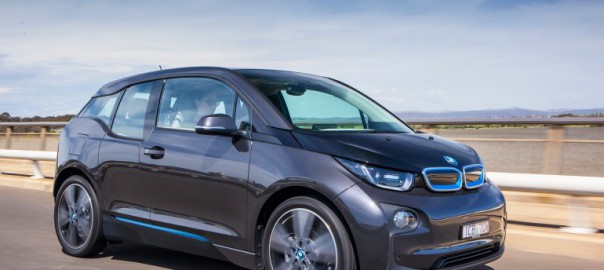
After a long incubation period, the first cars released under BMW’s sustainability-focused “i” sub-brand – the i3 city car and i8 sportscar – have been hitting roads around the globe throughout 2014. We climbed aboard the i3 to find out how it performs.

We’ve previously looked at the make-up of the i3 in detail, but here’s a quick refresher. It’s a compact four seat, five door that’s a touch under 4 m (13 ft) long with short overhangs at both ends and an exceptionally tight turning circle of 9.8 m (32 ft – that’s 10 percent less than a Mini) and 2.5 turns lock to lock.
The BMW-developed electric motor is located at the back, providing 125 kW and 250 Nm (184 lb-ft ) of torque to the rear wheels through a single speed automatic transmission. In addition to the battery electric vehicle (BEV) model there’s a range extender version in which a 34-hp, 650 cc two-cylinder petrol engine from BMW Motorrad sits alongside the electric motor and acts as a generator (i.e. it charges the battery but, unlike hybrid cars, it doesn’t drive the wheels).
The modular 360 V, 21.8 kWh (18.8 kWh useable), 96 cell, liquid-cooled lithium-ion battery pack is spread across the underbody and can be charged in 11 hours using a domestic wall plug or six hours using BMW’s i Wallbox. BMW says DC fast charging can deliver 80 percent charge in just 30 minutes.
On a single charge the i3 has an “everyday range” of 160 km (100 mi). Using ECO mode can bump that closer to 200 km (124 mi), while the range extender version can travel around 300 km (186 mi). Acceleration is put at 0-100 km/h (0-62 mph) in 7.2 seconds and importantly it still has plenty of zip for overtaking at higher speeds, with a 80-120 km/h (50-75 mph) time of 4.9 seconds, putting it on par with a BMW 435i. Top speed is electronically limited to 150 km/h (93 mph).
The i-series cars are based on an architecture that’s been created “from the ground up” for electric vehicles. The passenger cell is the first mass-produced using carbon fiber-reinforced plastic (CFRP) and the chassis is made of aluminum and other lightweight materials. This adds up to a car that weighs just 1,195 kg (2,634 lb) – the range extender adds around 120 kg (265 lb) to that figure.
Read more: Giz Mag
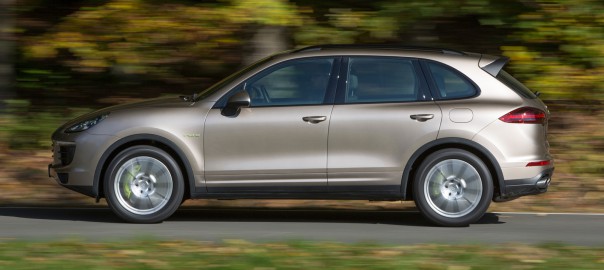
A Cayenne hybrid of heightened economy potential, and quite attractively priced given its complexity and capabilities
Porsche is keen to sell us plug-in hybrids. It now makes three, although one is rather unaffordable, it being the £652,849 918 Spyder. The other two are the Panamera and the new Porsche Cayenne e-Hybrid, which replaces the plain hybrid version.
This upgraded petrol-electric Cayenne is part of the revised range presenting a freshened styling and new features that include the economy-promoting coasting mode provided by the previous hybrid alone, stop-start that kills the engine a few mph before halting and a launch-control system with the optional Sport Chrono pack.
It also has more precise suspension geometry and a greater dynamic range between the Comfort and Sport modes for both steel-sprung and air-suspended versions. Improved rear seat comfort and a heated screen option are among the detail improvements.
But the upgrades to the Cayenne hybrid are a lot more substantial. Aside from the facility to plug it into a cheaper mains energy supply, a lithium-ion battery pack of almost six times the kilowatt-hour capacity replaces the previous nickel-metal hydride pack.
That allows the electric motor’s output to jump from 46bhp to 94bhp, while the electric-only range lengthens from 1.6 miles to between 11 and 22 miles, although Porsche’s development engineers say they’ve gone further.
It now cruises at up to 78mph rather than 40mph on amperes alone, and its 410bhp system output allows it a 5.9sec sprint to 62mph rather than the 6.5sec of the previous 380bhp hybrid. Its CO2 emissions reduce spectacularly from 193g/km to 79g/km, although the EU’s methods for measuring plug-in hybrid economy and carbon emissions are seriously misleading.
That said, this hybrid Cayenne will be genuinely cheaper to run than the last, tax-wise and when maximising travel on electricity alone. Of which there’s a good chance.
The Cayenne plug-in’s powerpack is near-identical to the plug-in Panamera’s (a more energy-dense battery pack and all-wheel drive are the main differences) the pair proving surprisingly reluctant to engage their petrol engines to achieve decent progress.
In the E-Power mode the Cayenne will keep up with most traffic; press the accelerator more firmly and the supercharged V6 leaps into life, its torque faultlessly synchronising with the electric motor’s.
At which point you can access truly substantial acceleration, the V6’s revs rising with a slightly industrial and not unappealing rortiness.
Despite its substantial weight, the Cayenne handles with some panache. It rolls a bit, even in the firmest of its air springs’ settings, but that doesn’t prevent it from tracing curves with pleasingly assured confidence, your enjoyment heightened by the steering’s precision.
With both motors working hard, a decently sporting pace is easily achieved. There’s further entertainment to be had from trying to maximise your electric range through brake recuperation.
It all makes this Cayenne a particularly interesting example of the breed, and if you successfully harness its powers, a pretty economical one too.
The price of this revised hybrid is exactly the same as the V8 diesel’s despite the fact that this is a vastly more complex machine, and though the hybrid is slower, that makes this plug-in impressive value among full-size, premium SUVs.
Source: Autocar
VW’s e-Golf is the car maker’s first EV to hit the U.S market. But how does it stack up against other electric vehicles like Ford Fusion Electric, Nissan Leaf and Fiat 500e?
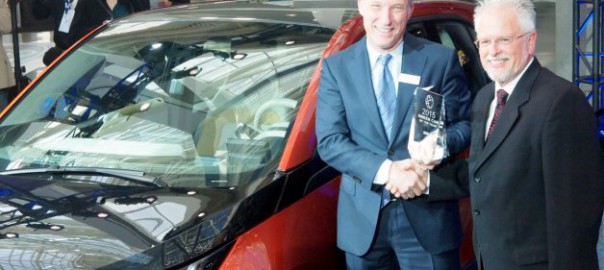
Milestone Carbon Fiber Electric Car Wins the Auto Industry’s Most Important Environmental Award at Los Angeles Auto Show
LOS ANGELES, CA (November 20, 2014) – BMW’s i3, an innovative electric car built with a lightweight carbon fiber passenger cell and an aluminum drive module, has been named Green Car Journal’s 2015 Green Car of the Year®, which was announced at the LA Auto Show. Green Car of the Year® finalists also included the Audi A3 TDI, Chevrolet Impala Bi-Fuel, Honda Fit, and VW Golf.

The Green Car of the Year® award is an honor widely recognized as the auto industry’s most important environmental accolade. Green Car Journal, the leading voice in the intersection of automobiles, energy, and the environment since the publication’s launch in 1992, celebrates the high-profile award’s 10th anniversary at the L.A. Auto Show this year.
“BMW’s i3 is a milestone vehicle in many respects and illustrates the automaker’s expansive vision of future motoring,”
said Ron Cogan, editor and publisher of Green Car Journal and CarsOfChange.com.
“It is purposefully designed with a small environmental footprint and zero emissions, offering the best features of an electric vehicle with the functionality of an available on board engine-generator that nearly doubles its battery electric range.”
The first all-electric vehicle to win Green Car Journal’s Green Car of the Year®, the i3 benefits from BMW’s years-long ‘project i’ initiative that focuses on future mobility and strategies for sustainable transportation. The result is a unique approach that finds the i3 embracing technologies, materials, and construction methods breaking new ground for a mainstream model. While the i3 is designed as a battery electric car, its optional REx gasoline engine-generator enables extended driving range with electricity created on board easing potential range anxiety.
“Unlike other manufacturers that build vehicles and then create advanced powertrains to go in them, BMW rethought the whole process of building a car from the ground-up, using new materials and techniques”
said noted TV personality and avid car collector Jay Leno, pointing out one of many strengths the i3 had going into the competition. Leno has been one of Green Car Journal’s Green Car of the Year® jurors since the award program launched in 2005.
Along with Leno, the Green Car of the Year® jury includes leaders of noted environmental and efficiency organizations including Jean-Michel Cousteau, president of Ocean Futures Society; Matt Petersen, board member of Global Green USA; Mindy Lubber, President of CERES; Kateri Callahan, President of the Alliance to Save Energy, and Dr. Alan Lloyd, President Emeritus of the International Council on Clean Transportation and former CalEPA Secretary and Chairman of the California Air Resources Board. The jury is rounded out by a smaller number of Green Car Journal editors.
The magazine’s extensive vetting process considers all vehicles, fuels, and technologies as the field of nominees is narrowed down to five finalists that significantly raise the bar in environmental performance. Vehicles that are all-new, or in the early stages of their model lifecycle, are considered and finalists must be on sale by January 1 of the award year. Availability and market significance are factors to ensure that models have the potential to make a real impact on improving air quality, reducing greenhouse gases, and promoting transportation efficiency.
As finalists for 2015 Green Car of the Year®, the Audi A3 TDI, BMW i3, Chevrolet Impala Bi-Fuel, Honda Fit, and Volkswagen Golf are additionally honored with Green Car Journal’s 2015 Green Car Product of Excellence™.
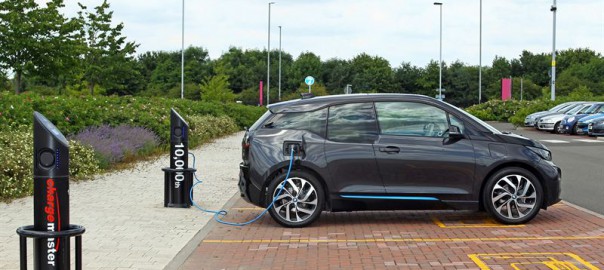
Chargemaster, the UK’s largest supplier of electric vehicle charging infrastructure, is keeping its charge points in London and the rest of the UK online with its industry-leading operations.
Earlier this year, the British firm installed its 10,000th public and commercial charging point and, along with a telephone support line that is open 24 hours a day, 7 days a week to resolve urgent issues, has a dedicated team of electricians and engineers to fix any faults, typically within 48 hours.
David Martell, Chargemaster CEO, said:
“We are proud to have the best-maintained charge points not only in London, but across the entire UK electric vehicle charging estate. Our own Chargevision back-end management system is the best in the business and provides us with diagnostics on every single one of our charge points, every minute of the day.”
Chargemaster, through its sophisticated Chargevision system and its own dedicated national maintenance team of technicians, is able to monitor the operational availability of its network. Over the last year, its owned and maintained infrastructure achieved a 98.7% serviceability record for all charge points on a month-by-month basis.
Today, just two charge points installed and maintained by Chargemaster in London are not fully operational, and both of these are scheduled to be back online within the next few days.
David Martell added:
“We take maintenance and serviceability very seriously. As the UK’s largest provider of EV charging infrastructure, we have a responsibility to ensure that electric car drivers can rely on our network to enable them to complete their journeys.”
Chargemaster infrastructure is part of the Source London charging network, a scheme which involves more than 60 site/charge point owners – from local councils to car park operators. Contractually, funding currently exists for the maintenance of London’s EV infrastructure and Chargemaster believes that if this funding was properly reclaimed by charge point owners, any sites that are currently out-of-service could be brought back online swiftly.
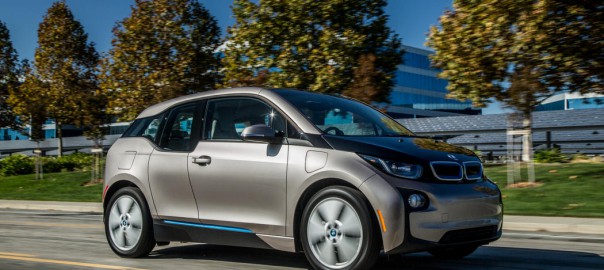
The most radical vehicle to emerge from any automaker in the past year — and likely the past decade — the BMW i3 looks and drives like nothing else on the road. You may call it a hatchback hit with an ugly stick or an an expensive way to travel 80 miles on a charge, but you’ll still miss the point of why we named it our 2015 Green Vehicle of the Year.
We’ve written before about the lengths BMW went to build a lightweight electric vehicle that would have unimpeachable green credentials. The carbon-fiber frame, narrow tires and drive system so wired to recover energy in coasting you really need only one pedal in everyday driving combine into a vehicle that’s more efficient at traveling a mile than any other available, including the Tesla Model S.
Driving the i3 — ours came with the 650-cc, two-cylinder range-extender engine that adds an addtional 80 miles of reach — is to revel in parsimony and goodness, and like the houses that hand out toothbrushes on Halloween, a bit of a buzzkill. The torque does arrive instantly, and the low center of gravity adds some fun in the chassis, but the tiny contact patch and suspension keeps such joy bottled up. The interior of open-pore eucalyptus and recycled plastic-fiber cloth looks inviting and jarring at first — as open and sporty as a fair-trade coffeehouse.
“No matter how funky and modern BMW makes its lights and window graphics,” said contributing editor Steve Siler, “it’s hard to get excited about a box with ultra-skinny wheels.”
Yet the panel of editors came to see the strategy behind the i3. The world has lived with automobiles for over 100 years, more than long enough for them to evolve into signifiers of our personalities. We expect form to follow function in even our wildest cars, from the spoilers and hood scoops on the Dodge Challenger Hellcat to the engine vents on the Alfa Romeo 4C’s rear decklid. But few automakers has ever been so enthralled by electric cars, so ready to embrace a low-carbon future, that they were willing to engineer a car that acts as a rolling billboard for saving energy. The BMW i3 was the first of this century, but it won’t be the last.
Source: Yahoo
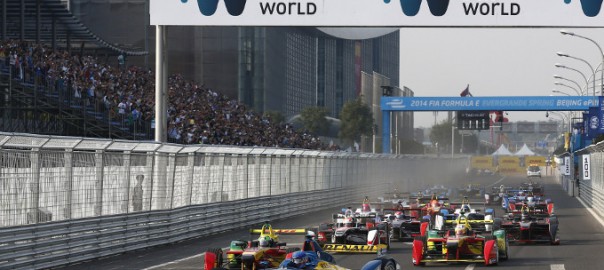
With only three days until Round-2 of the inaugural FIA Formula-E Championship is upon us, I thought it was time to take a deeper look into this interesting racing series.
The debut of Formula-e racing was held in the streets of Beijing on 13th September 2014. You can read my review of that here. There was great racing from quality drivers with interesting incidents. That’s what you would expect from any racing series so what makes Forumla-e different?
Firstly, the obvious part is the “e” – this is the first fully electric single-seater racing series. The car is the Spark-Renault SRT_01E which uses a Dallara chassis, a McLaren engineered electric motor, a Rechargeable Energy Storage System (RESS) part of which has been engineered by Williams and it rides on Michelin tyres. This being a racing series that champions sustainability and cost saving, the tyre is essentially a road tyre, capable of running in both wet and dry conditions. One set of tyres should last a whole race weekend.
The “electric” part presents a number of issues for ensuring entertaining racing. The sound is an immediate problem, especially in the aftermath of the controversy over Formula 1 went through when the engines were downgraded for eight to six cylinders. The new sound of F1 is more tame than it ever has been and this has led to criticism from pundits and the race going public. So much so that some different artificial sound enhancing tricks have been tried to no avail. This however has meant that the problem of very little sound coming from an electrical power unit being much less of an issue. In practice, the Formula-e car sounds just as aggressive as the current Formula 1 engine, just a little less loud.
Another big problem with an electric car is refuelling. Currently there is very little in the way of technology that allows a car to be recharged in the time it takes for a pit stop to happen. How do Formula-e get around this? Simple, have two cars. Instead of pulling in to change tyres or recharge the battery, the driver simple hops out of one car and into another. Now this works at the moment but it isn’t exactly the most economical way of running proceedings. It means that each team, of which there are ten, has to have four cars as a minimum, two for each driver. Not ideal, however this can only be positive for the future of electric cars. With Formula-e investing time and money improving the image of the sport and electric cars in general, they will surely have to look at a way of improving this set up. Maybe a 3.5-second way of changing the batteries or a 10-second way of charging. All potential exciting developments for the future of road cars.
So, there are some issues but all of them so far, have been easy to account for. Here comes one part of Formula-e that I just can’t get past, “Fan Boost”. Three drivers out of the twenty in the field, are given a 5-second “Fan Boost”. This is measured purely on popularity via social media. This will force drivers to work harder in the media, gain more “Followers” and ask them to vote for them. I am not sure that measuring how popular you are to the public, should have any bearing on anything in your life, let alone the outcome of an otherwise very equal race. This boost, though it seems relatively ineffective, with a 5-second boost equivalent to 40 BHP for the drivers to use twice in the race (once in each car) feels like a poor gimmick taken from 1980’s Saturday morning kids television that Formula-e would do well to be rid of.
Another problem for me is the length of time between races. I understand that the logistics of getting a city ready to host a race are extremely complicated. Unfortunately, Formula-e whet the appetite for this series with an incident packed race-one in mid-September but race-two will not take place until the end of November, easily enough time for the public to forget it. Thankfully the rest of the races will be closer together but still 3 weeks to a month apart, the schedule is below.
Problems aside, the first race was gripping and I am genuinely excited about the close fought racing that is likely to await us in this year’s Formula E championship. I am also eager to see how this innovative series can improve both itself and race cars of the future. It also forces the likes of Formula 1 to ensure they are genuinely at the forefront of fuel-efficient racing and encourages new efficiencies through both series’, into our road cars.
The next race will be broadcast live on ITV4 at 6am on Saturday 22nd November.
Race Schedule
Round 1 – 13 Sept 2014 – Beijing, China
Round 2 – 22 Nov 2014 – Putrajaya, Malaysia
Round 3 – 13 Dec 2014 – Punta del Este, Uruguay
Round 4 – 10 Jan 2015 – Buenos Aires, Argentina
Round 5 – 14 Feb 2015 – TBA*
Round 6 – 14 Mar 2015 – Miami, USA
Round 7 – 4 Apr 2015 – Long Beach, USA
Round 8 – 9 May 2015 – Monte Carlo, Monaco
Round 9 – 30 May 2015 – Berlin, Germany
Round 10 – 27 Jun 2015 – London, United Kingdom
* Rio de Janeiro was originally scheduled to host a race in November but the calendar has since changed and though the date has been selected for Round 5, no venue has been announced.