We narrowed the field down to five nominees for the 2014 Tech Car of the Year award at the beginning of December, and now CNET’s judges have weighed in on our final choices. There were some strong contenders, making a unanimous choice difficult, but there can only be one…
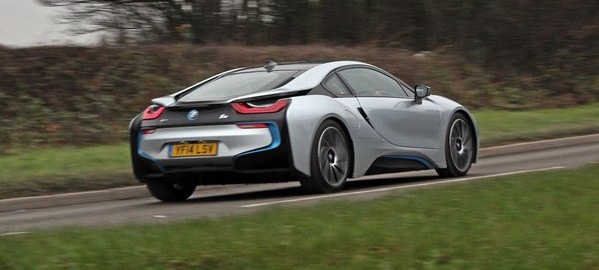
Winner: BMW i8
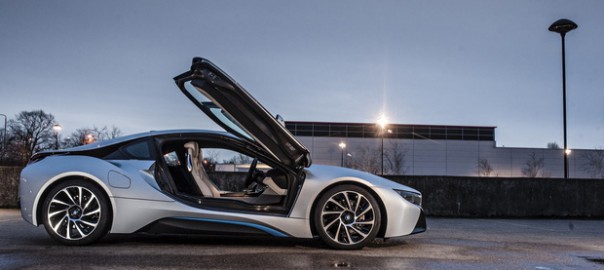
This car represents a marvel of innovative engineering. Carbon fiber in its construction not only keeps the weight down, but cheaper production of this material could make it a standard for cars of the future. BMW took a risk with the design, putting something on the road that looks like it should still bear a concept label. LED headlights make for another important touch, along with a head-up display and driver assistance features. Judge Tim Stevens noted that “it’s undoubtedly one of the most interesting new cars on the road.”
With an electric motor driving the front wheels and a compact gasoline engine at the rear, the i8 combines all-wheel drive with plug-in hybrid fuel efficiency. However, in the same car you can experience a thrilling driving experience, eating up corners with this nimble ultimate driving machine. Judge Wayne Cunningham notes that the i8 “is an extraordinary technical achievement.”
Finally, BMW’s iDrive cabin electronics system sneaks in an impressive roster of connected features. The car comes with its own data connection powering online destination search and built-in apps. iDrive gets expanded features through the ConnectedDrive app on a driver’s smartphone, bringing in everything from social media to online music.
The Audi A3 came in as our favorite runner-up, embodying near-perfect connected cabin tech, but its drivetrain didn’t represent a significant advance. Also up for serious consideration was the Infiniti Q50S Hybrid, an amazing technical achievement with its drive-by-wire steering and efficient gasoline-electric drivetrain. Fan favorite the Tesla Model S made the nominees list for its impressive drivetrain, but when we reviewed the 2014 P85 Plus model earlier this year we didn’t find much advancement in its cabin electronics, and it still lacked any driver assistance features. Tesla’s recent update of the Model S addresses some of those issues, so we will likely be reconsidering it for next year. The Ford Fusion Energi made our nominee list for its excellent driver assistance features and economical plug-in hybrid drivetrain, but its cabin tech couldn’t carry it over the top.
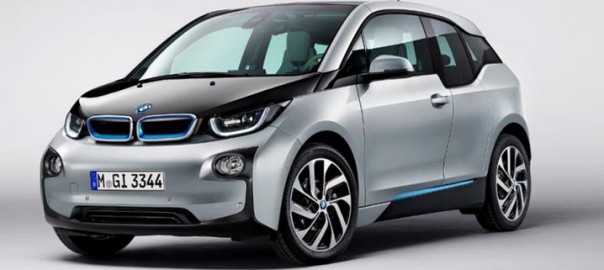
The BMW i3 has overcome strong resistance to become the first all-electric car to take out the Wheels magazine car of the year award.
German manufacturer BMW bettered fossil-fuelled rivals including last year’s winners Volkswagen, who have taken out the honour three times in the last six years, to be crowned for the first time in the award’s 52-year history.
Wheels editor Glenn Butler said the i3’s victory serves notice to its combustion-engined competitors that the electric cars are here to stay.
“This year the future has arrived in the form of a seriously good motor vehicle … that just happens to run on electricity,”
he said.
“There is no novelty factor involved here either.
“It ushers in a new era of eco-performance for millions of families and urban commuters around the world, and in Australia.”
Judges described the i3 as innovative and praised BMW’s “bravery” to produce the electric-engined car.
“Other brands surely possess the know-how to have created something equally visionary; all they lacked was BMW’s bravery,” they said in a statement.
“This innovative and compact electric car combines expressive design, impressive engineering, exceptional efficiency and persuasive practicality with a good deal of driver appeal.”
“It is both admirable and desirable.”
The Wheels award has been running since 1963, when the Renault R8 took out the prize.
The last Australian-built car to win the award was the Holden VE Commodore in 2006.
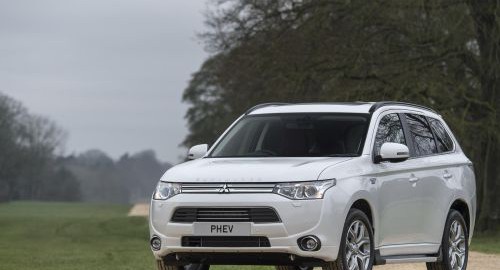
Sumptuous leather seats that are individually hand crafted, low level mood lighting, a sound system dynamically optimised with the vehicle’s interior acoustics and all-essential multiple USB charging ports are prerequisite in a luxury company car – and standard in the newly launched Outlander GX5h and GX5hs plug-in hybrid electric vehicle.
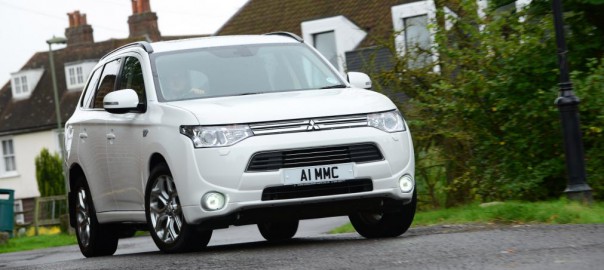
Externally the new models have full length side steps for easier access and the addition of a rear spoiler.
Moreover the new Outlander GX5h and GX5hs invite very little interest from HM Revenue and Customs. The top of the range GX5hs priced at £44,999 attracts just £75 a month in personal benefit-in-kind tax and is exempt from road tax.
The vehicle has phenomenal environmental and economy credentials. It emits just 44g/km of CO2 and the official combined fuel consumption figure is 148mpg. It is eligible for the Government’s plug-in car grant and companies can offset 100 per cent of the purchase value against profits in the first year.
Clive Messenger, Head of Corporate Sales, Mitsubishi Motors in the UK, says:
“The GX5h and GX5hs plug-in hybrid Outlanders offer such a fantastic package of benefits for both companies and company car drivers – high specification, luxury feel, low running costs, strong environmental credentials. We are expecting it to quickly populate company car choice lists UK-wide.”
Interior
Sumptuous high-line Nappa leather seats, dash, door and console lining in Porcelain Beige, Claret Red or Gunmetal Grey.
Acoustically optimised audio system – seven speaker 420W premium Alpine Hi-Fi system, with silk dome tweeters to provide accurate and smooth highs, powerful 16.5cm midrange drivers and 20cm subwoofers for deep lows. The audio system has been specifically tuned for the Outlander GX5h and GX5hs interiors, in a soundproofed audio chamber and using sophisticated sound measurement equipment.
Floor level, front and rear mood lighting, LED interior lights and ‘puddle’ lamps.
Front and rear heated seats.
Twin rear USB charging port.
Exterior
Integrated side steps.
Rear spoiler.
Outlander bonnet badge.
LED Fog lamps and DRLs with chrome surrounds.
Colours
The new Outlander PHEV GX5h and GX5hs will be available in all five Outlander PHEV colours:
Game-changing Mitsubishi Outlander PHEV plug-in hybrid SUV can deliver 148mpg and CO2 emissions of just 44g/km
Verdict: 4 stars
The Mitsubishi Outlander PHEV is a refined SUV with some impressive economy figures that cars of a similar size simply cannot match. It’s not a particularly scintillating drive and the ride is a bit unsettled, but Mitsubishi have built something worth looking at if you’re after a 4×4 with plenty of space and ultra-low running costs.
The Mitsubishi Outlander PHEV became the world’s first plug-in hybrid SUV when it went on sale early in 2014. With a high-tech powertrain and headline economy figures of 148mpg and 44g/km of CO2, it’s made a big impact on the UK car market, particularly among company car drivers.
Thanks to the £5,000 Government plug-in car grant, the Outlander PHEV prices range from just over £28,000 for an Outlander GX3h to £40,000 for the top-spec GX5hs. With the GX4h and GX4hs in the middle of the line-up, overall prices for the PHEV are largely the same as for the equivalent diesel Outlanders, giving buyers an interesting decision.
Further efficiency and economy benefits from owning an Outlander PHEV include exemption from road tax and the London Congestion Charge. Although, electric cars have previously enjoyed a zero per cent Benefit in Kind (BIK) company car tax rate, as of April 2015 rates are going up. Owners of cars such as the Outlander PHEV will still only be liable for the five per cent tax bracket.
On the road, it’s no surprise that the Mitsubishi Outlander PHEV is much quieter than the regular diesel Outlander, no matter which mode the car is operating in. Be it petrol engine and electric motors working in sync, or as a pure EV, the PHEV is extremely hushed.
The impressive refinement of this Mitsubishi hybrid is due to enhanced sound deadening throughout the car, but also thanks to the hybrid powertrain, which favours running in all-electric mode. The petrol engine is noticeable when you start the car up, but it’s never overly loud or intrusive.
Looks like the sports car of the future but does it actually drive like one? Take two in the BMW i8
The ‘real world’ offering in the rarified league of carbon fibre petrol-electric sports cars, the BMW i8 is no P1, LaFerrari or 918 Spyder in performance terms. Not that anyone who sees it seems to care. Indeed, while all of the above could slip by innocent bystanders as ‘just’ normal supercars the i8 has star quality in spades and is so obviously something new and different even non-car folk seem genuinely awe-struck.
Star quality that extends to whomever happens to be at the wheel too – pull up kerbside and by the time you open that carbon butterfly door you’ll have a small crowd and camera phone paparazzi waiting to hang on your every word about the driving experience. Crave the quiet life? Not the car for you…
That £99K starting price is interesting too, pitching the i8 directly into the line of sight of the serial 911 buyer who, just might, be looking for something a bit different or eying up electric friendly grants and congestion charging for driving to that City office block. Tempting as the F-Types, R8s, Merc-AMG GTs and similar alternatives at this price might be they all look a little dinosaur-like in the company of the i8, which achieves that rare thing of being incredibly expensive, exotic, unashamedly performance focused and yet totally socially acceptable too.
The IT crowd
Harris drove the i8 in the sympathetic surroundings of California and Matt had a go up in the wilds of Scotland but for this test we used the i8 in more everyday surroundings, hacking the daily commute and heading up the M1 for a meeting in the way anyone might use a ‘normal’ sports car like a 911. Electrically plumbed parking spaces at the office meant a chance to charge the battery for maximum EV goodness but the rest of the time it was just a case of jumping in and using it like any other test car.
First thought? Getting anywhere near that official 134.5mpg is going to require your very lightest loafers, the best the PH clogs could achieve being less than half that on a mixed commute of stop-start motorway traffic and a bit of urban crawl. OK, so it was winter and we’re soft enough to want heated seats on in addition to the rather more compulsory lights, wipers and similar. Still impressive for a 362hp sports car, not so much for a supposed eco champion even driven in a style intended to maximise regenerative charging opportunities and minimise intervention from the 1.5-litre petrol engine.
An inbound journey with barely any battery saw 45mpg; the return fully charged had the trip showing 99mpg running on mainly electric for the first five miles of urban driving before dropping to a less impressive mid 50s once on dual carriageways and motorway. Dig deeper into the i8 literature and these are actually more representative of BMW’s official expectations. Funnily enough that triple-digit combined figure has rather drowned that out though. There are tricks to be learned – following a tip from the delivery driver we enjoyed the fact Sport mode that keeps the petrol engine engaged also does an excellent job of charging the battery. A rather more sophisticated answer can be found by programming your route into the nav, whereupon the computers analyse the profile and calculates where to use petrol power, where to switch to electric and where the best re-gen opportunities may lie. Clever stuff.
LEVA’s Ed Benjamin enumerates the many reasons that plummeting oil prices will not only be short-lived, but that multiple other drivers will compel a shift to electric vehicles
As I write this, the price of Brent Light Crude is $51.35 / bbl. That is down from about $110 / bbl. 7 months earlier.
Filling a car, or an airplane, or a motorcycle, has become much more affordable.
It is easy to believe that this is a serious blow to electric vehicles. We have seen in the past that high fuel price helps move people, investment, and interest to electric vehicles of all sorts.
For many in the electric vehicle business, a high price for oil is a hoped for dream – that appeared to be occurring until last year.
Over the 150+ years of the world oil industry, there has been a repetitive cycle of rising and falling prices. Boom and bust for both oil men and their customers. It is easy to believe that 2014 was simply more of the same. That the high prices of 2008 would never come back, and that technology has solved the oil supply problems of the world. We can relax and keep on buying gasoline cars with confidence…
In my career, I have monitored the price of oil, read on the economics of the oil industry, and been oft surprised at the complex, seemingly mysterious events and contortions of the oil market due to the many forces that act on it.
So when the price of oil dropped so dramatically in 2014, surprising me once again, I looked a bit harder.
A premise that has been floated in the media, was that the Saudis had arranged to pull the price down to destroy the efforts of oilmen who were bringing oil sands, oil shales, and extensive fracking into production. These sources of oil (along with deep ocean wells) are MUCH more expensive sources of oil than the oil fields of the Middle East.
I have seen generalizations that it might cost $1-2 / bbl to find and extract oil from the Saudi wells compared to $70 / bbl for these more difficult sources.
So cheaper oil is still profitable to the Saudis, went the thinking, but discouraging of production, exploration and investment for oil sands, oil shales, fracking and deep ocean production.
Another idea that has some play is that advances in petroleum extraction technology have restored the USA to a nearly self sufficient level of production, and this, plus cheap natural gas, has pushed the price down.
These may be part, but not be the whole, or even the most important part of the story.
A key factor in oil price is the match between supply and demand.
Oil is produced in immense quantities, and then used in immense quantities.
Enough oil is produced every day to fill 600 average oil tankers. Add in the oil that is in motion at any one time…through pipelines, tankers, trucks, and there is a lot of oil requiring storage and transport. Think of it this way: If all oil moved by tanker (more moves by pipeline) and the average time for a tanker to make it’s destination and return was 20 days, then the world would need about 12,000 tankers plying the oceans just to keep the world moving. (But only about 4,000 tankers exist…)
The oil industry depends on smooth and reliable movement of oil from well to refinery to consumers at about the pace in which it is created and consumed. There is limited ability to deal with any sort of disruption, slow down, or sudden extra demand. (Since I live in Florida, I have had direct experience with this. When a hurricane caused shipments of oil to be postponed a few days, nearly every gas station in the southern half of the state was sold out of gasoline in about 30 hours.)
If the world is using 85 million barrels of oil per day…and the oil industry is producing very close to that amount per day….and then demand changes….the results can be dramatic.
If oil demand was only 1% less than production – the result would be about 850,000 extra barrels of oil EVERY day. There are not a lot of ways for the industry to store extra oil, and one way to think of this is that the extra oil would, in one month, fill about 150 average oil tankers swinging on their anchors with no place to take the oil. The oil storage facilities of the world are simply not big enough to handle such mismatches in production and demand.
Oil tankers anchored offshore (Image: EV World)
Such a mismatch exists today. Partly blamed on mistakes in projections of world use, partly due to the increased supplies coming in the USA.
Graphs of fuel consumption in the developed world show that, unlike expectations that there would be a steady growth in fuel consumption, today’s consumption is declining instead. This may have contributed to errors in planning of production.
This reduced consumption is attributed to cars with better gas mileage, reduced mileage being driven by Americans, and a less than stellar economy world wide.
Consumption in the developing world is both heavily affected by price, and is the primary driver of increased oil consumption world wide. Thus, high prices limit growth. Which combined with decreased consumption by the “high price” market, the slow down hit oil predictions hard.
So the oil price must drop until it is low enough to spur enough consumption to use all the oil being produced. Normally this would happen in combination with production being slowed and prices being kept relatively high – but in 2014, the Saudis did not decrease production, as they have in the past, keeping the mismatch going. So the price kept dropping. We can speculate that this will not continue for a long time, since every one in the oil business, including the Saudis, suffers from this big dip in revenue.
Something else to understand is that the world is currently using, mostly, oil that comes from huge oil fields that were discovered decades in the past. These fields could be tapped by drilling a well, and the pressure present in the oil field would push oil into the well in …. ever decreasing quantities as the field was depleted. And when the well was on land – even in a desert, it was vey convenient, and inexpensive to drill and transport. The discovery of such oil fields peaked in the 60’s and 70’s and the far fewer recent discoveries are in places that are… hard and expensive to reach.
The oil from such fields is what most refineries are designed to handle, and that is also very important. Refineries are designed to handle certain sorts of oil. When an oil is different, it may need to be shipped great distances to appropriate facilities. And refineries are multi billion dollar investments that are built rarely. (Most USA refineries were built in the 60’s and 70’s. )
These fields, near 1000 “giant” oil fields share some important characteristics. First, they are ALL in decline. Most of them are in politically unstable places. They have been worked as hard as technology and investment knows how, and there is probably not much that can be done to improve their decline in production. In the last decade, only about 75 new giant oil fields have been discovered, and except for the ones in the Arctic, they are in the same general areas as the existing fields.
New discoveries in oil supplies can be generalized as: Expensive, inconvenient, and often the wrong type of oil.
The USA consumers and much of the world are currently relaxing in the face of low gas prices. Overall, it is very good news as the vast amounts of money that are being saved by consumers is not only improving their lives, but is also being spent on goods an services instead of being stored in the accounts of sovereign wealth funds, or pockets of billionaires. This is a much needed help in today’s difficult economy.
But there are some issues that are not obvious.
Much of the increased oil production in the USA is lighter crude. Not only is that not the most useful or versatile oil, but is is refined by only a few plants.
Oil from oil sands and oil shales is energy intensive to extract and refine. While the technology changes all the time, at present there is avery large amount of energy required to extract oil from oil sands, as a percentage of the total energy that is created as usable fuels. There are some dramatic environmental costs associated with that. And this means that is is more expensive in many dimensions.
There is a dramatic increase in the production of natural gas in the USA. And the technology for this increase is expected to result in major increases in natural gas production world wide in coming years. NG is used in minor quantities for vehicle fuels, but very heavily for electrical generation. It has replaced some oil that was burned for electricity.
The extraction methods for this NG, and for the oil are controversial, with claims that there is substantial environmental damage – especially to water supplies.
New NG supplies have the primary effect of reducing the demand for coal. (And NG has fewer adverse environmental effects.)
Should we fear that the lower price of oil, no matter what the reason, will hamper the development and sale of electric vehicles?
My answer: Maybe a little.
I am not going to change my career, for I see this as a temporary factor, one that is good for consumers, and has limited long term effect on either human energy use, or on electric vehicles.
There are many reasons to expect a return to oil priced at more than $100 / bbl.
All the big oil fields are declining in production. This is not news, but is more and more apparent each year. This decline is substantial.
Discoveries do not keep pace with consumption
Newer sources of fossil fuels cost dramatically more to exploit than older ones. $70 / bbl is an oft citied floor for such sources. Many new discoveries will not be profitable until oil is even more expensive than that.
The expanded production in the USA is very light crude, and thought to be limited in quantity.
Many existing fields are in places that are in political turmoil, or bordered by such turmoil. War, sanctions, unrest, sabotage, neglected infrastructure, and other problems are found at the locations of perhaps half the world’s oil.
The economies of major oil producers (Russia is an example) depend on high priced oil. Russia is similar to Saudi Arabia in oil production quantity and they, and other producers, will strive to get the price back up. And even for the Saudi’s, higher oil prices are very good for their pockets.
The claimed reserves of any and all oil producers must be regarded as suspect. Over history, what the industry claims to have, often seems to be fiction.
They have had huge and sudden adjustments (usually downward) to what they claim to have available as taxes, quotas, and politics affect them. And in some cases (Saudi Arabia) their claims have never been audited by outside parties. Even the claims of USA oil and gas producers are controversial, with some voices predicting that the fracking and NG boom of today is going to be much shorter lived than the producers claim.
So, I predict, with confidence, that we will see $100/bbl oil again, and soon.
All of the oil producers are eager to see high priced oil as soon as possible. The economies of several nations depend on the revenues, and we can rely on them to find a way to increase the prices.
And the booms in energy production created by numerous new wells in existing fields, new methods of extraction and fracking are going to be short lived. Although it is hard to say exactly what that will mean. It could range from a few years to a few decades, but experts are saying it is more likely to be shorter than longer.
But…oil price is not the only driver for the electric two wheeler market. We do not depend on high priced oil as much as might be thought. (And keep in mind that $53.00 / bbl oil is low priced only compared to recent years. Not long ago (2000) we thought $12.00 /bbl was a reasonable price…)
I have come to believe that these drivers are much more important than the price of oil:
Humans all over the world are moving into bigger and denser cities. This is typified by 20 odd story apartment buildings standing a few meters apart, for many square kilometers. There is no need for a car since most daily services are within a short walk, and the workplace is reached by a metro or bus that can be reached on foot or bicycle. When 45,000 or more people live in a square kilometer, there is no room for big roads, no parking lots, no tolerance for noise or air pollution. Bicycles, electric bikes, and electric scooters are better choices.
People are starting to understand that electric vehicles are functional, affordable, reliable, and superior in many ways. This has been a lesson slow to be learned, but with Tesla the new status automobile, the Prius the suburban mom required vehicle, and electric vehicles of all sorts proliferating – the public gets it.
The world population is also aging. While we have some nations that are, on the average, quite young…many important nations have average ages that make them very interested in electric bikes as extenders of enjoyment and transportation.
Electric bikes for sport and recreation are now coming into their own. Electric mountain bikes, rental electric bikes at tourist destinations, touring on electric bikes instead of manual bikes are all important extensions of the product.
Government regulation encourages electric vehicles in many places, and in many ways.
Many people seek ways to reduce their personal carbon footprint. Electric vehicles are an affordable way for nearly anyone to do this.
As the developing world increases in wealth, many will buy cars. But many more will buy powered two wheelers. And today, the electric powered two wheeler is a viable competitor in many cases.
Air pollution is an important issue for much of humanity. Electricity for charging a two wheeler can easily come from a variety of renewable sources. Or from the existing grid. There is no “tail pipe” to dirty the air.
Islington Council votes for a £96 additional ‘diesel’ charge for resident parking permits
Islington Council in north London is thought to have become the first local authority to put a surcharge on the ownership of diesel-powered vehicles. On 15 January, the 48 members of the council (47 Labour and 1 Green) voted to increase the cost of a parking permit by £96 per year for all diesel vehicles registered with the borough.
If the vote is carried through the three-day ‘cooling off’ period, the charges will begin in April.
While London black cabs will be exempt in the Islington scheme, commercial vehicles with more than a 3.5-tonne overall weight will only be considered for exemptions on a ‘case-by-case’ basis.
Islington isn’t the first council to introduce surcharges for diesel vehicle parking permits. Kensington and Chelsea introduced an £18 surcharge, but it exempted diesel cars with newest Euro 5-rated engines.
However, the ‘blanket’ nature of the surcharge in Islington has sounded alarm bells within the car industry, sources have told Autocar.
It is feared that moves against all diesel vehicles – rather than just the oldest and most polluting examples – will be the beginning of a demonization of diesel as a fuel and seriously hamper the car industry’s attempts to meet the 2020 EU fleet laws for CO2 emissions.
Just ahead of the council vote, the Society of Motor Manufacturers and Traders (SMMT) wrote to the Islington Council executive to argue against the surcharge plans.
The SMMT said:
“We are concerned that the proposals to levy a £96 surcharge on parking permits for all diesel vehicles are disproportionate and do not recognise the huge technological advances made in recent years to make diesel vehicles cleaner,
“Intelligent engine design and highly efficient exhaust after-treatments, including particulate filters, now capture more than 99 per cent of particulates and around two-thirds of NOx emissions from diesel vehicles.
“The diesel surcharge will discourage uptake of the very latest diesel vehicles and could threaten further improvements in air quality and efforts to reduce CO2 emissions.
“We urge you to reconsider this proposal and would welcome a meeting with you and colleagues at your earliest convenience to discuss how technology is delivering improvements in air quality and CO2.”
Ford – which has just opened a new facility in Dagenham to build the latest-generation diesel engines – is also thought to have strongly backed the SMMT’s stance.
Recent publicity, especially in the capital, about the levels of particulate and nitrogen oxide pollution is starting to shift sentiment against diesel power, while London mayor Boris Johnson is consulting on his plans for an ‘Ultra Low Emission Zone’, which would cover central London and run on a ‘24/7′ basis from 7 September 2020.
Many in the automotive world fear that this means no diesel vehicle would be allowed into central London by the end of the decade, aside from diesel-electric hybrid buses. Such developments in the capital usually heavily influence thinking around the rest of the country.
If you thought low gas prices could kill the electric vehicle revolution, the industry’s record sales in December will come as a big surprise. According to InsideEVs, 12,874 EVs were sold in the U.S. during December, more than any month in history. This comes as gas prices were plunging toward $2 per gallon.
We shouldn’t draw too many conclusions from a single month, but this could be a sign that EVs have become a sustainable business, driven by more than just high gas prices.
EV sales jump in 2014
Overall, EV sales were up 23% in 2014 to 119,710 units, despite a lack of major product introductions. BMW was the only major newcomer to the EV market, launching the i3 and i8 in May and August, respectively, and BMW’s sales totaled just 6,647 units.
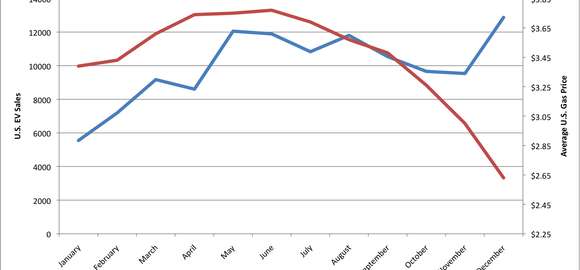
Incredibly, as gas prices fell, EV sales were constant to slightly higher, highlighted by record December sales of 12,874 units. Below, you can see how overall sales trended during 2014 versus gas prices. The correlation you might expect, of sales dropping as gas prices drop, hasn’t come to fruition yet.
2014 Electric Vehicle Sales vs. Gas Prices (Image: EIA/InsideEVs)
Part of that may be a lag between low gas prices and changing buying decisions, but SUV sales were up late in 2014, so other parts of the auto market adapted quickly to lower prices. Maybe EVs are becoming a mainstay in the auto industry?
Who is selling all those EVs?
Surprisingly, Tesla Motors (NASDAQ: TSLA ) wasn’t the leader in U.S. EV sales during 2014, despite leading the industry in headlines. The company sold and estimated 17,300 Model S during the year, less 15% of the market and only good enough for third place.
The industry’s leader was the Nissan Leaf, which sold 30,200 units, followed by General Motors’ (NYSE: GM ) Chevy Volt at 18,805 units. Toyota’s Prius PHV and the Ford Fusion Energi followed in 4th and 5th place, with 13,264 and 11,550 units, respectively.
Sales growth in 2014 is great, and December’s figure was impressive, but for EVs to be more than a bit player in the auto market, there still need to be more offerings and technology improvements that make them more competitive. That’s where 2015 could bring some key advancements.
The Tesla Model S has become an icon of the EV market, but it doesn’t lead the U.S. in sales.
How EVs can grow in 2015 and beyond
The last five years have shown that consumers are willing to trade in conventional vehicles for EVs if they can get where they need to go. The Chevy Volt, for example, is actually a hybrid, reducing EV range anxiety that buyers inevitably have. Tesla has answered the range question by offering nearly 300 miles in range in its high-end Model S. But further improvements have to bring adoption of EVs to an even wider audience. For now, it looks like most automakers are tiptoeing into the market with hybrids rather than betting the farm on a full EV.
In 2015, we’ll see a number of new EVs hit the road, most notably in the SUV and crossover market. Tesla’s all electric Model X is due out in the second half of the year and is the most anticipated EV of the year. The hybrid BMW X5 eDrive, Audi Q7 Plug-in, Volvo XC90 T8, and Mercedes-Benz GLE-Class Plug-in are a few others that could catch the attention of drivers.
Expanded product offering and investments by new EV players is good, but for EVs to grow significantly in 2015 and beyond, more companies need to advance EV range, beyond the 300 mile limit Tesla is bumping up against. To completely replace a conventional vehicle range anxiety can’t be an issue, and even at 300 miles, it would be a stretch for long trips. To move beyond that, battery technology likely needs to take another leap forward, which may take a few years.
EVs are showing some staying power
The 2014 sales numbers for EVs are impressive, and new vehicles coming out in 2015 should expand the market incrementally. But the challenge competing against $2 per gallon gas will come down to offering a vehicle that can go far enough on a charge to ease range anxiety and offers better performance than a standard car.
I’m bullish on the future of EVs, but it may be a while before a majority of the population sees them as a real option when buying a vehicle. Until then, small steps forward in EV offerings and technology will slowly grow the market until range anxiety is a problem of the past.
Many companies are considering providing workplace charging for their employees and finding they are in new territory with many options to consider. We at Plug In America would like to share what we have learned having been involved for over 10 years in both using charging infrastructure as drivers and advising site hosts of all types in how to provide effective charging facilities.
Goals
There are many reasons a company may be considering providing workplace charging. It could be to attract and retain forward-thinking employees, to enhance a company’s “green” image, to gain points toward LEED certification, or to raise awareness of electric vehicles.
Our analysis and recommendations are based on the goal of using workplace charging to increase the adoption of electric vehicles, which ties in with many of the reasons we find companies are considering making charging available in the workplace. Even when this is not an explicit goal at a given company, understanding the issues presented here may be helpful in evaluating charging options.
We also want to minimize the cost to the employer while meeting the goal of encouraging increased use of electric vehicles. These considerations include infrastructure costs, operating costs, maintenance costs, and efficient use of employee time.
There is certainly no one-size-fits-all approach that meets the goals and needs of every company. The ideas presented here are meant to serve as a starting point, a baseline plan that can be used to inform the analysis of corporate goals, infrastructure considerations, and employee interests.
Terminology
Level 1 refers to charging at 120V. This can be from an ordinary outlet using a portable charging device or from a dedicated Level 1 station that has the proper electronics and plug to connect directly to a plug-in electric vehicle. For long term loads, like charging a vehicle, the current drawn is generally limited to 12A, which yields 1.44 kilowatts (kW) of charging.
Level 2 refers to charging at higher voltage, 208V to 240V. This can also done from a 240V outlet (NEMA 14-50, for example) using a charging cord, but is more typically done with a dedicated charging station. The current limit for these stations is typically 30 to 32 amps (~7 kW), but can be anything from 15A to 80A (up to 19.2 kW).
DC Quick Charge This charging method bypasses the vehicle’s on-board AC charging equipment and sends high voltage (300V to 400V) DC directly to the battery, at rates between 20 and 130 kW. These are expensive to install and operate, and are typically used for road trips or other situations where extra charge is needed in a hurry, not for a workday charging session.
The “Just Right” Fee
Problem: Free Reduces Availability
Free charging sounds like the best incentive to get people to consider electric vehicles, but the cost of electricity is not a barrier to EV adoption. An exact comparison with gas depends on a number of factors, but think of driving on electricity as equivalent to getting gas for less than $1 per gallon. Free charging makes the cost benefit more apparent, but has a couple of problems. First, it sets an expectation that charging will always be free, something that generally isn’t sustainable. A short-term pilot with free charging can be very effective in kickstarting awareness of electric vehicles, and some companies may want to continue to provide free charging even as EVs rise in popularity.
However, if free charging drives demand to a level that can’t be met, the resulting oversubscription can create problems that reduce EV adoption. Free charging motivates everyone to charge at work because it’s cheaper than charging at home. Charging that is oversubscribed is undependable and therefore people who can’t charge at home won’t find it a viable option. The only people who can use free charging are those who don’t need it because they have a more reliable alternative. This creates conflict between drivers who need charging to get home and others who just want to charge because it’s free. This built-in conflict can even create a hostile environment at work. Who wants to get into a shouting match over fueling their car so they can get home?
When free charging leads to oversubscription and reduces charging availability for those who need to charge, it discourages EV adoption among those who could most benefit from charging at work.
Problem: Overly Cheap Charging Shifts Off-Peak Use to On-Peak
Like free charging, billing at a rate that’s below the market price for electricity incentivizes shifting charging from overnight at home to charging at work during the day. As EV adoption increases, this puts extra strain on the grid and increases energy costs.
Problem: Overly Expensive Charging Can Hurt Adoption Or Usage
Paid charging billed far above the cost of electricity erases the economic advantage of driving electric. People who can’t charge at home thus can’t use this as a way to make driving electric financially viable. This therefore will not increase EV adoption. Likewise it can’t substantially increase use of EVs if it makes driving electric cost more than burning gas.
Solution: Charge a Little Over Market Price
The solution is to provide charging billed at just a little above local home rates. This extends the economic advantages of driving electric to those who cannot charge at home. It also eliminates the incentive to shift charging from home to work, reducing the number of stations needed to satisfy demand. Together these benefits minimize the infrastructure cost of providing charging at work and focus the benefits on those who need it the most.
Note that billing for public charging is different; other issues are at play there.
‘You really have to be cut out for the kind of attention this car will garner: it’s like being famous overnight’
The BMWi8 is sleek, fast, futuristic and, most of all, defiant. The rules are, if you want to be green, you have to be crap. These were laid down in stone by eco-friendly cleaning products, and reinforced by decades of dirty hippies. The i8 is flash, showy, outrageously fast – and the future: one day, all cars will be like this – lighter, run on batteries – or cars will have ceased to exist.
The hybrid electric motor drives the front wheels, the turbo-charged petrol-triple engine the back. Sure, it plugs into the mains now, but as soon as they perfect the solar battery, this car is going to be first in line to run on sun. The frame is carbon-fibre reinforced plastic, somewhat lighter than aluminium, tonnes lighter than steel.
The resulting drive is, in any of the modes – SPORT, COMFORT or ECO-PRO (I’m not shouting; this is what BMW calls them) – more like driving in a video game than driving a car: silent, smooth, otherworldly. The speed dial is projected forwards into space, so only the driver can see it. This is handy, I imagine, if your passenger habitually tells you to slow down. Mind you, in this car, your passenger is going to tell you to slow down anyway. I defy you, feeling so protected (a high window line makes the world seem quite far away) and so omnipotent (thanks to the crazy raw power), not to go too fast, or at the very least accelerate in an ostentatious fashion.
Before you drive the i8, though, you have to get in; the doors open upwards in a gull-wing fashion. My kid asked me if it could fly. There is always someone taking a picture of it, if not as you approach, certainly by the time you’ve got the key out of your pocket. One time, walking purposefully toward it, then suddenly exhausted by the effort of explaining why I had it, even though it wasn’t mine, I just took a photo with my phone and walked away. You really have to be cut out for the kind of attention this car will garner: it’s like being famous overnight.
The cabin is swish and intuitive; in the dark, it comes alive with illuminated blue piping. The seatbelts are bright blue and heavily redolent of the professional pitstop. The posture is low and luxurious in a Swiss-watch-advert kind of way (“I’m reclining like this because I can afford to, not because my back’s gone”).
The motorway is where it gets to show off. It can make a decent noise, for a start, some of it simulated (people like that). More relevant is the ease with which it takes everything, and its remarkable fuel efficiency: at speed, something like 50mpg, roughly the same as a Prius, which feels like you’re pushing it along with your own buttocks.
The prototype for the i8 was in Mission Impossible: Ghost Protocol. I can’t figure out how Tom Cruise swung out of the low driver’s seat on his tiny little legs, but I can’t conceive of a more Hollywood-ready car.