Category Archives: Electric Cars

News and reviews of the latest electric cars (full electrics and plug-in hybrids).

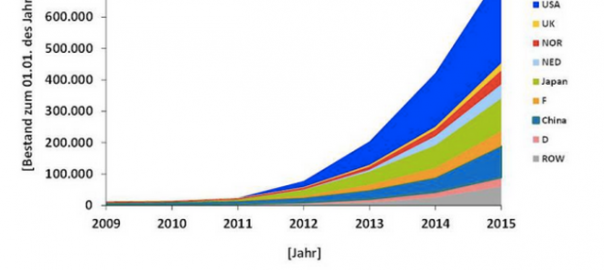
While electric vehicles only make up for a tiny percentage of total vehicles manufactured, its popularity is soaring. This is no surprise given the inherent advantages of electric vehicles. Here is a graph illustrating electric vehicle growth over the past six years (Image: Clean Technica)

The Electrification Of The Transportation Industry And Its Implications

Summary

  • Petroleum has been the main transportation fuel for over a century, which has spawned one of the largest industries as a result.
  • Despite petroleum’s pervasive influence on society, the energy industry may be changing irrevocably with the rapid electrification of transportation.
  • The shift toward electric transport will likely happen faster than most anticipate given the inherent advantages of electric transport, leading to several investment opportunities in the electric industry.

For the last century or so, the energy industry has largely been segmented. While energy sources such as coal, natural gas, nuclear, and renewables have primarily been used for electricity generation, petroleum has mainly been used as a fuel for transportation. Ever since oil drilling technologies were invented in the mid-19th century, petroleum has become the superior choice for transportation. Petroleum has become so vital to the transportation industry that oil supermajors, i.e. Exxon (NYSE:XOM), BP (NYSE:BP), ConocoPhillips (NYSE:COP), etc, have become some of the most valuable corporations in the world.

While these corporations also have interests in other forms of energy such as natural gas, petroleum still consists of a huge portion of these companies’ business portfolios. Despite the increasing energy diversification of such firms, the influence that petroleum plays on these companies is undeniable. This is not surprising as the transportation industry is notoriously energy intensive. In fact, only the industrial sector beats out the transportation sector in terms of energy usage in the U.S., with the residential and commercial sectors coming in third and fourth. Overall, transportation accounts for nearly one-third of total energy consumption, making petroleum an incredibly important commodity.

An Inevitable Convergence

With the thousands of trillions of BTU’s used for transportation alone, petroleum has become a huge component of the energy industry. Despite petroleum’s historical and current importance, its relevance may soon be limited. With the rising trend of electric transportation, the transportation industry may start to converge with the rest of the energy industry in terms of fuel sources. As petroleum is not a competitive source of electricity generation in the majority of the world, petroleum may have an increasingly hard time maintaining relevance moving forward.

While this is nowhere near apparent given that the vast majority of transportation is still petroleum-based, a massive shift toward electrical transportation could happen much sooner than most expect. This, of course, would have detrimental effect on companies with heavy crude oil interests, such as the aforementioned supermajors like Exxon. On the other hand, the electrification of transportation will only increase the need for other electricity-based energy sources, raising the prospects of coal companies, natural gas companies, renewable companies, etc.

While the solar PV industry will likely be the biggest winner in the long-run for its own reasons, other electricity-based energy industry’s will also undoubtedly benefit. A paradigm shift towards electric transportation will essentially give traditional electricity-based energy companies a huge influx of demand. To put this into perspective, an average person uses more energy for transportation than for residential purposes. Needless to say, the electrification of transportation will drastically alter the energy landscape.

Signs Of A Transformation

Given that electricity based transportation, namely motor vehicles, have inherent advantages over ICE-based transportation (e.g. superior safety, superior design potential, less pollution, and less noise), the only real debate lies in how fast electric cars will decrease in price. The cost-effectiveness of energy storage technology has always been the major barrier in the mass adoption of electric cars. With Tesla’s (NASDAQ:TSLA) massive investment into energy storage technology, the biggest barrier to mass adoption of electric vehicles should all but disappear in the near/mid-term. This is not to say that Tesla is alone in this pursuit, as many other major corporations are starting to funnel money into electric transportation R&D.

While Tesla itself will likely have a limited direct impact on the electrification of the transportation industry, the rise of the company has catalyzed an industry-wide movement towards electric vehicles. With Tesla’s stunning success thus far, major automotive companies such as General Motors (NYSE:GM) are beginning to put previously unimaginable emphasis on the development of electric vehicles. By proving that electric transportation is not only viable, but a theoretically superior alternative to ICE-based vehicles, Tesla has drastically accelerated the trend towards electric transportation by reigniting interest in this arena.

Industry Shift Likely To Occur Much Sooner Than Expected

Currently, far less than 1% of all transportation is electricity-based, with approximately 800,000 highway-capable electric vehicles sold worldwide thus far. On top of this, only about half of this figure is from purely electric vehicles, as opposed to hybrids. Given this information, it seems ludicrous to assume that a mass transformation toward electric transportation is possible even within the next few decades. While this line of thinking is certainly justified without the context of growth potential and technological advancements, the reality is that the electric vehicle industry is still in its extremely early stages of development. This implies that the electric transportation industry as it currently stands is nowhere near its potential.

The fact is that electric vehicle demand has been dramatically ramping up over the past few years, with the global electric vehicle market growing by approximately 76% in 2014. In addition, growth only seems to be accelerating, which is not surprising given the surge in electric vehicle popularity. What makes this growth even more amazing is that electric vehicles are still not yet cost-effective with ICE vehicles, implying that the inherent advantages of electric vehicles are powerful enough to overcome a severe cost disadvantage in the eyes of consumers. With the acceleration of electric vehicle innovation (mainly in the battery arena), even cost should no longer be a barrier a decade or so down the road.

Given the current roadmap of electric vehicle technological improvements, electric vehicles should easily become cost-comparable to ICE vehicles in a 5-10 year timeframe. In fact, Tesla is slated to unveil a $35,000 electric vehicle with at least 200 miles of range in approximately one years time, showcasing the speed at which electric vehicle technology is improving at. Given all the advantages that electric vehicles hold over ICE vehicles, growth will likely explode once the average price point of electric vehicles reach parity with those of ICE vehicles. While there will still be a huge fleet of petroleum consuming vehicles that will take decades to get rid of, a large-scale electrification of transportation seems inevitable in the mid/long-term. This, of course, will have huge implications on a number of industries, notably the crude oil industry.

While electric vehicles only make up for a tiny percentage of total vehicles manufactured, its popularity is soaring. This is no surprise given the inherent advantages of electric vehicles. Here is a graph illustrating electric vehicle growth over the past six years (Image: Clean Technica)

Massive Industry Impact

The mass electrification of transportation will have an enormous and irrevocable impact on several major energy industries as was mentioned before. The petroleum industry will likely be severely crippled as a result of the transportation industry’s shift away from oil. Electricity-based energy industries, i.e. coal, natural gas, nuclear, wind, and especially solar PV, will end up taking in the energy demand of the transportation industry. This implies that at current valuations, oil companies are overvalued while the general electric industry is undervalued. While there is certainly a debate about which type of electricity-based energy source will get most of the benefits in the long run, be it coal, natural gas, solar PV, wind, etc, there is no doubt that the electricity industry as a whole will benefit.

Conclusion

The electrification of transportation may be one of the most impactful transitions in modern day history. Not only will it drastically alter the landscape of the energy industry, but it should also have enormous geopolitical ramifications (think the Middle East). Supermajors like Exxon, Chevron (NYSE:CVX), or any petroleum-based company for that matter will be severely negatively effected by this likely transition. At current, companies will a heavy focus on petroleum are valuated as if oil will make up for the vast majority of transportation fuels for the long-term future (with P/E ratios in the range of 10-20).

This is far from a foregone conclusion given the exploding popularity and inherent advantages of electric transportation. Given the nascent stage of electric transportation, it makes for an opportune time to sell oil holding. Many find it absurd to think that transportation will make a such a large transition in a decade or so, which is completely understandable given the huge and unchanging influence petroleum has played in transportation for over a century. Despite this, only a few basic assumptions about technological progress need to be made in order to take on the thesis that transportation will primarily become electricity-based much sooner than most expect.

Source: Seeking Alpha

Volkswagen Golf GTE (Image: T. Larkum)

Volkswagen Golf GTE first drive: Hotting up the hybrid

You’ve heard of the Golf GTi. Now say hello to the Golf GTE. That’s E for electric, in case you were curious.

To readers of a certain age, GTE in the context of a performance car might be associated with another brand. When Pocket-lint was still in baby grows, it was Vauxhall that owned the GTE moniker, as seen stuck on the back of cars like its hot Astras.

Volkswagen Golf GTE (Image: T. Larkum)

But Vauxhall’s loss is clearly Volkswagen’s gain, as it gives the German maker a neat and easy-to-understand badge strategy for its range of performance cars. So in Golf world, it’s GTi for (injection) petrol, GTD for diesel, and GTE for plug-in hybrid electric – although this isn’t a purely battery powered Golf (you’ll need an e-Golf for that).

The Golf GTE mates together a chunky battery pack that you can plug in and recharge (unlike a regular hybrid like, say, a Toyota Prius) with a 1.4 TSi petrol engine. This engine sometimes keeps itself quiet and lets the battery do all the work, sometimes works together with the battery and (if the battery’s drained) can propel the car on its own. It depends on what mode you put the car in, state of charge and so on.

The benefit to you of all this? Well, 31 miles of range on the battery alone – which VW figure is enough to get most of us to work and back each day. But then the sort of performance you get from the regular GTi when the battery and petrol motor are working together and producing their combined total power output of 204hp. In between times – and depending how often you charge the battery up, the GTE promises much greater economy than its petrol equivalent – officially, 166mpg and 39g/km of CO2.

We could bore you at length about the GTE’s numerous modes (pure electric, GTE, charge battery etc) and various degrees of super cleverness. Instead we’ll simply talk about how it drives.

Set off with e-mode pressed, and the Golf travels under the power of just its battery, so long as you keep the speed below 81mph. It’s quiet, serene and nippy without feeling outright fast in a way that so many electric cars do. Both the electric motor and engine drive through the standard 6-speed DSG automatic gearbox, but in electric mode it’s very difficult to discern any real kind of stepping, gear-changing feel. And that’s all part of the appeal. It’s a fuss-free experience.

Read more: Pocket Lint

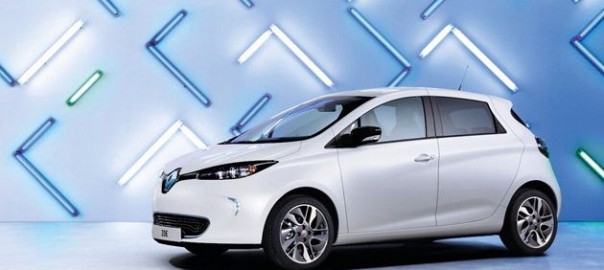
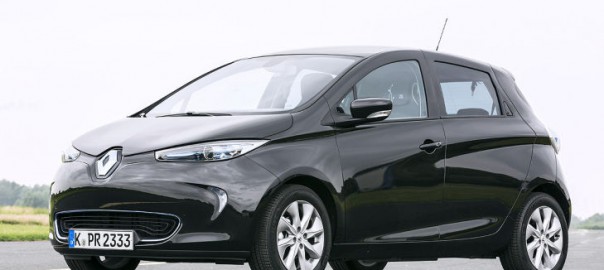
The Renault ZOE will benefit from a 35% discount from 1st April 2015

Electric cars: wave goodbye to the petrolhead

A zero-emissions Renault Zoe gave David Williams’ twins a taste of the future of driving, providing a very different approach to the way we drive

No sweat: first-time learner drivers Joe and Anna found the all-electric Renault Zoe a relaxing car to drive on the closed circuit (Image: L. Csernohlavek)

Lurching down the road in a series of kangaroo hops after each change of gear as you teach your son or daughter how to drive could soon be a thing of the past as the calm, quiet, more mature nature of the electric car promises to usher in a new generation of learners with a very different approach to the way we drive.

I’ve put my daughter and son into the driving seat to find out. With a melodic but barely audible sci-fi-style hum, of which Trekkies would surely approve, we inch slowly away from the kerb and glide ethereally towards a row of cones set out in the car park.

There’s no crashing of gears, no angrily revving engine and little stress. Anna beams as the sleek all-electric Renault Zoe quietly picks up speed and she deftly push-pulls the steering wheel to negotiate the first bend. It almost seems too easy.

As I sit in the back to watch my 15-year-old twins’ first “proper” driving lesson at Bluewater’s Young Driver facility in Kent, it seems a million miles away from my first attempts to co-ordinate juddering clutch, throttle, non-synchromesh gearbox and (yes, let us admit it) semaphore-arm indicators on my parents’ ageing, polluting Morris Minor Estate, some 35 years earlier. Even Gary Webber, the driving instructor whose familiarity with this special practice circuit is finely honed thanks to many hours teaching budding learners aged 11-17, is impressed with the calm, fuss-free zero-emission Zoe.

“Amazing – the loudest thing you can hear is the indicators,” he says, scarcely disguising his astonishment as he helps Anna insert the smartcard into the dashboard and press the Start button to “fire” up the car. Instead of the staccato bark of exhaust pipe, rattle of cam chain, puff of emissions and vibrations through the steering wheel, there’s a gentle synthesised “bong” and a cheerful “ready” message lights up in the space-age instrument panel.

“You certainly won’t be able to stall it,” adds Gary. “There’s no clutch and as it’s automatic, there’s no gear-changing to worry about, either.”

We’ve joined Gary at the Admiral Young Driver arena in Bluewater to see what it’s like to learn to drive in an electric car, and it’s a great location to grapple with the basics of getting behind the wheel — and while they still have to master manual gear changes and the like, a wealth of new technology, such as sensors and cameras, makes learning to drive easier.

The rest of the year, the instructors have made it more challenging, using hundreds of cones to represent lay-bys, cul-de-sacs, vehicles, traffic lights and buildings. Normally, there’d be six other cars on the circuit, as youngsters get a taste of motorised freedom, accompanied by a fully qualified ADI driving instructor – and with the benefit of dual- control cars.

Today, for our electric Renault Zoe acid test, we have the place to ourselves and Joseph and Anna are loving every moment. Even Gary seems relaxed about the lack of a spare brake pedal on the Zoe – for emergencies.

As Anna tackles her first roundabout, crossroads and T-junction, the Zoe is fully charged; we know this as it was topped up overnight at an electric socket; the dashboard readout tells us we have enough amps stored in the batteries to cover 78 fume- free miles for around £1.50. We won’t need them, but it’s comforting to know there are two charging cables in the boot – one for public charging points or dedicated home chargers (which will fully charge in four hours), the other for three-pin domestic electric points, which charge the car up overnight.

After Anna has negotiated the fake but sunny town centre for 45 minutes – grinning as she improves her steering technique, impressing Gary with her reversing – it’s Joe’s turn, and the readout now tells us we still have 76 miles of motoring time left. That is enough to get us to the seaside at Margate if we wished.

Joe – who has spent hours observing the finer points of car control from the Stig on Top Gear – is perfectly happy on our closed circuit. He has a heavier right foot and whizzes away, quickly acclimatising to the Zoe’s smooth power delivery, light powered steering and deft handling.

When he’s asked to park parallel to a kerb and reverse in a straight line for about 50 feet, he swiftly spots the high- tech reversing camera and demonstrates his prowess with brake and throttle, as well as the electrically controlled door mirrors. That’s the computer generation for you.

“It’s really good fun. Much smoother than the diesel car we tried earlier,” says Joe. “There’s less to think about as it’s an automatic so it’s perfect to learn in. You just put it into gear and go; it seems to put you in a really calm mindset.”

Anna adds:

“It’s less scary than the manual diesel car we tried earlier, even though it accelerates fast. I like the fact that it’s quieter and, because you just have to slide the automatic gear lever into Drive, it’s simpler.”

It’s all good fun, but there’s a serious point, too. Stacked in the Young Driver bus, where they dole out drinks and Drive Diaries to the novices who turn up are leaflets outlining what novices should expect. It asks: “Why do we encourage 11 to 17-year-olds to drive?”

“Being taught to drive away from the road, at a younger age, is a big benefit,” says Gary. “It means they hit the ground running when they start lessons on the road. It gives them a valuable advantage.”

With sales of electric cars up by more than 300 per cent in the first five months of this year and manufacturers bringing more and more models to market, from city runarounds and family hatchbacks to 4x4s and sports cars, surely the cleaner, greener future of driving is gliding smoothly and securely into place.

Source: The Telegraph

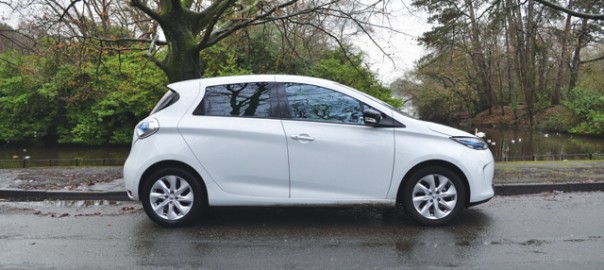
Long Termers: Renault ZOE

After six months and almost five thousand miles, our ZOE has gone back to Renault. But, in that time, it’s answered the question I’ve been asked so many times since it was delivered: what’s it really like living with an electric vehicle?

It’s much easier than you’d expect. We usually carry hundreds of miles of unnecessary fuel in a conventional car, but the ZOE shows a typical range of between 80 and 100 miles is quite generous. It’s enough to comfortably get from my house in Cardiff to Bristol and back, and the electricity costs less than half the price of the Severn Bridge toll. At each end, I can plug in while I do other things.

Of course, long trips take planning. The range drops to around 75 miles on the motorway, not helped by my impatience at the Eco mode’s 60mph speed limiter. At a steady 70mph, with the blowers on but air conditioning off, it comfortably gets between Ecotricity’s Electric Highway network on an 80% charge, reached in 20 minutes. Range anxiety is usually down to bad planning.

It’s hard not to love the technology, too. R-Link is fiddly at first but easy to get used to, setting cabin temperatures from your bed is a useful feature, and the Chameleon Charger means it takes the fastest charging speeds from whatever you can plug it into. Domestic sockets are the painfully slow exception, though, and the three-pin cable is really only a backup.

The more you live with it, the more it becomes a normal car. It’s stylish, comfortable, has a generous boot, folding seats and ISOFIX points in the back, plus the refinement is blissful. For mostly urban driving and occasional motorway trips, do you really need a plug-in hybrid?

Source: EV Fleet World

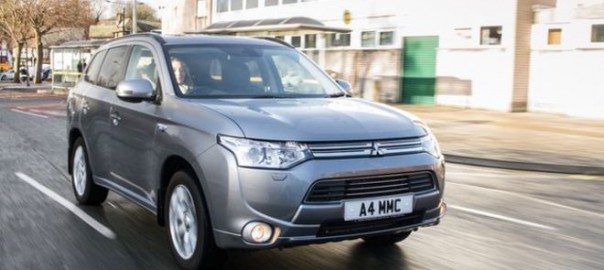
Britain's best-selling plug-in electric car has sold 10,000 vehicles in the last year: Mitsubishi Outlander PHEV

Almost 20% Of Mitsubishi Sales In Europe Are Plug-Ins

Almost 20% Of Mitsubishi Sales In Europe Are Plug-Ins; Outlander PHEV Sales Exceed Regular Outlander

A few years ago, Mitsubishi set a goal of 20% plug-in electric car sales by 2020.

Well, in Europe Mitsubishi has almost reached the target five years ahead of schedule.

2014 fiscal year ended in March with Mitsubishi reporting total European sales at 153,747 vehicles, out of which 44,963 Outlanders.

Outlander is available in a plug-in hybrid version and that is the version that’s most popular with 25,266 sales! Regular Outlander didn’t even reach 20,000.

Outlander PHEV accounted for 16.4% of all Mitsubishi sales in Europe.

On top of that, the Japanese company can add at least a few hundred i-MiEVs.

In Japan, Outlander PHEV had some 8,629 sales in the most recent fiscal year.

Source: Inside EVs

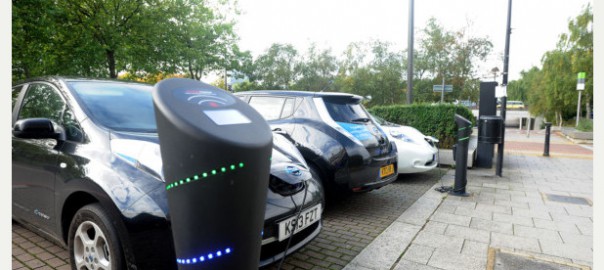
Electric cars charging in Central Milton Keynes

‘Electric taxis’ could now join the electric buses in Milton Keynes

DEPUTY Prime Minister Nick Clegg has announced Milton Keynes will receive government funding of £1,875,000 towards installing a network of 50 rapid charge units for electric vehicles, capable of fully charging a vehicle in 30 minutes or less.

[From January 2014] The faster speed of charging opens up electric vehicle charging as a possibility for private-hire vehicles for the first time.

As private-hire vehicles can cover very high daily mileages, they would need several re-charges during the working day.

But the speed of rapid electric vehicle charging posts makes recharging ‘electric taxis’ a practical possibility.

Building on the recent launch of the UK’s first wirelessly charged all-electric bus route, Milton Keynes Council is working with organisations including Arup and ChargeMaster alongside local private hire companies as plans are developed to make sure the new rapid charge posts are installed in the best places for use by taxi drivers.

Electric cars charging in Central Milton Keynes

Private motorists will also be able to use the 50 rapid charge posts, which are expected to be installed in Milton Keynes by mid-2015.

There are currently 170 different types of electric vehicle charge posts in Milton Keynes which provide more than 4,000 charges to vehicles each year and this is growing more than steadily and has doubled this quarter since the end of the last quarter.

The rapid charge project will be delivered by a consortium in partnership with Milton Keynes Council, with funding coming from consortium partners and government.

Councilllor Keith McLean, Milton Keynes Council’s cabinet member responsible for transport, said:

“This funding is more good news for Milton Keynes.

“We’re already leading the way on electric transport, having launched the UK’s first all-electric bus service this month, and being among the first places to introduce an electric vehicle charging network.

“These faster charging posts will be appealing to electric car drivers and commercial users, and we’ll continue to work with partners to introduce new and innovative transport schemes locally.”

Source: MK Web

Tesla Powerwall home battery storage system (Image: Tesla)

Why is the Domestic Battery so Important?

Earlier this year I saw an all in one inverter and domestic battery unit on display at the Bosch stand at CES.

2 years ago I stayed with my friend Simon Hackett in Adelaide, Australia and saw his line up of domestic batteries in sturdy cabinets outside his home. Simon’s house is covered in solar panels, he makes more electricity than he can use and he runs three electric cars from this power source.

Yesterday Tesla announced its domestic battery range.

Tesla Powerwall home battery storage system (Image: Tesla)

So, is this yet further ‘playthings for the rich’ as so many suggest to me on the Twitters?

What role can a domestic battery have for the ordinary Joe/Joanne?

With the advent of ever cheaper and more effective lithium ion battery technology, something government supported scientists have been working on for the last 40 years, a new paradigm is beginning to emerge.

On a personal level, if you have a few solar panels and a battery in your home, this doesn’t mean you can ‘live off the grid’ but it does mean you can reduce your electricity bill by a much larger amount that you can at the moment. You can obviously store the electricity coming from your panels during the day when you are not home and use it in the evening when you return.

But that really isn’t the story.

If a thousand homes had solar panels and domestic batteries fitted, it wouldn’t make any difference to the national picture.

Those homeowners would benefit from greatly reduced bills and maybe feel smug, but that’s about it.

If ten thousand houses had them, it might be possible to register the reduction in peak demand at the National Grid control room I visited for a Fully Charged episode.

If a million homes had them, solar panels or not, it would make a very profound difference.

If 10 million homes had them, well, everything would change.

But why?

Read more: Llew Blog

New Renault ZOE from £145 per month fuel included

Update: latest offer here.

THESE OFFERS EXPIRED ON 30 SEPTEMBER – FOR THE LATEST OFFERS SEE HERE:
New Renault ZOE from £155 per month fuel included.


(Update 1 September: Renault has confirmed that the £5060 discount will finish at the end of September so we expect the prices to be considerably higher from 1 October. Delivery is currently November-December. Update 25 August: Added prices for 18000 miles per year.)

Yesterday we received the new June 2015 prices for the Renault ZOE (effectively an electric Clio) and though they have changed slightly they are still looking remarkably good.

Latest prices are as follows for a Renault ZOE Dynamique Nav on 2 year PCP (Personal Contract Purchase: like a lease but you can choose to pay an optional lump sum at the end and keep the car):

  • 3000 miles per year: £75 deposit plus £145 per month, Fuel included*
  • 7500 miles per year: £75 deposit plus £180 per month, Fuel included*
  • 9000 miles per year: £90 deposit plus £190 per month, Fuel included*
  • 10500 miles per year: £100 deposit plus £199 per month, Fuel included*
  • 12000 miles per year: £120 deposit plus £210 per month, Fuel included*
  • 15000 miles per year: £150 deposit plus £235 per month, Fuel included*
  • 18000 miles per year: £180 deposit plus £260 per month, Fuel included*

For clarity the monthly figure includes the battery rental. In all cases the excess mileage is effectively 15.5p/mile (8p per mile for the car and £7.50 per 100 miles for the battery).

Road tax is, of course, free, and no MOT is required during the term of the contract.

be1393e978dcb6da_Renault_Zoe_AutoBild

A home 13Amp charge cable isn’t included, though it isn’t required if a dedicated charge point is used – it can, however, be taken as an option for £22 per month. Metallic paint (black, grey, blue, Arctic White) is also available and adds £10-£25 per month on a standard Glacier White finish.

For comparison, consider the current deal for the Clio Dynamique S Nav TCE 90 for which the deposit is a massive £2879 and the monthly payment is £169. Even at 60mpg, if you could get it fuel included it would cost an additional £55 per month in fuel for 7500 miles per year. Therefore in total over 24 months it would cost £224 per month compared to the ZOE’s £180. And being electric the ZOE is much nicer to drive, and can be run from a renewable energy supply. And of course you’ve saved that £2800 deposit.

It’s worth noting that you get a lot of car for your money. The ZOE Dynamique Nav is a very high specification including satnav with traffic control, bluetooth, MP3, auto-lights, auto-wipers, electric mirrors and windows, reversing camera, cruise control, speed limiter, traction control, keyless entry, alloy wheels, air conditioning, etc. And being electric you can monitor the battery charge and remaining range, and control the heating or air conditioning, from your smartphone.

Who’d have believed you could drive away a new high-tech high-end car with no fuel costs, no road tax and no MOT required, for a deposit of £75?!

It’s the ultimate in predictable, fixed-cost motoring. Note, however, that virtually all stocks have been sold so cars are being built to order. Delivery for orders taken in June will be delivered in September-November, first-come first-served.

Personally I think this is a loss-leader for Renault.

If you want to know more please complete our Contact form – the high interest in this offer makes it difficult to track contacts in other ways.

Update 26 June: Renault have historically always paid for the installation of a home fast charge point (7kW/30A) by British Gas but this offer is no longer available; you should therefore budget £200-£300 for this. Update 3 July: This offer has been reinstated but the intallation is now done by Chargemaster (for more details see the Chargemaster brochure).

Also note that due to demand ZOE deliveries are now likely to be October-December.


*Fuel Included

The following are included on a June 2015 fuel included deal:

  1. Fuel (electricity) for the first 10000 miles at the Economy 7 rate
  2. Registration and access cards for the biggest charging network: Ecotricity (and Chargemaster/Polar Update 23 September: Chargemaster are in the process of limiting their network provision)
  3. Registration for London congestion charge exemption
  4. Out of hours telephone and email support for the first 6 months
  5. Office hours telephone and email support for the first 12 months
  6. Advice and support on installing a charge point.
  7. Advice and support on switching to a renewable energy supplier and Economy 7 for overnight charging (both optional).

Note that fuel included pays for 10000 miles of charging through your charge point. It does not prevent you combining offers to get additional free miles in other ways:

  • Charging at all motorway services is currently free (and at some other charge points)
  • We advise and support you to switch to a renewable energy supplier, e.g. Ecotricity. Currently you can get an additional 1000 miles per year free from Ecotricity, so you could have a total of 12000 miles free motoring on this 2 year contract.

You can also take advantage of free parking at many locations (include central London, many other city centres, London Midland rail stations, etc.). Finally note that generally if you use your private car for work purposes you can currently claim and get reimbursed at the petrol/diesel rate (at least 40p per mile) even though your fuel is free.

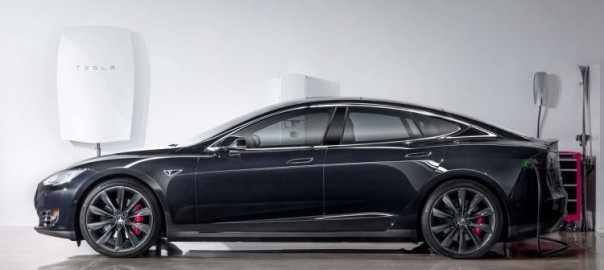
The Tesla Model S And The Powerwall (Image: Tesla)

Tesla Reveals Battery Storage Solutions

Late Thursday night [30 April] in Hawthorne, California, Tesla revealed its “missing piece to building a sustainable future,” which the company says puts the world on the road to “enabling zero emissions power generation.”

Tesla notes that the world currently uses 20 trillion kWh of energy annually, which is:

“Enough energy to power a single family home for 1.8 billion years or supply energy to a nuclear power plant for 2,300 years (or launch the Falcon 9 rocket seventeen million times).”

The company says that the Tesla Energy products launched today will help to start to wean the world off fossil fuels.

The Tesla Model S And The Powerwall (Image: Tesla)

More specifically the company is offering “a suite of batteries” for residential, business and utility use. Those solutions are outlined below.

As for what was available before today, Tesla CEO Elon Musk was very candid, “The issue with existing batteries is that they suck. They are expensive, unreliable and bad in every way.”

The Tesla CEO said that the first residential units will start shipping in about three months, but that the initial ramp will be slow, as early batteries will be built at the company’s Fremont factory.

However, next year production will switch to Tesla’s Nevada Gigafactory, and things will quickly speed up.

As a special bonus, the whole presentation made from California was done off the grid, via the company’s new utility grade “Power Packs”.

Read more: Inside EVs

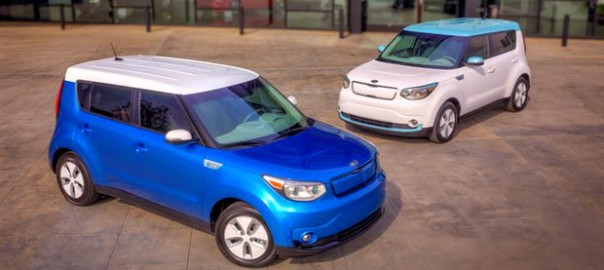
Kia Soul EV Named “Best Value In America” In Electric/Plug-In Hybrid Category

According to Vincentric, a “leading source of cost-of-ownership data and analysis within the automotive industry,” the 2015 Kia Soul EV is the “Best Value in America” in the Electric/Plug-In Hybrid category.

David Wurster, President of Vincentric states:

“As a first time winner of the ‘Best Value in America’ awards, the Kia Soul EV rose above the competition with a total cost of ownership that was more than 9% below expected. Contributing to its performance were low operating costs, which were powered, in part, by a 5-year, 60,000-mile comprehensive warranty.”

Orth Hedrick, vice president, product planning, Kia Motors America, remarked:

“The Kia brand has always stood for value, and even as we’ve grown and matured, adding ever more refined and diverse models to our lineup, we’ve never strayed from that commitment to our customers. The Soul EV, our first all-electric zero-emissions vehicle for the U.S. market continues that commitment. It offers iconic design, the best range of any vehicle in its class and superbly practical packaging, all at an affordable price. Being honored as a ‘Best Value in America’ by Vincentric is validation of Kia’s winning formula.”

The Kia Soul EV starts at $33,700 in the U.S.

Here’s how Vincentric calculates “best value:”

“Vincentric measures cost of ownership using eight different cost factors: depreciation, fees & taxes, financing, fuel, insurance, maintenance, opportunity cost, and repairs. Utilizing this methodology, Vincentric identifies which vehicles have lower-than-expected ownership costs relative to other comparable offerings. The statistical process evaluates each vehicle across all 50 states and Washington, D.C.”

Source: Inside EVs