Category Archives: Electric Cars

News and reviews of the latest electric cars (full electrics and plug-in hybrids).

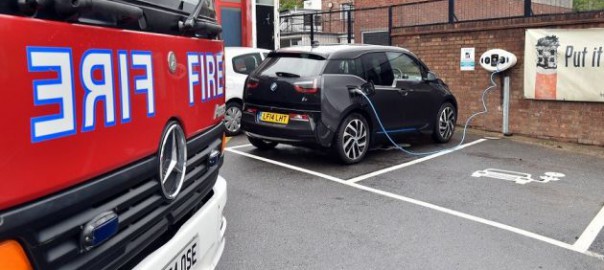
New London Fire Brigade electric car charge points

An interesting development – public charging points at fire stations. Presumably intended for visitors rather than passing members of the public?

Chargemaster, one of the UK’s largest suppliers of electric vehicle charging equipment, has completed the installation of 156 charging points at 71 fire stations and five other Brigade sites across London.

The charging points have been installed to support the London Fire Brigade’s growing fleet of electric support vehicles and 18 of the points in 9 locations are also available for public use.

As part of the Brigade’s commitment to reducing carbon emissions, the organisation selected Chargemaster’s popular twin socket fast charging units that can supply charge at a rate of up to 22kW.

Members of the public can use the charge points at Croydon, East Ham, Edmonton, Finchley, Hainault, Harold Hill, Hornsey, Ilford and New Malden fire stations, and can register for access and unlock the charging points on the spot via their smartphone.

The charging points are part of Chargemaster’s POLAR network, one of the largest in the country with over 4,000 publicly available charging points, which have a reliability and availability record of more than 99% according to Chargemaster.

Government funding contributed 75 per cent to the total cost of installing the charging points, while the remaining cost was covered by Chargemaster, which was appointed following a competitive tender to install and manage the charging point sockets.

Speaking about the co-funding deal between Chargemaster and the Department for Transport, Transport Minister Andrew Jones, commented:

“I want cleaner, greener cars across the capital and this money will make a real difference.

“The Department for Transport’s funding for the 156 new charge points will make it easier for people to use these increasingly popular low emission vehicles. It is an example of Britain leading the way in developing sustainable transport options that are accessible to everyone.”

Chargemaster CEO, David Martell, said:

“We are pleased to have worked with London Fire Brigade and to have invested in partnership with Government to expand the charging network available to electric vehicle users in the city.

“All charge points were installed on schedule and are now part of the UK’s most reliable charging network. We are committed to increasing the uptake of electric motoring in the UK and to make it as convenient as possible for motorists.”

London Fire Commissioner Ron Dobson, said:

“I am delighted the Brigade’s electric vehicle charge points have been installed across London and are now ready for use by both Brigade staff and members of the public.

“Electric cars offer big environmental benefits and play an important part in keeping London clean. The new charging network not only makes it easy and convenient to charge up a car’s battery making electric cars easier to use, but also reaffirms London Fire Brigade’s commitment to lead on sustainability in the fire service and reducing our impact on the environment.”

The Brigade currently uses five electric cars through its lease car scheme and hopes to have a further five in its fleet towards the end of year, as a result of additional government funding secured from the Office for Low Emission Vehicles.

To view all the EV charging infrastructure available to the public in the UK, including the 9 installed at London Fire Brigade sites, go to Zap-Map.com.

Source: Next Green Car
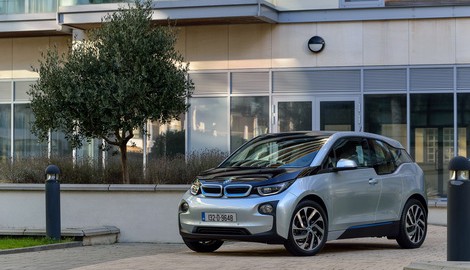
Tesla and i3 are Top Two Cars of 2015

CNET has recognised the Tesla Model S and the BMW i3, giving them the top two spots in its Top 5 Cars of 2015.

Both vehicles are deserving of their rank. The Tesla Model S P85D redefines the electric car segment due to its sheer power and speed, while the i3 makes its mark by being the world’s most efficient electric car and perhaps the most exotic electric car out there today with its use of carbon fiber, available REx and more.

Source: Inside EVs

Keeping up with the Joneses with an electric car

Finally electric cars become aspirational!

New research released today by Go Ultra Low has found that the majority of car buyers aspire to own high-tech, ultra-low emission electric vehicles to score social points over their neighbours and peers.

According to Go Ultra Low, it is clear that many UK drivers aspire to the cost benefits, style and convenience of electric motoring. The survey found that 67% of the population identified alternatively-fuelled vehicles as a purchase consideration.

Three quarters of motorists said that running costs were the biggest consideration when choosing their next car, making the argument for switching to ultra low emission vehicles even more compelling.

Hetal Shah, Head of Go Ultra Low, said:

“Our research shows that, after purchase price, the top things motorists look for in a new car are affordable running costs, comfort, space and style. The huge variety of electric vehicles now on the market is changing motorists’ concept of desirability.

The majority of consumers surveyed aspiring to the new breed of quiet, refined, technology-packed plug-in vehicles. We’re confident that this year alone we’ll see thousands more motorists up and down Britain plugging-in to this growing trend.”

Driving the Kia Soul electric car for a week

A fair review of the Kia Soul EV from a ‘petrol sniffer‘…

Day one: The Soul EV arrives at my office full, but not completely chock full, of electricity. It’s a pure electric car with no range extender back up and I’ve got a big journey tomorrow so I plug it in. The charging socket is in the middle on the front, rather than where the fuel hole would be on the side. In fact, the normal filler flap has completely disappeared which means they’ve altered the rear wing pressing for this one model, which in turn means they’ve spent some money on it. Putting the electro-umbilical point in the middle makes sense, especially if you’re neurotic about cable stretch.

Later I’m driving home without the stereo on, enjoying the smooth silence of electricalicityness when my brother rings me and his call connects through the Bluetooth. It’s only then I notice the light-up rings around the door speakers pulsing every time he speaks. I’ve seen this on a diesel powered Soul. They do it in time to whatever you’re listening to on the stereo. In a normal Soul, it’s a bit idiotic. In this electric one, it’s idiotic and a waste of precious electricity. Fortunately, you can turn it off.

Day two: The Soul EV has a claimed range of 132 miles. But even after a full charge last night the most it would show was 92. It’s a bit parky. Maybe that’s why. The problem is, today I’ve got to drive to somewhere that’s about 60 miles away. This might sound fine, but experience tells me that the range-o-meter on an electric car can be cheerily optimistic right up until the point you attempt to keep up with normal traffic or go onto a motorway. Then it plummets to the point where you it becomes clear you’re not going to make it and you will run out somewhere in the countryside and be unable to get help and have to live out your days in a forest. So this could go horribly wrong. Except, it doesn’t. The Soul turns out to have the most accurate range predictor I’ve ever seen. As long as you don’t ineptly mash the throttle like Maldonado on a pit entry, it seems to tell the truth. A mile goes by, it clicks off another mile. Sometimes it doesn’t even do that. I make it to where I’m going without range stress and buttockular clenching then plug it in, knowing I’ll get home again just fine. Which is an pleasant surprise.

Goodbye: The Soul EV is going away again. It feels like a very thoroughly developed electric car, usual long distance and charging limitations notwithstanding. It’s not as strenuously normal as the VW e-Golf and not as self-consciously wacky as the Nissan Leaf. It also seems much better at predicting its own range than either. If you’ve got 25 grand to blow on a school run-ish sort of car that lives in town it could be quite handy. I liked it.

Acceleration of electric car sales

Good news about the sales of electric cars (from 11 June)

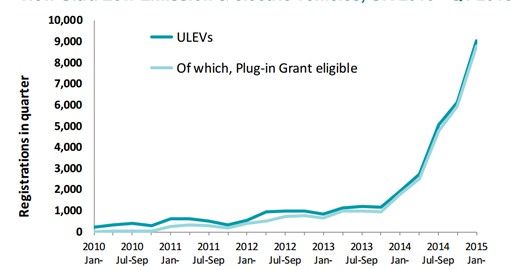
A record 9,000 new ultra low emission vehicles (ULEVs) were registered in the UK in the first quarter of 2015.

The figures, published by the Department of Transport, represent a 366% year-on-year surge.

sales_june_2015_ulev

The department said the increase was driven by more vehicles being eligible for grants, which subsidise up to 35% of the cost of a plug-in car and 20% of the cost of a plug-in van.

The models accounting for the most registrations in the latest quarter were the Mitsubishi Outlander with 4,596 and the Nissan Leaf with 1,705

Transport Minister Andrew Jones said:

“I am delighted to see such a huge rise in the number of people buying ultra low emission vehicles.

“The Go Ultra Low campaign is making low emission vehicles an increasingly popular choice and the government is investing £500 million over the next five years in making them more accessible to families and businesses across the country.

“It’s a great example of Britain leading the way in developing sustainable transport options that are affordable for everyone.”

Around 14,500 ULEV’s were sold in the UK in all of 2014, itself a fourfold increase on 2013.

There are now more than 20 plug-in models available to buy compared with just six in 2011, with each of the 10 best-selling brands in the UK now having a ULEV in its range.

Read more: Edie.net

UK plug-in car sales led by Mitsubishi Outlander

The Outlander PHEV continues its sales success in the market, according to the Daily Record.

Mitsubishi have never been the most fashionable car firm – until now.

Sales are up 133 per cent thanks to their Outlander plug-in SUV becoming an overnight success.

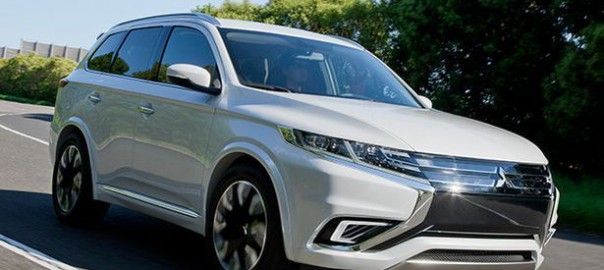
The Outlander became the UK’s favourite plug-in vehicle in March this year, when it overtook the Nissan Leaf’s all time sales. In May 2015 it outsold its nearest competitor by nearly three to one, indicating a strong market preference for the versatility and practicality of hybrid plug-ins over pure battery electric vehicles.

The Outlander PHEV has a range of 32.5 miles in electric mode alone – more than enough to accommodate the average daily commute. The vehicle’s official fuel consumption figure is 148 miles per gallon and it has emissions of just 44g of CO2 per kilometre.

Mitsu’s SUV success has also had an impact on UK electric sales.

Interestingly, 11,842 ultra-low-emission vehicles were registered last month, a four-fold increase on the same period last year.

The Society of Motor Manufacturers and Traders says the rise is down to better consumer awareness of the benefits of Ultra-Low Emissions Vehicles, as well as a wider choice. Just six ULEVs were available to choose from in 2011, compared to around 20 today.

SMMT chief executive Mike Hawes said:

“The remarkable growth in demand for plug-in vehicles is expected to continue as the range of ultra-low-emission vehicles on sale increases.”

Electric cars take over the market

A view on electric vehicles taking over – possibly a pessimistic one?

What would the world look like if electric cars took the lead in market share by 2030? “Couldn’t happen,” you say?

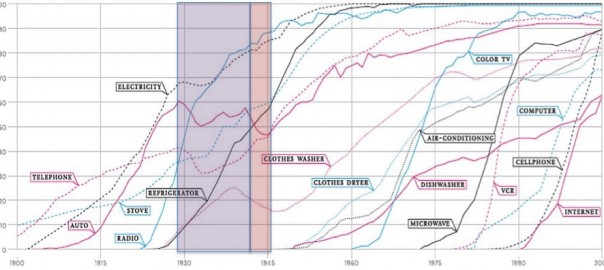
Consider the ramping up of some of the most basic items that have conquered the American market over the past century. Refrigerators went from a luxury item to 60 percent household penetration during the Depression and World War II. Technologies we used to live without including PCs, the Internet, and cell phones have become an integral part of daily life.

Once a breakthrough gets its footing, the rise to mainstream requirement is meteoric and, for reasons unknown (Copernicus has yet to weigh in), the rocket burn lasts about 15 years as the chart above indicates. Trace the rise of both electricity and automobiles. Radios had the sharpest rise of all, which may be why the 1920s were known as the Radio Days. Since the war, color TVs, microwaves, VCRs, PCs, the Internet and cellphones have all caught on as fast as radio. The air-conditioning vector appears to have been bent by the oil embargo in 1973. Auto production sputtered and coughed during the Depression, and throughout the war years, as factories churned out tanks and airplanes. It is not a coincidence that when the stock market peaked in 1929, auto production did too; neither would exceed the 1929 level until 1953.

We are about to find out if electric vehicles can make their mark and become mainstream. The launch sequence and liftoff phase (now barely underway) will soon reveal the extent of their fuel supply, i.e. How much interest will consumers have in EVs when a 200-mile-per-charge car costs less than $25,000? When a 60 kilowatt-hour (kWh) battery costs $9,000, there will be plenty of room in the budget to build a lightweight car around it. (UBS says that at $150 per kWh, the key variable in the calculation above, the EV market will take off.

Read more: Oil Price

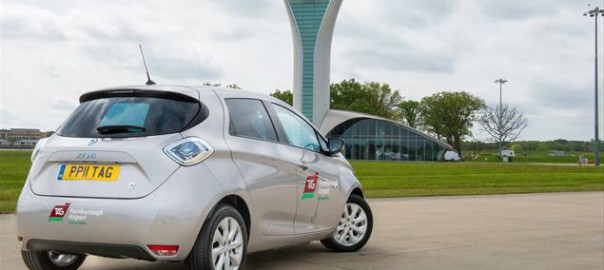
All-Electric ZOE takes off at TAG Farnborough Airport

  • TAG Farnborough Airport takes delivery of three 100% electric Renault ZOEs
  • Cars will be used as airside staff shuttles
  • ZOE will help the airport meet its sustainability and carbon footprint targets

Europe’s leading business aviation airport has taken delivery of a fleet of three 100 percent electric Renaults ZOEs as part of its ongoing strategy to reduce its carbon footprint.

TAG Farnborough Airport – the only dedicated business aviation airport in the UK receives thousands of business jets every year – is using the vehicles to shuttle staff between buildings, including the main control tower.

The vehicles make a contribution to the airport’s continued efforts to reduce its carbon footprint and meet the goals set out in its sustainability charter, which covers everything from waste management and energy usage to vehicle emissions.

The ZOE – rated the best electric vehicle to own in the Auto Express Driver Power 2015 survey and back-to-back winner of What Car? Magazine’s ‘Best Electric Car Under £20,000’ award –offers true zero emissions transport with no tailpipe emissions, in addition to ultra low running costs.

CHR3350_nlm_ZOE_Renault

Miles Thomas, Environment Manager at TAG Farnborough Airport, said

“We monitor our carbon footprint very closely across all our services and departments, and being able to reduce the environmental impact of the staff vehicle movements across the airport was a driving factor for us.

“We looked at all the electric vehicles on the market but only the ZOE ticked all our boxes. The car offers the low running costs and zero emissions and it’s also small, functional, simple and enjoyable to drive and has an impressive range.”

He added: “The reaction of our staff to the three ZOEs has been fantastic and very positive. People are enjoying driving them and we’ll definitely be looking to add more EVs to our fleet as a result.”

Ben Fletcher, Renault UK Electric Vehicle Product Manager, said:

“Every day more and more fleet operators are discovering the benefits of Renault electric vehicles.

“The ZOE is a practical, spacious and well-equipped family car but its innovative electric technology means it can offer incredible savings in running costs and whole life costs as well as making a real impact on a business’ carbon footprint.

“Drivers love them too, as evidenced by the ZOE’s performance in the Auto Express Driver Power Survey 2015, and that makes the model a win-win for fleet operators and families,” added Fletcher.

A spacious five-door family hatchback, the ZOE can cover up to 130 miles on a single charge according to official New European Driving Cycle (NEDC) figures.

A new longer-range version of ZOE, with a new Renault-developed motor, was announced at this year’s Geneva Motor Show which will bring a best-in-class official range of 149 miles when it joins the ZOE line-up this summer.

The ZOE can be charged in as little as 30 minutes using a fast charger, available in hundreds of locations across the UK, but retail customers can also have a 7kW wall-mounted charger – capable of fully charging the ZOE in three to four hours – fitted free of charge at their home. Renault is the only manufacturer to offer this service.

Available in three distinct trim levels, all ZOEs feature generous levels of standard specification and innovative technologies, including smartphone-controllable climate control and satellite navigation, and all the creature comforts the modern driver demands.

Prices start from just £13,443 RRP (including Government Plug-In Car Grant) when opting for the flexibility of battery leasing and £18,443 RRP (including PiCG) for those purchasing outright.

Renault is one of the global leaders in electric vehicle technology and is the only manufacturer with three 100% electric vehicles in its range – the Twizy urban vehicle, ZOE hatchback and Kangoo Z.E Van.

Sales in the UK of Renault’s electric models were up 90 per cent in 2014 to 1,286 vehicles and continued this strong growth in the first three months of 2015 with sales up 148 per cent to 401 vehicles.

Source: Renault Press Office

Racing a Renault ZOE

Steve Cropley has fun racing a Renault ZOE, from AutoCar

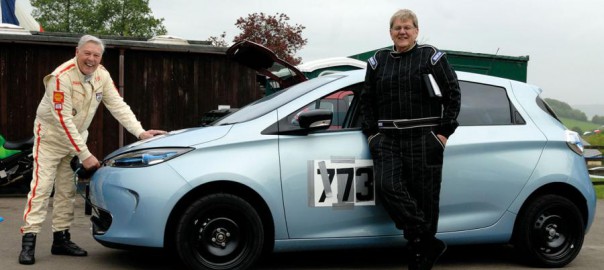
SUNDAY AM – Can driving be brilliant and terrible at once? It certainly can, and here’s an example. Headed off to Prescott to run an electric Renault Zoe in the annual hillclimb for French marques, La Vie en Bleu.

Plan was to compete on my own for a bit of fun, but some club type decided I should drive with Barrie ‘Whizzo’ Williams, one of the country’s most versatile and experienced racing drivers. If ever there were a recipe for humiliation, this was it.

Renault found a set of super-sticky Yokos, and the car felt instantly quick off the line, especially for something with a 12.3sec 0-60mph time.

Most importantly, it gripped, steered and turned really well, even during a late-morning downpour.

Whizzo was fast, of course, finding time to make ‘hush’ signs to the marshals as he noiselessly sped by. He soon turned 60.29sec, easily beating his previous electric record (in a Zoe). I soldiered on, eventually managing 61.88sec – slow but not entirely beyond the pale.

SUNDAY PM – Prescott is less blokeish than most race tracks, but it was still surprising just how interested people were in our Zoe, especially women.

They liked the styling and the interior but, funnily enough, they also liked the way it zipped uphill, which they felt matched its cheeky persona.

Found myself slipping into sales patter: “People pay £100k for cars with very little noise and vibration – and here’s one with none of either, small enough to park, for £15k.” Might even have sold a couple of the little things.

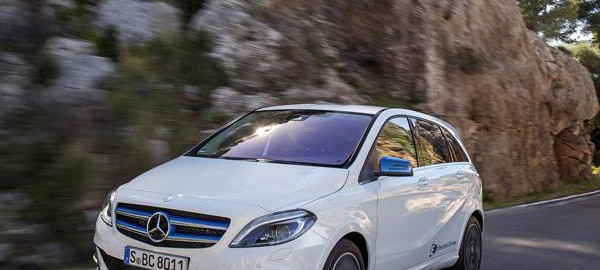
Mercedes B Class Electric (Image: MB)

Mercedes offers home energy storage

Tesla may be the automaker with the highest profile on energy storage, but they’re not the only ones. Now Mercedes goes public with its plans.

As the newest carmaker on the block, it’s perhaps not surprising that Tesla Motors likes to do things differently. That includes reaching beyond the automotive sector with its recently-announced plans to sell standalone battery packs for home and commercial energy storage. Yet that seems to be an idea the world’s oldest car manufacturer is pursuing as well.

Mercedes-Benz now plans to enter the energy-storage business as well. A division of parent company Daimler has been testing battery packs that can power houses, and plans to launch commercially in September, according to Australia’s Motoring.

Like Tesla, Daimler has tested quietly energy-storage systems for some time.

Read more: Green Car Reports