Category Archives: Electric Cars

News and reviews of the latest electric cars (full electrics and plug-in hybrids).

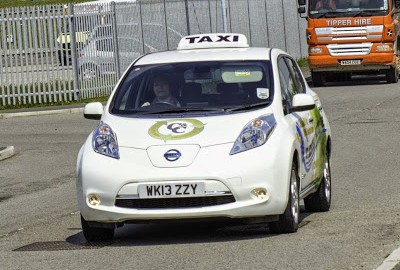
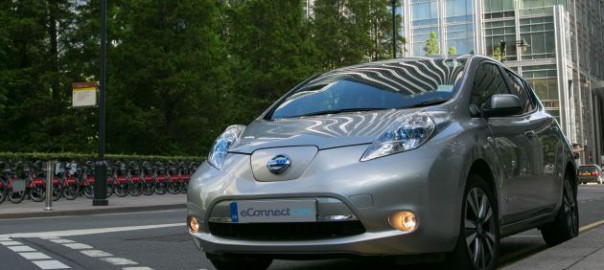
From 2020 all new private hire vehicles in London must be 'zero emission capable' (Image: eConnect Cars)

eConnect Cars taxi firm launches crowdfunding campaign

London based, zero-emissions taxi firm eConnect Cars, has launched a crowdfunding campaign to finance the next phase of its growth ahead of the introduction of the Ultra-Low Emission Zone in London.

From 2020 all new private hire vehicles in London must be 'zero emission capable' (Image: eConnect Cars)
From 2020 all new private hire vehicles in London must be ‘zero emission capable’ (Image: eConnect Cars)

From January 2020, as part of London’s forthcoming Ultra-Low Emission Zone, all private hire cars (taxis) less than 18 months old must be zero emissions capable in order to get a license. This means they will need to be able to have a range of at least 30 miles in zero emission mode.

eConnect cars goes one step further by having a fleet consisting entirely of 100% electric vehicles, the Nissan Leaf and Tesla Model S. This eliminates completely the disbursement of particulate matter from exhaust pipes that contributes to the death of approximately 9,000 people per year in London alone.

The company has already raised over 20% of its £400,000 crowdfunding target in the first couple of days. This shows the significant level of interest in the campaign, indicative of people’s concern for environmental matters, particularly with relation to health and pollution in our cities.

The Nissan Leaf is Europe’s leading electric taxi, with over 300 currently in use in countries from Estonia to Germany and The Netherlands. The UK has the most of any European country with over 120 vehicle; however, London, given its population density and pollution, surprisingly only accounts for 20% of this fleet. eConnect, the only Nissan Leaf fleet operator in London, wants to readdress this balance and is looking to double the size of its fleet through this crowdfunding campaign.

Managing Director, Alistair Clarke said:

“There is tremendous pressure on London and other large cities when it comes to urban mobility. With population growth, congestion and air pollution increasingly challenging the status quo, innovative companies like eConnect cars are forging a new integrated multi-modal transport solution.

“With new legislation coming into place [from 2018], running ultra-low emission fleets will become the only viable option. While many competitors seek to stall these changes, eConnect is not only embracing change but is also innovating in the market and showing what positive steps can be done today for a cleaner future.”

Read more: Next Green Car
Discover the BMW i8

The BMW i8 is ready to revolutionise its vehicle class. As the first sports car with the consumption and emission values of a compact car. The strength of the plug-in hybrid lies, among other factors, in the perfect synchronisation of electric motor and combustion engine, which makes itself apparent in maximum efficiency and dynamics on the road.

https://www.youtube.com/watch?v=qJgui5bNaoY

A Car Dealers Won’t Sell: It’s Electric

More than seven years ago, President Obama called for one million electric cars to be on the road by this year, and the vehicles have gained a large fan club. Environmentalists promote them as a smart way to cut dangerous emissions. Owners love their pep and the gas money they save. Apple and Google have jumped into the race to build next-generation battery-powered cars.

screenshot140_w555_h555_unk

So why are only about 330,000 electric vehicles on the road? One answer lies in an unexpected and powerful camp of skeptics: car dealers. They are showing little enthusiasm for putting consumers into electric cars.

Some buyers even tell stories of dealers talking them into gas cars and of ill-informed salespeople uncertain how far the cars can go on a charge or pushing oil changes that the cars do not need.

Read more: NY Times

Ignore the haters: electric cars really are greener

We had our carpets cleaned the other day, and when the cleaner guy found out what I did, the very first thing he said was, “I was going to get an electric car.” Then he looked at me almost apologetically. “But I heard they’re actually worse for the environment.”

CHR3696_1_nlm_Renault_c

It’s not the first time I’ve heard it. The media loves these stories. They’re counterintuitive, surprising, and best of all, show that those silly greens, with their idealistic yadda yadda, don’t know how to do math.

They’re also wrong, as a new report from the Union of Concerned Scientists conclusively demonstrates. The two-year study digs into the life-cycle greenhouse gas emissions of battery electric vehicles and gasoline cars, from materials to manufacturing to operation to disposal.

The four cars used in the comparison were a midsize and a full-size gasoline car, a midsize battery electric vehicle (based on the Nissan Leaf), and a full-size BEV (based on the Tesla S).

Long story short: Electric cars really are cleaner.

Read more: Vox

Nissan passes electric taxi milestone

Nissan is heading the electric vehicle revolution with more than 550 electric taxis now on the road in Europe.

During 2015 alone, over 100 electric vehicles were delivered to taxi companies across Europe and growth of the electric taxi market looks set to continue, as its popularity has started to take hold in Eastern Europe. Budapest company Green Lite Taxi has purchased 65 Nissan LEAFs in a bid to become Hungary’s largest zero emission fleet. To power its pioneering franchise, the company has installed seven quick chargers within the city.

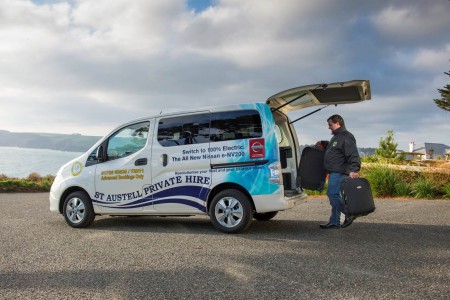
C&C Taxis’s Nissan e-NV200 Combi

In Estonia, it has been reported that a Nissan LEAF owned by taxi company, Elektritakso, has clocked up over 218,000 kilometres (135,459 miles) on its original battery pack, showcasing the high quality and reliability of Nissan’s electric vehicle range.

Nissan electric vehicles – which include the Nissan LEAF and the e-NV200, a passenger and light commercial vehicle – are becoming increasingly popular among European taxi businesses, with the Netherlands and the UK topping Nissan’s e-taxi league table, followed by Estonia, Hungary and Germany…

Taxi Electric in Amsterdam was the first private taxi service to switch to a fleet of 100 percent electric taxis in November 2011. Since then, others from across Europe have joined the revolution, with the Nissan LEAF and e-NV200 now being used by taxi businesses in Stockholm, Prague, Barcelona and Rome.

Gareth Dunsmore, director of electric vehicles for Nissan Europe, said: “We are so proud to be announcing this all-important milestone. Nissan has already delivered 30 percent more e-taxis this year than in 2014 and this figure is constantly increasing, as more taxi companies realise the benefits of becoming 100 percent electric.”

Source: ITS International

Buying a Renault Zoe

What’s life really like with an electric car? Two years in a Renault Zoe should provide the answers

My name is Jim Holder and I’ve bought an electric car.

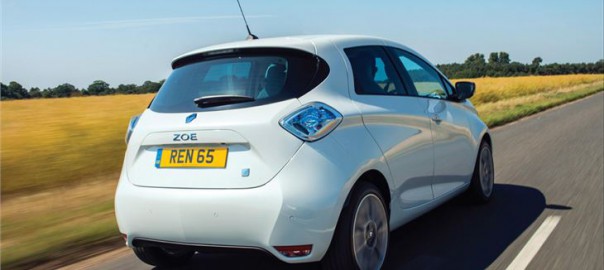
Renault ZOE
Renault ZOE

There, I’ve said it. Standing up in front of the autocar.co.uk crowd and saying that feels fairly momentous, because our readers are notoriously divided as to the merits of such vehicles. Some love them, some hate them; please don’t rush to judge me either way.

Anyway, after some earnest shopping around, I’ve laid down a £75 deposit and will lease a Renault Zoe for the next two years.

Both the rational and emotional sides of me couldn’t be happier. Let me explain why.

The Zoe will be mostly driven by my wife, who currently owns a 2007 vintage Ford C-Max powered by a 1.6-litre petrol engine. Despite covering just 100 or so miles per week, the stop-start nature of her travels (school clubs, swim teaching at various locations) means she spends £20-£30 at the pumps every seven days. Now, she will charge the Zoe once a week, at a cost of around £5 – so that’s £100 a month back in the bank.

Likewise, there will be no road tax to pay, no MOT test to cover and, because she is self-employed, there are significant tax savings. Servicing should also be £50 a year cheaper – and without, I hope, the anxious wait to find out what has worn out this time. Furthermore, selling the C-Max should also put £3500 in the bank to accrue some interest, while the ‘free’ charger that comes as part of the deal (but which costs £1000 prior to more Renault and government input) is another bonus.

Read more: Autocar

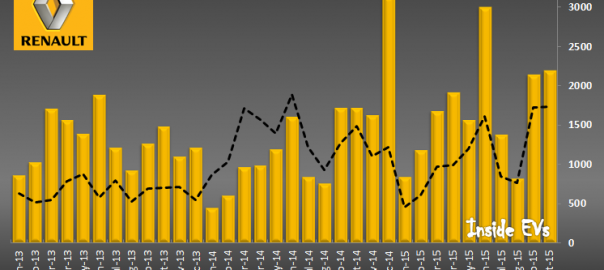
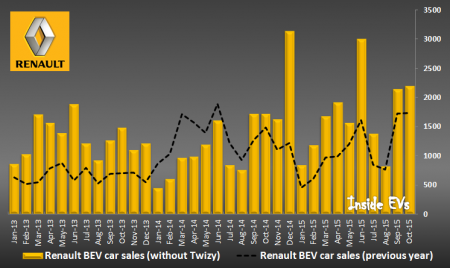
Renault BEV car sales (without Twizy) – October 2015 (Image: Inside EVs)

Renault Electric Car Sales Up 27% In October

Renault electric car sales grew last month by 27% (year-over-year – including the inclusion of the Twizy).

Renault BEV car sales (without Twizy) – October 2015 (Image: Inside EVs)

In total, Renault delivered about 2,200 cars and nearly 290 Twizy (all numbers preliminary).

Growth is fueled by Renault ZOE, which at nearly 1,850 sales not only represents about 84% of Renault’s all-electric car sales, but is moving up fast at up over 39% from over the 1,300 moved a year ago.

Average monthly sales of ZOE this year are over 1,360, which is a decent number, especially considering that sales are almost entirely limited to Europe.

So far this year, the French manufacturer already sold a record ≈16,800 electric cars (all-time record for Renault) and ≈2,000 Twizy.

Source: Inside EVs

Porsche Panamera S E-Hybrid PHEV

Autocar reviews the Porsche Panamera S E-Hybrid

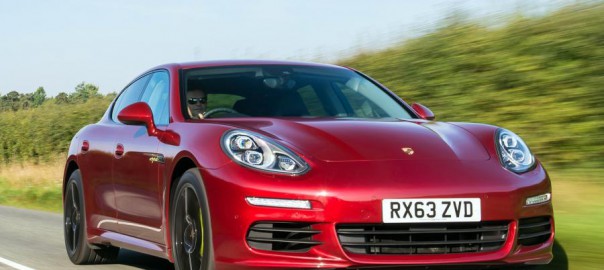
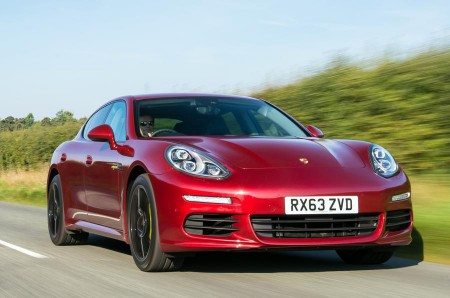
Porsche has tweaked its parallel hybrid drivetrain for this second-generation Panamera E-Hybrid, adding plug-in battery recharging that enables much more credible distances to be covered on electric-only propulsion while maintaining impressive performance.

Porsche Panamera S E-Hybrid PHEV

The Panamera S E-Hybrid is at its most effective when left to its own devices in Hybrid mode to optimise its power sources as required.

However, it is possible to choose electric-only mode by pressing the E-Power button on the vast centre console.

This is also the default start-up mode and, with a full battery, electric power can transport you up to 22 miles.

The EV range varies depending on driving conditions, how many auxiliary systems you’re using and how enthusiastically you’re unleashing the motor’s 95bhp.

In full-electric mode, the Panamera E-Hybrid can accelerate to 31mph in 6.1sec and reach a top speed of 84mph, making it amply flexible for the kind of stop-start traffic that’s typical in city centres.

Read more: Autocar

Bloomberg reviews the Tesla Model X

While travelling around the floor at the Los Angeles Auto Showon press days this week we made note that Tesla was not present at the event with the Model X or S.

But perhaps somewhat unsurprising, Bloomberg is again seemingly acting as the de facto main stream press release source for Tesla, and just so happened to be provided with a Model X “sneak peak” by the company on the first day the show is open to the public.

We don’t care much for all the overt gushing, as the spot almost comes over as a paid placement – “Place your order now, because it’s going to go fast”, but it is still a great look inside the Tesla Model X; which should start heading into mass deliveries for Signature Series reservation holders in the next couple weeks.

Source: Inside EVs