Category Archives: Electric Cars

News and reviews of the latest electric cars (full electrics and plug-in hybrids).

Hedge Fund Manager Chanos: Pump Oil Now Because EVs Are Coming

Hedge fund manager and Kynikos Associates President, Jim Chanos was interviewed on CNBC on Thursday, and had a couple interesting (and uncharacteristic) observations worth noting.

CHR3696_1_nlm_Renault_c

The first being bullish on solar, but still maintaining a short position in Solar City (of whom Chanos says is not a tech company, but a finance company); despite the recent surge in PV stocks thanks to the pending 5 year renew of the 30% federal tax credit.

The second point of interest was a message to all the oil pumpers out there:

“I think if you were to look out five or 10 years, if I was a member of OPEC, I would be pumping as much as I could today while it’s worth something, because it might not be worth a whole lot by 2030.”

The reason? Electric vehicles.

Read more: Inside EVs

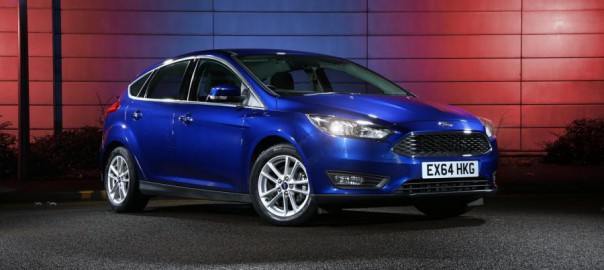
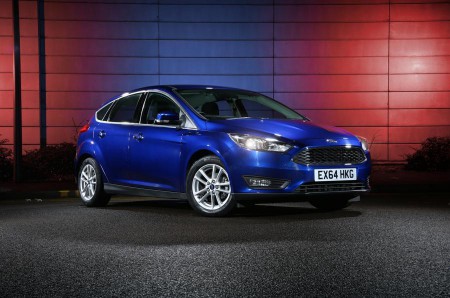
Soon, Ford dealers will have an electric focus

Electric Ford Focus on sale within the year

Ford will launch a Focus EV during 2016 – and add another 13 such cars within the next five years

Soon, Ford dealers will have an electric focus

The only place to find an electric focus used to be your camera. But soon, Ford dealers will have them too.

During the next 12 months, the new Ford Focus Electric will go on sale. And it’ll be the first of many such cars, as Ford aims to be offering electric options across 40% of its product range by the end of the decade.

There’s already an electric Focus in the US. Its 143bhp motor is good for 85mph and a range of something like 100 miles on between two and three hours’ charge – but Ford says the new one will do much better.

Read more: Standard

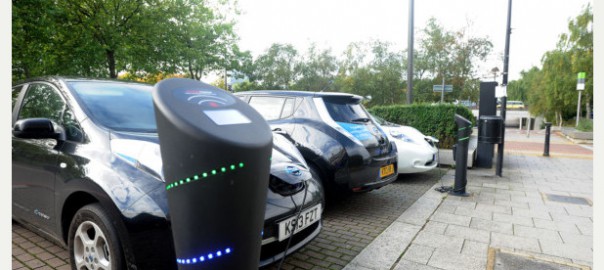
Electric cars charging in Central Milton Keynes

Ford increases focus on electric vehicles

A global electric vehicle outlook report published in 2013 suggested that the goal of 15 countries that are part of the Electric Vehicles Initiative is to have 20 million electric vehicles on the road by 2020.

Electric cars charging in Central Milton Keynes

The report states that, as countries seek to address future energy requirements, achieving sustainable transport has emerged as an important mission. Electric Vehicles have emerged as one of the most promising solutions to increase energy security and reduce emission of pollutants.

Ford Motors‘ announced on December 10th that it will invest an additional $4.5 billion in electrified vehicle solutions by 2020 to answer the increasing global trends calling for cleaner and more efficient vehicles. Although the cars segment in North America along with Lincoln cars and SUVs accounts for less than 10% of Ford?s valuation, as per our estimates, focusing on trends which will drive the industry in future will ensure that Ford maintains its market share in this segment.

Read more: Forbes

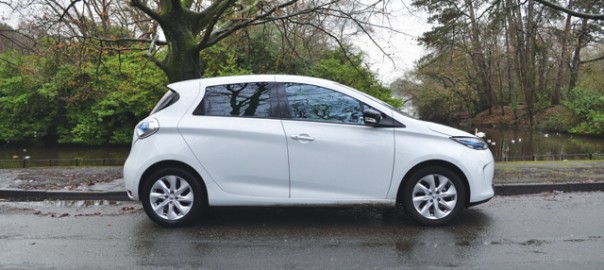
Renault ZOE R240, VAB Family Car of the Year 2016

In the 29th Family Car of the Year Awards run by the Belgian automobile association VAB, journalist and family juries voted Renault ZOE R240 top in the electric vehicles category.

Renault ZOE
Renault ZOE

For the 2016 edition of its Family Car of the Year Awards, the Belgian automobile association VAB specified a 30-kilometre increase in the minimum “electric power” range required for vehicles in the “electric” category.

As well as running against other all-electric vehicles, Renault ZOE R240 was also competing with plug-in hybrid vehicles and electric vehicles with range extender.
With both juries (25 motoring journalists and 78 families) giving the car top ranking, ZOE R240 finished with 159 points in all, ahead of the Mercedes B250e (with 154 points) and Kia’s Soul (with 147).

The professional jury of motoring journalists praised ZOE’s “roomy interior, bold design and unbeatable price”, noting that “affordable pricing and long range are making Renault electric vehicles an attractive proposition for more and more people”. The family jury expected “a real breakthrough for ZOE R240, a truly affordable vehicle” and saw it as “an eminently practical choice of second vehicle, with its extensive equipment and large boot”.

The unofficial children’s jury appreciated “the neat bodywork, the smooth ride, the comfortable rear seats, and the pretty lights”.

Renault ZOE R240

Powered by the R240 unit, Renault ZOE boasts a range unparalleled in the all-electric segment: 240 km (NEDC standard), which is 30 km more than with the Q210 power unit. Renault engineers have improved the motor efficiency by optimizing the electronic control system. Higher efficiency means lower electricity consumption with no performance penalty.

The R240 power unit also brings a 10% reduction in ZOE’s charge time under most usage conditions. As well as extending the ZOE range, Renault engineers also upgraded the Caméléon charger to reduce the low-power charge time. The new Caméléon charger is especially efficient on charging stations from 3 to 22 kW, which account for more than 95% of the vehicle charging infrastructures currently in operation.

Source: Automotive World

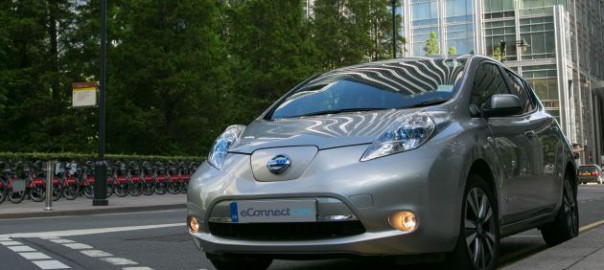
From 2020 all new private hire vehicles in London must be 'zero emission capable' (Image: eConnect Cars)

Don’t tell anyone the 2016 Leaf is out!

Back in September, I got on Nissan’s mailing list to be the “first to know” when the 2016 LEAF was released. I also asked a local Nissan dealer to contact me when it was available. Neither one contacted me.

From 2020 all new private hire vehicles in London must be 'zero emission capable' (Image: eConnect Cars)

One would think that the biggest update to the LEAF in 5 years would warrant a media fanfare. Yet, so far, Nissan has kept the 2016 LEAF release pretty much a secret.

When the new LEAF with 107 miles of range was announced, I was super excited. I’ve wanted an EV for 12 years, and the 2016 LEAF finally had the range for most of our trips at a price I could afford. Over on mynissanleaf.com, an owner in my area said Fontana Nissan had been great with his LEAF purchase back in 2011, so I emailed Fontana asking when the 2016 might be available. Their response? A form letter asking me to come down for a test drive.

I tried again, being as clear as possible that I was only interested in the date the 2016 would be released to market. This time I got a voicemail asking me to come down for a test drive. I had progressed to voicemail! Hurray.

Read more: Clean Technica

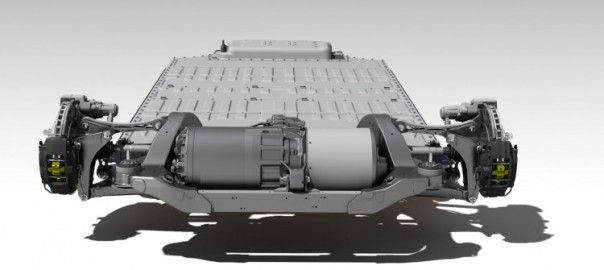
Tesla Model S Drivetrain

Tesla Drivetrain Engineer Explains Why Electric Motors Are Inherently Superior To Gas Engines

Fortune interviewed Dustin Grace, who for nine years was working on drivetrains at Tesla Motors, and earlier this year switched to electric bus maker Proterra by becoming their director of battery engineering.

Grace shared his opinion about the advantages of electric motors over internal combustion engines.

Tesla Model S Drivetrain

We listed some of the main topics, but full details can be found directly in the source Fortune article:

  • Electric motors generate motion, not heat (high efficiency)
  • They’re more powerful (high torque from zero rpm for great acceleration)
  • They’re simpler (not many parts, no transmission needed in most cases)
  • They’re (vastly) easier to service (less parts, smaller and lighter, fewer subsystems around the motor)
  • They feed themselves (regenerative braking capability)
  • They’re smarter (ultimate controlling accuracy, especially useful in AWD with two or even four motors controlled independently)

Source: Inside EVs

New plug-in grant will treble number of greener cars on Britain’s roads

More than 100,000 motorists to benefit from £400 million fund focused on greenest vehicles.

The government has today (17 December 2015) announced a long-term extension to the plug-in car grant, backed by a £400 million package to treble the number of ultra low emission vehicles on Britain’s roads.

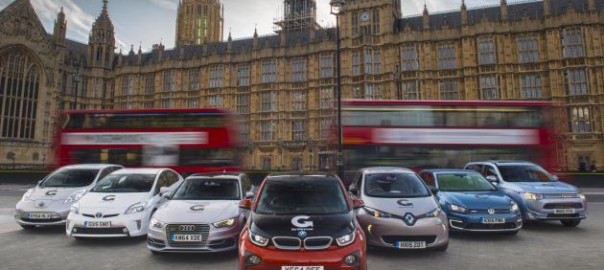
goultralow2015_EVs_parliament_GUL

The grant will continue well beyond the latest guarantee of February 2016 until at least the end of March 2018 and will mean more than 100,000 people will benefit over the coming years — double the number who have already claimed the grant since 2011.

It means from next March, buyers of the greenest cars can save up to £4,500 off the overall purchase price.

Transport Minister Andrew Jones said:

“The UK is a world leader in the uptake of low emission vehicles and the plug-in car grant has been key to that success. Extending the grant in a sustainable way ensures more than 100,000 people will benefit from financial support when purchasing these cheap-to-run and green cars. We are determined to keep Britain at the forefront of the technology, increasing our support for plug-in vehicles to £600 million over the next 5 years to cut emissions, create jobs and support our cutting-edge industries.”

Jim Wright, Nissan GB Managing Director, said:

“Today’s decision by government has reaffirmed their commitment to the uptake of ultra-low emission vehicles. With government support and Nissan’s investment of over £420 million into electric vehicles in the UK, our British made Nissan LEAF has increased in popularity with many UK customers already enjoying the benefits of zero emission and low cost driving. This announcement, together with ongoing infrastructure developments, should see the growth and wider deployment of this technology continue.”

The grant was created in 2011 to encourage sales of ultra-low emission vehicles (ULEVs) and has been instrumental in the UK becoming the biggest ULEV market in the EU, and the fourth largest in the world. Some 50,000 people have already benefited from the grant.

From 1 March 2016, 2 grant rates will be available to ensure the funding is sustainable and focus financial support on the greenest vehicles. ‘Category 1’ vehicles with a zero emission range of over 70 miles will benefit from a grant of £4500. ‘Category 2 and 3’ vehicles with a shorter zero emission range — such as plug-in hybrid vehicles with a petrol or diesel engine — will receive £2500.

The new grant levels reflect strong growth in the sector with sales of ULEVs doubling over the past year. Motorists also have a wider choice of 29 ULEVs on the market — 5 times as many as when the plug-in car grant was launched. The UK is also at the forefront of the roll-out of hydrogen fuel cell vehicles, which are also eligible for the £4500 grant thanks to their zero tailpipe emissions.

The government has also today announced it will continue to provide a grant to help ULEV owners have a dedicated charge point installed at their home. From 1 March 2016, the electric vehicle homecharge scheme (EVHS) will offer £500 per installation, which on average will cover around half of the cost of getting a charge point.

The plug-in car grant is just one element of a comprehensive £600 million package of measures from the Office for Low Emission Vehicles over the course of this parliament which also includes funding for chargepoints, grants encouraging low emission buses and taxis and R&D funding for innovative technology such as lighter vehicles and longer-lasting car batteries.

To encourage zero emission vehicles and maximise the number of everyday motorists who can benefit from government support, a price cap will also be introduced from 1 March 2016. Category 2 and 3 models with a list price of over £60,000 will not be eligible for the grant, but all category 1 vehicles with a zero emission range of over 70 miles will be eligible for the full £4,500 grant.

The government has committed to make nearly all cars and vans in the UK zero emission by 2050, and announced in the Spending Review to increase funding to £600 million between 2015 and 2020 to support the development, manufacture and uptake of ULEVs.

This commitment was reinforced when the UK was one of 14 international members of the Zero Emission Vehicle Alliance to sign a pledge promoting the uptake of electric cars at the recent Paris climate conference.

Source: Gov.uk
Electric vehicle charging points to be installed at Novotel and Ibis hotels

Chargemaster is to install EV charging points at AccorHotels Ibis and Novotel hotels across the UK.

The first phase, in 2016, will see 60 hotels receive EV charging points as part of Chargemaster’s Polar network. The charging points will be free to use for Ibis and Novotel visitors to charge their electric and plug-in hybrid vehicles.

ibis_ev_charging_unk

The charging points will be 22kW or 7kW fast chargers, enabling electric cars to be charged in 60 minutes.

However, residents are likely to take full advantage of the facility for charging their EVs overnight.

Chargemaster CEO David Martell said:

“This is a major step forward in the provision of destination charging in the UK. Hotels are one of the obvious locations where EV drivers have a fundamental need for charging facilities and we are delighted to work with AccorHotels to achieve this.”

He added: “We expect hotels to adopt electric vehicle charging as a customer service in the same way that they have provided wifi across the board.”

Thomas Dubaere, managing director of AccorHotels UK and Ireland said:

“As a leading operators of hotels across the UK, we are always looking at ways to enhance and improve facilities for our guests.

“We recognise that many of our customers are adopting low-emission vehicles and we need to provide charging points at our hotels to accommodate them.

“In providing a national rollout of this service, AccorHotels continues to lead the field in customer service and our commitment to sustainable development.”

AccorHotels is the first major hotel chain to recognise the increasing need to install charging points to accommodate the growing population of business and leisure motorists using low-emission vehicles to visit their hotels.

Source: Fleet News

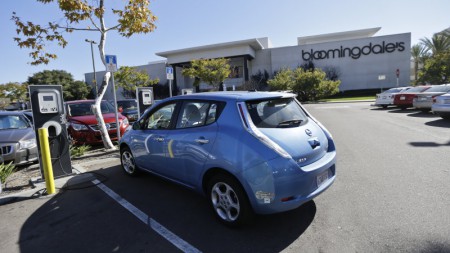
Nissan Leaf on charge

ZEV Alliance sets huge zero-emission goal for 2050

The International ZEV Alliance, an international group geared to cut greenhouse-gas emissions by spurring more electric vehicle sales, has used the United Nations’ COP21 climate-change conference in Paris to set a rather lofty goal.

Nissan Leaf on charge

The group wants to have all new cars sold within their jurisdictions to be emissions-free by 2050, according to Green Car Reports. The group includes eight US states, (California, Connecticut, Maryland, Massachusetts, New York, Oregon, Rhode Island, and Vermont) along with Quebec, Germany, the Netherlands, Norway, and the UK.

The Alliance was officially founded in September. At the time, it was determined that the group accounted for seven percent of global vehicle sales but also made up 38 percent of electric-vehicle sales, so these entities already appear to be the world leaders in the zero-emissions vehicle movement. The eight US states have been at it for a while, of course, joining up in May 2014 to state their collective goal to have 3.3 million electric vehicles on their roads by 2025. Those states and their Multi-State ZEV Action Plan account for almost one-fourth of US light-duty vehicle sales.

Of course, Norway always shoots high when it comes to zero-emissions transportation. Long known for its abundance in hydroelectricity and big-time plug-in vehicle incentives, that country is aiming to have all new cars emissions-free within the next decade.

Another group of US and non-US entities, including California, France’s Alsace region and parts of Holland, signed onto the Under 2 MOU agreement at COP21. Those members aim to cut greenhouse-gas emissions by 2050 to less than 20 percent of those in 1990.

Source: Autoblog

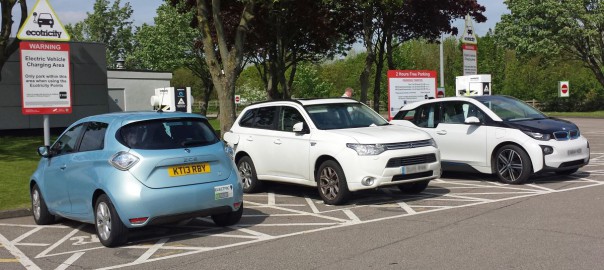
My ZOE plus an Outlander PHEV and i3 charging at London Gateway (Image: T. Larkum)

Electric vehicles are the future – there is no escaping it

Ultra-low emission vehicles (ULEVs) are becoming a more common sight on UK fleets, with this growth set to continue as manufacturers and companies aim to reduce CO2 emissions.

My ZOE plus an Outlander PHEV and i3 charging at London Gateway (Image: T. Larkum)

The latest Department for Transport (DfT) figures show that a total of 35,305 cars with CO2 emissions of 75g/km or below were registered at the end of June, compared with 12,200 on the same date last year.

Research from the latest Fleet200 – the UK’s biggest 200 fleets across 10 industry sectors – backs this up, with those organisations operating more hybrids and battery electric vehicles (EVs) than before.

But what does the future hold for fleets, and what are the implications for the UK’s road and power infrastructure?

We asked two of the country’s leading ULEV experts – Colin Herron, managing director of Zero Carbon Futures, and Denis Naberezhnykh, head of ultra-low emission vehicles for Transport Research Laboratory – for their views.

Read more: Fleet News