Category Archives: Electric Cars

News and reviews of the latest electric cars (full electrics and plug-in hybrids).

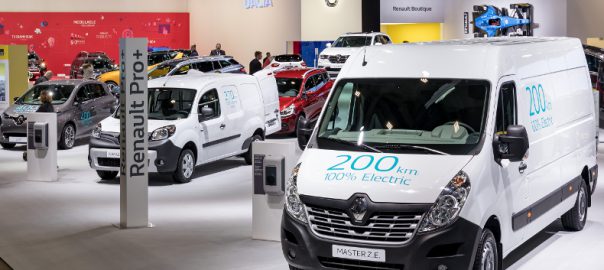
New Renault Master ZE Electric Van with Kangoo ZE Electric Van behind (Image: Renault)

Renault Pro+ commercial vehicles announces pricing and specification of new Renault Master Z.E.

Ordering is now open for the New Renault Master Z.E., the all-electric version of the largest Renault Pro+ LCV priced from £45,700 excluding VAT (after the Government PiVG)

Ideal for emissions-free access to city-centres and benefiting from a payload of up to 1,128kg, New Master Z.E is perfect for last-mile deliveries.

Utilising the manufacturer’s electric vehicle expertise – the Renault Kangoo Z.E. 33 and the Renault ZOE being the best-selling electric van and electric car in Europe in 2017 – Master Z.E. combines the new-generation 33 kWh battery and a highly efficient motor to provide a real-world driving range of 74 miles with half payload and a charging time of empty to fully-charged in only six hours.

New Renault Master ZE Electric Van with Kangoo ZE Electric Van behind (Image: Renault)
Renault Master ZE Electric Van (Image: Renault)

Master Z.E. is available in a choice of three wheelbase configurations – SWB, MWB and LWB – with a choice of two roof heights, LR & MR. All are based on the well-equipped Business specification that is available across the award-winning Renault Master range. Focused on providing drivers with high levels of comfort, convenience, connectivity and safety, standard features of the Business trim level include electric front windows and mirrors, DAB radio, Bluetooth, CD player, USB, full steel bulkhead, ESC, Hill Start Assist and Trailer Swing Assist.

Specific equipment that is unique to the New Master Z.E. includes a side Z.E. charging socket, pre-heating function, and Z.E. voice – a specific sound that the vehicle makes at low speeds in order to be more noticeable to pedestrians.

Exclusive New Master Z.E. options include a charging cable suitable for a domestic three-pin plug and a three-year renewal subscription to My Z.E Connect, which when combined with the R-Link media system, lets you view the vehicle’s range on a smartphone or computer connected to the internet.

Read more: Automotive World
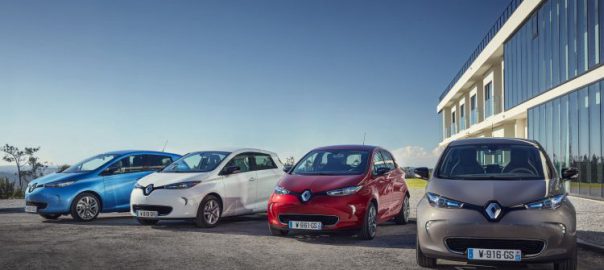
Cheapest electric car uk

Demand surges for hybrids and EVs in used car market

Consumer appetite for alternatively fuelled vehicles (AFV) is growing fast in the used car market.

Over the last three months the percentage of fuel related searches on Auto Trader attributed to AFVs almost doubled, increasing from 4% to 7%.

And in July, the UK’s fastest selling used car was a Renault Zoe; a first for a fully electric vehicle.

Renault ZOE Z.E. 40 Example Colours (Image: Renault)
Renault ZOE Z.E. 40 (Image: Renault)

“However, whilst AFVs undoubtedly represent an exciting opportunity for retailers, significant growth may be hampered by a lack of availability,” said Auto Trader director Ian Plummer.

In terms of stock to search ratio, each AFV car advertised on Auto Trader receives an average of four times as many searches than the average petrol car. Purely electric vehicles (EV) receive nearly nine times as many.

Plummer said the next generation of EVs will be in high demand throughout Europe.

“And with some manufacturers questioning the ROI in supplying post-Brexit UK with the much anticipated second generation EVs which will be in high demand throughout their other European markets too, demand may outstrip supply in both the new and used markets,” he said.

The biggest challenge to the government’s road to zero ambitions may no longer be the traditionally perceived barriers to entry, such as cost and infrastructure, but rather a matter of long-term supply and demand” said Ian Plummer, Auto Trader Director.

Read more: Motor Trader

VW e-Golf (Image: Volkswagen.co.uk)

Volkswagen e-Golf – long-term test: is the family hatchback still one of the best when it’s electrified?

It is fair to say that the regular Volkswagen Golf is one of the best all-round buys – competitively priced when new and holding its value well. Does ditching an internal combustion engine make it a better day-to-day bet than a bespoke electric car?

Our car: Volkswagen e-Golf List price when new: £32,730 (excluding PICG grant) Price as tested: £35,490 (excluding PICG grant) Official fuel economy: n/a

November 13, 2018

Average consumption: 4.3 miles/kWh

This week, I thought I’d highlight two aspects of the e-Golf that have particularly caught my attention – one electrical, one mechanical.

The electrical has – perhaps surprisingly, for an electric vehicle – nothing to do with the e-Golf’s powertrain. No, what I’ve been particularly struck by, as the clocks have gone back and the nights have closed in, is the lighting system.

VW e-Golf (Image: Volkswagen.co.uk)

All e-Golfs, unlike regular Golfs, have LED headlights and C-shaped daytime running lights (DRLs) – and they’re very bright. LED lights are becoming increasingly commonplace on modern cars, filtering down model ranges and from premium marques to be found on mainstream cars.

Their greater brightness (compared with xenon lights) is a valuable safety feature, allowing a car to be seen from a greater distance and enabling the driver to see further ahead. In addition, they use less power than xenon lights, so are more efficient – an advantage for all cars, but a definite boon to an EV, where you want as much of the electrical energy as possible assigned to powering the car.

It’s noticeable how much brighter the e-Golf’s LED lights compared with those of oncoming cars and, allied to the DRLs, they improve the face of the car.

Read more: Telegraph

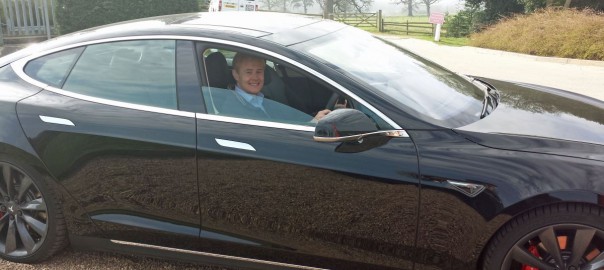
A classic Tesla grin (Image: T. Larkum)

‘Laughing in the face of the congestion charge’ – Zoe Williams meets the Tesla

As more drivers opt for electric, Zoe Williams takes the Tesla Model S for a spin

This is the most unscientific analogy to use about the most incredibly scientific car, but you know when you’ve been out with, say, three Sagittariuses (Sagittarii?) in a row.

You think, each of those was very delightful in their own way, exciting, adventurous, yada yada, but I would not do a Sagittarius again because they’re just too unreliable.

That’s what I always felt about the electric car. Watching the mileage vanish in a BMW i8, 16 miles of charge left one minute, wham, 50 yards later, you’re down to your last four, with a boot full of shopping and no charger in sight; stranded in a service station, halfway between Oxford and Manchester in a Hyundair Ioniq, staring down the barrel of spending three hours next to a plug, smiling half-heartedly at the people checking their tyre pressure.

A classic Tesla grin (Image: T. Larkum)

It just isn’t worth it. This may be the future, but thanks, the future isn’t for me.

And then I met the Tesla; and oh my God, I’d fallen for another archer, except this time, it was also Brad Pitt.

Obviously, this car is the brainchild of Elon Musk, and though there are faults to find in Musk’s temperament and these might predispose you against his invention, forget it. Surrender is inevitable.

Read more: Standard

What happens to used lithium-ion battery packs from electric cars?

Electric cars are a critical subject, and are likely to remain so as buyers respond to knee-jerk legislation by turning to electric vehicles (EVs) – be it plug-in hybrid or pure electric. Sales of those cars eligible for the (now reduced) government plug-in car grant are up 30 per cent year-on-year in the UK according to the SMMT, with 26,482 registered in the first half of 2018.

Notwithstanding the issues of excavating precious metals, there is a significant environmental burden associated with plug-in cars that must be considered: the batteries.


The scale of the issue

Most modern EVs use lithium-ion batteries; much the same as those that power your phone, toothbrush, tablet and most portable electrical items. Given how unfathomably numerous these small batteries are, it says a lot that EV batteries are expected to account for 90 per cent of the lithium-ion battery market by 2025 according to a recent forecast by consultancy firm Roskill.

For a longer-range forecast, consider that the UK government intends for all new cars and vans to be plug-in EVs by 2040. Assuming the new car market remains as buoyant as it is now, that equates to about 2.5 million new cars – and therefore battery packs – each year.

While the sheer volume of EV batteries that will need to be re-purposed or recycled is undoubtedly daunting, it’s worth starting on the positive note that these batteries have a long lifespan, and have proven very reliable. Most lithium-ion batteries will last about eight to 10 years before their performance drops to around 70 per cent (or less) of what it was when new.

So what can be done with these batteries when they reach the point that they need to be re-used or recycled?


Power storage for your home and business

One popular solution is to re-use them as power storage for domestic and commercial buildings. Nissan recently launched the largest power storage facility in Europe to use both new and used car batteries; the Johan Cruyff ArenA in Amsterdam uses 63 used EV battery packs and 85 new battery packs, which feed off of 4,200 solar panels on the stadium roof.

Read more: Telegraph

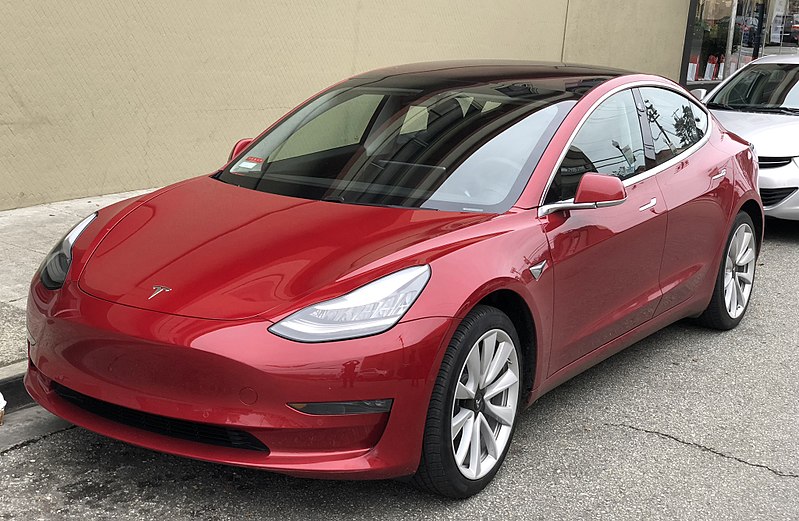
Tesla Model3 (Image: Wikimedia/Carlquinn)

Tesla to open up CCS fast charging for European Model 3, Model S and Model X

Third-party CCS fast charging available to all Tesla Model 3 owners with adaptors coming for Model S and Model X owners

European Tesla Model 3s will come with a CCS (Combined Charging System) fast charging compatible port when they arrive in the early part of 2019. That means that, as well as using Tesla’s own Supercharger and Destination networks, the Model 3 will be able to fast charge on third-party networks such as Polar/BP Chargemaster and Ionity.

Owners of Model X and Model S cars will also be able to use third-party CCS chargers by buying an adaptor that can be plugged into their cars’ existing on-board Type 2 sockets. The new adaptors are expected to be priced similarly to existing CHAdeMO fast-charging adaptors, which cost around €500 (£435), yet will be slightly smaller in form.

Tesla Model3 (Image: Wikimedia/Carlquinn)

Speaking exclusively to Auto Express, Tesla’s head of global charging infrastructure, Drew Bennett, said: “There’s a lot of excitement about Model 3 coming to Europe and charging is always part of that conversation.

“We’ll be continuing to invest in our network – that’s a huge part of the ownership experience. But we’ll be enabling our owners to have access to the CCS networks that are starting to grow in Europe, so the Model 3 will have a charge port for the CCS standard and we’ll also have an adaptor for Model S and X.

“All existing Tesla customers will be able to use the Supercharger network still, but these changes will allow people to venture outside the network – this is something that could really help our owners and is really exciting for us to be able to say that about the infrastructure in Europe.

“We’re all about accelerating the advent of sustainable energy and transportation and this is another way to help everybody scale.”

Read more: AutoExpress

Global oil demand under growing threat from electric cars, cleaner fuel

LONDON (Reuters) – Electric vehicles and more efficient fuel technology will cut transportation demand for oil by 2040 more than previously expected, but the world may still face a supply crunch without enough investment in new production, the International Energy Agency (IEA) said on Tuesday.

Oil demand is not expected to peak before 2040, the Paris-based IEA said in its 2018 World Energy Outlook.

The IEA’s central scenario is for demand to grow by around 1 million barrels per day (bpd) on average every year to 2025, before settling at a steadier rate of 250,000 bpd to 2040 when it will peak at 106.3 million bpd.

“In the New Policies Scenario, demand in 2040 has been revised up by more than 1 million bpd compared with last year’s outlook largely because of faster near-term growth and changes to fuel efficiency policies in the United States,” the agency said.

The IEA believes there will be around 300 million electric vehicles on the road by 2040, no change on its estimate a year ago. But it now expects those vehicles will cut demand by 3.3 million bpd, up from a previous estimated loss of 2.5 million bpd in its last World Energy Outlook.

Read more: Reuters

White Tesla Model S (Image: T. Larkum)

45% of Current Electric Car Drivers Plan to Buy a Tesla Next

You’re going to be shocked — the electric car that respondents most frequently said they were most likely to buy next (or for the first time in the case of non-EV drivers) was the Tesla Model 3.

Over 100,000 reservations ($1,000 each) were placed for the car in under 24 hours — even before the car was shown. The demand was through the roof and ended up being the single biggest product reveal in history by certain key metrics. So, it is not a surprise in the least that this electric car tops the list of “expected next EV model.”

That said, the Tesla Model 3 didn’t account for the majority of answers, demonstrating that the electric car market is broad and goes far beyond the Model 3. Delving into the less desired models is perhaps more interesting than dwelling on the Model 3’s dominance, since they get much less attention but are still cars that many consumers are eager to place in their garages.

White Tesla Model S (Image: T. Larkum)

As with our first two EV owner reports, one thing that stands out is how loyal many consumers are to the brands and models they are currently driving. Many Volt drivers plan to get a Bolt, many LEAF drivers plan to get another LEAF, and many Tesla drivers are filling out their family fleets with other Tesla models or are upgrading to the latest and greatest versions of the Tesla vehicles they already have.

Read more: Clean Technica

Tesla showroom in Milton Keynes (Image: T. Larkum)

Tesla (TSLA) surpasses BMW’s valuation as one soars and the other slips

Tesla’s stock (TSLA) is surging since announcing record profits and the company is now worth more than BMW as the stock of the latter is slipping following disappointing financial results.

The California-based electric automaker’s market cap is now worth over $59 billion while BMW’s slipped below 49 billion euros ($55 billion) yesterday after it announced lower than anticipated profit for the last quarter.

While it’s hard to directly compare Tesla to other automakers because the company is more than an automaker due to its growing energy division, most of its revenue currently comes from its automotive business.

Tesla showroom in Milton Keynes (Image: T. Larkum)

As a premium automaker, BMW is probably one of the best comparisons for Tesla.

But even though Tesla’s production increased significantly this year, the two automakers deal in completely different kinds of volume.

The BMW Group delivers over 2 million vehicles per year between all its brands while Tesla is currently producing vehicles at a rate of about 360,000 unit per year.

Nonetheless, investors are betting on the company’s future and they are encouraged by its growth and profitability over the last quarter.

The Model 3 is already disrupting the midsize premium sedan market, which has been an important market for BMW.

BMW’s sales of midsize sedans have been down in the US, where Tesla is mainly delivering the Model 3, this year.

The German automaker’s BMW 3 Series is seen as one of the biggest losers in the rise of the Model 3.

Read more: Electrek

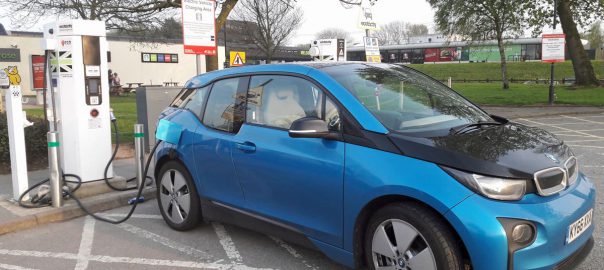
Our BMW i3 on charge at Corley Services (Image: T. Larkum)

Utilities, automakers and big oil: the future of EV charging

Utilities, automakers and big oil companies will drive the deployment of electric vehicle charging infrastructure, according to a new report by EY, which warns that despite market uncertainty, investment needs to be made or “it’s highly likely they’ll be late to the party”.

‘Driving the electric vehicle revolution’, released as part of the consultancy’s Renewable Energy Country Attractiveness Index (RECAI) publication, suggests that the key investors in the future of e-mobility have already been determined.

However, they face considerable uncertainty over how quickly EVs will displace traditional vehicles, and how what forms of charging will actually be required. Investment now could see heavy losses from low utilisation, or lead to stranded assets if the wrong charging infrastructure is deployed.

Much has been made of the split between home, workplace and destination, and public charging networks, with many in the UK sector expecting public charging to be the least utilisation option.

Our BMW i3 on charge at Corley Services (Image: T. Larkum)

However, those deploying such infrastructure have suggested that this will be needed to solve the issue of range anxiety for drivers concerned their EVs won’t make the distances required, while also being used to meet current driving behaviour which sees people ‘fill up’ at petrol station-like EV charging hubs.

According to Michael Cahill, management consultant at EY, the danger to any investors in this space will be in not acting soon enough to capture a portion of the market.

“If they don’t invest now, it’s highly likely they’ll be late to the party. But, equally, players might not want to risk investing too early and narrowly in a market where technology and policy is constantly developing,” he said.

Read more: Current News