Category Archives: Leaf

Nissan signs up to smart grid scheme

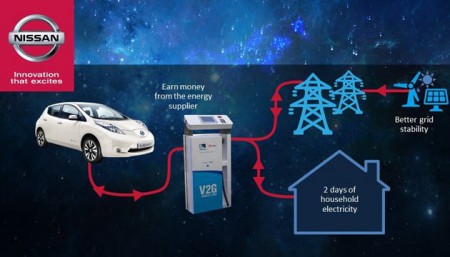
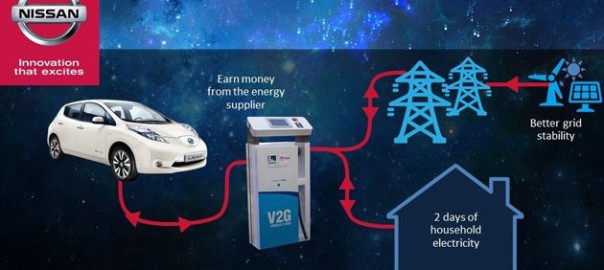
Nissan has joined up with energy supplier ENEL to trial the idea of ‘Smart Grids’ using electric cars. The two companies will work together to set up innovative vehicle-to-grid systems that allow owners to use their car as a movable energy hub – using, storing or returning energy to the grid.

ENEL_home_energy_Nissan
The deal has been announced during the Nissan-Renault Alliance’s support of the COP21 climate change conference in Paris. The leading EV manufacturers have supplied a fleet of 200 EVs to shuttle delegates around the conference.

Based in a large number of European and north and central American countries, ENEL is Italy’s largest energy provider. Nissan’s partnership with the company will see smart grid trials begin in Europe. This dovetails with the recent announcement that Nissan has also teamed up with power management specialists Eaton to reuse old EV batteries.

The smart grid concept sees EV owners avoid peak tariffs for household energy, with the car able to supply either the home or national grid with power during high demand periods such as evenings after normal working hours. This will give the Leaf owners a greater degree of financial freedom, and they can then either recharge their vehicle at off peak times in the early hours of the morning, or maintain enough charge to be able to drive to their workplace and charge there.

Denmark will be the first country to trial the smart grid project, with plans already in place to roll it out to Germany, the Netherlands and other northern European countries.

Read more: Next Green Car

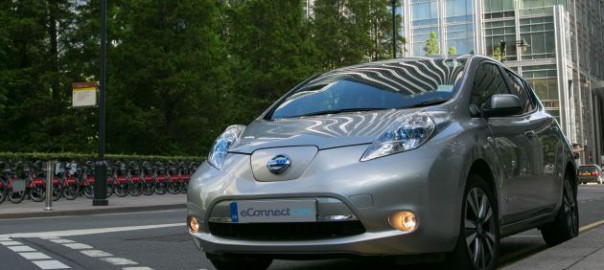
From 2020 all new private hire vehicles in London must be 'zero emission capable' (Image: eConnect Cars)

eConnect Cars taxi firm launches crowdfunding campaign

London based, zero-emissions taxi firm eConnect Cars, has launched a crowdfunding campaign to finance the next phase of its growth ahead of the introduction of the Ultra-Low Emission Zone in London.

From 2020 all new private hire vehicles in London must be 'zero emission capable' (Image: eConnect Cars)
From 2020 all new private hire vehicles in London must be ‘zero emission capable’ (Image: eConnect Cars)

From January 2020, as part of London’s forthcoming Ultra-Low Emission Zone, all private hire cars (taxis) less than 18 months old must be zero emissions capable in order to get a license. This means they will need to be able to have a range of at least 30 miles in zero emission mode.

eConnect cars goes one step further by having a fleet consisting entirely of 100% electric vehicles, the Nissan Leaf and Tesla Model S. This eliminates completely the disbursement of particulate matter from exhaust pipes that contributes to the death of approximately 9,000 people per year in London alone.

The company has already raised over 20% of its £400,000 crowdfunding target in the first couple of days. This shows the significant level of interest in the campaign, indicative of people’s concern for environmental matters, particularly with relation to health and pollution in our cities.

The Nissan Leaf is Europe’s leading electric taxi, with over 300 currently in use in countries from Estonia to Germany and The Netherlands. The UK has the most of any European country with over 120 vehicle; however, London, given its population density and pollution, surprisingly only accounts for 20% of this fleet. eConnect, the only Nissan Leaf fleet operator in London, wants to readdress this balance and is looking to double the size of its fleet through this crowdfunding campaign.

Managing Director, Alistair Clarke said:

“There is tremendous pressure on London and other large cities when it comes to urban mobility. With population growth, congestion and air pollution increasingly challenging the status quo, innovative companies like eConnect cars are forging a new integrated multi-modal transport solution.

“With new legislation coming into place [from 2018], running ultra-low emission fleets will become the only viable option. While many competitors seek to stall these changes, eConnect is not only embracing change but is also innovating in the market and showing what positive steps can be done today for a cleaner future.”

Read more: Next Green Car

Nissan passes electric taxi milestone

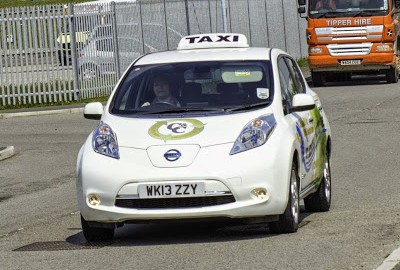
Nissan is heading the electric vehicle revolution with more than 550 electric taxis now on the road in Europe.

During 2015 alone, over 100 electric vehicles were delivered to taxi companies across Europe and growth of the electric taxi market looks set to continue, as its popularity has started to take hold in Eastern Europe. Budapest company Green Lite Taxi has purchased 65 Nissan LEAFs in a bid to become Hungary’s largest zero emission fleet. To power its pioneering franchise, the company has installed seven quick chargers within the city.

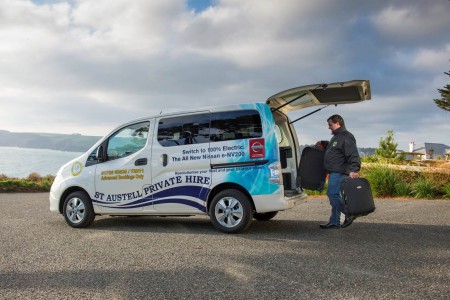
C&C Taxis’s Nissan e-NV200 Combi

In Estonia, it has been reported that a Nissan LEAF owned by taxi company, Elektritakso, has clocked up over 218,000 kilometres (135,459 miles) on its original battery pack, showcasing the high quality and reliability of Nissan’s electric vehicle range.

Nissan electric vehicles – which include the Nissan LEAF and the e-NV200, a passenger and light commercial vehicle – are becoming increasingly popular among European taxi businesses, with the Netherlands and the UK topping Nissan’s e-taxi league table, followed by Estonia, Hungary and Germany…

Taxi Electric in Amsterdam was the first private taxi service to switch to a fleet of 100 percent electric taxis in November 2011. Since then, others from across Europe have joined the revolution, with the Nissan LEAF and e-NV200 now being used by taxi businesses in Stockholm, Prague, Barcelona and Rome.

Gareth Dunsmore, director of electric vehicles for Nissan Europe, said: “We are so proud to be announcing this all-important milestone. Nissan has already delivered 30 percent more e-taxis this year than in 2014 and this figure is constantly increasing, as more taxi companies realise the benefits of becoming 100 percent electric.”

Source: ITS International

RENAULT-NISSAN AND PARTNERS INSTALL 90 NEW EV CHARGE SPOTS AROUND PARIS FOR COP21

  • 90 new charge spots powered by low-carbon electricity will refuel 200 Renault-Nissan EVs during the COP21 climate change conference
  • EV shuttle service is expected to log at least 400,000 kilometers over the two-week summit—without a single drop of oil
  • Many of the most conveniently located quick chargers will remain after COP21 and be available for the public

PARIS (Nov.  19, 2015) — The Renault-Nissan Alliance is installing 90 new charge spots for electric vehicles in and around Paris for the COP21 global summit on climate change.

68937_1_5_Renault

The installation is being done in partnership with French energy provider EDF, Schneider Electric, Aéroports de Paris, Paris City Council and SNCF, France’s national railway company.

The charging stations, several of which will be donated by Schneider Electric, will refuel 200 EVs serving as VIP shuttles for negotiators, delegates and media attending the conference. More than 20,000 U.N. participants from 195 countries are expected to attend the 21st annual Conference of Parties (known as COP21), from Nov. 30 to Dec. 11.

“COP21 is a call to action to reduce the impact of climate change–including global warming resulting from personal transportation,” said Renault-Nissan Chairman and CEO Carlos Ghosn. “Electric vehicles are the only existing, practical and affordable transportation solution to our planet’s environmental challenges – and they are available today. Expanding the EV infrastructure is mandatory for any city or state that’s serious about environmental stewardship.”

The quick and standard EV charging stations will use renewable and extremely low-carbon electricity from EDF, enabling the Renault-Nissan fleet to cover more than 400,000 km in two weeks. The quick charging stations will recharge EVs from 0 to 80% capacity in about 30 minutes.

EVs consume any form of electricity used in the power grid, including hydropower, solar and wind energy. As countries reduce dependence on fossil fuels and increase reliance on renewable resources, EVs become even greener.

Small carbon footprint

The COP21 charging stations in the Paris region will use electricity with a small carbon footprint. The French power grid distributes electricity with a very low average of CO2 emissions per kWh: less than 40 g in 2014, compared to the European average of 325 g of CO2 emissions per kWh. Renewable energy accounted for about 19% of France’s electricity last year.

“EDF supports the development of electric mobility, which is a cornerstone of countries’ efforts to minimize urban pollution. EDF produces extremely low-carbon electricity in France, which enables a significant reduction in greenhouse gas emissions and thus reinforces the favorable ecological footprint of this new generation of transport,” said EDF Chairman and CEO Jean-Bernard Levy.

In addition, EDF is offsetting the remaining CO2 emissions through carbon credits generated by projects certified by the United Nations. That means the Renault-Nissan EV fleet will use electricity considered fully “decarbonized.”

Fourteen of the 27 quick chargers installed will remain after the climate change conference and will be available for the public to use. These include two at Charles de Gaulle Airport, two on the Paris périphérique highway and one at Orly Airport.

France already has about 10,000 quick and standard charging spots. In the Paris region alone, there are more than 4,000 spots, making Paris one of the most “plugged in” cities in Europe.

Source: Renault Nissan Blog
Fully Charged Checks Out Longer Range 30 kWh Nissan LEAF – Video Review

Nissan recently demonstrated the new 30 kWh LEAF to journalists in France.

Among the various media outlets was Fully Charged with Robert Llewellyn impressed by the longer range LEAF.

According to latest episode, it’s worth buying the 30 kWh version, as you’ll definitely notice the difference in range compared to 24 kWh – reasonably about 110-120 miles (107 miles EPA).

“A wonderful drive up a mountain in the South of France in the newly released 30kWh Nissan Leaf. No question, it’s a big improvement in terms of range and driver interface.

A bigger battery that’s not physically bigger, just 25% more energy dense.”

Source: Inside EVs

Nissan Leaf vs Renault Zoe: which electric vehicle is best?

They are two of the most affordable EVs around, but which is best for you?

68937_1_5_Renault

Electric vehicles are now a viable alternative to their diesel- and petrol-powered counterparts. Offering low running costs, sophisticated travelling and a range long enough for most journeys, they are – rightly – more popular than ever.

The statistics back up this surge in popularity. The UK’s Society for Motor Manufacturers and Traders claims 512 electric vehicles were sold in the first month of this year, which has a lot to do with the Nissan Leaf and the Renault Zoe. Based on affordable city-runners like the Nissan Micra and Renault Clio, both cars bring all the benefits of electric power to a tried-and-tested platform. The result? Electric power for the masses – and at a very reasonable price.

But which EV is best for you? We analyse the key aspects of each car, from the running costs and performance to the technology inside, to find out which provides the most seamless, cost-effective crossover from a traditional car.

Read more: Alphr.com

2016 Nissan Leaf

How the Nissan Leaf has blazed a trail

Sales may not knock you off your feet, but the Nissan Leaf’s creator says it is a crucial car that will leave a lasting legacy

Nissan Leaf
Nissan Leaf

“A lot of people underestimated just how big a commitment the Leaf was from Nissan,” says Tom McCabe, a senior engineer who’s been working on the world’s best-selling electric car for the past six years.

He’s right: here is a major car manufacturer that didn’t just flirt with electric car technology with an out-there concept car at a far-flung motor show, but went out and made a full global model built on three different continents.

“It was a huge commitment to move the game on and change the conventions of the industry,” McCabe adds. “Competitors are now realising this is something that needs to be done properly. More people are following now.”

Nissan is approaching the fifth anniversary of Leaf production, and it is the sixth anniversary of the model’s appearance at the 2009 Tokyo motor show after its debut earlier that summer. At this year’s show, the next-generation Leaf is being previewed with a new concept car that also introduces autonomous technology to the model.

It feels fitting, then, to look back on the impact the world’s first mass-produced electric car has had on the industry – and, autonomous tech aside, just what the future has in store for the Leaf.

The Japanese manufacturer has now sold close to 200,000 Leafs globally and 10,000 in the UK, almost 3000 of which were in the first half of this year alone, an achievement that was good for a 63.3% market share of electric vehicles.

Read more: AutoCar

Nissan Leaf with 30kWh battery

First drive of the new longer-range Nissan Leaf

What an opportune time for a new electric car…

Indeed. As owners collectively scratch their chins about just how clean their diesel cars really are, Nissan has given its Leaf an extra 26 per cent of range – hiking it to 155 miles – as well as a bit of a spruce-up.

Nissan Leaf with 30kWh battery

It’s fortuitous timing rather than a clever plan, but you could say the stars have aligned, the most convincing Leaf yet arriving just as internet searches for electric cars exponentially increase.

It looks no different. Why should I care?

It’s unlikely to grab headlines quite like the more obviously revolutionary Toyota Mirai, true. But the Leaf is the world’s best selling electric car, ever. Over 200,000 have been shifted, 11,500 of them in the UK. It currently accounts for more than half of all EVs sold here, and a fifth of plug-in vehicles if you include plug-in hybrids like the Prius and, erm, Porsche 918.

Owners love them, too; the Leaf has the highest satisfaction rate of any car Nissan sells. So you can understand why little has changed: the styling is identical, remaining divisive, and its 109bhp electric motor is untouched, with the only mechanical tweaks occurring to the batteries that lie in the floor.

What’s new?

Their size and packaging are actually identical, but the cathodes are upgraded, helping energy output climb from 24 to 30kWh. In simple terms, this means a claimed 155 miles from a full change, as opposed to 124 miles. Fast chargers will top most of the power back up in 30 minutes for longer journeys via appropriately equipped motorway services.

The 30kWh battery is an option – a £1,600 option, no less – with sales of the 24kWh Leaf continuing. But 80 per cent of buyers are expected to go for the more accommodating setup.

A Tesla Model S will go quite a bit further.

Yeah, but it will also cost quite a bit more than the 30kWh Leaf’s £24,490. And the numbers are spot-on for what people actually use cars in the Golf and Focus class for, according to Nissan. It reckons so-called C-segment buyers travel an average of 30 miles a day, with 98 per cent of them covering fewer than 100 miles daily.

If you’re thinking “the old one could do that,” you’re right. But it’s all about perception: an extension of the range makes people more secure, makes them worry less about driving their EV in a mollycoddling way. Likewise an eight-year warranty on battery degradation is probably overkill in an age of short-term lease deals, but it’s all added peace of mind.

Read more: Top Gear

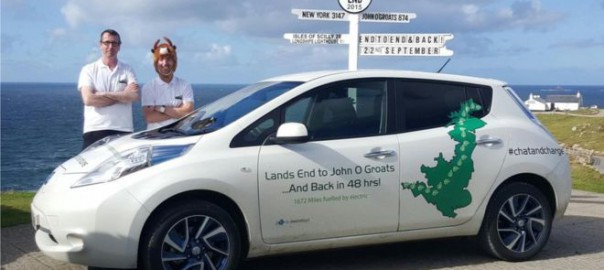
Jonathan Porterfield and Chris Ramsey at Land's End (Image: J. Porterfield)

Electric car trip from Land’s End to John O’Groats ‘a record’

I’d love to try this in my ZOE!

Two men say they have set a record time for driving from Land’s End to John O’Groats in an electric car.

Jonathan Porterfield and Chris Ramsey at Land's End (Image: J. Porterfield)
Jonathan Porterfield and Chris Ramsey at Land’s End (Image: J. Porterfield)

Jonathan Porterfield, from Orkney, and Chris Ramsey, who lives in Aberdeen, completed the journey on Wednesday evening in 27 hours and 46 minutes.

Earlier in the week, the duo drove from John O’Groats to Land’s End in 28 hours and 38 minutes.

They have submitted an application to Guinness World Records to have the quicker time recognised as a record.

The pair, who only used the existing public rapid charger infrastructure, had hoped to make the round trip in 48 hours.

Robert Llewellyn, who plays Kryten in the Red Dwarf comedy TV series and is an electric vehicle enthusiast, followed the pair’s trip.

After the men reached Land’s End, Llewellyn tweeted: “Well done guys. Great achievement. Hope you find time for a nap now.”

Later, the actor added on Twitter: “@pluginadventure are 2 young chaps (barking mad of course) who drove John O’Groats-Lands End in a #NissanLeaf now they’re on their way back.”

Source: BBC