Second-hand EV sales double in last quarter, so what’s driving used demand as new electric sales falter?
A spike in demand for used EVs has been reported by the Society of Motor Manufacturers and Traders, which says the number of pre-owned battery electric vehicles (BEVs) changing hands doubled in the third quarter of this year.
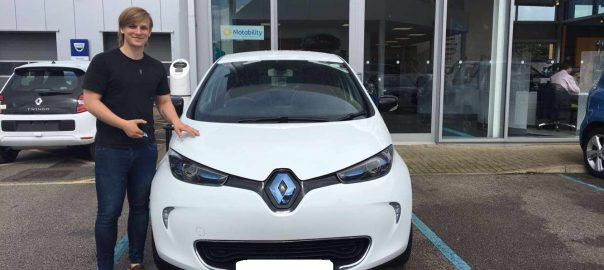
A rise of 99.9 per cent in used EV sales mean battery-electric cars have now reached a record 1.8-per cent share of the second-hand market, in part thanks to prices that have fallen due to the increasing availability of company-owned electric cars being ‘de-fleeted’. A recent report by online car retailer Auto Trader said the average price of a used BEV was around £32,000 at the end of October, with used prices for electric models appearing to stabilise at around 20 per cent below the levels recorded this time last year. Relatively cheap used-EV options range from three-year-old Renault Zoes, which are now undercutting similarly aged petrol Clios by around £500, and three-year-old Jaguar I-Pace EVs that undercut internal-combustion powered F-Pace models by almost £4,000, according to recent Auto Trader figures.
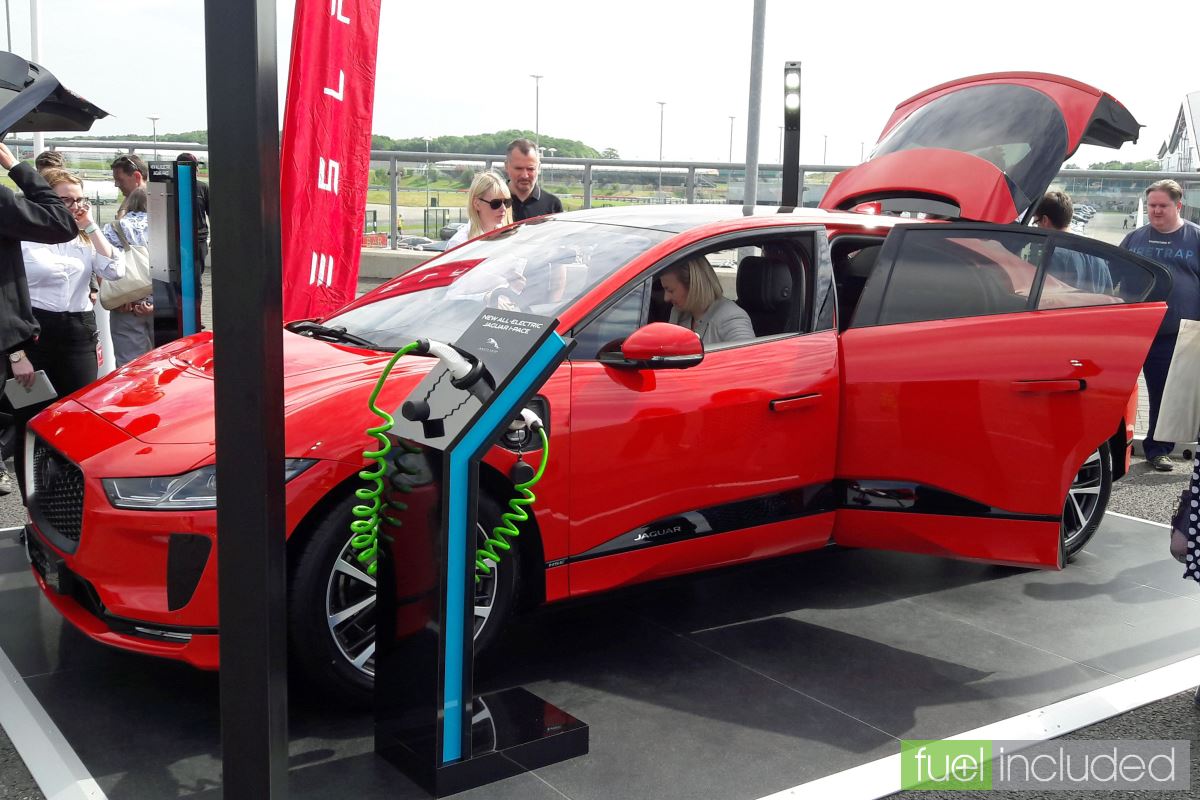
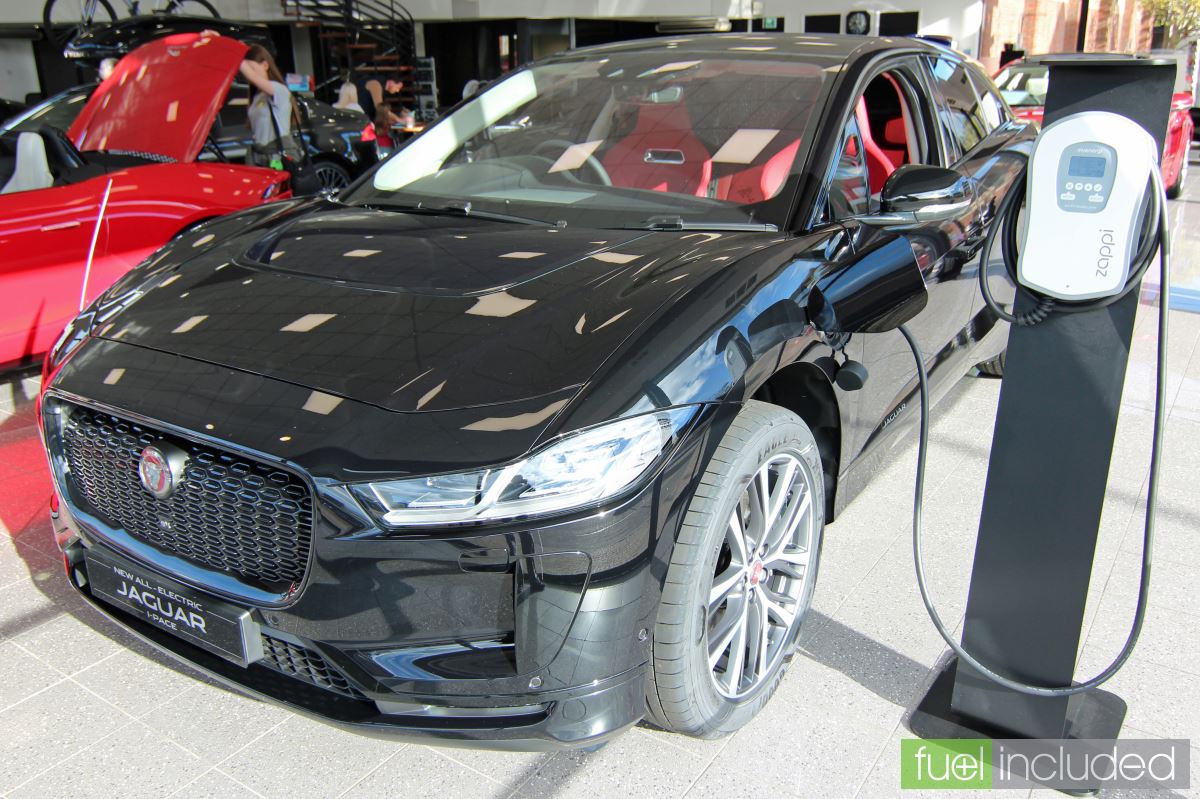
Jaguar I-PACE at Fully Charged Live show (Image: T. Larkum)
With around 750,000 EVs sold into the fleet market in the past three years now fuelling a used-EV sales mini-boom, the government’s approach of stimulating company BEV sales through large benefit-in-kind tax discounts for company drivers appears to be being vindicated as the fastest way to reduce the UK’s tailpipe emisssions.
If you would like to know more about Solar Panels and the PowerBanx range of home battery systems, and get a free instant quote, please complete our online form:
The UK’s largest carmaker has announced plans to use old car batteries to store energy the national grid can’t use and return it to the network at peak times.
Jaguar Land Rover (JLR) is turning its used car batteries into what it says will be one of the largest energy storage systems in the UK.
Battery storage can be used to hold excess power during off peak times, when there’s a mismatch between supply of electricity (from wind farms, for example), and demand for energy.
That power can then be released and fed back into the grid when needed.
The JLR battery scheme aims to supply enough batteries to power 750 homes for a day, equivalent to 7.5 megawatt hours of energy, by the end of this year.
Electric car batteries can be reused, JLR said, due to the high standards they meet, meaning they can be used again when they fall below the “stringent” requirements of an electric vehicle.
Typically they’re left with 70% to 80% residual capacity.
The batteries will be stored in containers across the Chelveston renewable energy park in Northamptonshire
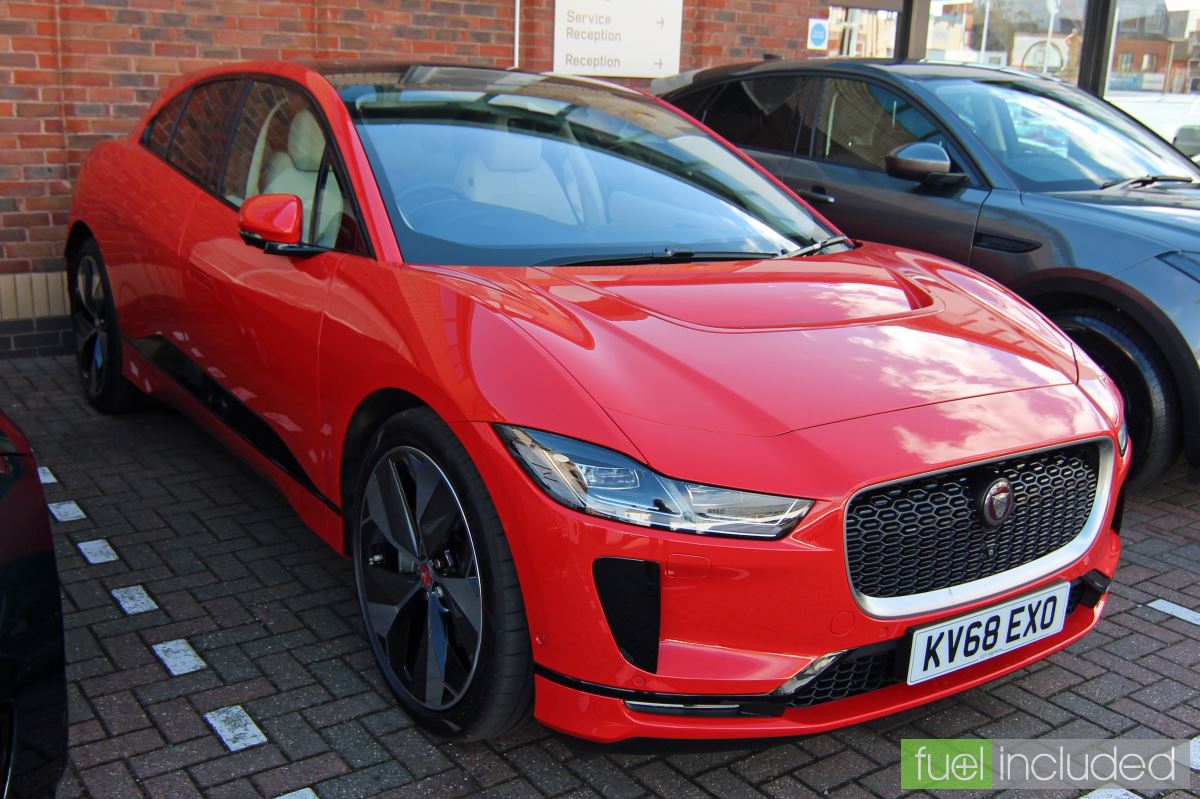
Jaguar I-PACE Electric Car (Image: T. Larkum)
And there’s scope to grow the programme as more containers can be created to house additional used batteries from vehicles in the future, JLR said.
Used batteries could be utilised even further in years to come, JLR added.
Used battery supply for energy storage could exceed 200 gigawatt-hours per year by 2030, creating a global value over $30bn (£23.5bn), according to a 2019 McKinsey report.
If you would like to know more about Solar Panels and the PowerBanx range of home battery systems, and get a free instant quote, please complete our online form:
The company says the £4bn investment will create up to 4,000 new direct jobs and thousands more in the wider supply chain.
The owner of Jaguar Land Rover has unveiled plans to build an electric car battery factory in the UK.
Tata Group says it’s planning to invest more than £4bn, with Prime Minister Rishi Sunak declaring that the new plant in Somerset will create thousands of skilled jobs for Britons across the country.Jaguar I-PACE Electric Car (Image: T. Larkum)
The deal is the culmination of months of talks with the government over taxpayer subsidies to fend off reported competition for the investment from Spain.
It marks a step in the right direction for UK ministers amid mounting challenges over the transition to electric powertrains, as the clock ticks down to the 2030 ban on the sale of new cars using petrol or diesel.
According to Tata Group, this marks one of the largest-ever investments in the British automotive sector, and the gigafactory will deliver half of the battery production needed by 2030.
If you would like to know more about Solar Panels and the PowerBanx range of home battery systems, and get a free instant quote, please complete our online form:
Middle-class households will need incentives to buy used EVs in order to meet climate targets.
That’s according to Auto Trader, which says the government is falling short on making the uptake of used cars, particularly used ones, attractive, unlike abroad.
Used EV demand is said to be dropping thanks to increasing electricity prices, and the cost of used EVs, especially luxury ones, has dropped, with The Times reporting the average price of a used Jaguar I-Pace, pictured, to have decreased by 14.6 per cent in a year, while the Tesla Model X is down by 12.1 per cent.
Meanwhile, the price of a used Nissan Leaf has gone down by 1.6 per cent, while the cost of a Smart ForTwo has dropped by 1.3 per cent.
Jaguar I-PACE at Fully Charged Live show (Image: T. Larkum)
A working group has been set up by the Office for Zero Emission Vehicles to look at the used EV market, including how to stimulate demand, and Auto Trader warns in a report that ‘with supply ahead of demand, the used electric vehicle market needs urgent attention to address the imbalance’.
Auto Trader brand director Marc Palmer was quoted by The Times as saying: ‘What we really need is more mainstream demand.
‘We need middle-income households to be able to access electric cars and to be reassured electricity is OK.
If you would like to know more about Solar Panels and the PowerBanx range of home battery systems, and get a free instant quote, please complete our online form:
Thanks to big advancements in battery and charging technology, the best electric SUVs are now as usable as they are desirable. Here we count down the top 10 – and reveal the model to avoid…
Electric cars and SUVs are two types of car that are currently in huge demand, so electric SUVs are perhaps the most desirable models of all right now.
It’s about more than just fashion, too – the best of the breed are as practical as they are classy, and as good to drive as they are cheap to run. But which models are we talking about, exactly?
Well, below we count down our top 10 electric SUVs, and name the one we’d avoid. If anything on the list take your fancy, just hit the ‘Read our review’ button to find out more about it. Or, alternatively, check out the latest new, nearly new and used deals by clicking on the relevant links.
Kia Soul EV 2020 (Image: Kia.com)
Tesla’s latest model his strong in a number of key areas, including performance, range, practicality and residuals, plus like all Teslas it has access to the firm’s excellent Supercharger network. We just wish it had quieter cruising manners and a smoother ride.
The first of three Kias to make this top 10, the Soul EV gives you a huge amount of equipment for your money, plus its performance is strong and its range long. The ride is quite firm, though, and while the Soul’s compact size is a boon in town, it does mean the boot is on the small side.
If you would like to know more about Solar Panels and the PowerBanx range of home battery systems, and get a free instant quote, please complete our online form:
Jaguar Land Rover announced today a new global strategy called “Reimagine,” and it involves a serious acceleration of the electrification of all its brands, including Jaguar going all-electric by 2025 and Land Rover following with mostly electric vehicles after that.
As part of the new plan, the automaker is planning to have Land Rover and Jaguar brands develop separate electric architectures with “two clear, unique personalities.”
It said about Land Rover:
In a Land Rover, vehicle and driver are united by adventure. By breaking new ground, confronting new challenges and not being content with the expected, Land Rover truly helps people to go ‘Above and Beyond.’ In the next five years, Land Rover will welcome six pure electric variants as it continues to be the world leader of luxury SUVs through its three families of Range Rover, Discovery and Defender. The first all-electric variant will arrive in 2024.
And then it wrote about Jaguar:
By the middle of the decade, Jaguar will have undergone a renaissance to emerge as a pure electric luxury brand with a dramatically beautiful new portfolio of emotionally engaging designs and pioneering next-generation technologies. Jaguar will exist to make life extraordinary by creating dramatically beautiful automotive experiences that leave its customers feeling unique and rewarded. Although the nameplate may be retained, the planned Jaguar XJ replacement will not form part of the lineup, as the brand looks to realize its unique potential.
Jaguar I-PACE Electric Car (Image: T. Larkum)
More concretely, it means that all new Jaguar vehicle will be all-electric by 2025, and by 2030, the British automaker expects 100% of the sales from the brand to be all-electric vehicles.
As for Land Rover, it will lag a bit behind the Jaguar brand, which already has an electrification lead with the I-Pace.
It will get its first all-electric vehicle in 2024, and by 2030, the company aims for 60% of all sales coming from all-electric vehicles.
Here are the highlights of Jaguar Land Rover’s new global strategy:
New global strategy – Reimagine – announced for the British company under the leadership of Chief Executive Officer, Thierry Bolloré
A sustainability-rich reimagination of modern luxury, unique customer experiences, and positive societal impact
Start of journey to become a net zero carbon business by 2039
Reimagination of Jaguar as an all-electric luxury brand from 2025 to ‘realize its unique potential’
In the next five years, Land Rover will welcome six pure electric variants as it continues to be the world leader of luxury SUVs
All Jaguar and Land Rover nameplates to be available in pure electric form by end of the decade; first all-electric Land Rover model in 2024
Clean-hydrogen fuel-cell power being developed in preparation for future demand
Streamlined structure to deliver greater agility and promote an efficiency of focus
Global manufacturing and assembly footprint to be retained, rightsized, repurposed and reorganised
Collaborations and knowledge-sharing with industry leaders, in particular from within the wider Tata Group will allow the company to explore potential synergies on clean energy, connected services, data and software development leadership
On a path toward double-digit EBIT margin and positive cash flow, with an ambition to achieve positive cash net-of-debt by 2025 with a value creation approach delivering quality and profit-over-volume
Read more: electrek
It’s Time to Go Green!
If you would like to know more about Solar Panels and the PowerBanx range of home battery systems, and get a free instant quote, please complete our online form:
EV range is a hot topic right now so we’ve listed the new electric cars with the longest range you can buy now…
The first question most people have when a new electric car comes out is how much range it has. ‘Range anxiety’ is a phrase often thrown around to describe the fear EV owners could face when driving their electric car with a level of remaining battery charge that may not get them to their destination. As a result, there’s a certain kudos attached to the electric cars with the longest range as well as a valuable competitive advantage manifested as electric car buyers are attracted to them. If you’re wondering which electric car has the longest range, you can find out below.
Manufacturers have quickly realised the importance of range to existing petrol or diesel car owners and now some electric cars can travel just as far on a single charge as an internal combustion engined (ICE) equivalent can manage on a full tank – all the while producing zero emissions at a cheaper running cost to the owner. The fact that most drivers will very rarely travel the kind of distances in a single day that would deplete a modern electric car’s battery is seen as less important than the need to reassure motorists considering the switch to the new technology.
There’s no doubt that the UK’s charging infrastructure still remains a stumbling block for electric cars and their owners. Charging points are increasing in number across the country and charging times are dropping but the chargers that there are are still often in use compounding the fact that recharging an EV is still noticeably slower than filling up a petrol or diesel vehicle.
With increasing investment from the Government and charging infrastructure providers to improve EV charging options coupled with the appeal of emission-free motoring and cheaper running costs than ICE vehicles, electric cars are more appealing than ever. Manufacturers too are in a race to develop enhanced batteries and electric car technology that will increase the range available in electric cars to the point that range anxiety will become a thing of the past.
Turn on, plug in and drop out of the fossil fuel race with the finest zero emissions passenger cars currently on offer
Traipse around one of the recent European motor shows and you’d be forgiven for thinking that most of the world’s most famous manufacturers don’t produce or sell an internal combustion engine any more.
The major players have spoken and the future of personal transportation looks distinctly battery powered, with Deloitte predicting worldwide sales of Battery Electric Vehicles (BEVs) will rocket from 4 million in 2020 to 21 million by 2030, whereas sales of traditional internal combustion engines will fall off a cliff.
There are political and ethical arguments around for instance, lithium mining for EV batteries but this isn’t quite the right place to get into it.
Jaguar I-PACE Electric Car (Image: T. Larkum)
Zero emissions vehicles boast a number of benefits that can be enjoyed today. There are fewer moving parts, meaning lower maintenance costs, the tax breaks and Congestion Charge benefits are extremely generous, while those with regular short journeys could save bucket-loads of cash by turning their backs on the humble petrol station. And don’t be misled by those bemoaning the public charging network, because a quick scan of Zap Map reveals an abundance of locations to charge a vehicle – a number that is growing by the day.
On top of this, those who have already made the switch to electric often attest to the fact that installing a charging point at home often negates the need to use the public charging network. After all, when was the last time you drove more than 200-miles several times in a week?
Amidst a gloomy series of announcements pointing to car manufacturers pulling out of the UK, there are still some signs that the future could be bright for the UK’s automotive industry.
Jaguar Land Rover (JLR) has announced it will invest hundreds of millions of pounds in electric vehicle (EV) production at its Castle Bromwich plant in the Midlands, helping to secure 2,700 jobs. The previous government had been eager to show its support, handing a £500m loan guarantee to JLR, announcing it will make charging points mandatory in new homes and cutting company car tax for EVs from 2020. In his first address to Parliament as new prime minister, Boris Johnson emphasised his vision for the UK as “the home of electric vehicles”.
Jaguar I-PACE Electric Car (Image: T. Larkum)
But how realistic is this grand ambition? The UK still only attracts a small fraction of the new global investment in electric car manufacturing. China, Germany and the US are getting the lion’s share, with car makers’ planned investments in these countries reaching a total of over $240bn. The domestic EV market lags behind other EU countries. And, while Johnson also claims that the UK is “leading the world in battery technology”, there are no plans for large scale domestic battery manufacturing facilities, with production capacity in Europe instead expected to reach 130 GWh by 2025.
Unless this changes, the global auto industry will continue to invest elsewhere and the UK will miss its chance to claim a major stake in this industry – not to mention the benefits of cleaner air and real progress in cutting carbon from the largest emitting sector in the UK.
The announcement is seen as a major thumbs up for the UK car industry
Jaguar Land Rover (JLR) has announced it is set to build a new range of electric vehicles at its manufacturing plant in Castle Bromwich, Birmingham.
Honouring its commitment to deliver electrified options for all new Jaguar and Land Rover models by next year, a next-generation all-electric Jaguar XJ will be the first vehicle in the range to enter production.
Jaguar I-PACE Electric Car (Image: T. Larkum)
Crafted by the team behind the Jaguar I-PACE – the brand’s first all-electric car – the new saloon promises to deliver in design, performance and luxury, although the company has given no indication as to when it might take to the road.
“The future of mobility is electric and, as a visionary British company, we are committed to making our next generation of zero-emission vehicles in the UK,” JLR CEO. Prof. Dr. Ralf Speth said.
“We are co-locating our electric vehicle manufacture, Electronic Drive Units and battery assembly to create a powerhouse of electrification in the Midlands.”