https://www.youtube.com/watch?v=omlpFFBKQ3A
Category Archives: Charging
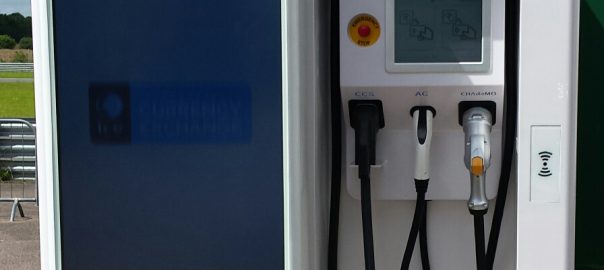
Evolt wins first Go Ultra Low City contract to install EV Charge Points across Dundee
Evolt, the SWARCO Group’s eMobility brand, has received the first phase of works estimated at £1.8 million by Dundee City Council to support three new charging ‘hubs’ in the city, along with an additional regional charging infrastructure. This follows its success in being awarded a place on a Framework and aims to boost the number of plug-in cars on Scottish roads.

The contract confirms Evolt as the dominant supplier to the Scottish market, having installed over 1,000 charge points and been selected to the Energy Saving Trust’s national framework to deliver public and private EV charging.
As one of the Go Ultra Low Cities, Dundee is creating three new charging ‘hubs’ that will become dedicated areas for the charging of electric vehicles. Each hub will be equipped with Evolt’s well proven charging technology, including a combination of Rapid and Fast charging units that can charge two EVs simultaneously to 80% battery life within 30 minutes and an hour respectively.
To harness the benefits of renewable energy, each hub will have solar panels installed to feed Evolt’s energy storage solution, which harnesses the power of second life EV and hybrid battery packs. Storing energy for future use reduces the heavy demand placed on the power grid when EVs are charging simultaneously.
A further four Rapid chargers and 14 Fast chargers will be installed at additional locations outside of the City centre to provide a wide network that supports existing EV users and to encourage further take up. All of Evolt’s units will be connected to the national ChargePace Scotland network
Dundee is the first of the eight Go Ultra Low Cities to award a contract following the announcement of £40 million of Government funding earlier this year. Evolt was successful with its bid following a competitive tender exercise, and is working with British Gas as its installation partner.
Fraser Crichton, Transport Manager for Dundee City Council, says:
“We have worked with Evolt for the last five years on charging infrastructure within Dundee and are delighted to continue our relationship to develop some exciting and innovative charging hubs across the city and surrounding area.”
Justin Meyer, General Manager for Evolt, says this Framework Contract is a key win for the company and builds upon Evolt’s successes in Scotland:
“The quality and proven reliability of our hardware coupled with dedicated local servicing expertise makes us a driving force within the Scottish eMobility marketplace,” he explains.
“We are very pleased to be playing a part in the Go Ultra Low initiative, and with more Evolt chargers in key locations across Dundee we hope to see the take up of EVs continue to increase.”
Among the 14 Rapid chargers delivered, Dundee has chosen six of Evolt’s next generation Raption 50 model that includes a 47-inch LCD screen to offer the council a further revenue generating opportunity. The Raption 50 Rapid was unveiled in September at the Cenex-LCV exhibition, and this will be the first time the new units have been installed in the UK, with multiple units already installed across Europe.
Evolt has supplied 24 of Scotland’s 32 local authorities, with its model for continued success based on the provision of highly reliable hardware combined with a strong and localised after-sales service.
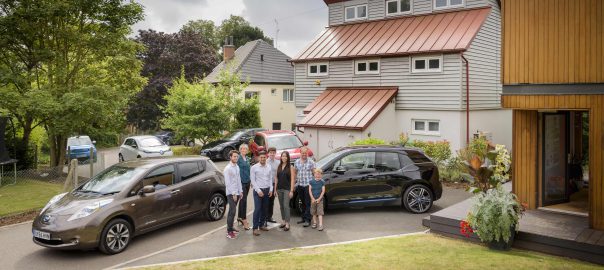
Evolt smart chargers selected for major nationwide trial
Evolt, the SWARCO Group’s eMobility brand, has been selected to provide its smart electric vehicle (EV) chargers for Electric Nation, a nationwide trial that is seeking to better understand the demand and impact that ‘at-home charging’ places on the local power distribution networks.

Greater demand is being placed on power networks as the take up of EVs widens, EV battery sizes increase, and charging times get faster. This demand is particularly noticeable when EVs in the same local network are charging simultaneously.
The Electric Nation project aims to implement a prototype smart charging solution that will better manage power distribution at a local level at peak times.
Evolt, which is a brand of the SWARCO Group, is providing its smart charging unit to 50% of the 500 – 700 members of the public that are being recruited for Electric Nation.
Its units will be subsidised by OLEV* and Western Power Distribution (WPD), which is funding the project. Initially, the project will take place within the bounds of WPD (the South West, South Wales, and the Midlands), but has the ability to be rolled out nationally.
A previous project, My Electric Avenue (which was smaller in scale and used only one type of EV and charger), found that 32% of the UK’s supply cables would require upgrading when 40% – 70% of a network’s customers have EVs. This is estimated to cost £2.2 billion. Electric Nation is now trialling a smart charging solution that monitors the level of power going to many different makes and models of EV via a variety of charge points; in effect managing the distribution of power at a local level.
“Electric Nation’s scope is far broader than the previous My Electric Avenue project, and is the world’s largest trial of its kind,”
says Gill Nowell, Senior Consultant – Smart Interventions at EA Technology, which is responsible for developing the demand control technology, as well as the customer research, marketing and learning dissemination for the project.
“Evolt’s capability to provide smart chargers that stream information via the cloud was key to its selection,” she adds. “It also provides well-known, easy to use and reliable products that are installed throughout the length and breadth of the UK. Having proven systems that are trustworthy was also a central aspect to its selection.”
Justin Meyer, General Manager of Evolt, says the EV industry is constantly adapting:
“We need to ensure that our local power distribution networks can cope with the increasing demands of EV charging,” he says. “We know that when everyone charges at the same time there is increased pressure on the grid. But by working together we can find the right way of optimising the grid’s availability and protect the future of EV charging as demand continues to rise.”
Electric Nation is the customer-facing brand of CarConnect, a WPD and Network Innovation Allowance funded project. WPD’s collaboration partners in the project are EA Technology, DriveElectric, Lucy Electric GridKey and TRL.
To check your eligibility for the Electric Nation project visit www.ElectricNation.org.uk.
Ecotricity-The Electric Highway | Fully Charged
A demonstration of how to use the new Ecotricity electric highway app followed by a chat with Ecotricity founder Dale Vince.
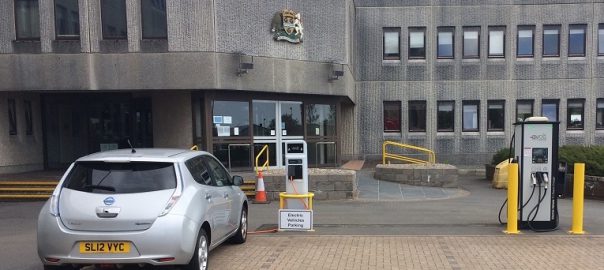
Evolt connects Isles to the mains
Evolt, the Electric Vehicle (EV) charge point supplier, has assisted Comhairle nan Eilean Siar (Western Isles Council) in creating a north-south EV charging network throughout the islands of the Outer Hebrides.

A total of 11 charge points have been strategically positioned on the Isles of Lewis and Harris, North Uist, South Uist and Barra, which make up the majority of the Council’s remit. The new network adds to the existing Evolt charge points procured and installed at the ferry ports throughout the Western Isles.
The news also follows Evolt’s selection as one of the Energy Saving Trust’s EV charge point suppliers on a Scotland-wide framework agreement.
A Spokesperson at Comhairle nan Eilean Siar explains the charge point infrastructure project was completed in three phases, and Evolt were appointed the successful tenderer to supply its equipment:
“It has proven to be an good and reliable supplier, and we have had minimal operational issues with the equipment, which bearing in mind our extreme weather conditions and harsh environment, is impressive.”
Three top-of-the-range Rapid chargers that can efficiently charge two EVs to 80% of their battery life within 30 minutes through a 50Kw AC and 43Kw DC outlet have been installed at key locations throughout the region. These are supplemented by three 22kW Fast chargers that are ideal for quick ‘top ups’, have AC and DC capability, and take one hour to simultaneously charge two EVs; and five 7kW Street chargers that complete the Islands’ north-south network.
“The charging infrastructure has contributed to our environmental agenda and is an enabler of sustainable tourism,” the Spokesperson adds. “A car club is also being set up by an independent enterprise for residents and businesses to hire EVs.
“Further strategically placed charging units are proposed for the future to increase accessibility to some of our prime tourist locations, however there can be limitations to installations based on the capacity of the electricity network in the area,” the Spokesperson concludes.
Justin Meyer, General Manager for Evolt, emphasises EVs and charge points appeal to both rural and urban environments:
“It’s a testament to the reliability and durability of our systems that they continue to effectively charge EVs even in the most testing conditions.”
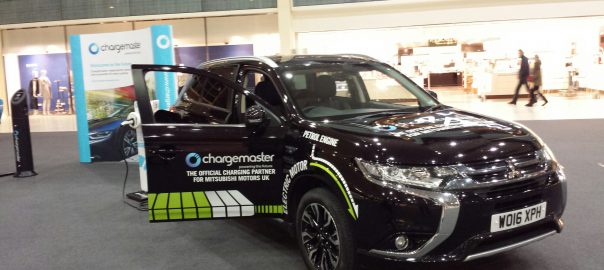
MK Start-up Marketplace 2
[Part 1]
It was a good day – there was a lot of interest shown in the i3 and lots of good questions. I’m encouraged that the general public may finally be warming to electric cars.

We were positioned next to the Chargemaster stand which was handy as their stand was displaying a Mitsubishi Outlander PHEV and examples of their charge points. That meant it was easy to explain plug-in hybrids and home charging.
Overall it was a useful event and we look forward to repeating it next year.
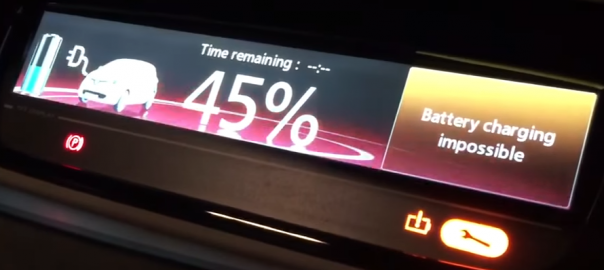
Renault ZOE: Battery Charging Impossible (BCI)
Early models of the Renault ZOE would quite often encounter problems with charging at public charging points and would show a message saying “Battery Charging Impossible” (BCI). The ZOE electronics were updated at about the time the new R240 version of the ZOE entered production to fix this issue – however, I’ve learned it can still happen with a new ZOE so let’s look at it in detail.
I had one of the early ZOE’s so i’m experienced with this error. The first thing to note is that in most cases it does not indicate that there is anything wrong with the car. The message simply means “Battery Charging Unsuccessful” and refers to the last charge attempted whereas the wording – perhaps a poor translation from the French – implies something more serious.
When a charge point (CP) is connected to the ZOE a communication takes place between the car and CP to agree a rate of charge. Also the ZOE checks the earth connection of the CP to make sure that it is securely earthed for safety reasons. A BCI error generally indicates that the ZOE found that the CP is not sufficiently well earthed to be safe and so it refuses to charge.
While this might seem to be obviously an appropriate response to a potentially dangerous situation the simple fact is that other electric cars are not so ‘fussy’ as the ZOE and quite often will charge at a CP that the ZOE has a problem with. Worse, the earth connection will vary with outside factors (e.g. weather and dampness of the ground) so that a ZOE can be happy with a CP one day but refuse to use it another day. While it might seem reassuring that the ZOE errs on the side of caution and refuses to charge with a CP that it can’t guarantee to be safe, the result is frustration for the driver when the car needs a charge.
The issue of a BCI from poor CP earthing is well documented. However, there may be another issue that causes BCI’s occasionally. There is a lot of circumstantial evidence that the ZOE charges more reliably – particularly with DBT rapid chargers – if the weight of the cable is taken off the connector when the connector is inserted into the car. It’s possible the cause is that the upper pins are not fully connecting during insertion. I suggest, therefore, a BCI may also be caused occasionally by the connector being pulled down by the weight of the cable when initiating the charge. This may be exacerbated if the spare cable is ‘tidily’ pushed under the nose of the car.
Since BCI in its simplest form is just a message to let the driver know that the last charge attempted didn’t succeed the obvious solution is just to try charging again. Unfortunately the BCI seems to be a ‘sticky’ error, in other words once it has happened it more likely to happen on subsequent tries – until a charge succeeds at which point it is completely wiped from the system. Therefore it is not unknown for follow on attempts to charge to produce a BCI even on a CP (e.g. at home) that has previously been fine.
In most cases, however, the BCI ‘stickiness’ will time out. Anecdotally, most people find that it only lasts 10-15 minutes, some people have found it lasts about an hour, and occasionally it can last until the car has sat overnight. In an ideal situation it is best to let the error time out and then try charging again – but it is not unknown for an attempt to charge while the error is still there to succeed, and for it to be cleared, before it has timed out.
Occasionally all attempts to clear a BCI fail and this indicates a hardware fault – it is, however, very unusual. The first thing to check would be the charging cable. If that is fine, then the car needs to be taken to a dealer to be checked.
So, let’s add that all together into a useful procedure.
What to do if you get a Battery Charging Impossible (BCI) message

- Don’t panic! In most cases it’s fixable by the driver and doesn’t indicate a long-term issue.
- Try charging at least 3 times before giving up:
- Support the connector where it goes into the car to make sure the upper pins are fully connecting. Listen for a successful latching of the connector into the car (multiple latching sounds may indicate a problem).
- If you’re at a location with multiple charge points, try a different one each time if possible.
- If that fails, shut down, lock up the car and leave it for 15 minutes, then repeat from 2.
- If that fails, shut down, lock up the car and leave it for at least 1 hour, then repeat from 2. However, if time is tight go to the next step.
- Drive to a different type of charge point and repeat from 2. If possible, it’s usually best to use your home CP as that’s the most reliable and forgiving type. Otherwise, if at a street 7kW charge point try a rapid charge point, or vice versa. Repeat from 2.
- If that fails (and that should be very rare) then it could be the cable. Borrow an alternative Type 2 cable and repeat from 2.
- If that fails then it looks like there may be a problem with the car – call your dealer and arrange for the car to be checked.
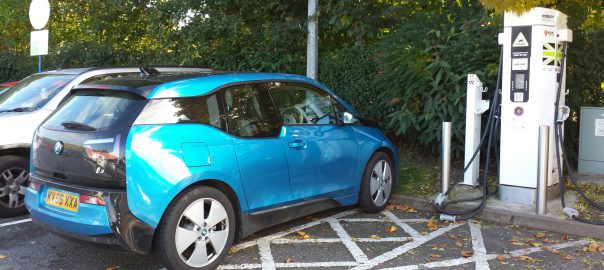
The Pain of Public Charging
I haven’t written one of these posts for some time as the public charging infrastructure has improved significantly in scale and reliability over the last three years. However, so far today has been a bit like returning to the bad old days.
We’re driving from Northampton to Stoke for one of our daughter’s regular gymnastics events. It’s fairly relaxed as with the new i3 94Ah we have plenty of range to get there without charging en route.
However as the family needed two comfort breaks on the way I took the opportunities to try charging. The results were disappointing.
At Corley Services on the M6 there was a Leaf at one of the two Ecotricity charge points. Unfortunately it was the only one that had a CCS connector compatible with the i3 so I could see I wasn’t going to get a charge. In fact it looked like he was having problems and was on the phone to Ecotricity. However when I came back out of the building later I could see and hear he was charging.

I was more hopeful at Stafford services when pulling in as both charge points were vacant. However I had 3 failed attempts to charge using the Ecotricity app, with the message ‘Remote Start failed’.
At that point I gave up and we got back on the motorway. At least with the i3 94Ah we could get where we were going without needing to charge.
[Part 2]

Exclusive London New Build Installs 38 Evolt Charge Points
One of London’s most high-profile and successful new mixed-use developments, Fitzroy Place in Fitzrovia, W1, has installed 38 electric vehicle (EV) charge points from Evolt.

The developer of Fitzroy Place, Exemplar, appointed Evolt not only to supply and install single outlet AC wall mount charge points, but also the latest load distribution technology.
The latter ensures the total power to all charge points is consistently available, evenly distributed and prevents overloading. When an EV is fully charged, its power usage is re-distributed to the other EV’s so that they can achieve a full charge in the fastest possible time.
The charge points are split into four groups, with each group being controlled by a distribution board. They are also connected to a centralised server, which manages the entire system and provides a real-time reporting function for operators. The server also has a failsafe mechanism in case of a local power outage, where it ‘instructs’ the distribution boards to continue charging vehicles at a default setting.
Michael Bucknell, Development Director at Exemplar says:
“Evolt’s installation of car charge points was a key contribution for us meeting our demanding sustainability objectives at Fitzroy Place.
“As we see Central London’s air quality moving up the political agenda, encouraging residents and occupiers to embrace electric vehicles will become increasingly key to tackling this very serious health and environmental issue”.
Justin Meyer, General Manager of Evolt, says that EV’s are fast becoming an essential part of city life:
“Charge points at new builds are becoming commonplace, as an increasing number of city dwellers and office workers are increasingly environmentally conscious.
“We are visibly seeing the demand for AC charge points at new builds,” he continues, “and it is important to install technology that manages power distribution, otherwise a site’s charge point network may never effectively charge numerous EVs simultaneously”.
The recently completed Fitzroy Place development provides 235 private apartments, 54 affordable homes, 20,000 sq ft of retail and restaurant space, 220,000 sq ft of commercial office space in addition to health and education facilities, and public open space.
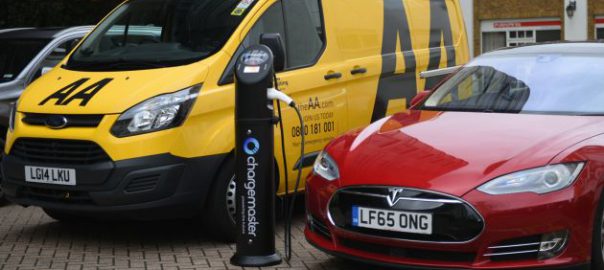
AA and Chargemaster partnership set to bust EV myths
A new partnership between the AA and Charagemaster is set to help boost sales of electric vehicles. In the first partnership of its kind, the Automobile Association and EV charge point specialists will combine forces to provide discounted charging, increased access to home charge points, an information campaign, and the roll-out of charge points at AA-rated hotels.

According to research conducted through AA members, 96 per cent of motorists don’t know the real cost of running an EV. This is despite the Association predicting that more than 500,000 plug-in vehicles will be on UK roads by 2020.
To combat this, the AA and Chargemaster will be attempting to overcome misconceptions with an information campaign that highlights the benefits of EV use and ownership. The partnership will also have practical financial impact on AA members with a discount worth more than 10 per cent on Chargemaster’s Polar Plus network. This brings monthly membership down by £1 to £6.85.
The number of charge points located at AA-rated hotels is also set to expand dramatically thanks to the partnership. With 2,500 hotels in the UK rated by the AA, the potential expansion of the EV charging network is huge.
Edmund King OBE, AA president, says:
“We think that the EV revolution is about to take off and we want to help consumers understand the benefits of low cost, low emission driving and to show them it is accessible and affordable. Per mile driven an EV is five times cheaper than the average petrol car and carries no Vehicle Excise Duty.
“Modern electric vehicle designs and performance are comparable to conventional internal combustion-powered vehicles. Concerns and regulations about diesel emissions may also prove to be a tipping point. Sales of new ultra-low emissions vehicles (ULEV) doubled over the last year. And 63,000 drivers have taken advantage of the plug-in car grant. We expect the market to grow substantially, as buyers overcome their misconceptions.
“The vast number of car journeys are under 25 miles and a third of households have two or more cars. Hence, we estimate that more than two million second cars could be electric tomorrow, with no disadvantages and many cost-saving benefits. The AA’s research also shows that if drivers owned an electric vehicle, three-quarters (75 per cent) would expect to charge it overnight, mainly at home while a quarter (25 per cent) would rely on public charging points away from home.”
David Martell, Chargemaster CEO, points out that a significant barrier to electric vehicle ownership is concern that when they reach their destination, drivers will not find a charging point available. This worries 81 per cent of respondents to the AA’s research.
“We want to change that perception,” he says. “This new relationship with the AA will see hundreds more AA branded charging points installed. They’ll go in at AA-rated hotels and other accessible public places such as supermarkets, public car parks and town centres while we will be embarking on a public awareness campaign to show that charging a vehicle at home is neither difficult or costly.”
Edmund King concluded:
“The facts speak for themselves. The cost of electric vehicles is coming down and the £4,500 government grant helps make them competitive. Myths about batteries not lasting long have been blown away by use. Some of the earliest models have clocked up very high mileages with almost no diminution of battery capacity.
“Modern EVs have a much greater range and battery technology is advancing as fast as the cost is falling. Most family saloon cars will drive for 80 to 100 miles without difficulty, well over the average journey length. EV performance is startling – top-range vehicles will accelerate faster than sports cars and provide all the creature comforts.
“This is the future of motoring and we are proud to be launching this initiative with Chargemaster today. Now is the time to charge up the EV revolution.”
Source: Next Green Car