Category Archives: BMW

News and reviews of BMW electric cars (including plug-in hybrids).

BMW i3 120Ah (Image: BMW Group)

THE CARS WITH ONE EYE ON SUSTAINABILITY

Recycling. It’s a word which most people know and understand. In a world faced with imminent climate change, recycling is a way for us to limit our own impact on the earth through reducing waste and turning what we’d usually throw away into something new.

Manufacturers are just as aware of this too. In fact, plenty of car makers are integrating recycled materials into their vehicles. Let’s take a look at some of the best.

BMW I3
BMW’s striking i3 is green from the off, as its fully electric powertrain has far less of an impact on the environment than an equivalent petrol or diesel-powered car. However, it goes further with an interior which majors on sustainability.

Much of the interior is made from kenaf, which is a lightweight, quick-growing material taken from the mallow plant. The dashboard is crafted from eucalyptus, while the seats are woven from sustainable wool. Check out i3 models for sale here.

BMW i3 120Ah (Image: BMW Group)

POLESTAR 2
Polestar’s new 2 is a car which has been brought in to take the fight to Tesla in the electric car stakes. However, it hasn’t lost track of the end goal – to reduce environmental impact – which is why you’ll find eco-friendly techniques and materials used throughout its construction.

It uses natural fibre composites to reduce the car’s overall use of plastic while at the same time driving down weight. In addition, the seats themselves are made from recycled plastic bottles, the upholstery is entirely vegan-friendly and the carpets are made from old fishing nets too. Don’t worry – they’ve been cleaned first.

HYUNDAI IONIQ ELECTRIC
Hyundai’s Ioniq was somewhat of a trendsetter from the off, as it was one of the first cars to be offered with three powertrains – regular hybrid, plug-in hybrid and electric. However, it’s just as cutting edge in other areas too.

Hyundai used recycled plastic mixed with powdered wood and volcanic stone to lower the weight of the interior plastics by an incredible 20 per cent.

Read more: motors.co.uk

Tesla Model 3 (Image: Tesla.com)

Electric vehicle acronym guide: Know your BEVs from FCEVs from PHEVs from ULEVs

When it comes to more sustainable driving, there is a whole host of options now and it can be confusing knowing what’s what. In the olden days you pretty much had the choice of diesel or petrol, but with the ever-evolving market of low-emission vehicles, there’s more choice than ever.

When it comes to “EVs,” you can choose from BEVs, PHEVs, HEVs, or FCEVS, all of which are classed as ULEVs. But what do all these acronyms actually mean?

If you need some quick pointers on what all these acronyms stand for and what they refer to specifically, look no further.

BEV
Let’s start with the most common type of EV, and the type of vehicle we usually refer to when we’re talking about EVs: the battery electric vehicle, or BEV.

As the name suggests, a BEV is an electric vehicle that uses batteries to store and deploy power which powers electric motors to drive the wheels. It’s also common to see words like “pure electric,” or “all-electric” when you read about battery electric vehicles.

Popular BEVs include cars like the Nissan Leaf, the whole range of Teslas, the Polestar 2, the BMW i3, Hyundai Kona Electric, Kia Soul EV, VW’s ID.3 and e-Golf, the Jaguar i-Pace — you get the idea.

Tesla Model 3 (Image: Tesla.com)

PHEV and HEV
Plug-in hybrid (PHEV) and hybrid electric vehicles (HEV) are perhaps the most confusing of the partially-electric vehicle world. There’s one key difference, though: plug-in hybrids can be charged up like a battery electric vehicle by plugging-in to an EV charge point, regular hybrids cannot.

It gives you the flexibility to drive and use your PHEV like it was a BEV and not rely on the combustion engine, for very short journeys at least. They typically have very small batteries and are only capable of driving between 30 and 50 miles on all-electric mode.

Popular PHEVs include the Mitsubishi Outlander, Hyundai Ioniq, MINI Countryman PHEV, and the Volvo XC60 T8.

Regular hybrid vehicles (HEVs), like the original Toyota Prius, can’t be plugged in and the only way to charge their batteries is from regenerative braking or by using the engine like a generator.

Some companies have even referred to these vehicles as “self-charging hybrids,” as if not having to plug them in is a benefit. That phrase has been branded as misleading, and Toyota and Lexus ads in EV loving Norway using the tag line have been banned for being misleading. In reality, to charge them, you need to fuel them with gasoline.

FCEV
FCEV stands for, Fuel Cell Electric Vehicle. These are a small offshoot of EVs that use hydrogen fuel cells to create an electrical charge that’s used to power motors that drive the wheels.

Most FCEVs use a small battery or super capacitor to act as a buffer between the fuel cell and the motors to ensure power delivery is consistent and reliable.

Some tout fuel cell vehicles as a better option than batteries for the future of sustainable transport. They can be filled up in the same way as a combustion engine vehicle, hydrogen is the most abundant element in the world, and their only waste product is water vapor.

Read more: TheNextWeb

It’s Time to Go Green!

If you would like to know more about Solar Panels and the PowerBanx range of home battery systems, and get a free instant quote, please complete our online form:

BMW iX3

New BMW iX3: electric SUV priced from £61,900 in UK

Rear-driven, 282bhp electric SUV available to pre-order in Premier Edition form; cheaper variants could follow

BMW has priced up its second fully electric model, the iX3, which is available to pre-order today ahead of UK customer deliveries commencing in summer 2021.

Two exclusive variants will be offered at launch: the Premier Edition and Premier Edition Pro, which are priced from £61,900 and £64,900 respectively. Although not confirmed, cheaper variants could follow at a later date.

The Premier Edition comes as standard with kit including 20in alloy wheels with an aerodynamic design, an electric tailgate, adaptive suspension and a panoramic sunroof. Electrically adjustable heated front seats, wireless smartphone charging and a suite of driver assistance systems are also thrown in. Four exterior paint colours, two exterior trim colours and four Vernasca leather colours are offered.

BMW iX3
BMW iX3

The Premier Edition Pro brings more features, such as a head-up display, a Harman Kardon surround-sound system, gesture control, automatic high-beam, adjustable lumbar support and Parking Assistant Plus. It also features BMW’s new IconicSounds Electric augmented ‘engine’ sound generation, developed in conjunction with composer Hans Zimmer.

Based on the third-generation X3, the electric SUV is positioned above the i3 supermini and introduces what BMW describes as its fifth-generation eDrive system. This features a newly developed electric-motor-and-battery combination that provides it with 282bhp and an official WLTP range of 285 miles.

First previewed at the 2018 Beijing motor show, the iX3 breaks new ground by being the first BMW to be produced in China for export to key world markets.

Production of the iX3, the first of three new electric, i-branded BMW models due to go on sale within the next 18 months, will take place exclusively at a joint-venture factory operated by BMW and Chinese car maker Brilliance in Shenyang, Liaoning, with right-hand-drive UK deliveries planned to begin next March.

Holding true to the appearance of the concept, the production version of the iX3 is differentiated from the standard X3 by a blanked-off front grille with vertical air ducts at each corner, an altered breather element behind the front wheelhouses, revised sills and a lightly revised rear bumper. Blue elements within the grille, sills and rear bumper are used to signal its electric propulsion. Its drag coefficient is 0.29Cd.

Although its bodystyle might suggest that it offers four-wheel drive, the iX3 is planned to be exclusively rear-driven. Power comes from a rear-mounted electric motor producing 282bhp and 295lb ft of torque, being channelled through a single-speed gearbox.

Read more: Autocar

BMW i3 120Ah (Image: BMW Group)

BMW And VW Ramping Up i3 And e-Golf Production Due To COVID Disruption, Rising Demand

Demand for electric cars is on the rise in Europe and elsewhere around the world, prompting BMW to ramp up production of the i3 and VW to build the e-Golf for longer than originally planned.

BMW has significantly increased production capacity compared to the original plan for the second half of 2020 at its Leipzig plant in Germany. The company is extending shifts and shortening breaks to increase the number of vehicles built per day from 114 to 130.

BMW i3 120Ah (Image: BMW Group)

In addition, the automaker has cancelled the one-week summer break for the i3 assembly line. Automobilwoche reports the decisions are motivated by increasing demand and the need to recuperate the long production stoppage in the second quarter of the year caused by the COVID-19 outbreak. In the first half of 2020, BMW built just over 12,500 i3 EVs, while in the entire 2019 calendar year production reached 38,937 units.

As for the VW e-Golf, production will continue at the Transparent Factory in Dresden until Christmas, contrary to initial plans. However, e-Golf production ended for good at the Wolfsburg plant on July 23.

VW currently makes 74 e-Golfs every day but aims to reach an output of 80 vehicles per day. Mind you, this will only continue until Christmas, when the Dresden plant will be converted to build the ID.3 starting January 2021.

Read more: CarScoops

It’s Time to Go Green!

If you would like to know more about Solar Panels and the PowerBanx range of home battery systems, and get a free instant quote, please complete our online form:

BMW i3 120Ah (Image: BMW)

A really simple introduction to one-pedal driving

In the early days of motoring, cars didn’t have the standardized three pedals, steering wheel, and gear shifter controls that most of us will know.

Take the Ford Model T for example: to drive it in reverse you depress the middle pedal, its brake pedal is where a modern accelerator should be, and its throttle is on a lever on the steering column. It’s confusing to say the least.

As cars got more advanced, driving them became an increasingly simple affair. From the confusing controls of early motorcars, three pedals, steering wheel, and a gear selector became the norm. As automatic gearboxes became A Thing, cars with just two pedals, and no gear stick became more common.

However, with the advent of electric vehicles, we now only need to use one pedal for most of our driving. Let’s take a look at what that actually means.

BMW i3 120Ah (Image: BMW)

What is it?
If you’re new to EVs, they still come with two pedals: stop and go. But thanks to the characteristics of electric motors, you don’t always have to use the brake pedal. One-pedal driving allows you to come to a complete stop in an EV without touching the brakes.

Electric cars come with a feature called “regenerative braking.” In effect, this uses the vehicle’s motors like generators to convert the kinetic (moving) energy of the vehicle back into electricity to recharge the batteries.

When this happens, the magnetic resistance of the motors creates a braking force which slows the vehicle. In my experience, when regenerative braking is set to the highest level, it has the same effect as hard braking.

This means that when you’re pulling up to traffic lights, or are in a traffic jam, you only need to take your foot off the go pedal for the car to stop.

Read more: SHIFT

It’s Time to Go Green!

If you would like to know more about Solar Panels and the PowerBanx range of home battery systems, and get a free instant quote, please complete our online form:

Plug-in vehicle leasing demand skyrocketed in 2019, according to Vantage Leasing

Vantage Leasing, the personal and business contract hire company, saw a 700% increase in demand at its business for plug-in vehicles last year.

Premium brand models made up the majority of the new plug-in vehicle contracts.

The Range Rover Sport PHEV was the most popular option, accounting for 60% of all plug-in hybrid models. Even more surprisingly, it was also the most popular version of the car, making up 59% of all Range Rover Sport lease contracts in 2019.

BMW X5 xDrive45e PHEV (Image: BMW)

The data points to a huge surge in plug-in vehicle interest and Vantage Leasing has now launched an ‘EV Chooser’ tool that compares key metrics for EVs – including range, price and efficiency.

Vantage Leasing has also created its own EV ranking based on how vehicles fair across those criteria, with the Skoda CITIGOe IV coming out on top.

BMW Group’s plug-in models performed particularly well. The second-most popular PHEV was the BMW 5 Series, closely followed by the BMW 3 Series and MINI Countryman. Plug-in derivatives accounted for 30% of 3 Series lease contracts and 67% of Countryman contracts.

Other strong performers included the Volvo XC90, with double the number of Twin Engine plug-in hybrid models leased in 2019 compared with 2018.

Read more: AM Online

It’s Time to Go Green!

If you would like to know more about Solar Panels and the PowerBanx range of home battery systems, and get a free instant quote, please complete our online form:

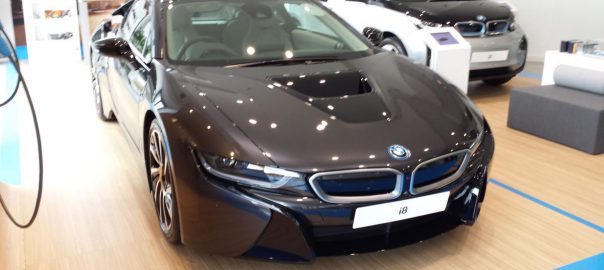
BMW i8 in Sophisto Grey (Image: T. Larkum)

‘No way around electrification,’ BMW says

Consumers are increasingly turning to electric vehicles – and they’re liking it, said BMW’s chief lobbyist in Europe, calling on policymakers to accelerate charging infrastructure deployment to support the roll-out of electric mobility on a mass scale.

“Our customers, what do they do? The good news is that they are starting to buy electric vehicles,” said Andreas Klugescheid, head of external affairs at the BMW Group, referring to plug-in hybrids as well as fully electric vehicles.

The EU’s newly-adopted CO2 emission standards for cars mean “there is no way around electrification,” he told the audience at a EURACTIV event, held in the automaker’s flagship Brussels store on Wednesday (6 November).

BMW i8 in Sophisto Grey (Image: T. Larkum)

In contrast to rival carmaker Volkswagen, BMW has opted for a softer transition to electric mobility. While Volkswagen plans to build 22 million EVs over the next ten years, BMW has hedged its bets on plug-in hybrids as well as fully-electric vehicles. And Klugescheid didn’t rule out other alternatives, saying hydrogen and eFuels will also play a key role in decarbonising transport, especially for long-haul, heavy-duty trucks.

But when it comes to personal cars, the battery electric vehicle stands out as a clear winner.

“People start to buy these vehicles. And they’re happy with them,” Klugescheid said. But the infrastructure does not follow customers’ expectations, he warned, calling on policymakers to accelerate deployment of charging points across Europe.

“The next charging point is 30km away from our house,” Klugescheid said. “And not everybody owns a house with a good charging infrastructure,” he pointed out. “So the message is clear: infrastructure is a topic” if Europe wants electric vehicles to be adopted on a mass scale.

Things are moving forward, however. On Monday, German automakers met with top government representatives and agreed to roll out 1 million charging points for electric vehicles across the country by 2030.

Read more: Euractiv

New BMW X5 plug-in hybrid 2019 review

The new plug-in hybrid BMW X5 xDrive45e promises up to 54 miles on electric power and over 140mpg, but does it deliver?

Verdict 4 stars
The new BMW X5 xDrive45e will actually be the best version of the X5 for many potential buyers. This is a very accomplished plug-in hybrid SUV with plenty of premium appeal, and it doesn’t stick out on price list. For many considering a conventionally powered X5, this is an option they’ll be able to afford. If you can deal with slowly recharging it overnight, this is a model worth thinking about.

Plug-in hybrid power is back on the menu for the BMW X5, but with a key difference this time around. BMW is aiming to make the new xDrive45e version of its long-running Audi Q7 and Volvo XC90 rival more than just a niche choice; it is hoping this new, six-cylinder petrol-assisted option will shape up as the X5 to buy for more people than ever before.

BMW X5 xDrive45e PHEV (Image: BMW)

Compared with the previous-generation plug-in X5 (the xDrive40e), the biggest change is the adoption of two more cylinders. The 3.0-litre turbocharged six-cylinder petrol engine links up with an electric motor attached to an eight-speed automatic transmission.

Total system power stands at 389bhp, but more importantly, the electric motor is fed by a 24kWh battery pack located under the rear bench. That’s a large battery for a plug-in hybrid car; for context that’s as big as the cell found in the previous-generation, fully electric Nissan Leaf. But in the BMW application it has six-cylinder shove to fall back on when necessary.

The size of that battery means that the X5 xDrive45e boasts a big range on electric power only. BMW says it’ll do between 42 to 54 miles at up to 83mph, according to WLTP standards. Those numbers easily beat out the maximum electric ranges of other large plug-in rivals like the new Audi Q7 TFSIe and Volvo XC90 T8. Only the upcoming, diesel powered Mercedes GLE 350de with its enormous 31.2kWh battery and 61-mile claimed range looks like it’ll outgun the BMW for electric running.

Read more: Auto Express

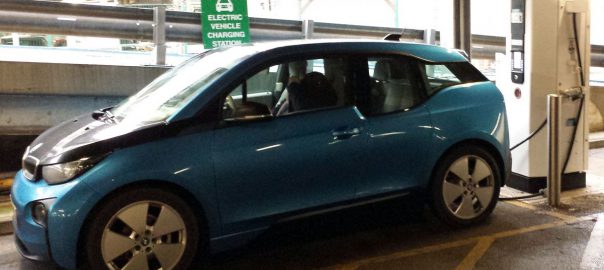
i3 charging at Frimley Hospital (Image: T. Larkum)

Long-term report: What I’ve learnt driving a BMW i3

I always knew that running an electric car as a long-term test vehicle would be something of an education, but I wasn’t prepared for quite how much it would change my perception of motoring.

Now, as I’ve waved goodbye to the BMW i3 after four months, I’ve had a chance to reflect on what EV ownership was really like. And do you know what? I’ve loved it.

It seems I’m not the only one who has been making the switch either – many new car buyers are currently snapping up alternatively fuelled vehicles.

i3 charging at Frimley Hospital (Image: T. Larkum)
i3 charging (Image: T. Larkum)

In the latest new car sales figures for October, battery-electric and hybrid vehicle sales accounted for one in 10 registrations for the first time ever. It appears more and more people are ditching diesel- and petrol-powered cars to switch to these new options.

So what will these new owners be looking forward to? Well, for a start they’ll soon find they are very different to drive. The silence is the first thing that strikes you, and I very quickly grew to love the swift acceleration combined with just a little wind noise as the i3 leapt towards the horizon.

Much has been written about the silence of electric cars, but at low speeds they do actually make a very satisfying hum – the i3 sounded like a muffled Tube train leaving a station as it speeded up.

I’m a huge fan of the BMW’s turning circle too. London taxi-like in its ability to spin around, it made parking it a doddle, and now I’m back in a ‘normal’ car I’ve struggled to adapt, often misjudging reverse parking manoeuvres by an embarrassing margin.

But what people will really want to know is how I’ve coped with the charging and range. Let’s deal with those in order. Charging-wise, I’m amazed at how well I’ve adapted, considering I don’t have access to a home charging point.

At work, I only have a three-pin outside plug to top it up with too, which takes a full 15 hours to completely recharge the BMW from flat. The reality, though, is this never happened. I simply topped the car up every day while I worked, and this was pretty much enough to keep it always fully charged.

Read more: AOL

BMW i3 and i3S 120Ah (Image: BMW Group)

Electric cars will put design in the driving seat

In a victory for sustainability, UK restrictions on the use of electric car chargers are to be lifted under plans to increase the use of green vehicles in the UK.

Practically, this means only one subscription will be required to use charging points. Additionally, the transport secretary is allocating £2.5 million of funding for more than 1,000 new electric car charging points.

All signs point to the British government readying itself for the next wave of innovation in the auto-industry. Just as our streets were once emptied of the horse and cart, in the not-so-distant future our roads could be free of petrol and diesel powered vehicles – transforming how we drive in the process.

I recently bought an electric car, a BMW i3s. I did so for environmental reasons but I didn’t fully appreciate just how radically different the driving experience would be. Among many innovations, the experience embraces connected technology, reduced running costs, outstandingly fast performance and virtual silence. A measure of moral smugness is thrown in as an emotional extra.

BMW i3 and i3S 120Ah (Image: BMW Group)

Driving experience aside, we are on the brink of a design revolution for the auto industry thanks to e-cars. In a way, the clock is being turned back so auto designers can free their imagination.

There is evidence that the classic car market is heading for fast decline: the value of such cars at auction dropped dramatically over the summer, driven by concerns over the availability of fuel. Yet many of the vehicles of the 1950s, 60s and 70s remain iconic symbols of design at its wonderful best. They were symbols of freedom, opportunity and progress, and they were magnificent to behold.

But as competition and market demand increased, the distinctive beauty of car design eroded away. The dominant voices around the automotive industry table became those of engineers and economists who sought to compromise the work of the designer in the name of efficient manufacturing process and, ultimately, lower prices. The democratisation of the automobile happened at the expense of elite design.

But now, the possibilities for a design-led approach are once again coming to the fore and are endless. Electric vehicles do not require a cooling system, oil, a transmission, nor so much else of the mechanics of a fossil-fuelled car. As battery and electric motor technology improves, the design challenge shifts from “how do I fit it all in?”, to, “what on earth am I going to do with all this space?”. As a consequence, we are about to witness a transformation on the scale of how Apple transformed the PC or the mobile phone.

Read more: Shots