Category Archives: BMW

News and reviews of BMW electric cars (including plug-in hybrids).

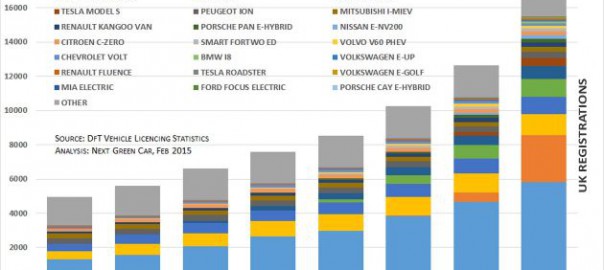
UK electric vehicle registrations UK (Image: Next Green Car)

Nissan LEAF most popular electric car in UK

Figures recently released show that the Nissan LEAF maintains its position as the most popular electric car or van in the UK, with at least 5,838 vehicles registered by the third quarter of 2014, representing over a third of all EV sales.

The registration data also shows the new Mitsubishi Outlander PHEV has made a dramatic entry to the UK market; the electric SUV is already in second position with over 2,706 sales less than a year after its UK release.

In third and fourth places are two more established plug-in hybrids, the Toyota Prius PHEV (with 1,226 registrations) and the Vauxhall Ampera (1,039 vehicles). The BMW i3 now ranks fifth with at least 1,029 UK registrations (454 all-electric and 575 range-extender variants).

The Renault ZOE and Tesla Model S are also selling well in the UK with over 775 and 474 sales respectively; the two models in fourth and fifth sales positions across Europe as a whole (YTD October 2014).

UK electric vehicle registrations UK (Image: Next Green Car)

With the recent announcement from OLEV that 23,083 claims have been made through the Plug-in Car Grant scheme, the number of electric cars and vans in the UK now exceeds 24,500 vehicles for the first time.

Another indicator that the EV market is gaining momentum is the number of fully electric and plug-in hybrid models available in the UK. While only 9 EVs were available for the major manufacturers in 2011 (excluding quadricycles), this increased to 18 models in 2013, and now stands at 24 high-quality cars and vans (in 2014) with more models due for launch in 2015.

Dr Ben Lane, Director of Next Green Car said:

“The strong growth of the EV market in the UK as elsewhere provides yet more evidence that the light-duty vehicle market is undergoing a radical change with consumer preferences changing from petrol and diesel models to electric power-trains. With sales growing exponentially, the EVs are set to become commonplace on UK roads within the next few years.”

Source: Next Green Car

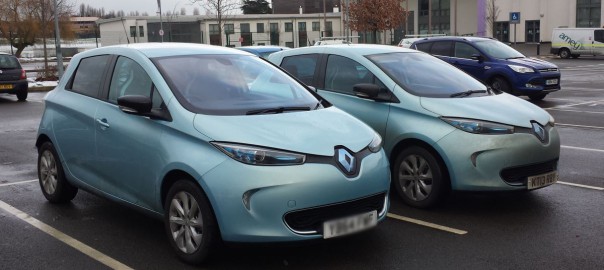
ZOE Twins (Image: T. Larkum)

EV Spotting

ZOE Twins (Image: T. Larkum)

It turns out my Renault ZOE is no longer the only one in my local area, around Northampton. An almost identical but newer Dynamique Intens has turned up, and I’ve seen it in Northampton and nearby Wellingborough. It’s even the same Energy Blue colour. I’m embarrassed to say I can always tell which one is mine, it’s the dirtiest one!

Catching a quick charge at the local Renault dealer (Image: T. Larkum)

While catching a charge recently at the Renault dealership in Bletchley I spotted a ZOE with the rather neat registration number of “EV13 ZOE” (where, of course, EV is ‘Electric Vehicle’).

ZOE with custom number plate (Image: T. Larkum)

Meanwhile I saw the first BMW i3 in my home town of Northampton recently. It was just sitting outside the local shopping centre/health centre looking entirely at home. For sure it will be the first of many.

The first BMW i3 spotted in Northampton (Image: T. Larkum)
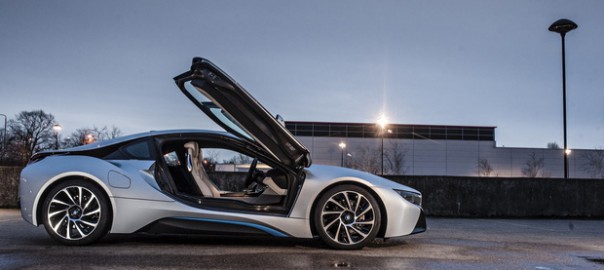
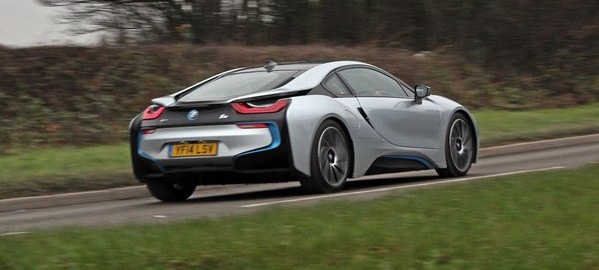
On the road: BMW i8 (Image: The Guardian)

BMW i8: Reviewing The Car Of Tomorrow

We were promised flying cars, teleportation and hover boards. We don’t have any of that. But now we have this: The BMW i8 and it’s a future that cannot get here soon enough.

My body hurt. My mind was numb. I had just spent a week in Las Vegas for the Consumer Electronics Show and was ready to fly home. But first I had to drive a brand-new 2015 BMW i8 to L.A. It’s a rough job, but someone has to do it.

The i8 is BMW’s latest supercar, able to go 0 to 60 in about 4.4 seconds with its hybrid electric/gas powertrain. The i8 looks like a Hot Wheels car, handles like a supercar and is as expensive as a high-end Porsche. With a starting price of $135,000, this isn’t the car for everyone. It’s actually a gateway into BMW’s other hybrid, the cute and cheap BMW i3, a shorter, sporty runaround that BMW is touting as their answer to crunchy hybrids from Honda, Nissan, and Chevy.

I set out, gassed up and fully charged. My time with the i8 was short. I had already spent several days cruising around Vegas where the i8 got more attention than the volcano in front of the Mirage. The car stopped traffic. People gawked from sidewalks and leaned out of cabs to snap pictures.

Stopping at a gas station was an exercise in patience. Everyone had to take a picture and tell me a story about a car they once loved but totaled. It got the most attention parked at a hotel across from CES where most thought it was part of BMW’s trade-show exhibit.

Nope, she was all mine for the next couple of days.

Since the i8 lacks a proper trunk, I jammed my luggage in the back seat and took off to LA down I-15. The sun was shining and the traffic was light. I didn’t plan on taking the quick route all the way to my airport hotel some hundred miles away. Nope, I had all day to get there and was going to make the most of my time with the i8. I turned off the expressway at the first sign of the Mojave National Preserve and found what I was looking for: empty desert roads. I smiled and I assume the i8 did as well.

It’s astounding BMW made the i8 at all. It’s a concept car turned production car. BMW released the stunning concept in 2009 at the height of the recession. Now, some five years later, I’m sitting on the side of an empty road with the i8’s scissor doors open and admiring the desolate beauty outside Las Vegas. All I can hear is a slight whine from the hybrid electric powerplant ready to be abused.

Nestled somewhere within the i8’s frame is an electric motor and tiny 3 cylinder, 1.5L turbocharged engine. They work in tandem to power the i8. The results will make treehuggers and gearheads equally happy.

When driven in hybrid mode, the i8 is quick and plentiful. It can go about 15 miles on effectively just electric power. When the gear shift lever is kicked over to sport mode, the i8 becomes exhilarating.

In either mode it’s quick off the line and at speed. Stomp the right pedal to the floor and the i8 flies to 60 mph in 4.4 seconds. Even more impressive, though, is when passing is required. As I understand it, the powertrain uses the electric motor to give the moving car an instant boost and then seconds later the 3 cylinder engine takes over. The car leaps forward with supercar might and plants occupants into the seats.

The car simply thunders when driven in sport mode and hugs the roads like a modern supercar should. BMW piped some of the engine noise back into the cabin through the audio system. Sure, that might be cheating a bit, but the notes are genuine and raw. I found the sound to be the most surprising thing about the i8. I simply wasn’t expecting the hybrid to sound so mean.

Read more: Tech Crunch

On the road: BMW i8 (Image: The Guardian)

2014 Tech Car of the Year: i8 – A carbon fiber hyper hybrid

We narrowed the field down to five nominees for the 2014 Tech Car of the Year award at the beginning of December, and now CNET’s judges have weighed in on our final choices. There were some strong contenders, making a unanimous choice difficult, but there can only be one…

Winner: BMW i8

This car represents a marvel of innovative engineering. Carbon fiber in its construction not only keeps the weight down, but cheaper production of this material could make it a standard for cars of the future. BMW took a risk with the design, putting something on the road that looks like it should still bear a concept label. LED headlights make for another important touch, along with a head-up display and driver assistance features. Judge Tim Stevens noted that “it’s undoubtedly one of the most interesting new cars on the road.”

With an electric motor driving the front wheels and a compact gasoline engine at the rear, the i8 combines all-wheel drive with plug-in hybrid fuel efficiency. However, in the same car you can experience a thrilling driving experience, eating up corners with this nimble ultimate driving machine. Judge Wayne Cunningham notes that the i8 “is an extraordinary technical achievement.”

Finally, BMW’s iDrive cabin electronics system sneaks in an impressive roster of connected features. The car comes with its own data connection powering online destination search and built-in apps. iDrive gets expanded features through the ConnectedDrive app on a driver’s smartphone, bringing in everything from social media to online music.

The Audi A3 came in as our favorite runner-up, embodying near-perfect connected cabin tech, but its drivetrain didn’t represent a significant advance. Also up for serious consideration was the Infiniti Q50S Hybrid, an amazing technical achievement with its drive-by-wire steering and efficient gasoline-electric drivetrain. Fan favorite the Tesla Model S made the nominees list for its impressive drivetrain, but when we reviewed the 2014 P85 Plus model earlier this year we didn’t find much advancement in its cabin electronics, and it still lacked any driver assistance features. Tesla’s recent update of the Model S addresses some of those issues, so we will likely be reconsidering it for next year. The Ford Fusion Energi made our nominee list for its excellent driver assistance features and economical plug-in hybrid drivetrain, but its cabin tech couldn’t carry it over the top.

Read more: CNET

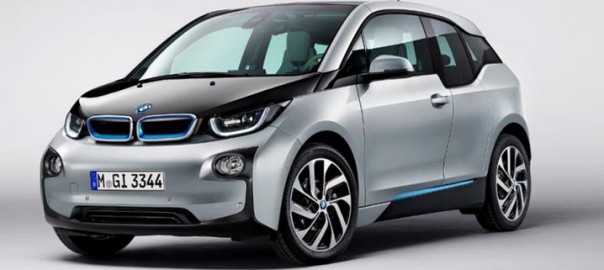
Bmw i3 (Image: BMW)

All-electric BMW i3 wins Wheels magazine’s car of the year award

The BMW i3 has overcome strong resistance to become the first all-electric car to take out the Wheels magazine car of the year award.

German manufacturer BMW bettered fossil-fuelled rivals including last year’s winners Volkswagen, who have taken out the honour three times in the last six years, to be crowned for the first time in the award’s 52-year history.

Wheels editor Glenn Butler said the i3’s victory serves notice to its combustion-engined competitors that the electric cars are here to stay.

“This year the future has arrived in the form of a seriously good motor vehicle … that just happens to run on electricity,”

he said.

“There is no novelty factor involved here either.

“It ushers in a new era of eco-performance for millions of families and urban commuters around the world, and in Australia.”

Judges described the i3 as innovative and praised BMW’s “bravery” to produce the electric-engined car.

“Other brands surely possess the know-how to have created something equally visionary; all they lacked was BMW’s bravery,” they said in a statement.

“This innovative and compact electric car combines expressive design, impressive engineering, exceptional efficiency and persuasive practicality with a good deal of driver appeal.”

“It is both admirable and desirable.”

The Wheels award has been running since 1963, when the Renault R8 took out the prize.

The last Australian-built car to win the award was the Holden VE Commodore in 2006.

Read more: 9 News

BMW i8 (Image: PistonHeads)

BMW i8 vs The Real World

Looks like the sports car of the future but does it actually drive like one? Take two in the BMW i8

The ‘real world’ offering in the rarified league of carbon fibre petrol-electric sports cars, the BMW i8 is no P1, LaFerrari or 918 Spyder in performance terms. Not that anyone who sees it seems to care. Indeed, while all of the above could slip by innocent bystanders as ‘just’ normal supercars the i8 has star quality in spades and is so obviously something new and different even non-car folk seem genuinely awe-struck.

Star quality that extends to whomever happens to be at the wheel too – pull up kerbside and by the time you open that carbon butterfly door you’ll have a small crowd and camera phone paparazzi waiting to hang on your every word about the driving experience. Crave the quiet life? Not the car for you…

That £99K starting price is interesting too, pitching the i8 directly into the line of sight of the serial 911 buyer who, just might, be looking for something a bit different or eying up electric friendly grants and congestion charging for driving to that City office block. Tempting as the F-Types, R8s, Merc-AMG GTs and similar alternatives at this price might be they all look a little dinosaur-like in the company of the i8, which achieves that rare thing of being incredibly expensive, exotic, unashamedly performance focused and yet totally socially acceptable too.

The IT crowd

Harris drove the i8 in the sympathetic surroundings of California and Matt had a go up in the wilds of Scotland but for this test we used the i8 in more everyday surroundings, hacking the daily commute and heading up the M1 for a meeting in the way anyone might use a ‘normal’ sports car like a 911. Electrically plumbed parking spaces at the office meant a chance to charge the battery for maximum EV goodness but the rest of the time it was just a case of jumping in and using it like any other test car.

First thought? Getting anywhere near that official 134.5mpg is going to require your very lightest loafers, the best the PH clogs could achieve being less than half that on a mixed commute of stop-start motorway traffic and a bit of urban crawl. OK, so it was winter and we’re soft enough to want heated seats on in addition to the rather more compulsory lights, wipers and similar. Still impressive for a 362hp sports car, not so much for a supposed eco champion even driven in a style intended to maximise regenerative charging opportunities and minimise intervention from the 1.5-litre petrol engine.

An inbound journey with barely any battery saw 45mpg; the return fully charged had the trip showing 99mpg running on mainly electric for the first five miles of urban driving before dropping to a less impressive mid 50s once on dual carriageways and motorway. Dig deeper into the i8 literature and these are actually more representative of BMW’s official expectations. Funnily enough that triple-digit combined figure has rather drowned that out though. There are tricks to be learned – following a tip from the delivery driver we enjoyed the fact Sport mode that keeps the petrol engine engaged also does an excellent job of charging the battery. A rather more sophisticated answer can be found by programming your route into the nav, whereupon the computers analyse the profile and calculates where to use petrol power, where to switch to electric and where the best re-gen opportunities may lie. Clever stuff.

Read more: Piston Heads

On the road: BMW i8 (Image: The Guardian)

BMW i8 – car review

‘You really have to be cut out for the kind of attention this car will garner: it’s like being famous overnight’

The BMWi8 is sleek, fast, futuristic and, most of all, defiant. The rules are, if you want to be green, you have to be crap. These were laid down in stone by eco-friendly cleaning products, and reinforced by decades of dirty hippies. The i8 is flash, showy, outrageously fast – and the future: one day, all cars will be like this – lighter, run on batteries – or cars will have ceased to exist.

The hybrid electric motor drives the front wheels, the turbo-charged petrol-triple engine the back. Sure, it plugs into the mains now, but as soon as they perfect the solar battery, this car is going to be first in line to run on sun. The frame is carbon-fibre reinforced plastic, somewhat lighter than aluminium, tonnes lighter than steel.

The resulting drive is, in any of the modes – SPORT, COMFORT or ECO-PRO (I’m not shouting; this is what BMW calls them) – more like driving in a video game than driving a car: silent, smooth, otherworldly. The speed dial is projected forwards into space, so only the driver can see it. This is handy, I imagine, if your passenger habitually tells you to slow down. Mind you, in this car, your passenger is going to tell you to slow down anyway. I defy you, feeling so protected (a high window line makes the world seem quite far away) and so omnipotent (thanks to the crazy raw power), not to go too fast, or at the very least accelerate in an ostentatious fashion.

Before you drive the i8, though, you have to get in; the doors open upwards in a gull-wing fashion. My kid asked me if it could fly. There is always someone taking a picture of it, if not as you approach, certainly by the time you’ve got the key out of your pocket. One time, walking purposefully toward it, then suddenly exhausted by the effort of explaining why I had it, even though it wasn’t mine, I just took a photo with my phone and walked away. You really have to be cut out for the kind of attention this car will garner: it’s like being famous overnight.

The cabin is swish and intuitive; in the dark, it comes alive with illuminated blue piping. The seatbelts are bright blue and heavily redolent of the professional pitstop. The posture is low and luxurious in a Swiss-watch-advert kind of way (“I’m reclining like this because I can afford to, not because my back’s gone”).

The motorway is where it gets to show off. It can make a decent noise, for a start, some of it simulated (people like that). More relevant is the ease with which it takes everything, and its remarkable fuel efficiency: at speed, something like 50mpg, roughly the same as a Prius, which feels like you’re pushing it along with your own buttocks.

The prototype for the i8 was in Mission Impossible: Ghost Protocol. I can’t figure out how Tom Cruise swung out of the low driver’s seat on his tiny little legs, but I can’t conceive of a more Hollywood-ready car.

Source: The Guardian

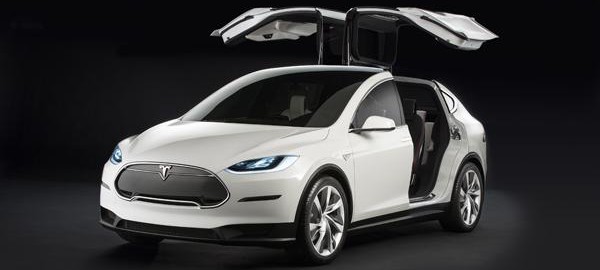
Tesla Model X (Image: Tesla)

Top 10 Electric Vehicles Coming Soon in 2015

Last year marked a big breakthrough for electric cars; the majority of major manufacturers invested heavily in developing electric drive-trains and subsequently added an array of appealing battery-electric (BEV) and plug-in hybrid (PHEV) models to their rosters.

By the end of 2014 there were over 17,000 plug-in cars and vans on UK roads with that number expected to more than double by the end of this year.

As noted by Dr Ben Lane, Managing Editor of Next Green Car: “2015 will see a continuing roll out of battery electric and plug-in hybrid models as UK motorists become more accustomed to electric drive-trains. This year will be the year when EVs start to considered as ‘normal’.”

The future is only looking bright for electric mobility and there a number of exciting EV prospects expected to feature prominently this year. Below is Zap-Map’s list of top 10 electric vehicles coming soon in 2015:

1. Tesla Model X – BEV

Tesla Model X (Image: Tesla)

Originally scheduled for 2013, Tesla recently announced that the eagerly anticipated Model X crossover will be launched in the third quarter of 2015. Despite being larger than the Model S, the all-wheel electric drive will give the Model X a similar level of performance (that’s 0 to 60 mph in around 5.9 seconds!). With 10% additional weight, the expected driving range will be slightly less; around 170 miles for the 60 kWh battery pack or 230 miles for 85 kWh battery. One the striking features of the next Tesla will be its rear ‘Falcon’ doors which open upwards instead of swinging outward. Final pricing has yet to be announced. Although it’s been a while coming, with the new Model X, Tesla is unlikely to disappoint.

2. Volkswagen twin-up! – PHEV

Volkswagen twin-up! PHEV (Image: VW)

The twin-up!’s 55kW powertrain consists of a 0.8 litre TDI diesel engine working in conjunction with a 35kW electric motor. The energy storage system includes a lithium-ion battery (energy capacity: 8.6 kWh), a conventional 12V battery for on-board electrics, and a 33 litre capacity fuel tank. On the official test cycle, the twin-up! delivers a combined fuel economy of over 250 MPG with a CO2 emissions of just 27 g/km. In zero-emission operation the PHEV can cover a range of 31 miles and is anything but a slouch: the twin-up! accelerates up to 62 mph in 15.7 seconds and has an all-electric top speed of 80 mph. Pricing to be announced.

3. Mercedes-Benz B-Class Electric Drive – BEV

Mercedes B Class Electric (Image: Mercedes-Benz)

The Mercedes-Tesla relationship is evident (and welcome) in the B-Class ED with the drive-train and battery pack coming from the California-based company. Capable of 125 miles per full charge, the B-Class ED provides electric motoring in a quality package with more reserved styling than some other brands such as the BMWi range. While the motors can deliver up to 179 bhp (Sport mode), two other driving modes are available: ‘Economy’, where power is limited to 131 bhp; and ‘Economy Plus’ with just 87 bhp and a maximum speed of 70 mph. Expected to be priced from around £27,000.

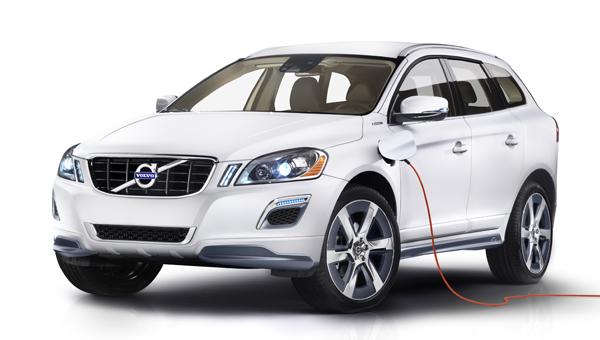
4. Volvo XC90 plug-in hybrid – PHEV

Volvo XC90 PHEV (Image: Volvo)

No doubt encouraged by the huge success of the Mitsubishi Outlander PHEV, Volvo will bring its own plug-in SUV to market in 2015, in addition to the usual range of petrol and diesel engines. While all will offer four-wheel drive, for the first time there will also be a front-wheel drive option. The XC90 PHEV will also feature a collection of entertainment and safety technology including a 9.3 inch screen compatible with Apple’s new CarPlay interface and Volvo’s new collision avoidance system. The XC90 range is priced from £45,750.

5. Volkswagen Passat GTE plug-in hybrid – PHEV

Volkswagen Passat GTE PHEV (Image: VW)

Now in its eighth incarnation, the new Passat range includes the GTE, the first Passat with a plug-in hybrid drive. Powered by a turbocharged direct injection petrol engine (TSI) and an 85kW electric motor, the GTE is capable (on the official test) of over 141 MPG (petrol) and 13.0 kWh/100km (electric) with CO2 emission of under 45 g/km. On a full tank and fully recharged 9.9 kWh lithium-ion battery, the new PHEV has a total driving range of over 620 miles. In ‘E-Mode’, the Passat GTE can also cover a distance of up to 31 miles with zero emissions. AC charging options include standard (or ‘slow’) charging at 2.3 kW from a domestic socket in 4.25 hours or an optional a home 3.6 kW charger which provides a full charge in 2.5 hours. Anticipated pricing from around £20,000.

6. BMW X5 e-drive – PHEV

BMW X5 e-Drive PHEV (Image: BMW)

The BMW X5 e-drive concept was first unveiled at the 2013 Frankfurt International Motor Show and is seen as the logical next step for the successful X5 series. Combining a four-cylinder combustion engine with BMW TwinPower Turbo technology and lithium-ion battery, the plug-in hybrid can driver approximately 19 miles solely on electric power. There is a choice of three driving modes, depending on requirements and situation – the intelligent hybrid drive option for a balance between sportiness and efficiency; pure electric and therefore emission-free driving; or Safe Battery mode to maintain the current battery charge. According to BMW, the X5 e-drive is capable of 74.3 mpg and on average emits 90g of CO2 per kilometre. Estimated to be priced at £55,000 – £60,000, the X5 e-drive is on course to directly compete with the Volvo XC90 PHEV.

7. Renault Zoe 2015 (new battery) – BEV

Renault ZOE EV
Renault ZOE EV

Renault’s battery-electric Zoe, the second best-selling EV after the Nissan LEAF, will be revitalised by a smaller and more efficient electric motor in 2015. By reducing the motors size, Renault expects a 10% increase in the Renault Zoe’s official 130 mile range. Renault also claims the improvements will reduce charging time by 20-30 minutes when using low-level power supply such as a 3kW 3-pin slow charging unit. The upgrades to the Zoe will be added to all new models from Spring 2015 Renault say.

8. Mitsubishi Outlander PHEV S – PHEV

Mitsubishi Outlander PHEV-S (Image: Mitsubishi)

Following on from the successful Outlander PHEV launch in 2014, Mitsubishi plans to release the Outlander PHEV-S. Power for the Outlander PHEV-S is expected to come from the same four-cylinder 2.0-litre petrol and twin electric motor system that drives the original car. This will see up to 204bhp sent to all four wheels, resulting in a 0-62mph time of 11 seconds and a 106mph top speed, whilst offering 148mpg and emissions as low as 44g/km CO2. The main difference will be in appearance, offering a refined interior and exterior design that will magnify the Outlander PHEV’s unique driving experience. Pricing to be announced.

9. Audi Q7 Quattro plug-in hybrid – PHEV

Audi Q7 e-tron Quattro (Image: Audi)

The Audi Q7 e-tron quattro, which will be launched soon after its conventionally powered counterparts in the spring, is the first plug in hybrid from Audi with a diesel engine. It is also the world’s first diesel PHEV with quattro all-wheel drive in the premium SUV segment. It returns the equivalent of up to 166.1mpg, which corresponds to less than 50 grams of CO2 per kilometre and can travel just under 35 miles on battery-electric power alone. Pricing to be announced.

10. Peugeot Quartz – PHEV

Peugeot Quartz PHEV (Image: Peugeot)

The Quartz plug-in hybrid concept mixes elements of a crossover vehicle and a saloon, to bring a new take on the SUV segment. It uses a plug-in hybrid drive train comprising of a 1.6-litre petrol engine supplemented by two 85kW electric motors, driving each axle. When the vehicle is in ZEV mode, it utilises the electric motor only and can cover up to 31 miles on a single battery charge. Peugeot have estimated the vehicle will not reach production until 2016; it will be interesting to see if the striking design mellows between now and then.

Source: Zap-Map

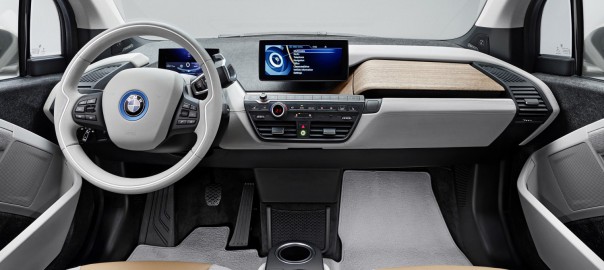
BMW i3 Interior

2,500+ Miles on One Gallon of Gas

Finally in the spring, I saw my first i3, and it is absolutely a head turner; you have never seen a car like it; because there has never been a car like it. The first models I saw on the street were in an orange/pumpkin-like color combination, which, as my mother used to say, would not be my choice. I saw a pretty good looking one in white with black trim. The i3 in my driveway is, I love these lofty official color names, Laurel Grey Metallic with the BMWi frozen blue accent. I generally don’t like dark colors on a car; but I like this; and I love the hint of blue in the front grille and on the lower side door panels.

The BMWi series, the i3 I am driving and the space-age i8, are electric cars built from the ground up. 100% new. They didn’t just take a 3 series and put a new engine in; instead BMW designed an entirely new manufacturing process for what may be my favorite part of the entire car; what they call the “life module,” and I would simply call the interior or the cabin.

On the outside, I would say the BMW i3 has the footprint of a small car; around the same size as the Prius or the Leaf. But on the inside, the full cabin space has the similar total interior volume of a BMW 3 series. There is ample room and comfort from the single most important position; the driver’s seat.

Let me get all-superficial for a moment. The interior cabin looks great. I have the, more official names now, Giga Cassia Natural Leather & Carum Spice Grey Wool Cloth. It’s light, modern, and beautiful. The remaining trim in the cabin is all made from recycled woods and carbon fiber. I wish I had a study or man cave in my own home that looked as nice as the i3 does from the inside.

The easily adjustable heated seat has a great driving position; and there is, I don’t know a better way to describe it, a vastness to the front windshield. BMW says the car is equipped with super-ergonomic controls; I don’t know what that means, but what it means to me, is everything is easy to find and where it is supposed to be. The center console screen is right-sized, not at all tiny, and not too big; so the Sirius/XM/FM radio is easy to see and operate, as are all the maps and various ways the car communicates with the driver.

Prior to my i3 experience, I spent a few weeks behind the wheel of the BMW 6 series M, with every single bell and whistle imaginable. I don’t find that I am missing anything at all behind the wheel of the i3.

A few last interior notes. The car features what has long been colloquially described as suicide doors. Where the front doors open in traditional fashion and the smaller rear doors open out from the center. I find this actually easier in getting the kids in and out of the backseat. Speaking of the back seat, it is perfectly serviceable. My most frequent passengers are my kids and their friends. You can easily have yourself plus 3 passengers in the car. If you are taking the entire soccer team, this isn’t the right car for you. But I have never been stymied by lack of interior space. The rear hatch opens big and wide and has a perfectly fine amount of trunk space; and the back seat folds down flat if you are the type that takes your boogie board with you everywhere.

Now, to what matters most. How does the i3 drive? Perhaps I can engage you in a little demonstrative exercise. Please, indulge me. Snap your fingers. How long does it take from the moment you snap your fingers to the moment you hear the sound? That’s how fast the i3 is. Officially timed at 0–30 MPH in 3.5 seconds, my car is faster than that. You press on the accelerator and off you go. Boom. Real quick. Freeway acceleration shows absolutely no strain, and the i3 can keep up with and/or pass anything. It is a good thing that I drive to work at 5 a.m. in the morning. The steering is tight and responsive. The i3 is all electric AND all BMW.

Some EV drivers are very interested in wringing out every last watt of energy and translating that to mileage. If you are into those sorts of range games; the i3 has three driving modes. I am a “comfort” person all the way, there is also ECO PRO, and if Ed Begley Jr. were driving the car, ECO PRO+. The car features a brake energy regeneration system; oh, and at 124 MPGe, the EPA lists the i3 as the most efficient electric car sold in the U.S.

Many people have asked me for the years I have been driving electric, “what if you run out of juice and there are no charging stations around?” This fear has now been given an official psychological term; it is called “range anxiety,” and since the father of modern psychology Sigmund Freud was born in Austria, leave it to his German neighbors at BMW to cure this ill. My i3 has, as an option, something called a “range extender.” Basically, it is a small gasoline powered engine; and a super small gas tank; that in the event you absolutely run out of electric power, will provide power to the batteries of the i3 to keep you going. This device is pure Prozac to those who worry about these kinds of things. I never do worry; and in my 2500 mile test drive, I have purchased all told; one gallon of gas. O N E. Not going to the gas station is the single greatest reliever of most the anxieties I deal with.

A little bit more about range. The EPA says the i3 can travel 81 miles on a single charge, and a total of 150 miles if the range extender is used as well. In my own experience, and I like to go fast, I think those estimates are probably a little high if you drive like I do. On any given day I probably drive about 30 miles a day. Brentwood into Hollywood; an errand somewhere, some trip with the kids; and back home. I have more than enough pure electric power to last all day. I have taken the i3 on longer drives; from Brentwood to Hollywood, to Costa Mesa, to Diamond Bar and back home, all in one day, and I was fine. If you have a massively long daily drive, the i3 may not be for your needs.

Now the bottom-line about the bottom-line. Our pals at the EPA say “going electric” can save more than $9,000 in fuel costs if you drive an electric car for 5 years. We all know that gas is fairly inexpensive right now; but do you sincerely believe it will always stay that way?

The i3 represents a far cleaner, far more efficient, far better way to drive; both now and into the future. Before I accept my own award from Greenpeace, you should also know that the 2013 World Green Car of the Year was the Tesla Model S; the 2014 World Green Car of the Year is the BMW i3.

There are dozen of other features, including the self-parking feature of the i3, I didn’t dwell on because, to be honest, I haven’t used them yet.

What I want the most is the get from “A” to “B” with speed, style, safety and comfort. I was already sold on electric cars before I experienced the i3. Maybe I love the i3 so much because it just reinforces my own opinion that I was right to begin with. All that, and some amazing and impressive engineering breakthroughs that you really have to drive yourself to experience.

Source: Medium