Category Archives: i3

BMW i3 120Ah (Image: BMW Group)

BMW And VW Ramping Up i3 And e-Golf Production Due To COVID Disruption, Rising Demand

Demand for electric cars is on the rise in Europe and elsewhere around the world, prompting BMW to ramp up production of the i3 and VW to build the e-Golf for longer than originally planned.

BMW has significantly increased production capacity compared to the original plan for the second half of 2020 at its Leipzig plant in Germany. The company is extending shifts and shortening breaks to increase the number of vehicles built per day from 114 to 130.

BMW i3 120Ah (Image: BMW Group)

In addition, the automaker has cancelled the one-week summer break for the i3 assembly line. Automobilwoche reports the decisions are motivated by increasing demand and the need to recuperate the long production stoppage in the second quarter of the year caused by the COVID-19 outbreak. In the first half of 2020, BMW built just over 12,500 i3 EVs, while in the entire 2019 calendar year production reached 38,937 units.

As for the VW e-Golf, production will continue at the Transparent Factory in Dresden until Christmas, contrary to initial plans. However, e-Golf production ended for good at the Wolfsburg plant on July 23.

VW currently makes 74 e-Golfs every day but aims to reach an output of 80 vehicles per day. Mind you, this will only continue until Christmas, when the Dresden plant will be converted to build the ID.3 starting January 2021.

Read more: CarScoops

It’s Time to Go Green!

If you would like to know more about Solar Panels and the PowerBanx range of home battery systems, and get a free instant quote, please complete our online form:

BMW i3 120Ah (Image: BMW)

A really simple introduction to one-pedal driving

In the early days of motoring, cars didn’t have the standardized three pedals, steering wheel, and gear shifter controls that most of us will know.

Take the Ford Model T for example: to drive it in reverse you depress the middle pedal, its brake pedal is where a modern accelerator should be, and its throttle is on a lever on the steering column. It’s confusing to say the least.

As cars got more advanced, driving them became an increasingly simple affair. From the confusing controls of early motorcars, three pedals, steering wheel, and a gear selector became the norm. As automatic gearboxes became A Thing, cars with just two pedals, and no gear stick became more common.

However, with the advent of electric vehicles, we now only need to use one pedal for most of our driving. Let’s take a look at what that actually means.

BMW i3 120Ah (Image: BMW)

What is it?
If you’re new to EVs, they still come with two pedals: stop and go. But thanks to the characteristics of electric motors, you don’t always have to use the brake pedal. One-pedal driving allows you to come to a complete stop in an EV without touching the brakes.

Electric cars come with a feature called “regenerative braking.” In effect, this uses the vehicle’s motors like generators to convert the kinetic (moving) energy of the vehicle back into electricity to recharge the batteries.

When this happens, the magnetic resistance of the motors creates a braking force which slows the vehicle. In my experience, when regenerative braking is set to the highest level, it has the same effect as hard braking.

This means that when you’re pulling up to traffic lights, or are in a traffic jam, you only need to take your foot off the go pedal for the car to stop.

Read more: SHIFT

It’s Time to Go Green!

If you would like to know more about Solar Panels and the PowerBanx range of home battery systems, and get a free instant quote, please complete our online form:
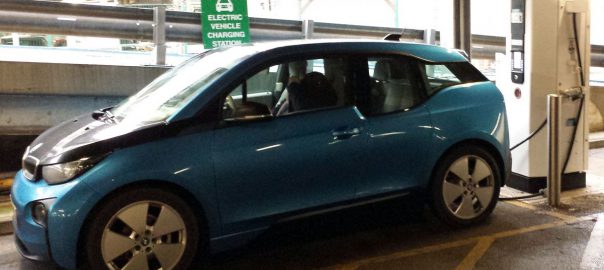
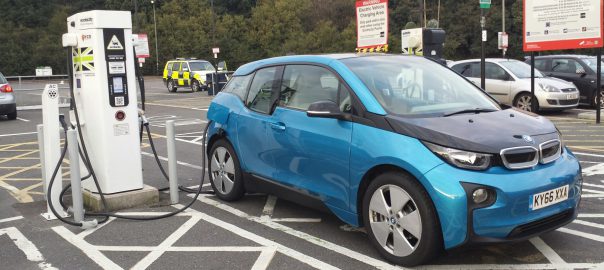
i3 charging at Frimley Hospital (Image: T. Larkum)

Long-term report: What I’ve learnt driving a BMW i3

I always knew that running an electric car as a long-term test vehicle would be something of an education, but I wasn’t prepared for quite how much it would change my perception of motoring.

Now, as I’ve waved goodbye to the BMW i3 after four months, I’ve had a chance to reflect on what EV ownership was really like. And do you know what? I’ve loved it.

It seems I’m not the only one who has been making the switch either – many new car buyers are currently snapping up alternatively fuelled vehicles.

i3 charging at Frimley Hospital (Image: T. Larkum)
i3 charging (Image: T. Larkum)

In the latest new car sales figures for October, battery-electric and hybrid vehicle sales accounted for one in 10 registrations for the first time ever. It appears more and more people are ditching diesel- and petrol-powered cars to switch to these new options.

So what will these new owners be looking forward to? Well, for a start they’ll soon find they are very different to drive. The silence is the first thing that strikes you, and I very quickly grew to love the swift acceleration combined with just a little wind noise as the i3 leapt towards the horizon.

Much has been written about the silence of electric cars, but at low speeds they do actually make a very satisfying hum – the i3 sounded like a muffled Tube train leaving a station as it speeded up.

I’m a huge fan of the BMW’s turning circle too. London taxi-like in its ability to spin around, it made parking it a doddle, and now I’m back in a ‘normal’ car I’ve struggled to adapt, often misjudging reverse parking manoeuvres by an embarrassing margin.

But what people will really want to know is how I’ve coped with the charging and range. Let’s deal with those in order. Charging-wise, I’m amazed at how well I’ve adapted, considering I don’t have access to a home charging point.

At work, I only have a three-pin outside plug to top it up with too, which takes a full 15 hours to completely recharge the BMW from flat. The reality, though, is this never happened. I simply topped the car up every day while I worked, and this was pretty much enough to keep it always fully charged.

Read more: AOL

BMW i3 and i3S 120Ah (Image: BMW Group)

Electric cars will put design in the driving seat

In a victory for sustainability, UK restrictions on the use of electric car chargers are to be lifted under plans to increase the use of green vehicles in the UK.

Practically, this means only one subscription will be required to use charging points. Additionally, the transport secretary is allocating £2.5 million of funding for more than 1,000 new electric car charging points.

All signs point to the British government readying itself for the next wave of innovation in the auto-industry. Just as our streets were once emptied of the horse and cart, in the not-so-distant future our roads could be free of petrol and diesel powered vehicles – transforming how we drive in the process.

I recently bought an electric car, a BMW i3s. I did so for environmental reasons but I didn’t fully appreciate just how radically different the driving experience would be. Among many innovations, the experience embraces connected technology, reduced running costs, outstandingly fast performance and virtual silence. A measure of moral smugness is thrown in as an emotional extra.

BMW i3 and i3S 120Ah (Image: BMW Group)

Driving experience aside, we are on the brink of a design revolution for the auto industry thanks to e-cars. In a way, the clock is being turned back so auto designers can free their imagination.

There is evidence that the classic car market is heading for fast decline: the value of such cars at auction dropped dramatically over the summer, driven by concerns over the availability of fuel. Yet many of the vehicles of the 1950s, 60s and 70s remain iconic symbols of design at its wonderful best. They were symbols of freedom, opportunity and progress, and they were magnificent to behold.

But as competition and market demand increased, the distinctive beauty of car design eroded away. The dominant voices around the automotive industry table became those of engineers and economists who sought to compromise the work of the designer in the name of efficient manufacturing process and, ultimately, lower prices. The democratisation of the automobile happened at the expense of elite design.

But now, the possibilities for a design-led approach are once again coming to the fore and are endless. Electric vehicles do not require a cooling system, oil, a transmission, nor so much else of the mechanics of a fossil-fuelled car. As battery and electric motor technology improves, the design challenge shifts from “how do I fit it all in?”, to, “what on earth am I going to do with all this space?”. As a consequence, we are about to witness a transformation on the scale of how Apple transformed the PC or the mobile phone.

Read more: Shots

BMW i3 120Ah (Image: BMW)

Long-term report: Becoming an EV super-fan in a BMW i3

I’ve tried very hard indeed to not become one of those evangelical electric car owners that we all try to avoid – but it’s slowly creeping in.

You know the type I mean: the ones that constantly tell anyone who’ll listen just ‘how good electric cars are’, how they’re ‘easy to live with’ and that ‘they’re the future’.

They annoy me as much as they probably annoy you, but after nearly two months with the BMW i3 I’ve sort of become that person by default. The thing is, with a unique-looking car like the BMW, more people than usual ask you what it’s like to live with.

BMW i3 120Ah (Image: BMW Group)

I’ve had neighbours wait for me by the car in the morning to ask what it’s like and a group of shoppers at the local supermarket hang around and want to know how the charging works as I plug it into the fast charger there.

I can’t help but tell them just how much I love it. In fact, I’m genuinely surprised at how well it has fitted into my life. With a range of around 200 miles – which flexes up and down by around 20 miles depending on how and where I’m driving it – I’ve managed to get away with just two fast charges in that time.

By plugging it in at work every day, in a normal three-pin plug socket, I’ve managed to keep the i3 topped up enough for my daily usage. I haven’t got access to charging at home so am relying purely on this trickle-charging at work (it takes 15 hours for a full charge this way) and it’s working. It effectively means the 1,000 miles I’ve covered so far have cost me personally the grand sum of £14 for two fast charges. OK, so that’s not very realistic, as most owners will be paying for their electricity at home, but if you’ve got a free charging point at work then it could equate to very cheap motoring indeed.

Read more: Evening Express

Kia e-Niro vs BMW i3 vs Hyundai Kona Electric

We find out if the new Kia e-Niro or revamped BMW i3 can beat our current EV champion, the Hyundai Kona Electric

Until recently, electric vehicles generally fell into one of two camps: small, more affordable and often frustrating because of drawbacks such as a limited range; or bigger cars that had larger batteries and therefore a longer range, but were also much pricier.

However, there’s now a growing group in the middle ground promising affordability and usability, thanks to their accurate and genuinely exploitable predicted range that’s making ‘range anxiety’ a thing of the past.

EVs are as usable as ever and leading this group are two upstarts and one familiar face. The newest model is the Kia e-Niro, which combines an advanced electric drivetrain with a conventional compact SUV body. The latest BMW i3 gets a bigger battery that gives it even more range. And in the sportier i3s trim that we’re testing here, it pretty much matches the e-Niro for performance and price.

Finally the Hyundai Kona Electric is our current favourite affordable EV, having taken the title at our New Car Awards last year – but it’s by no means old. The e-Niro shares much of the Hyundai’s tech, so it’ll be interesting to see how much difference there is and which will be Britain’s best wallet-friendly EV.

Read more: Auto Express

BMW i3 120Ah (Image: BMW)

Twilight of combustion engine comes for Germany

The completed combustion engine fitted into a BMW M5 is a 1,200-piece puzzle that weighs more than 181 kg (400 pounds).

There are about 150 moving parts whose interlocking precision can catapult a six-figure sports car to 97 kph (60 mph) in 3.3 seconds.

The engine under the bright lights of the vast BMW factory hall in Dingolfing, Germany, has come together from a web of hundreds of suppliers and many, many hands.

The electric-vehicle motor produced in the same factory is different in almost every respect: light enough for a single person to lift, with just two dozen parts in total, and lacking an exhaust, transmission, or fuel tank. The battery cells themselves are mostly an industrial commodity, products bought in bulk from someone else. No one brags about the unique power of BMW’s electric drivetrain.

Yet, this slight battery-driven motor can outgun the combustion engine in BMW’s fastest performance car from a standstill at a traffic light.

BMW i3 120Ah (Image: BMW Group)

The fact that both combustion engines and electric motors find themselves inside the same 18,000-person complex in Dingolfing, BMW’s largest in Europe, makes it a microcosm of a shift overtaking automakers the world over.

A visitor can see that 625-hp engine–more than twice as powerful as the original from 1985, a luxury product relentlessly branded as “the ultimate driving machine” — then walk around the corner and see its small electric replacement. You start thinking the better slogan might be “the ultimate combustion engine.” As in: last of its kind.

Read more: Autonews

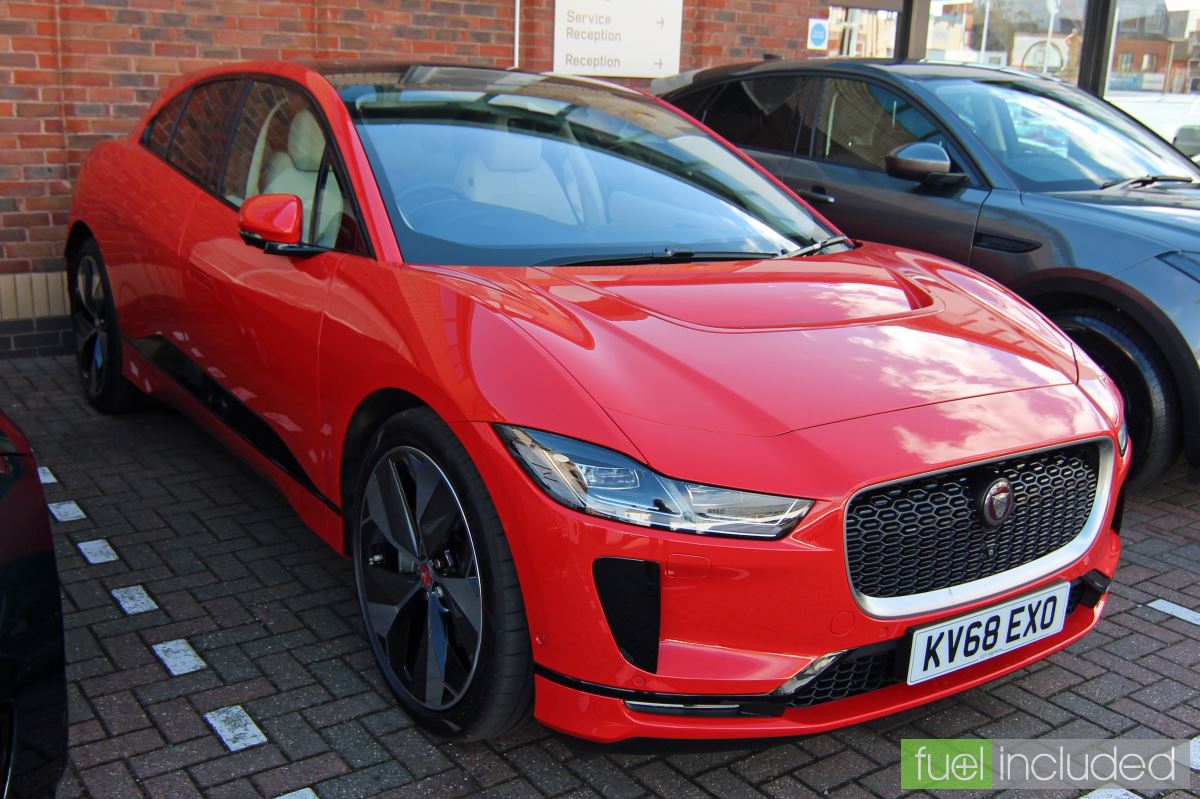
Jaguar I-PACE Electric Car (Image: T. Larkum)

Lease costs for electric vehicles fall in 2018

Leasing costs of battery electric vehicles (BEVs) have fallen throughout 2018 according to data experts at Cap HPI.

The study looked at five of the best-selling models in the UK and discovered that monthly lease costs had fallen by 9.5% on average.

The UK’s best-selling electric car, the Nissan Leaf saw monthly lease values fall by 6.6% between January and November 2018. Monthly lease prices for the Renault Zoe fell by 16% between June and November.

Between in the 12 months up to November 2018, the BMW i3 saw lease prices drop by 9.2%. The Volkswagen e-Golf saw prices drop 14% over the same period.

The Jaguar I-Pace saw the smallest price drop with a fall of only 1.7% since April 2018.

Jaguar I-PACE Electric Car (Image: T. Larkum)

Mark Turnbull, global head of consulting at Cap HPI, said: “Over the next few years the new price of BEVs will come down as more affordable ‘mainstream’ model ranges are introduced by many manufacturers.

“Used buyer perception will continue to improve as battery ranges are extended and charging times are reduced, and electric car technology proves to be robust and reliable. So subject to adequate investment in charging infrastructure, and positive government legislation, I believe their residual values will be stronger.

“A pincer movement of lower new prices and improved RVs will mean less depreciation in pound terms, and cheaper lease rates will speed up the adoption of this technology.”

Read more: Fleet News

Milton Keynes 'Mushrooms' Charging Hub (Image: T. Larkum)

Milton Keynes Mushrooms: A New Generation of Charging Stations

Driving from Northampton to Surrey to visit my family over Christmas I was due to go past the new Milton Keynes Charging Hub so took the opportunity to call in.

The Hub was developed by Milton Keynes Council with a government grant, with the charging infrastructure provided by BP Chargemaster. I had heard on social media that the hub was recently completed. However there’s been nothing in the mainstream press about it – I’m guessing there’ll be an official launch soon.

Milton Keynes 'Mushrooms' Charging Hub (Image: T. Larkum)
Milton Keynes ‘Mushrooms’ Charging Hub (Image: T. Larkum)

It is quite difficult to find. It is tucked away at the far corner of the Coachway bus station (near Junction 14 of the M1) and there’s no signage in place yet. There were fresh road markings in place though.

The location is pretty good, not just because of proximity to the motorway. Being co-located with the bus station means that while you wait to charge there’s easy access on foot to its cafe and toilets (though you have to pay 30p for the latter).

The hub consists of a triangular island with 8 rapid chargers around its edge (why not 9?) all covered over with three large concrete ‘mushroom’ canopies for rain protection. I was there mid-week and it was pretty quiet, however two other EVs did call in even during the short time I was there topping up my i3.

Charging is through BP Chargemaster’s Polar network so requires either the Polar Instant app or Polar Plus subscription as described previously.

BP Chargemaster Rapid Charger at Milton Keynes Charging Hub (Image: T. Larkum)

The Hub is a great idea and seems to be implemented well. It also gives an exciting view into the future of organised EV charging, being potentially a bit like using an airport lounge. It represents another nail in the coffin of fossil fuel motoring – who would want to relax and eat at a petrol station?!

If there’s a criticism it’s just the usual one of uneven rapid charger allocation, and one can hardly blame MK council for taking every opportunity to support EVs. But for sure MK alone has more rapid chargers than anywhere else in the UK, including the entire country of Wales.

New 450kW EV charger from BMW and Porsche is as fast as filling up with petrol

BMW and Porsche’s prototype 450kW FastCharge unit can give 62 miles of range in just three minutes, once vehicle technology catches up

A new electric vehicle charger capable of delivering 100km (62 miles) worth of charge in just three minutes, and fully charging an EV’s batteries in just 15 minutes, has been developed by a number of German companies, including BMW and Porsche.

The companies’ 450kW (kilowatt) FastCharge system – while still a prototype – trebles the charge rates of the world’s rapid chargers’ at present, and promises “to make charging electric vehicles as fast and convenient as fuelling with petrol”.

When operating at its maximum 450kW capacity, it has proven capable of replenishing a BMW i3 (fitted with a “specially developed high-voltage battery”) from 10 to 80 per cent in just 15 minutes, and delivering 62 miles of range to a Porsche research vehicle in just three minutes.

While not technically a ‘full’ charge, this is representative of a full charge in real-world conditions, as manufacturers advise against recharging to 100 per cent, and most owners are unlikely to allow their batteries to drop below 10 per cent.

Read more: Auto Express