Category Archives: Autonomous Driving

ZOE Cab autonomous vehicle (Image: Renault)

Why most self-driving cars will be electric

As our urban transportation landscape becomes automated over the next decade, it could spark an electric car revolution.

Spend enough time around these early self-driving vehicles and you notice that nearly all are hybrids or pure electric vehicles. They include Ford’s automated Fusion, the similarly equipped Fusion hybrids that Uber is deploying in Pittsburgh, the Google cars bopping around the peninsula of northern California, the Chevrolet Bolts being tested in San Francisco and suburban Phoenix.
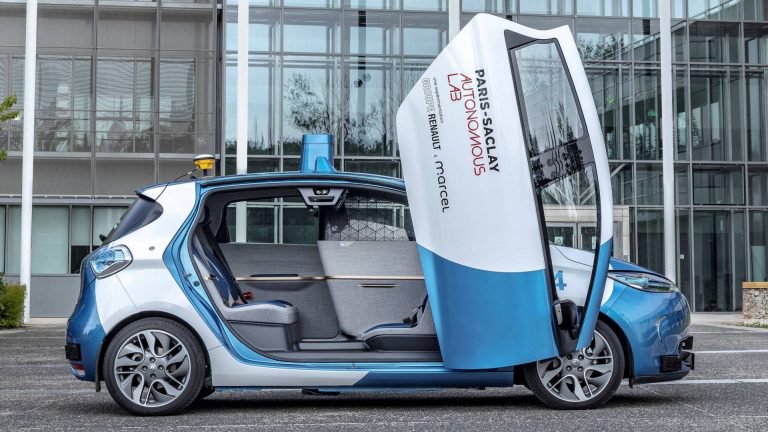
ZOE Cab autonomous vehicle (Image: Renault)

Today, hybrids, plug-ins and pure electrics are a marginal piece of the U.S. market, accounting for a scant 2.8% of all new vehicles sold in the U.S. through the first eight months of 2016, according to hybridcars.com.

But a decade from now, electric cars will appeal far beyond the granola-eating, tree-hugging, climate-change evangelizing base that has sustained them thus far. You may not own one, but you will have ridden in them. The change won’t be instant, but it will be steady.

So why will our autonomous future likely be an electric one?

First are the regulatory reasons, namely gas mileage requirements. Then there are engineering reasons — electric vehicles are easier for computers to drive. And, of course, ride-hailing services will increasingly make up a higher percentage of daily miles driven, and it will be easier, cheaper and safer to recharge an unmanned car than to gas one up.

“One of the biggest changes will be in the growing difference in cost of ownership between electrified and internal combustion engines,”

Ford CEO Mark Fields said last week, repeating his company’s pledge to spend $4.5 billion to introduce 13 new electric vehicle nameplates by 2020.

A competition, of sorts, between Silicon Valley and Detroit has been ongoing in the past decade for the engineering and computer programming talent needed to create the next generation of smart, connected and ultimately self-driving vehicles.

The two sides will likely have to work together — either through mergers and acquisitions or strategic partnerships — and electric cars will be the platform.

The federal government’s corporate average fuel economy (CAFE) standards will vary depending on the mix of trucks, SUVs and passenger cars a manufacturer sells, but a substantial portion of electrified vehicles will be needed to achieve the goals.

And then there are the engineering reasons.

“There are a lot fewer moving pieces in an electric vehicle. There are three main components — the battery, the inverter and the electric motor,”

said Levi Tillemann-Dick, managing partner at Valence Strategic in Washington, D.C., and author of “The Great Race: The Global Quest for the Car of the Future.”

“An internal combustion engine contains 2,000 tiny pieces that have to be kept lubricated and they break every once in a while.”

Read more: USA Today
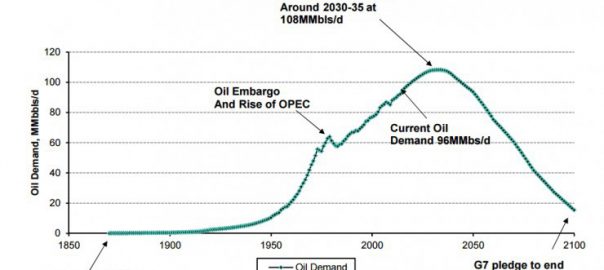
Peak Oil Could be in 15-20 Years (Image: Bernstein Research)

Big Oil Is Terminal

“Peak oil demand” is the new “peak oil supply” because of climate change and plummeting costs for electric car batteries.

It’s increasingly clear that we’re not going to move off of oil because we run out of supply. Rather, we’re going to move off of oil because it is both the economic and moral thing to do.

The research firm Bernstein notes that two “existential threats to the oil industry” exist — “climate change” and “advances in battery technology and computing power, which have resulted in a surge in interest in electric vehicles and autonomous driving.” They project the peak in oil demand could come as soon as 2030–2035:

Peak Oil Could be in 15-20 Years (Image: Bernstein Research)

Read more: Think Progress

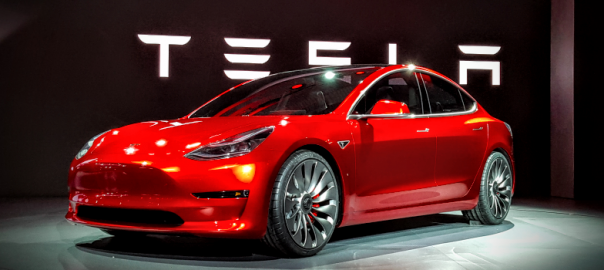
Tesla Model 3 at launch (Image: K. Field/CC)

Perfect storm of factors speeding electric vehicle development

Even if you work the auto industry, you probably didn’t expect the current rush to develop, build, sell, and drive electric vehicles.

UK motorists now have more than 30 electric models to choose from

But there’s no denying it. A series of technology developments, market disruptions, and wake-up calls are hastening an inevitable shift from fossil fuel engines to electric power in cars and trucks, according to a post on TechCrunch.

Battery technology is the greatest enabler of the shift to fully electric-powered vehicles. Lower electricity cost means less expensive cars. With range anxiety now a “thing” and a common deterrent to full-electric car purchases, larger capacity batteries are needed for adequate driving range. The cost of lithium-ion battery power has dropped by about 80 percent in the last eight years. One kilowatt of power that cost roughly $1,000 in 2008 is now closer to $200. Continued battery technology advances plus the impending construction of huge new battery factories could bring prices down to $100 per kilowatt in the next few years.

Autonomous vehicle technology is developing hand in hand with the switch to electrification. Auto manufacturers are working fast to develop autonomous capabilities just to stay up with their competitors. Combining hybrid and all-electric power with autopilot and auto-assist features gives manufacturers showcase platforms.

Read more: Digital Trends

Tesla Model 3 at launch (Image: K. Field/CC)

Your time is up, Stanford tech expert tells petroleum industry

ADDRESSING a high-profile audience of the Thai energy sector last week, Stanford University lecturer and Silicon Valley investor Tony Seba minced no words in warning them that petroleum, which had been a source of livelihood to many of them, would become obsolete by 2030 or sooner.

Tesla Model 3 at launch (Image: K. Field/CC)

Citing four key technologies – energy storage, electric vehicles, self-driving cars, and solar – the author of the amazon.com best seller “Clean Disruption of Energy and Transportation” said the energy and transport industries were on the cusp of either being transformed or destroyed.

“The energy and transport industries will become high-tech industries” he told the Petroleum Institute of Thailand’s 30th anniversary event that was attended by energy and science ministers, privy councillor, director of the Crown Property Bureau Snoh Unakul, and other top energy officials and executives. Speaking at a press conference held at the conference, Seba said since consumers would switch “en masse” to electric vehicles by 2020, petroleum – 60 per cent of which is used for transport – was going to become obsolete.

The driving force will be the four key technologies that will improve exponentially, not because of climate change, he said.

Besides “exponential” technological development in key areas such as in lithium-on batteries, solar photovoltaic installations and generating costs, electric and autonomous cars, and LIDAR sensors, Seba pointed out business model innovations that could accelerate the changes such as storage-as-a-service, electric vehicles’ (EVs) free charging network, car-as-a-service, and “zero money down solar” leasing.

EVs will hit the low-end automobile segments by 2020 when their prices drop to $20,000 (Bt700,000) and will put an end to internal combustion engine cars when EV prices fall to $5,000 in 2030, he predicted. Tesla recently introduced its Model 3 at an unsubsidised retail price tag of $35,000. Within 24 hours, it received 180,000 bookings – a record for the car industry.

Read more: Nation Multimedia

The researchers claim there is now urgent need for a higher qualified workforce to avoid further skills shortages across the electric vehicle sector

Electric cars worth £51bn to UK economy ‘if Government acts now’

The UK Government will lose out on major economic benefits unless it makes a significant investment in upgrading the nation’s electric vehicle (EV) charging infrastructure and upskilling the motor industry, an independent academic report will warn this week.

The report, commissioned by the Institute of the Motor Industry (IMI), concludes that the overall economic and social benefit of EVs, connected and autonomous vehicles could be in the region of £51bn per year by 2030, with the potential for 320,000 newly-created industry jobs.

Researchers will present the report’s findings to a cross-party group of MPs on Wednesday (13 April), calling on the Government to focus on protecting the economic growth of the motor industry by acting strategically to make charging low emission cars more convenient for drivers, and ensuring that there are enough skilled technicians to service and repair them.

Loughborough University professor Jim Saker, who will host Wednesday’s Parliamentary meeting, said:

“The UK, by the nature of its size and geography, has a natural advantage in the rapid adoption of vehicles with the new power train technologies, but it is dependent on Government investment to pump prime this initiative.

“Without proper regulation, a skills gap will emerge with only a limited number of technicians working in the franchised sector being able to service and repair new technology vehicles. If this trend is found to be true then it is likely that the independent sector of the retail automotive sector will decline. This will mean that the market will fail to open up and develop to the benefit of the UK economy.”

Read more: Edie.net

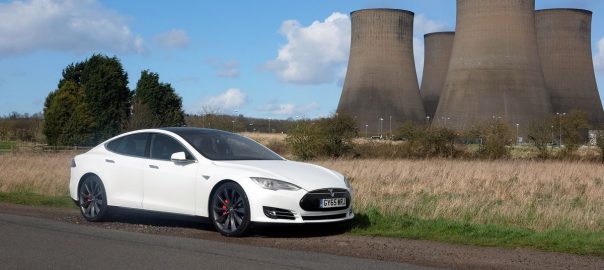
Tesla Model S (Image: A. Souppouris/Engadget)

A semi-autonomous road trip in the Tesla Model S

How I learned to love Autopilot

Tesla Model S (Image: A. Souppouris/Engadget)

Perhaps the worst driving experience of my life happened in 2009 while helping a friend move. She could only afford to rent a rusty van for a single day, so I agreed to make the 14-hour round trip from London to Scotland and back again in one shot. After setting off at 9 AM, we arrived at 7 PM, some four hours behind schedule, thanks to bad traffic. I started the 450-mile home leg at around 9 PM, and the entire journey was a battle to stay awake, alert and within the confines of my lane. Plenty of coffee and roadside breaks later, I arrived home at 6 AM, 21 hours after setting off. It was the most unsafe I’ve ever felt in a car.

When Tesla offered us the opportunity to test out its semi-autonomous Autopilot feature in the Model S, my thoughts immediately went to Scotland and that traumatic journey. While I’m never going to trade my VW Golf for a car that expensive, the new Model 3 will arrive at $35,000 with many of the same capabilities. So I saw the opportunity to take an extremely early Model 3 test drive, of sorts. I wanted to know if it could make a cross-country journey on electric power, and see if the Autopilot would have made that long trip to Scotland a little less arduous.

The conceit

To test this theory, we would drive up to the north of England — Scotland just wasn’t practical given the time constraints we were under. We’d then stretch out the process with some video and photo shoots, before heading home hopefully somewhat exhausted. On the trip back to London, we’d then make use of the autonomous features — about 90 percent of the journey back could be driven by the Tesla, with limited human oversight.

My colleague Matt Brian picked up the Model S — a $120,000 (£110,250) P90D, to be precise — from Hounslow, on the outskirts of London. From there we’d take the M25 freeway, which encircles London, before setting off on the M1, the main road heading north. We chose Leeds, a city around four hours away in the north of England, as our destination. Because the Tesla is electric, though, we’d need a charger to get us there. Or at least back.

Read more: Engadget

The Tesla Model 3 arrives with 215 miles of range

And Tesla claims there are 115,000 preorders, which is madness.

After a long wait, Tesla has finally unveiled the Model 3. It’s what we were expecting (and hoping for) – a less-expensive, versatile, attractive five-seater with decent range and a low price. It rounds out Tesla’s revised Secret Master Plan, as Elon Musk cheekily called it, that started with the Roadster, progressed to the Model S, and grew to encompass the Model X.

Tesla Model 3 Unveil (Image: Tesla)

That’s all fine, but did you catch how many preorders Musk said the company had received for the Model 3 by this evening? 115,000 – a staggering number. If you’ll remember, each reservation to purchase a Model 3 requires a $1,000 (refundable) deposit.

Here’s the other stuff you should really know about Tesla’s entry-level electric vehicle. For one, Musk promises it’ll ace every safety test category. All will be standard with Autopilot hardware (autonomous driving functionality) and Supercharging (very fast recharging) capability.

It’ll also seat five real adults in comfort, as Tesla has squashed the instrument panel a bit and moved the front seats forward to clear rear legroom. To give a sense of airiness to the cabin, and also to gain some extra headroom, it’ll have a roof made of two large panes of glass, with the windshield meeting the backlight just above the A-pillar. Neat. In case you surf, it’ll swallow a 7-foot surfboard, apparently.

Read more: Autoblog

WHAT WE LEARNED DRIVING A TESLA MODEL S TO THE SOUTH OF FRANCE

Tesla’s all-electric flagship Model S gives you range confidence.

1620_Tesla_modelS_GQ

The 20th Century failed to deliver several high profile science fiction promises: jetpacks exist but are impractical, flying cars never worked, and working androids are still yet to arrive outside of a Japanese technology conference. The 21st Century is doing a little better. It’s now possible for anyone to travel thousands of miles in a semi-autonomous all-electric vehicle, as long as they have a little extra money to spend.

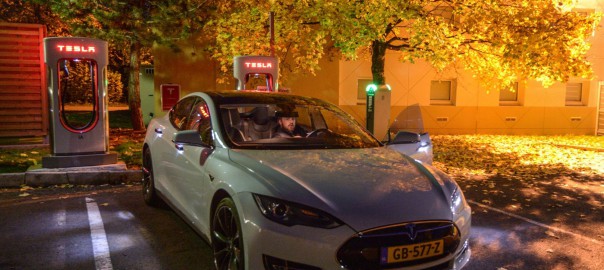
Taking a Tesla Model S on a 1,200 mile round-trip to the middle of rural France is not only possible, thanks to the company’s network of supercharger stations, it’s one of the best road trips we’ve ever driven. For the last few years Tesla has been building a network of 120kW supercharging stations which can get you to half charge in 20 minutes. That means you can get almost anywhere in Europe, for free, if you have a compatible car and don’t mind stopping every few hours (which you’ll probably do anyway).

Read more: GQ Magazine

Electric Vehicles Will Triumph Because They’re Better

Electric vehicle sales may be driven mostly by policy and preference right now, but they’ll soon be powered by dominant economics—including a profitable symbiosis between electrical drive and autonomous control, according to a former researcher for General Motors.

“What is going to happen here, I believe, is it’s just going to become easier to build an electric car,”

said Lawrence Burns, until recently the director of the Program for Sustainable Mobility at Columbia University and a professor of engineering practice at the University of Michigan. He served as General Motors’ corporate vice president of research & development and planning from 1998 to 2009. He now advises firms, including Google and Allstate, on mobility transformation.

Tesla Model S Drivetrain

“Beyond 2025, battery and fuel-cell vehicles could simply become the best way to design and engineer a light-duty vehicle,” Burns said tonight at the University of Chicago Booth School of Business. “Set aside all the motivations with climate change, oil dependence—it’s just a better way to do a car. It’s simple.”

Read more: Forbes

Is your personal carbon footprint important

I asked a few weeks back whether you’d buy a used Nissan LEAF, revealing that I myself am mulling such a purchase.

No sooner do I start to explore the decision in depth that some of those familiar naysaying headlines start popping up. Over at Autoblog Green, I see this: Electric cars can be dirtier than gas ones. Meanwhile over at Torque News, I learn that a LEAF is greener than a Prius in most states—but is only borderline in my home state of North Carolina.

Now there are way too many ambiguities to discuss here: The study quoted in Autoblog Green did not, for example, take into account the fact that refining gasoline requires vast amounts of (usually) coal-burning electricity too. Without a true well-to-wheels (or mine to wheels) analysis, the whole exercise becomes a bit moot. Equally, how does it change the equation if an electric car driver chooses to buy from a green energy tariff? And how do we plan for a changing electricity grid in the future?

What really interests me is the bigger point, however: We may be spending too much time worrying about our own, specific carbon footprint—and not enough time worrying about the role we are playing in a broader transition to a low carbon economy.

8-2411p_i8_wind_NewEnergyNews

The case of electric cars is just one example of this phenomenon. If we need to decarbonize both electricity supply and our transportation systems, then the idea that a gas-fired car is (or may be) currently greener becomes largely irrelevant. What matters is that we need both emission-free cars and emission-free electricity in the very near future, and any form of oil-powered car, however efficient, is simply not going to get us there. (One recent study suggests that a future based on autonomous, electric vehicles could create 94% reductions in CO2 emissions as the grid gets greener.)

So buy your electric car (if you need a car), and then work like hell to defend and promote clean energy where you live, and maybe reduce car dependence too.

Other examples of this phenomenon range from the constant whining about Al Gore’s carbon footprint (as opposed to his leverage) to the dangerous notion that “voting with your dollar” is as important as engaging with the political system.

Yes, your personal impact on the planet is part of the bigger picture. But it’s that bigger picture that actually matters.

Source: Treehugger