Category Archives: Wind Power

(Image: Razzouk/Shutterstock)

2016 Will Be the Year the Fossil Fuel Era Enters Terminal Decline

This year is set to be even warmer than last, but there are reasons to believe the shift to clean energy will gain serious momentum in 2016.

(Image: Razzouk/Shutterstock)

2015 was a landmark year for climate action. Its many highlights were topped by a Paris agreement where 195 countries set themselves on a low-carbon path via economy-wide plans sure to be developed and strengthened every year.

In the meantime, climate chaos continues to build: 2015 was the warmest year of the warmest decade since we started recording temperatures. 2016 is forecast to be even warmer. The number of climate refugees are swelling and everywhere popular movements against more pollution and irresponsibility are strengthening.

Expect the following broad trends to accentuate in 2016.

Clean Energy can no Longer be Stopped

Notwithstanding the low price of coal and oil, solar power and other forms of clean energy will continue their onward march in 2016 and quasi-monopolize additions to electricity supply worldwide.

Order books for new clean energy power plants are up sharply in the United States, China, India, as well as in the developing economies of Africa and Latin America. India, for example, with current electricity grid capacity of less than 300 gigawatts (GW), is on its way to building 100 GW of solar power by 2022 (from 5 GW currently), double the current solar capacity of China.

Meanwhile, cheaper battery technology will continue to drive clean energy costs down, while changing the way people think about energy: We will produce more electricity from solar power, but also store and manage it ourselves. This foretells nothing short of a revolution in the way our modern society fuels itself, upending previous assumptions about the need for large fossil fuel plants connected by an expensive, inefficient electricity grid.

Read more: Alternet

UK’s Poor 2015 Made Worse By Paris Agreement Expectations

2015 saw the UK destroy its position as a climate and energy leader, and now faces some tough questions in the wake of a successful Paris climate agreement.

image_wind_farm_unk

Despite a big year in 2014 which saw a number of renewable energy records broken and strong momentum created for the country’s renewable energy industry, following 6 months of baffling policy decisions and a lacklustre attendance in Paris, the UK has a long way to go if it is to accomplish its role in tackling climate change.

Read more: Clean Technica

Vauxhall Ampera Charging (Image: OLEV)

The Coming Electrification of Everything

At Obvious Ventures, we believe stored electricity, increasingly derived from renewable sources, will entirely replace fossil fuels as the preferred method to power everything in our lives.

Vauxhall Ampera Charging (Image: OLEV)

From cars to scooters to boats to locomotives to industrial equipment, we are in the midst of a transition that will electrify everything previously driven by combustion.

There are two simple reasons we’ll make this change sooner than most people think. First, electrically powered things just work better. And people want things that work better. The second reason is really just a piece of the first. “Better” increasingly means “better forever.” That is, not just better in the moment for that use, but also better for our surroundings, our health, and the health of our planet.

But, at least for the short term, our climate will be served not simply by environmental motivations, but by the same relentless human force that created it: the desire for more, faster, better. Ever-better technology will lead consumers, rather than idealists, to drive this electricity evolution.

Why now? Key trends emerging only in recent years have created the foundation for this evolution.

Read more: Greentech Media

Two pictures of Beijing taken 24 hours apart show the Chinese capital engulfed by smog earlier this month (Image: Rex)

Climate change is the challenge of our generation

Consumers and businesses will have to be more energy-efficient and switch to alternatives to fossil fuels

Two pictures of Beijing taken 24 hours apart show the Chinese capital engulfed by smog earlier this month (Image: Rex)

[From 4 December} The Paris climate change summit will conclude at the end of next week. It aims to reach an international agreement on limiting emissions of carbon dioxide and other greenhouse gases that are contributing to global warming. The main source of these emissions is the burning of fossil fuels – oil, coal and natural gas – that power industry, and heat and light our homes.

One big area where technology is helping is through the development of renewable energy sources, such as solar and wind power. The energy from these sources has increased by a factor of four in the past 10 years. Biofuel production, which is more environmentally friendly than extracting oil from the ground, has increased at a similar rate.

If we can get another four-fold increase from renewable energy sources over the next decade, a total of around a quarter of the world’s energy needs can be met from renewables, nuclear energy and hydro-electricity – without burning fossil fuels and creating greenhouse gas emissions.

Another area where technology is having a big impact is in the development of electric cars. Bigger and better batteries are being developed so that electric cars can be charged more quickly and drive further without recharging.

These developments in technology will enable society to cut its dependence on fossil fuels and reduce the damage to the world’s climate.

But there will still need to be changes to our lifestyles and the way in which businesses operate.

The first change is that we are going to have to become a lot more energy-efficient at home and at work. The less energy we use overall, the easier it will be to reduce our carbon emissions. Consumers need better-insulated homes and smart meters to monitor their energy use.

Read more: Telegraph

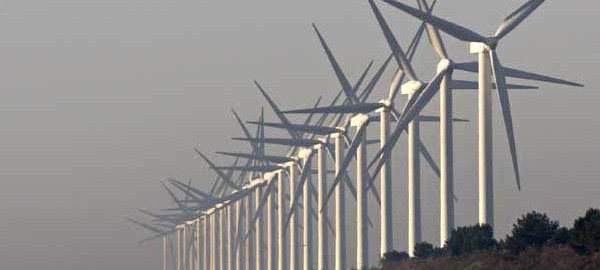
Wind farm in Europe (Image: EV World)

UK downgraded on global energy rating

The World Energy Council rates countries in their energy and climate policies. The recent rating is available on the WEC website. The WEC points out that only two countries have the triple A rating. This post from Reuters in The Guardian shows that the UK has lost that rating, because of the government scrapping onshore wind subsidies and cut solar subsidies.

Britain loses top energy rating after green policy U-turns

Wind farm in Europe (Image: EV World)

Britain has lost its top-notch energy policy rating from the UN-accredited World Energy Council after the government prematurely cut some renewable energy subsidies, creating uncertainty about how it will address support in future.

The World Energy Council has downgraded Britain to an AAB rating, from AAA, in its annual “energy trilemma index”, which ranks countries’ energy and climate policies based on the issues of energy security, equity and sustainability.

The downgrade reflects the damage the subsidy cuts have caused to Britain’s reputation as an attractive renewable energy market.

Earlier this year Britain scrapped subsidies for onshore windfarms, closed support for small-scale solar projects and changed the way other renewable energy projects qualify for payments, saying they were becoming too costly for taxpayers.

“The UK government must give more predictability to investors in the way the electricity market reforms are progressed,” said Joan MacNaughton, executive chair of the World Energy Trilemma study.

Read more: Energy in Demand

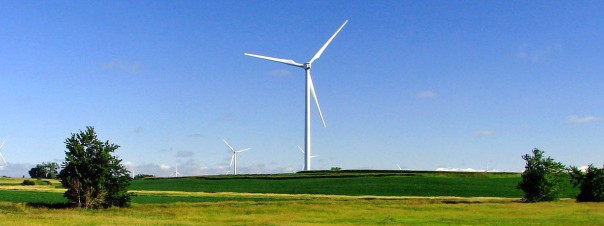
Turbines tower over corn fields in Iowa (Image: D. Graham)

House Of Lords Rejects Discontinuing Onshore Wind Subsidies

After many months of bad news for the country’s renewable energy industry, the House of Lords delivered some unexpected good news.

Wind farm in Europe (Image: EV World)
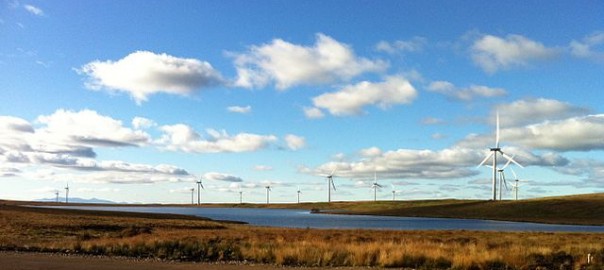
Wind farm (Image: EV World)

In deliberations on Wednesday, the UK Government’s House of Lords voted to remove a section of the country’s Energy Bill that would end subsidies for onshore wind from 31 March, 2016. This had been an integral part of the newly re-elected Conservative Government’s plans to reshuffle the UK renewable energy industry in a so-called attempt to “keep bills as low as possible for working families and businesses” by ending Government subsidies for onshore wind.

Specifically, Baroness Worthington, the Shadow Energy and Climate Change Minister, moved for the offending clause in the Energy Bill to be removed, which was approved with a vote of 242 to 190.

Read more: Clean Technica

Renault electric vehicles propelled by wind power into the Outer Hebrides

  • 10 Renault electric vehicles available to hire in the Outer Hebrides
  • EVs powered by renewable energy generated by the islands’ wind turbines
  • 100% electric ZOE supermini and Kangoo Van Z.E. ideal for rural and urban areas
  • Vehicles available to hire on an hourly or daily basis
  • New six turbine wind farm to power Outer Hebrides domestic electricity requirements opened today

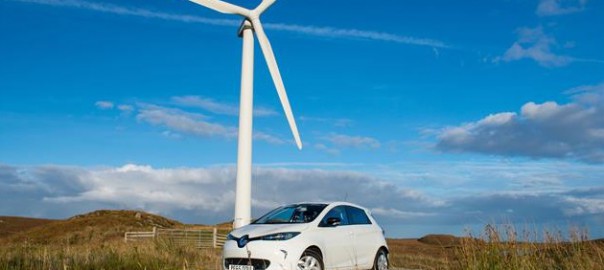
A 10-strong fleet of 100 per cent electric Renault vehicles powered almost entirely by renewable energy can now be hired by residents and visitors to the Outer Hebrides of Scotland.

Much of the electricity will be generated by the Pentland Road Wind Farm, the largest on any Scottish island that was officially opened today.  The nine ZOE hatchbacks and a Kangoo Van Z.E. have been introduced into the remote region through a unique partnership between E-Car Club and the wind farm operators.

CHR3696_1_nlm_Renault_c

The joint venture brings affordable, zero carbon transport to the area and underlines the suitability of electric vehicles in rural as well as urban environments, with the public being able to hire the innovative models on an hourly or daily basis from a number of locations across the town of Stornoway on the Isle of Lewis.

E-Car Club – the UK’s first entirely electric pay-per-use car club – chose the Renault ZOE and Kangoo Van Z.E. for the Outer Hebrides following the success it has experienced with the models at its other nationwide locations, including its St Andrews operation which opened earlier this year. The models’ specification, fun drive, reliability and excellent customer feedback were also key factors in the decision.

Representing an investment of £24 million and developed over a 12-year period, Pentland Road Windfarm will generate power for the new vehicles as part of providing renewable electricity to the islands. Such is the efficiency of the wind farm and the suitability of the local climate to support wind power, the six turbines will supply sufficient electricity to meet the entire domestic load of the Outer Hebrides.

Nearly 700 households in the Newvalley, Guershader and Laxdale Lane, Sheshader, Knock and Swordale, and Stornoway General communities will also receive 50 per cent of the biannual lease payments made by Pentland Road Windfarm to the Stornoway Trust as landlord, while there will also be agreed annual payments to the Western Isles Development Trust.

Great effort has also been made to minimise the impact of the wind farm on the local landscape. Great care was taken during the design and construction stages so as not to upset the free movement of water across the site and habitat reinstatement measures are also ensuring that plant communities typical of moorland are now returning to areas surrounding the turbine bases and access tracks. Local bird species have also been unaffected by the project.

Ben Fletcher, Renault UK’s Electric Vehicle Product Manager, said:

“This deal underlines that Renault is a leader in the fast-growing EV sector and the rapidly-increasing popularity that our vehicles have with car sharing clubs and the general public alike. As well as offering residents and tourists a great way to save money and help improve air quality, the car sharing scheme perfectly illustrates that our electric offering has the range and ease of use – not to mention driving pleasure – that makes it ideal for all kinds of drivers in all types of areas.”

Those living in or visiting the Outer Hebrides will be able hire one of the Renault ZOEs from E-Car Club for only £5.50 per hour or £45 per day (24 hours). Power and insurance are both included in the price. The Kangoo panel van is available for £7.50 per hour or £60 per day.

In its drive to help combat congestion, reduce parking and enhance local mobility in an environmentally-friendly and affordable way, E-Car Club has over 20 locations across the UK with several more in the pipeline.

Chris Morris, Managing Director of E-Car Club said:

“I’m delighted to be able to officially announce the launch of E-Car Club in the Outer Hebrides. This is an exceptionally exciting project combining shared e-mobility with renewable power generation in what is undoubtedly a landmark sustainable transport project both in Scotland and around the world.”

“The Islands are a perfect fit for electric car sharing with a community who are already committed to a sustainable lifestyle and current car use limited to relatively short journeys and a frequency which does not always justify private ownership.”

“The intention of E-Car is to provide everyone living in, working in or visiting the region with access to flexible, low cost transport whilst at the same time minimising their environmental impact in what is a truly stunning part of the world.”

Peter Crone, Director of Pentland Road Wind Farm and Zero Carbon Marine, said:

“Electric cars are without doubt the future and car sharing is certain to become increasingly more common too, so it’s wonderful that we have been able to introduce both to the community as part of Pentland Road Wind Farm.

“Local reaction to the wind farm has been excellent and the availability of shared electric cars adds another benefit for people in the region. After having driven one of the ZOEs from the most southern to the most northern point of the Outer Hebrides earlier this week, I am certain that the vehicles will prove very popular.”

Dr Alasdair Allan MSP, Scottish National Party (Western Isles) and Mr Angus Brendan MacNeil MP, Scottish National Party, both attended the launch of Pentland Road Windfarm.

Dr Allan said:

“I am happy to see the Pentland Road wind turbines becoming a reality and creating a benefit to the community. I appreciate the great amount of effort that has gone into this project over many years to make it a reality.

“The Isles are uniquely placed to be at the forefront of renewable energy development. Clearly linking the electric car scheme with locally produced wind energy shows the possibilities we have here for a low-carbon future.

“I am looking forward to electric cars becoming more common around the Isles and to seeing the wider community benefits these two schemes should bring in.”

The ZOE is an all-electric, five-door family hatchback available in three trim levels that comes with a very high level of standard specification, despite its competitive price-tag, which starts from £13,445 after the Government Plug-in Car Grant. Standard specification includes items such as climate control and sat-nav.

ZOE is available with a number of features that make for seamless electric vehicle ownership including remote monitoring of the battery and pre-heating the cabin via your smartphone. ZOE also benefits from the patented Chameleon™ Charger that allows it to make the most of the widest range of power supplies and also keep charging times to a minimum – ZOE can charge from zero to 80 per cent full in as little as 30 minutes.  The official NEDC range is 149 miles – Renault estimates that in real-world driving conditions that this equates to around 106 miles in summer and 71 miles in winter.  Retail ZOE customers also enjoy the free installation of a fast-charging 7kW wall box at home, giving a standard charge time at home from 0-100 per cent in just 3-4 hours.

Awarded the titles of What Car? 2015 ‘Best Electric Car for less than £20,000’ and ‘Best Electric Vehicle’ in the Auto Express Driver Power 2015 survey, the Renault ZOE is an affordable route to zero emissions-in-use motoring.

The Kangoo Van Z.E is perfectly suited to many commercial applications with its choice of four bodystyles and 106-mile range (NEDC) – Renault estimates that in real-world driving conditions that this equates to around 84 miles in summer and 53 miles in winter.

In addition to the ZOE supermini and Kangoo Van Z.E, the Renault Z.E range includes the Twizy urban runaround, an innovative open-sided two-seater vehicle.

In a UK electric car market up 54.5 per cent year-to-date, sales of Renault electric vehicles in the UK were up by 92.4 per cent, to 1,316 vehicles, compared to the same period last year.  Total Renault car sales in the UK stood at 59,221 – up 16.7 per cent on first nine months of 2014.

Electricity supply sources Q2 2015 (Image: UK gov)

Renewables beat coal in UK electricity mix

Some good news on renewables – despite government policy.

Often when we talk about countries breaking renewable energy records, we focus on momentary spikes caused by exceptionally sunny or windy days. While these records are, in and of themselves, important—they still leave a bigger question hanging: How does the electricity grid cope when the sun isn’t shining or the wind isn’t blowing?

Electricity supply sources Q2 2015 (Image: UK gov)

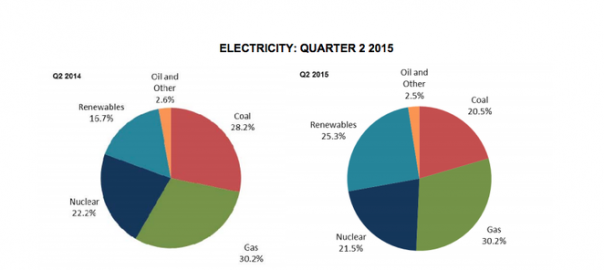
What’s becoming increasingly clear, however, as countries integrate more renewable energy into their grids, is that clean energy can indeed supply a significant portion of our energy over an extended period of time. Indeed, new data from the UK government on Q2 electricity supply suggests that renewables beat out coal in the country’s electricity mix for the first time ever over an entire quarter. Specifically, renewables accounted for 25.3% of electricity generated in Q2 2015 (up from 16.7% in Q2 2014). Meanwhile coal fell from 28.2% to 20.5% in the same period. Gas remained the same. And nuclear fell slightly to 21.5%.

Read more: Treehugger

Wind farm in Europe (Image: EV World)

Renewable Energy reaches the end of the beginning?

A positive view of renewables from an oil publication

In April, 2010, BP took the front page, and held it for months, as it struggled to plug the blowout on the bottom of the Gulf of Mexico that would cough up 3 or 4 million barrels.

The Deepwater Horizon disaster was a bitter reminder of the coming difficulties and risk involved in getting what is left of the world’s oil reserves up and out of places that are a lot harder to get at – deep sea, where pressures are extreme; the arctic, where conditions are even more challenging; tar sands, the poster child for too much carbon; and in thousands of small, disparate patches, where ‘tight oil’ comes from driving water, sand and a few chemicals into fissures miles underground. In the U.S., these wells average around 100 barrels a day (see chart below). Herding cats does not seem a likely way to make the U.S. the swing producer to knock Saudi Arabia off its perch.

Things got harder for explorers as 2014 came to an end, and the price of Brent, the international benchmark, was well on its way to a total 61 percent fall in under 12 months. The question is not so much whether the price of oil will be high enough to get the next trillion barrels out of the ground (roughly the current world rate of consumption for another 30 years); it is whether or not the climate can “afford” to have that happen. Peak oil, whether from insufficient supply or demand, makes for an interesting cocktail party discussion. It has even become a political litmus test. However, it is largely irrelevant. Sheik Yamani’s dictum, that the Stone Age did not end because we ran out of stones, should not be dismissed.

Read more: Oil Price

Turbines tower over corn fields in Iowa (Image: D. Graham)

Technical advances making wind power viable everywhere

An interesting and detailed discussion of the technology behind wind power and how it’s changing

Wind power is often described as relying on “mature technology” and, in many contexts, that’s correct. Today, well-sited wind farms in the US and EU generate electricity at a lower cost than coal.

But numerous difficulties remain with the way we build wind turbines, and these difficulties raise the price of the turbines, which in turn determines where they can profitably go. High turbine costs mean that, unless the wind at a site is quite strong, there are typically better ways to spend money.

Fortunately, while wind is mature technology, it hasn’t reached an evolutionary dead end. Plenty of incremental changes can make wind even more affordable—and in many cases, the necessary technology is already being tested.

Read more: Ars Technica