Category Archives: Solar Power

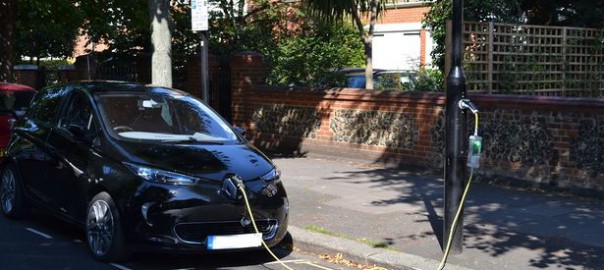
Hundreds of electric car charging points like this one are set to be installed at lampposts across Hounslow

Here’s How Many Solar Panels You’ll Need to Charge Your EV

In order to make your EV green-energy approved, you’ll need to charge it using a renewable energy source. Solar panels are one way to accomplish that.

For the eco-conscious EV driver, an electric vehicle is only as clean and green as the source of electricity charging its battery.

That’s because EVs plugged into the grid can either be powered by “dirty” sources such as fossil fuels such as coal, or from “clean” renewable energy that comes from sources such as solar, hydro or wind power. With many utilities, it’s likely to be a mix of renewables and fossil fuels. The best way to ensure your EV is actually powered by renewable energy is to connect your home’s EV charger to a solar energy system or use a public charger also sourced by solar panels.


An impediment to electric vehicle adoption is car dealerships.

With spiking gas and electric prices and an intensifying climate crisis, it’s no wonder the solar and electric vehicle industries are gaining in popularity each year.  Rooftop solar panel installations are breaking records, and US EV adoption is expected to accelerate — predicted to reach 40% of passenger car sales by 2030, according to the US Bureau of Labor and Statistics.

Read more: cnet

It’s Time to Go Green!

If you would like to know more about Solar Panels and the PowerBanx range of home battery systems, and get a free instant quote, please complete our online form:

Why running out of battery in an electric car gave me hope for the future | Opinion

You’ve heard about how electric cars have things like flat floors, so-called ‘frunks’ for additional storage, and how the removal of engines, transmissions and drivelines allow automakers to experiment with more unconventional designs. It’s all good stuff, but the really life-changing features of EVs will come from how we use the battery.

Features like vehicle-to-load – which allows you to power devices externally using an EV’s charging port in reverse, or the more advanced vehicle-to-grid (V2G) which uses the same technology to dispense enough power for your whole home, or even sell energy back to the power grid.


This technology isn’t just a pipe dream. While the promising vehicle-to-grid technology is currently experiencing some bureaucratic hurdles in Australia, there are already a few models which are ready to support the technology when it can be used, like the Nissan Leaf and Mitsubishi Outlander PHEV, which are V2G capable thanks to their Japanese-standard CHAdeMO charging port.

Read more: CarsGuide

It’s Time to Go Green!

If you would like to know more about Solar Panels and the PowerBanx range of home battery systems, and get a free instant quote, please complete our online form:

French farmers are covering crops with solar panels to produce food and energy at the same time

Agrivoltaics – the practice of using land for both solar energy and agriculture – is on the rise across France.

In the Haute-Saône region, in the northeastern part of the country, an experiment is being conducted by solar-energy company TSE.  It is hoping to find out whether solar energy can be generated without hindering large-scale cereal crops.

Previous attempts to experiment with agrivoltaics have been through smaller-scale projects. But, keen to see if it can thrive on an industrial level, 5,500 solar panels are being spread over this farm in the commune town of Amance by TSE.

If successful, the crossover could be revolutionary for both the agricultural and solar panel industries.

How do solar panels help protect crops from climate change?

“The aim was to be able to meet France’s needs in terms of renewable energy development, without pre-empting agricultural land,” says Xavier Guillot, head of agronomy research and development at TSE.

Read more: EuroNews

It’s Time to Go Green!

If you would like to know more about Solar Panels and the PowerBanx range of home battery systems, and get a free instant quote, please complete our online form:

Home solar panels will now pay for themselves in just four years as energy bills soar

As energy costs rise, households with rooftop solar save money each month by using their own power rather than expensive grid electricity

The time it takes to repay the cost of installing rooftop solar has dropped dramatically as energy costs have spiked, with new data suggesting it could soon take just four years to pay off a new system through savings on energy bills.

Homes fitted with rooftop solar panels can now cut their electricity bills by hundreds of pounds a month, by using home-generated electricity instead of expensive grid power.

That means solar systems pay for themselves within just a few years.


Analysis from climate website Carbon Brief suggests the payback period for a £4,300 rooftop solar system, with a power capacity of 3kW, has dropped from 16.7 years in October 2020 to 11.1 years under the current price cap.

By April, by which time analysts predict the average energy bill could hit £5,277, the payback time is set to drop to just 4.1 years.

“Stratospheric gas prices are driving our energy bills through the roof,” said Dr Simon Evans, senior policy editor at Carbon Brief, who conducted the analysis.

“That’s making low-carbon options even more cost effective. Whether it’s large-scale windfarms now costing four times less than gas power, or home solar systems that could pay back the initial outlay within less than five years, the economic case for net-zero has never been stronger.”

Read more: inews

It’s Time to Go Green!

If you would like to know more about Solar Panels and the PowerBanx range of home battery systems, and get a free instant quote, please complete our online form:

Solar-plus-storage: 3 reasons why they’re better together

Adding storage to your commercial on-site solar power asset is a numbers game. When you save on your overall electricity bill, you definitely come out ahead. Here are three reasons to add storage to your solar PV:

Reason #1: Use solar when you need it most (even if it’s cloudy)

Most utilities have time-based rates for commercial and industrial (C&I) customers, which means you pay more when the grid is delivering at its peak capacity. For summer-peaking utilities, that’s generally late afternoon.

With a storage system connected to your solar array, you can store some of your solar generation when rates are low and discharge the battery to lower your grid-supplied energy consumption when grid power costs rise. This is known as time shifting your energy usage, and it’s a great way to improve the ROI on your solar investments.

Read more: UtilityDive

It’s Time to Go Green!

If you would like to know more about Solar Panels and the PowerBanx range of home battery systems, and get a free instant quote, please complete our online form:

Electric cars to solar panels: tax breaks in Biden’s climate law for Americans

The giant $369bn bill signed by the president on Monday promises to bring big savings by offering tax rebates for green investments

The giant climate bill signed by Joe Biden on Tuesday is set to touch upon myriad aspects of Americans’ lives, helping shape everything from the cars they drive to the stovetops in their kitchens.

Biden has lauded the $369bn of climate spending in the Inflation Reduction Act as the “largest investment ever in combatting the existential crisis of climate change” and predicted it will save people hundreds of dollars each year in energy costs. This claim is based upon a series of investments aimed at shifting buying habits away from a polluting status quo towards cleaner, electrified vehicles and appliances.


A US household could save $1,800 on their energy costs each year, according to a recent estimate, although this would require the installation of electric heat pumps for hot water and air conditioning, replacing a gasoline-powered car with an electric vehicle and installing solar panels on the roof.

But even without these modifications, the climate bill is expected to lower costs by funneling support to renewable energy projects, such as wind and solar, that will provide a less price volatile source of electricity than gas, coal and oil.

Read more:

It’s Time to Go Green!

If you would like to know more about Solar Panels and the PowerBanx range of home battery systems, and get a free instant quote, please complete our online form:

Solar Charge Points charging electric cars (Image: T. Larkum)

New Nottinghamshire solar point can charge 100 electric cars a day

A new solar-powered hub could charge up to 100 electric vehicles a day, according to the authority behind it.

The hub is opening in the car park of Gamston Community Centre in Nottinghamshire.

Rushcliffe Borough Council said the facility formed part of its carbon management plan and would, in time, largely be powered by natural light.

It said electric and hybrid users would be able to charge their vehicles up to 80% in 30 minutes.

‘Greener transport’

The facility will add to the council’s network of sites in Keyworth, Radcliffe on Trent, Cotgrave and Rushcliffe Arena in West Bridgford, the authority said.

Solar Charge Points charging electric cars (Image: T. Larkum)

The council’s portfolio holder for communities and climate change Abby Brennan said: “The charging point is an essential part of our work to… help reduce the environmental impact of our operations.

“As a council, we’re committed to installing more electric vehicle charging points across the borough.

“This will continue to encourage the use of electric or hybrid vehicles, as the infrastructure to support them becomes even more convenient and available to residents.”

The authority has been able to provide the site, near the A52, as part of the government’s Transforming Cities Fund.

The council’s portfolio holder for environment and safety Rob Inglis said: “We’re once again thrilled to bring more public electric charging points to Rushcliffe by providing this new solar-powered facility in Gamston and just yards from one of our major road routes.

“This infrastructure will continue to support residents to make the switch to greener transport and complement our existing sites with more to come later this year.”

Read more: BBC


It’s Time to Go Green!

If you would like to know more about Solar Panels and the PowerBanx range of home battery systems, and get a free instant quote, please complete our online form:
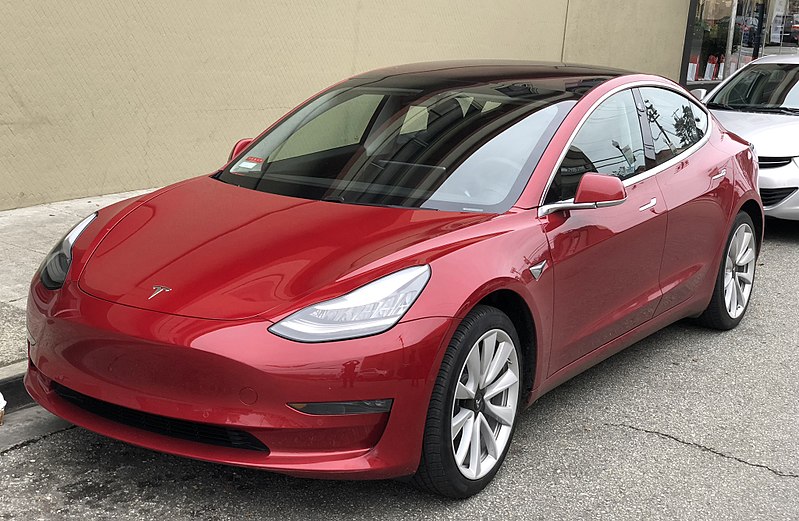
Tesla Model3 (Image: Wikimedia/Carlquinn)

Tesla’s Musk says solar, energy storage will grow faster than electric cars, and there’s some truth to it

  • Tesla CEO Elon Musk recently said the company’s solar and energy storage business will grow faster than its electric vehicle business.
  • With Tesla making progress on Model 3 production efficiency, Musk said on the most recent earnings call there will be more focus on solar and the broader Tesla Energy business, which includes aligning intermittent solar power with battery storage.
  • Tesla and Musk have faced criticism, and a shareholder lawsuit, over the solar business, the controversial acquisition of SolarCity, and issues at the company’s solar panel plant in Buffalo, New York.

A Model 3 ramp-up that resulted in a quarterly profit was a sign that Tesla’s automobile business finally may be financially stable. If so, it is a good time for Tesla to turn its attention to the energy business — encompassing solar and energy storage — that has for long taken a backseat to getting the electric vehicle assembly line in order.

Tesla Model3 (Image: Wikimedia/Carlquinn)

Elon Musk has been broadcasting this message since Tesla reported a surprise profit in the third quarter. On the call with Wall Street analysts after the earnings in November, the Tesla CEO said, “For almost two years we had to divert a tremendous amount of resources.”

Now Musk claims Tesla is poised for “the really crazy growth for as far into the future as I can imagine. … It would be difficult to overstate the degree to which Tesla Energy is going to be a major part of Tesla’s activity in the future,” he said.

Never one to shy away from bold claims or ambitions, Musk said Tesla Energy could grow to roughly the same size as Tesla’s automotive business, and solar would grow, on a percentage basis, the fastest of any, with storage second.

“I think both over time will grow faster than automotive,” Musk said. “They’re starting from a smaller base.” He added, “I think, especially, if you look at sort of — if you look at, like, year-over-year growth, it will be absolutely incredible … over the course of, say, a year, gigantic increase.”

In a recent internal email to Tesla employees, Musk outlined two critical year-end priorities: delivering all cars to their customers and boosting the rate of solar deployments by a significant degree.

Read more: CNBC

It’s Time to Go Green!

If you would like to know more about Solar Panels and the PowerBanx range of home battery systems, and get a free instant quote, please complete our online form:
Solar-plus-EVs economics to trigger a ‘relentless and irreversible decline’ for oil, report states

The economics of combining solar and other renewables with electric vehicles is becoming so compelling that the oil sector faces a “relentless and irreversible decline”, a new report from BNP Paribas has concluded.

The report, dubbed ‘Wells, wires and wheels’, examines the link between mobility, energy and capital investments, introducing the concept of ‘energy return on capital invested’ (EROCI).

That metric focuses on how much useful energy or mobility would be returned from a specific capital outlay in competing technologies, with the report squarely focusing on oil’s return for petrol and diesel-fuelled vehicles and renewables alongside battery electric vehicles.

The bank’s analysis concludes that for the same capital outlay, wind, solar and battery EVs can deliver between 6.2 and 7-times more useful energy than oil if it’s priced at US$60 per barrel, roughly the same price as Brent Crude is today.

As a result, BNP Paribas has said that the economic and environmental benefits of combining solar and electric vehicles as “irresistible”.

Furthermore, the report argues that the economics are so compelling that the oil sector has “never before in its history” faced the kind of threat that renewables and EVs now pose, and stressed the need for oil and gas companies to ramp up their investments in renewables and battery storage if they are to survive.

Read more: Solar Power Portal

BMW says EV owners can turn i3 into ‘cash cow’, use more solar power

Over the past 3 years, BMW has been running a trial of its ‘ChargeForward’ program with BMW i3 owners willing to automatically delay the charging of their vehicle at the request of their local electric utility, PG&E, in order to offset peak demand.

BMW is presenting the results of the trial and says that electric car owners can turn i3 into ‘cash cow’ and use more solar power with controllable load technology

The idea is quite simple. Under the program, PG&E can request BMW to delay the charging sessions of BMW i3 owners by up to an hour in order to reduce the load.

Instead, the owners are incentivized to charge for cheaper when renewable energy production is higher.

In return, owners are compensated for the possible inconvenience. For the first trial run, owners received a $1,000 “gift card” at the launch of the program and they were able to get up to $540 more based on how their charging sessions were affected. BMW is actually reducing the rewards for the second round, presumably because they realized that it was a lot of money for what they were asking of the i3 owners.

It’s important to note that owners can easily temporarily opt out of the program before starting a charging session if they absolutely need to charge. But if your car needs to charge, but it’s not urgent, you plug it in and if PG&E needs to offset demand, they will delay it and your car will take up to one more hour to charge.

Read more: Electrek