Category Archives: Pollution

The Government is planning to phase out coal energy completely by 2025 (Image: PA)

The day coal power dropped out of the national grid for the first time in more than 100 years

From 1882 until 10 May this year, coal has powered the nation. Could the UK be one of the first countries to end coal power altogether?

The Government is planning to phase out coal energy completely by 2025 (Image: PA)

At midnight on 10 May 2016, the UK hit an energy milestone. For the first time in over 100 years, the amount of coal being used by the national grid to power Britain’s kettles, computer and televisions fell to zero. And then it stayed at zero for four hours.

Two days later, this time for five hours, coal usage fell to zero again. Nuclear, wind, hydro and solar energy powered the national grid in coal’s place. By 13 May, the needle had hit zero four times, for a total of around 25 hours.

This historic turning point came on the eve of a Government consultation on phasing out coal energy completely by 2025.

A spokesperson for the Department for Energy and Climate Change told The Independent:

“As part of our plans for a cleaner energy future, we are one of the first countries to announce our intention to consult on ending unabated coal by 2025,

“We will issue this consultation shortly.”

Read more: Independent

Sadiq Khan at Sir John Cass’s Foundation primary school roof garden where he announced new plans to clean up London’s air pollution (Image: S. Rousseau/PA)

London Mayor Sadiq Khan to more than double size of London’s clean air zone

New mayor of London calls air pollution ‘our biggest environmental challenge’ and plans to bring the increased ultra low emission zone into force early

Sadiq Khan at Sir John Cass’s Foundation primary school roof garden where he announced new plans to clean up London’s air pollution (Image: S. Rousseau/PA)

The new mayor of London Sadiq Khan has made his first major policy announcement, unveiling plans to substantially increase the size of London’s clean air charging zone to tackle the capital’s illegal air pollution levels.

The Ultra Low Emissions Zone (ULEZ) – which could also now come into force earlier than planned – will require drivers of the 2.5m oldest and dirtiest vehicles to pay a charge. Owners of cars that fail to meet the standards will pay a £12.50 charge, separate to the congestion charge.

The scheme is intended to act as an incentive to drivers to use cleaner vehicles or alternative transport to reduce the levels of nitrogen dioxide, a toxic gas produced by diesel vehicles.

Under Khan’s plans, which will now be subject to a public consultation, the ULEZ will stretch from the north to south circular roads in London rather than just the much smaller congestion charge zone in central London as currently planned. Officials said the area covered will more than double in size.

Khan said his predecessor, Boris Johnson, had been too slow to act and had left the city a “laughing stock” internationally, and the government had been “hopelessly inactive” on the issue. Officials said the ULEZ, under a consultation to be published within weeks, could now come into force as soon as 2019 rather than the original plan of 2020.

“I have been elected with a clear mandate to clean up London’s air – our biggest environmental challenge,” Khan said at a school in east London. He said London had only acted on pollution in the past after emergencies, such as the Great Smogs of the1950s: “But I want to act before an emergency, which is why we need big, bold and sometimes difficult policies if London is to match the scale of the challenge.”

The mayor’s office also said an extra charge on the most polluting vehicles would be brought in from 2017, which would be administered by the congestion charge system but be separate to the congestion charge. It is not yet clear what that charge will be.

Read more: The Guardian

Josh Fox in "How to Let Go of the World: and Love All the Things Climate Can't Change" (Image: IFC Films)

It’s too late to halt climate change and our society is doomed — that’s the good news

“Gasland” director Josh Fox is back with “How to Let Go of the World,” a sprawling chronicle of despair — and hope

Josh Fox in "How to Let Go of the World: and Love All the Things Climate Can't Change" (Image: IFC Films)
Josh Fox in “How to Let Go of the World: and Love All the Things Climate Can’t Change” (Image: IFC Films)

It was a full decade ago now that not-quite-president Al Gore and director Davis Guggenheim captured the world’s attention with “An Inconvenient Truth,” a film based on the premise that we still had time to prevent or limit the most devastating effects of climate change if we acted immediately. In case you haven’t noticed, we didn’t. In the United States, the fossil-fuel industry and its Republican lackeys picked away at a handful of loose scientific threads in the film, depicting it as some partisan, puritanical attack on capitalism, consumerism and prosperity. On a global scale, leaders of the major Western nations and the booming economies of Asia could only reach vague and general agreement on targets for reducing carbon emissions, which weren’t binding on anyone and would do little or nothing to slow planetary warming or control climate chaos.

So now we get Josh Fox, the activist-filmmaker behind the grassroots documentary “Gasland” — one of the least likely Oscar nominees of recent memory — making a sprawling, ambitious HBO documentary with exactly the opposite premise. Fox’s “How to Let Go of the World and Love All the Things Climate Can’t Change” is an unwieldy movie with an unwieldy title, but once you get past the slightly forced naiveté of his framing device, it’s a fascinating, heartbreaking and ultimately inspiring ride. He begins by accumulating evidence that it’s effectively too late to stop a major warming of the earth’s air and water, with enormous effects on our coastlines, our climate, our relationship to the ecosystem and all of human civilization. One environmental activist tells Fox in the film that he has had to carve out a place in his heart and mind for despair, and carry it with him, while still doing his work aimed at creating some semblance of a better future. In placid times such a weight can be a burden, he says; in turbulent times, it’s an anchor.

It might sound cruel or Malthusian or post-apocalyptic to suggest that the enormous disruption we are beginning to experience is both a crisis and an important opportunity. But there’s no point lying to ourselves, or shutting our eyes: There’s no way we can save all the species that are likely to be extinguished, all the wetlands that will be inundated or all the farmland that will be baked out of existence. We might not be able to save Miami or Kolkata or Shanghai. But in a filmmaking mode that combines YouTube channel, guerrilla newsman and a younger, less prankish and more athletic Michael Moore, Fox suggests that such devastation won’t wipe out the best and strongest aspects of human community, and that those remain our best tools going into a profoundly uncertain future.

Read more: Salon

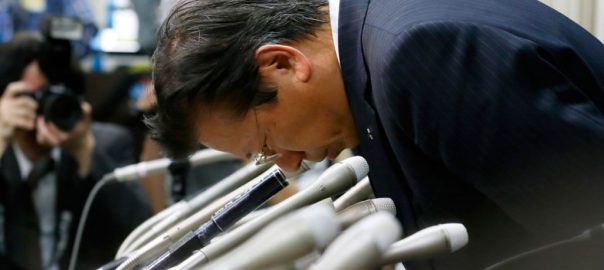
Mitsubishi Motors president Tetsuro Aikawa is in the firing line

‘Dieselgate’ heralds the age of the electric car

Every smog cloud has its silver lining. Volkswagen is still on the hook for installing “cheat devices” – software that made its cars appear cleaner than they were – but it’s now emerged that it’s not the only one to play dirty. To one degree or another, it seems a number of car brands have been playing fast and loose with the rules.

Mitsubishi Motors president Tetsuro Aikawa is in the firing line

The car industry won’t be able to forget last week fast enough. We saw the bosses at Japanese car firm Mitsubishi hang their heads in shame. Evidence that they had falsified fuel economy data was uncovered in raid on their factory in Okazaki, central Japan. The government has given them until tomorrow to explain themselves.

Closer to home, French car maker Peugeot Citroen was on the receiving end of an unexpected visit from the authorities. It claims it’s done nothing wrong, echoing Renault which was raided in January.

Also last week, 37 car models in Britain and 56 in Germany were found to exceed EU standards on air quality and pollution when tested.

And at the weekend, the Germans were pointing accusing figures at the Italians after their tests suggested “some Fiat vehicles showed irregular diesel exhaust pollution”, Reuters reported. The Italians have yet to respond.

That’s a lot horn-blowing in the space of just a few days. So what on earth is going on?

Read more: Money Week

We can ditch fossil fuels in 10 years, if we want to

Patterns show that the move to cleaner energy would be quick if there was a concerted effort.

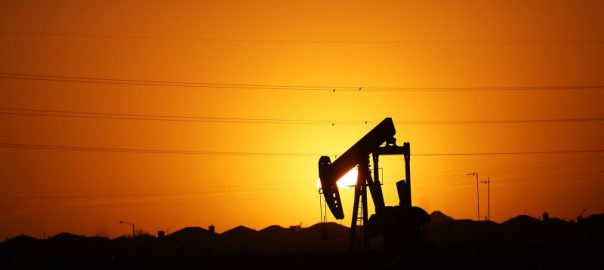
506079846_oil_rig_unk

The quest to end the use of fossil fuels might not be as daunting as you think. A University of Sussex study claims that humanity could drop coal and oil within a decade, based largely on historical evidence that many tend to overlook. Professor Benjamin Sovacool notes that energy transitions have happened quickly whenever there was a combination of “strong government intervention” with economic or environmental incentives to switch. It only took 11 years for the Canadian province of Ontario to abandon coal energy, for example, while nuclear power surged to 40 percent of France’s electricity supply within 12 years. In the case of fossil fuels, it’s a combination of climate change worries, dwindling resources and advanced technology that could step up the pace.

The researcher admits that these handovers tend to move slowly if left to their own devices, such as the decades it took for electricity to see widespread adoption. However, Professor Sovacool argues that the mainstream notion that these transitions must happen slowly doesn’t really hold water. They just need a concerted, collaborative effort, he says.

Of course, actually creating that effort is another matter. While electric cars and renewable energy are quickly hitting their stride, there’s also stiff opposition from the fossil fuel industry (and the politicians that protect it) to the sort of regulation that would speed up the use of cleaner power sources. Also, developing countries seldom have the luxury of dropping fossil fuels — it’d cost too much, or leave too many people without reliable electricity. An accelerated transition might not happen until the political and economic advantages are so overwhelming that even the staunchest opponents concede defeat.

Source: Autoblog

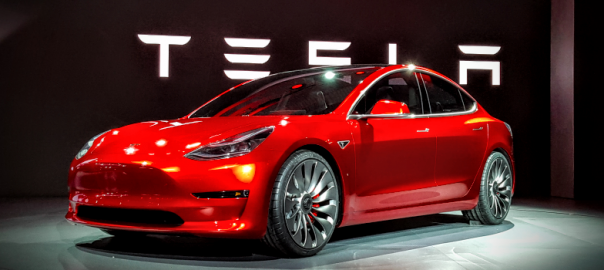
Tesla Model 3 at launch (Image: K. Field/CC)

‘I Drive Electric Because I Love My Children More Than You Do’

I am the CTO of a company supporting the oil and gas industry, and also the CEO of a start-up (FuelIncluded.com) promoting the adoption of electric cars. Clearly, from at least one perspective, these industries are in direct competition. However I prefer to see them as complementary: the tension between these industries is an example of the many energy transitions we are starting to experience as a society as we move from fossil fuels to renewables, and from pollution to clean air. Having a foot in each camp gives me, I think, an interesting and exciting position from which to watch things unfold, and, to an extent, to promote a much needed change.

Smog in New York City (Image: Public Domain/Wikipedia)

Naturally I’m a big fan of electric cars. I’ve owned one for nearly 3 years and have driven it more than 40,000 miles in that time. It charges at home either from my own solar panels or from our renewable energy supply. It charges on the motorway/freeway at Ecotricity rapid chargers which also have a renewable supply. I’m clearly sympathetic to the view that we should all be driving electric vehicles for the sake of public health and our future climate, never mind peak oil.

However, I was still shocked to receive a retweet on my Twitter feed this week that seemed to go beyond the usual debate on the pros and cons of electric cars. It showed a bumper sticker that said:

“I Drive Electric Because I Love My Children More Than You Do”

It was a bit of a shock to read so I read it again. I then moved on, meaning not to give it another thought. However, since then I’ve found myself reflecting on it. It bothered me, enough for me to want to put my thoughts on paper.

I’ve concluded that there are two issues here that caught my attention – the message itself, and the way the message was communicated.

The Message

I have a lot of sympathy with the message, …

Read more: Me on LinkedIn

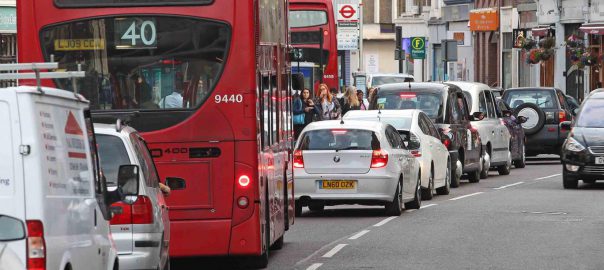
Diesel vehicles are among the worst for harmful pollution, experts claim (Image: N. Howard)

‘Ban all diesel vehicles from capital’s centre,’ say over half of Londoners

[13 April] More than half of Londoners want diesel vehicles banned from the city centre to cut toxic air pollution blighting the capital, a new poll reveals today.

Diesel vehicles are among the worst for harmful pollution, experts claim (Image: N. Howard)

The YouGov survey showed 55 per cent of adults in the city back a crackdown on buses which experts blame for the largest proportion of nitrogen dioxide fumes from traffic in central London.

Even more supported a ban on diesel lorries, 62 per cent.

While 54 per cent believe diesel taxis should be stopped from operating in this area, and 52 per cent think all diesel cars should be banned from it.

More than two thirds of Londoners also say higher polluting vehicles should pay more for travelling through the capital.

The findings will heap pressure on the next mayor to speed up switching away from diesel to cleaner electric buses and hybrid models used in electric mode.

Read more: Standard

The costs of setting up a diesel scrappage scheme wouldn't merit the benefits says RAC Foundation

Bin diesel scrappage idea and support EVs says RAC Foundation

A proposed diesel car scrappage scheme would have very little effect on air quality – unless implemented on a huge scale – and instead support should be given to electric vehicles, according to analysis by the RAC Foundation.

The costs of setting up a diesel scrappage scheme wouldn't merit the benefits says RAC Foundation
The costs of setting up a diesel scrappage scheme wouldn’t merit the benefits says RAC Foundation

The idea, proposed by think tank Policy Exchange last month, suggested that a scrappage scheme be set up for drivers of older, more polluting diesel cars, in a similar fashion to the 2009/10’s vehicle scrappage scheme. This would give owners an incentive – previously around £2,000 off the price of a new car – to have their highly polluting vehicle taken off the road to benefit air quality.

The RAC Foundation has found that around 1.9 million older diesel cars are on UK roads, fitting into Euro standard categories 1, 2 and 3. Currently, all new cars sold have to be certified to Euro 6 standards.

These older models account for 17 per cent of all diesel cars on the road – more than 11 million in total – and are responsible for 15 per cent of total NOx emissions from diesel cars says the RAC Foundation.

Analysts went on to calculate the benefits of such a scheme if, as would be expected, it ran along the same lines as the vehicle scrappage scheme around seven years ago.

Around 400,000 old diesel cars would be taken off the UK’s roads, at a cost of around £800 million should the government and manufacturers each contribute £1,000 for the incentive for customers to buy a new model.

If every one of those cars was replaced with a zero-emission vehicle, the annual cut in NOx emissions from the diesel fleet would be about 4,900 tonnes, or 3.2 per cent of total emissions from diesel cars.

Should the 400,000 models scrapped be replaced with new Euro 6 diesels, that saving would drop to 2,000 tonnes NOx per year at 1.3 per cent of the total, accounting for drivers covering the same mileage as with their old diesel car.

Read more: Next Green Car

Red Tesla Model S (Image: T. Larkum)

Why Would You Power A Clean Electric Car With Dirty Energy?

Buying a Tesla might lead to greener choices elsewhere

Red Tesla Model S (Image: T. Larkum)
You’ll want to know how the electricity is produced, right? (Image: T. Larkum)

NEW YORK — It’s one thing to get people to care about the price of energy. It’s quite another challenge to get them to care about the source of energy and its environmental impact.

But buying an electric car — presumably, in part, to reduce one’s carbon footprint — may push people to think about where the electricity to power that vehicle comes from, according to one early investor in Tesla Motors.

“The electric vehicle is like a Trojan horse for energy literacy,”

Nancy Pfund, managing partner at the venture capital firm DBL Partners, said during a panel discussion at the Bloomberg New Energy Finance Summit in Manhattan on Monday morning.

Pfund said she noticed the possible linkage a decade ago, when DBL first invested in Tesla, which sells luxury electric cars, and its sister company, SolarCity, which markets solar power systems. Both are chaired by billionaire Elon Musk.

“In the early days of Tesla, early adopters would buy the Roadster or the Model S, and weeks later we’d see an uptick in solar adopters,” she told The Huffington Post in an interview. “They’re really examples of the connection between transportation and the green electrical grid.”

The idea is that no one wants to go greener by buying a battery-powered electric vehicle only to charge it with electricity generated from burning coal or gas.

Most Americans buy electricity from utility companies that produce energy by burning fossil fuels or generate power from water flow, wind turbines or solar panels. A small but growing number of people generate power from rooftop solar panels or backyard wind turbines and then sell any excess energy to the utility companies. To really go green, people need batteries to store their own clean energy for later use.

If purchasing an electric car focuses the buyer on other ways to access cleaner energy and use it in lower quantities, that can work to improve the whole system.

“Anytime you get people to be more literate and understand where something is coming from, they have a voice,” Pfund added. “And a more engaged and vocal population will demand more energy choices.”

Read more: Huffington Post

Car exhaust pollution (Image: Wikipedia)

‘Extend congestion charge as far as North and South Circular roads to halt pollution’

The congestion charging zone should be extended out as far as the North and South circular roads by 2019 to tackle London’s growing air pollution problem, a major study said today.

Car exhaust pollution (Image: Wikipedia)

Transport for London should look at expanding the zone, which costs £11.50 a day to enter, to merge it with the wider low emissions zones currently in place.

The major report from independent think tank IPPR said the scheme could be one of the best ways of simultaneously tackling air pollution and congestion as well as raising funds to reinvest in public transport, cycling and walking.

It warned that without new policies to manage increased congestion, there will be an estimated 43 per cent increase in miles driven between 2013 and 2030, making emissions even worse.

The death toll in London from air pollution is more than 9,000-a-year and experts are particularly worried about the impact on the health of children. The economic cost is put at £3.7 billion.

Other key recommendations include speeding up the “greening” of TfL’s bus fleet so it meets air pollution standards by 2019, expanding the electric vehicles charging network and bringing in on-street parking permits reserved for car-sharing schemes.

The report, London: Global Green City, said:

“The deadly spectre of air pollution has risen once again in the form of invisible pollutants such as nitrogen dioxide and particulate matter.

“This is a public health problem of the highest order and once again London sits on the frontline. London stands at a crossroads, and nothing short of a world-leading transport programme is required.”

Read more: Standard