Category Archives: Energy and Climate Change

News and articles on climate change, vehicle pollution, and renewable energy.

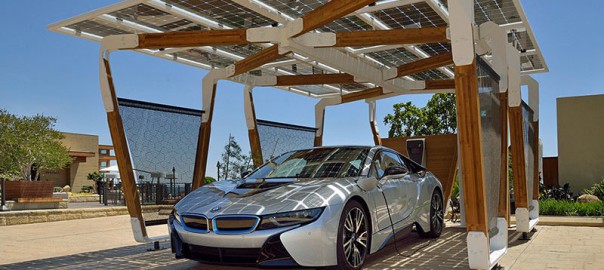
BMW i8 and Solar Car Port (Image: BMW)

BMW solar roof helps i8 drivers even when sun isn’t shining

Connected Box Keeps An Eye On Lower Electricity Prices

At the Consumer Electronics Show, BMW has announced a release window for its i Wallbox Pro that unites domestic solar power and the electricity grid. The box itself was shown off during last year’s i8 drives and it rests inside a solar carport to control the simultaneous delivery of both solar power and the electric grid energy to recharge an i8. One drive attendee wrote how the Wallbox Pro display showed that it was providing 3.4 total kW to the coupe, with 2.8 kW from the sun and 0.6 kW from the grid.

At CES, BMW said the i Wallbox Pro, brought to life by BMW DesignWorks, will be available in 2016. For homes that aren’t equipped with solar power, or when solar isn’t available, the system will draw power from the grid when it’s least expensive.

The Munich manufacturer also announced a concept storage solution using discarded batteries from its electric cars, where excess energy from solar or other sources could be held for later use for a vehicle or the home itself. BMW will be demonstrating the i Wallbox Pro at CES.

BMW i8 and Solar Car Port (Image: BMW)

Source: Autoblog

How solar power and electric cars could make suburban living awesome again

The suburbs have had it rough in the last few years. The 2008-2009 economic collapse led to waves of foreclosures in suburbia, as home prices plummeted. More recently, census data suggest that Americans are actually shifting back closer to city centers, often giving up on the dream of a big home in suburbs (much less the far-flung “exurbs”).

It doesn’t help that suburbia has long been the poster child for unsustainable living. You have to drive farther to work, so you use a lot of gas. Meanwhile, while having a bigger home may be a plus, that home is also costlier to heat and cool. It all adds up — not just in electricity bills, but in overall greenhouse gas emissions. That’s why suburbanites, in general, tend to have bigger carbon footprints than city dwellers.

You can see as much in the amazing map from researchers at the University of California, Berkeley, showing how carbon footprints go up sharply along the east coast as you move away from city centers.

But now, a new National Bureau of Economic Research working paper by Magali A. Delmas and two colleagues from the UCLA Institute of the Environment and Sustainability suggests that recent technologies may help to eradicate this suburban energy use problem. The paper contemplates the possibility that suburbanites — including politically conservative ones — may increasingly become “accidental environmentalists,” simply because of the growing consumer appeal of two green products that are even greener together: electric vehicles and solar panels.

“There’s kind of hope for the suburbs, basically,” says Delmas — even though suburbia “has always been described as the worst model for footprint per capita, but also the attitude towards the environment.”

Here’s why that could someday change. Installing solar panels on the roof of your suburban home means that you’re generating your own electricity — and paying a lot less (or maybe nothing at all) to a utility company as a result. At the same time, if you are able to someday generate enough energy from solar and that energy is also used to power your electric car, well then you might also be able to knock out your gasoline bill. The car would, in effect, run “on sunshine,” as GreenTechMedia puts it.

A trend of bundling together solar and “EVs,” as they’re called, is already apparent in California. And if it continues, notes the paper, then the “suburban carbon curve would bend such that the differential in carbon production between city center residents and suburban residents would shrink.”

The reason is that, especially as technologies continue to improve, the solar-EV combo may just be too good for suburbanites to pass up — no matter their political ideology. Strikingly, the new paper estimates that for a household that buys an electric vehicle and also owns a solar panel system generating enough power for both the home and the electric car, the monthly cost might be just $89 per month — compared with $255 per month for a household driving a regular car without any solar panels.

This dramatic savings becomes possible to contemplate, notes the study, due to the growing prevalence of $0 down payment options both for installing solar panels, and for buying electric vehicles.

So are we really on the verge of a widespread phenomenon of green “bundling” — suburbanites installing rooftop solar, and then using it to power both their homes and also their cars? The paper points to four separate trends that are, at least, suggestive.

Read more: Washington Post

Blades Being Installed on Turbine 5, Yelvertoft Wind Farm (Image: T. Larkum)

North Sea oil industry ‘close to collapse’

The UK’s oil industry is in “crisis” as prices drop, a senior industry leader has told the BBC.

Oil companies and service providers are cutting staff and investment to save money. Robin Allan, chairman of the independent explorers’ association Brindex, told the BBC that the industry was “close to collapse”. Almost no new projects in the North Sea are profitable with oil below $60 a barrel, he claims.

Blades Being Installed on Turbine 5, Yelvertoft Wind Farm (Image: T. Larkum)
Blades Being Installed on a Wind Turbine (Image: T. Larkum)

‘Everyone is retreating’

“It’s almost impossible to make money at these oil prices”,

Mr Allan, who is a director of Premier Oil in addition to chairing Brindex, told the BBC.

“It’s a huge crisis.”

“This has happened before, and the industry adapts, but the adaptation is one of slashing people, slashing projects and reducing costs wherever possible, and that’s painful for our staff, painful for companies and painful for the country.

“It’s close to collapse. In terms of new investments – there will be none, everyone is retreating, people are being laid off at most companies this week and in the coming weeks. Budgets for 2015 are being cut by everyone.”

Mr Allan said many of the job cuts across the industry would not have been publicly announced. Oil workers are often employed as contractors, which are easier for employers to cut.

His remarks echo comments made by the veteran oil man and government adviser Sir Ian Wood, who last week predicted a wave of job losses in the North Sea over the next 18 months.

Decline

The US-based oil giant ConocoPhillips is cutting 230 out of 1,650 jobs in the UK.

This month it announced a 20% reduction in its worldwide capital expenditure budget, in response to falling oil prices.

Other big oil firms are expected to make similar cuts to their drilling and exploration budgets. Research from the investment bank Goldman Sachs predicted that they would need to cut capital expenditure by 30% to restore their profitability at current prices.

Service providers to the industry have also been hit. Texas-based oilfield services company Schlumberger cut back its UK-based fleet of geological survey ships in December, taking an $800m loss and cutting an unspecified number of jobs.

On Wednesday Aberdeen-based Wood Group announced a pay freeze for staff, and cut rates for its contractors.

Apache, one of the North Sea’s biggest producers, has followed suit and will impose a 10 percent reduction on its contractors’ wages from January 1st.

Investment record

The industry trade body, Oil and Gas UK, said:

“While Oil & Gas UK cannot comment on the commercial decisions, and individual opinions, of its members, the industry trade body recognises that the falling oil price is affecting activity across the UK Continental Shelf and companies are having to take hard decisions in light of this challenging business environment.”

UK oil and gas production has been in decline since 1999 – though the rate of decline slowed in 2013, a year which saw the highest level of investment on record.

The industry was hoping to see continued high levels of investment, stemming the inevitable decline of production as North Sea’s resources are used up. But falling oil prices have put that in doubt.

However, the Department of Energy and Climate Change said:

“The recent sharp reductions in oil prices are very challenging for companies active in the North Sea. We have seen very little evidence of new projects being cancelled or deferred in reaction to lower oil prices.”

Read more: BBC

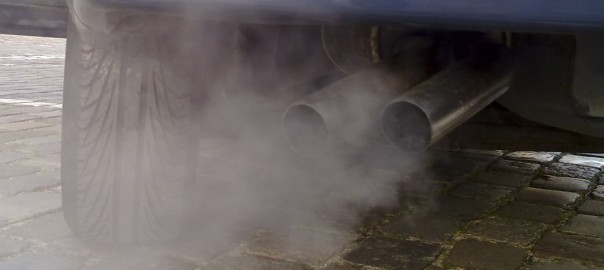
Car exhaust pollution (Image: Wikipedia)

Auto industry urges London rethink on Ultra Low Emission Zone

  • UK automotive industry totally committed to air quality improvement and carbon reduction.
  • Ultra Low Emission Zone (ULEZ) needs to be more ambitious says SMMT.
  • Diesel vehicles built today the cleanest ever made capturing over 99% of particulates.

Welcoming plans for an Ultra Low Emission Zone (ULEZ) in London by 2020, the Society of Motor Manufacturers and Traders (SMMT) today said London should set the benchmark for the world’s great cities by implementing a scheme which demands the very best in vehicle technology. In an open letter to the Mayor of London, SMMT has called for a rethink of the current proposals set out by Transport for London (TfL) to enforce the latest emission standards for both petrol and diesel vehicles. This reflects the step change in clean diesel technology, and helps to ensure similar schemes across the UK and Europe are harmonised.

Mike Hawes, SMMT Chief Executive, said,

“The implementation of the ULEZ will accelerate the take-up of ultra low and low emission vehicles, but a harmonisation of standards – a technology neutral approach – for petrol and diesel vehicles would strengthen the initiative. Currently the proposed requirements differ for cars and vans. SMMT is urging London to be more ambitious with a universal (Euro-6) standard for both petrol and diesel vans and cars which would remove any confusion, strengthen the uptake of cleaner technology and bring air quality benefits sooner.

“The automotive industry is investing billions of pounds in the UK and abroad to develop technologies to lower vehicle emissions. The ULEZ can accelerate the take up of these cleaner technologies and bring air quality and carbon reduction benefits to London sooner.

“Today’s diesel vehicles are light-years away from those built just a decade ago. Intelligent engine design and highly efficient exhaust aftertreatments, including particulate filters, capture over 99% of particulates and around two-thirds of NOx emissions. ULEZ proposals should support the introduction of these technologies now, technologies which are being introduced ahead of the ever-tougher legislative requirements which will be implemented over the next few years.”

The current proposals for an ULEZ for London dictate the 2006-standard Euro-4 for petrol vehicles and the latest Euro-6 for diesel vehicles. Given the introduction date of 2020, it would therefore allow petrol vehicles of up to 14 years of age to enter without penalty. By this date the European fleet average will be approaching 95g/km of CO2, whereas a typical petrol car of Euro-4 vintage would have CO2 emissions some 72% higher. Euro-6 petrol and diesel vehicles are on sale now and mandatory from next year meaning that under SMMT’s proposals, by 2020, qualifying vehicles would be up to six years old and would be reasonably affordable, potentially on their third owner. Crucially, regulators can be assured that they will be delivering the air quality benefits as Euro-6 vehicles have engine management systems which constantly monitor and manage emission performance – a major advance on earlier models’ technology. Underlining the progress made by car makers, SMMT also said that it is vital that the ULEZ actually delivers on congestion reduction to allow the automotive industry’s new technologies to work effectively. There must be no side effects to the ULEZ which actually increase congestion or else any air quality benefits will be negated.

The success of the automotive industry’s commitment to improved emissions is indisputable. Average CO2 emissions for new cars in the UK in 2013 were 128.3g/km, down 29.1% since 2000. The 2013 figure marks a milestone as it exceeds the pan-European 2012-2015 target (sub 130g/km). Work on CO2 reduction has been matched by technology to cut other pollutants, resulting in filters which capture over 99% of particulate (PM10) emissions. Nitrogen oxide (NOx) levels from diesel cars have also been cut by 64% since 2000. Criticisms that vehicles fail to deliver real world improvements compared to ‘controlled test cycle conditions’ are also being addressed, with the Euro-6 standards to include ‘real world’ driving emission testing for the first time. This will give confidence to regulators and consumers alike that these new vehicles are delivering real benefits.

Those benefits include carbon reduction as diesel engines are key to reducing road transport CO2 emissions. Diesel cars emit up to 20% less carbon than their petrol equivalents – essential if the UK and Europe are to meet their climate change ambitions.

Looking to the future, Mike Hawes added,

“We need an integrated approach on air quality at local, regional, national and European level. Fleet renewal, or the uptake of new vehicles on the road, is critical in reducing emissions. Proposals such as London’s ULEZ can help deliver this goal. Air quality is often a local issue so we need a flexibility that allows for focused initiatives like the ULEZ but which sit within an overall framework of harmonised standards across Europe. The automotive sector must have certainty in policy direction so technology investments can be targeted on addressing key issues such as air quality and climate change.”

Engine manufacturing is a crucially important part of the UK automotive industry with more than 2.5 million engines built in the UK in 2013. Engine manufacturers include Ford in Dagenham and Bridgend, Bentley in Crewe, BMW at Hams Hall, Honda in Swindon, Jaguar Land Rover in Wolverhampton, Nissan in Sunderland, Toyota in Deeside and Cummins in Darlington.

Significant new investment into the manufacture of engines in the UK has been announced over the last few years. Ford announced in the last month that it will invest £190m in diesel engines at its Dagenham plant, creating 318 jobs. Jaguar Land Rover’s new engine manufacturing centre in Wolverhampton, recently opened by HM The Queen, marks an investment of more than £500m, creating 1,400 jobs.

Source: SMMT

Natural gas: The fracking fallacy

The United States is banking on decades of abundant natural gas to power its economic resurgence. That may be wishful thinking.

When US President Barack Obama talks about the future, he foresees a thriving US economy fuelled to a large degree by vast amounts of natural gas pouring from domestic wells. “We have a supply of natural gas that can last America nearly 100 years,” he declared in his 2012 State of the Union address.

Obama’s statement reflects an optimism that has permeated the United States. It is all thanks to fracking — or hydraulic fracturing — which has made it possible to coax natural gas at a relatively low price out of the fine-grained rock known as shale. Around the country, terms such as ‘shale revolution’ and ‘energy abundance’ echo through corporate boardrooms.

Companies are betting big on forecasts of cheap, plentiful natural gas. Over the next 20 years, US industry and electricity producers are expected to invest hundreds of billions of dollars in new plants that rely on natural gas. And billions more dollars are pouring into the construction of export facilities that will enable the United States to ship liquefied natural gas to Europe, Asia and South America.

All of those investments are based on the expectation that US gas production will climb for decades, in line with the official forecasts by the US Energy Information Administration (EIA). As agency director Adam Sieminski put it last year: “For natural gas, the EIA has no doubt at all that production can continue to grow all the way out to 2040.”

But a careful examination of the assumptions behind such bullish forecasts suggests that they may be overly optimistic, in part because the government’s predictions rely on coarse-grained studies of major shale formations, or plays. Now, researchers are analysing those formations in much greater detail and are issuing more-conservative forecasts. They calculate that such formations have relatively small ‘sweet spots’ where it will be profitable to extract gas.

The results are “bad news”, says Tad Patzek, head of the University of Texas at Austin’s department of petroleum and geosystems engineering, and a member of the team that is conducting the in-depth analyses. With companies trying to extract shale gas as fast as possible and export significant quantities, he argues, “we’re setting ourselves up for a major fiasco”.

That could have repercussions well beyond the United States. If US natural-gas production falls, plans to export large amounts overseas could fizzle. And nations hoping to tap their own shale formations may reconsider. “If it begins to look as if it’s going to end in tears in the United States, that would certainly have an impact on the enthusiasm in different parts of the world,” says economist Paul Stevens of Chatham House, a London-based think tank.

If natural-gas prices were to follow the scenario that the EIA used in its 2014 annual report, the Texas team forecasts that production from the big four plays would peak in 2020, and decline from then on. By 2030, these plays would be producing only about half as much as in the EIA’s reference case. Even the agency’s most conservative scenarios seem to be higher than the Texas team’s forecasts.

“Obviously they do not agree very well with the EIA results,”

says Patzek.

Read more: Nature

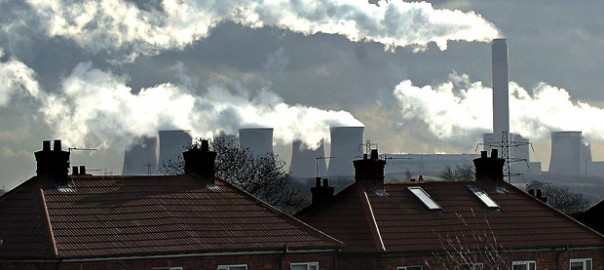
Pollution at Drax Coal Power Station near Selby (Image: J. Giles/PA)

How Solar Power Could Slay the Fossil Fuel Empire by 2030

In just 15 years, the world as we know it will have transformed forever. The ​age of oil, gas, coal and nuclear will be over. A new age of clean power and smarter cars will fundamentally, totally, and permanently disrupt the existing fossil fuel-dependent industrial infrastructure in a way that even the most starry-eyed proponents of ‘green energy’ could never have imagined.

These are not the airy-fairy hopes of a tree-hugging hippy living off the land in an eco-commune. It’s the startling verdict of ​Tony Seba, a lecturer in business entrepreneurship, disruption and clean energy at Stanford University and a serial Silicon Valley entrepreneur.

Seba began his career at Cisco Systems in 1993, where he predicted the internet-fueled mobile revolution at a time when most telecoms experts were warning of the impossibility of building an Internet the size of the US, let alone the world. Now he is predicting the “inevitable” disruption of the fossil fuel infrastructure.

Seba’s thesis, set out in more detail in his new book Clean Disruption of Energy and Transportation, is that by 2030 “the industrial age of energy and transportation will be over,” swept away by “exponentially improving technologies such as solar, electric vehicles, and self-driving cars.”

Tremors of change

Seba’s forecasts are being taken seriously by some of the world’s most powerful finance, energy, and technology institutions.

Last November, Seba was a keynote speaker at JP Morgan’s Annual Global Technology, Media, and Telecom Conference in Asia, held in Hong Kong, where he delivered a stunning presentation on what he calls the “clean disruption.”

Seba’s JP Morgan talk focused on the inevitable disruption in the internal combustion engine. By his forecast, between 2017 and 2018, a mass migration from gasoline or diesel cars will begin, rapidly picking up steam and culminating in a market entirely dominated by electric vehicles (EV) by 2030.

Not only will our cars be electric, Seba predicts, but rapid developments in self-driving technologies will mean that future EVs will also be autonomous. The game-change is happening because of revolutionary cost-reductions in information technology, and because EVs are 90 percent cheaper to fuel and maintain than gasoline cars.

The main obstacle to the mass-market availability of EVs is the battery cost, which is around $500 per kilowatt hour (kWh). But this is pitched to fall dramatically in the next decade. By 2017, it could reach $350 kWh—which is the battery price-point where an electric car becomes cost-competitive with its gasoline equivalent.

Seba estimates that by 2020, battery costs will fall to $200 kWh, and by 2024-25 to $100 kWh. At this point, the efficiency of a gasoline car would be irrelevant, as EVs would simply be far cheaper. By 2030, he predicts,

“gasoline cars will be the 21st century equivalent of horse carriages.”

It took only 13 years for societies to transition from complete reliance on horse-drawn carriages to roads teeming with primitive automobiles, Seba told his audience.

Lest one imagine Seba is dreaming, in its new quarterly report, the leading global investment firm Baron Funds concurs: “We believe that BMW will likely phase out internal combustion engines within 10 years.” (Investors at rival bank Morgan Stanley are making a similar bet, and are financing Tesla.)

Two days after his JP Morgan lecture, Seba was addressing the 2014 Global Leaders’ Forum in south Korea, sponsored by Korean government ministries for science and technology, where he elaborated on the prospects of an energy revolution. Within just 15 years, he said, solar and wind power will provide 100 percent of energy in competitive markets, with no need for government subsidies.

Over the last year Seba has even been invited to share his vision with oil and gas executives in the US and Europe.

“Essentially, I’m telling them you’re out of business in less than 15 years,”

Seba said.

Revolutionary economics of renewables

For Seba, there is a simple reason that the economics of solar and wind are superior to the extractive industries. Extraction economics is about decreasing returns. As reserves deplete and production shifts to more expensive unconventional sources, costs of extraction rise. Oil prices may have dropped dramatically due to the OPEC supply glut, but costs of production remain high. Since 2000, the oil industry’s investments have risen threefold by 180 percent, translating into a global oil supply increase of just 14 percent.

In contrast, the clean disruption is about increasing returns and decreasing costs. Seba, who dismisses biomass, biofuels and hydro-electric as uneconomical, points out that with every doubling of solar infrastructure, the production costs of solar photovoltaic (PV) panels fall by 22 percent.

Seba said:

“The higher the demand for solar PV, the lower the cost of solar for everyone, everywhere,”

“All this enables more growth in the solar marketplace, which, because of the solar learning curve, further pushes down costs.”

Read more: Motherboard.vice.com
Car exhaust (Image: BBC)

Air pollution ‘causing deadly public health crisis’

New schools, care homes and hospitals should be built far away from major roads because of the dangers of air pollution, a report by MPs says.

The Environmental Audit Committee argues air pollution is a “public health crisis” causing nearly as many deaths as smoking. It also suggested a scrappage scheme for diesel cars to cut emissions.

The government said it was “investing heavily” in clean air, but campaigners said it was ignoring the issue. There are an estimated 29,000 deaths annually in the UK from air pollution. Nitrogen dioxide is known to cause inflammation of the airways, reduce lung function and exacerbate asthma. Particulate matter – tiny invisible specks of mineral dust, carbon and other chemicals – are linked to heart and lung diseases as well as cancer.

Some particulate matter lodges in the lungs, while the finest particles can enter the bloodstream, risking damage elsewhere in the body.

‘Forecasts’

London lost in air pollution London in April this year, when dust from the Sahara combined with pollution from mainland Europe

Joan Walley, the committee chairwoman, told the BBC:

“There is a public health crisis in terms of poor air quality.

“There are nearly as many deaths now caused by air pollution as there are from smoking, so the main thing is we stop a new generation of children being exposed.”

She said government “should make it impossible” for new schools, care home or health clinics to be built in pollution hotspots.

She added that “well over a thousand” schools were already near major roads and that it “made sound economic sense” to filter the air coming into the buildings.

The committee’s report says traffic is responsible for 42% of carbon monoxide, 46% of nitrogen oxides and 26% of particulate matter pollution.

It said government had promoted diesel vehicles as they produced less of the greenhouse gas carbon dioxide.

But the committee said diesel was now seen as “the most significant driver of air pollution in our cities”.

They called for government to pay for diesel drivers to upgrade their engines or for a national scrappage scheme to take the most polluting vehicles off the road.

Other measures suggested include:

  • The Met Office and BBC producing high pollution forecasts alongside ones for pollen and UV.
  • A national plan for “low emission zones” to tackle heavily polluting vehicles, like the one in London.
  • Changes to fuel duty to encourage low nitrogen dioxide vehicles as well as low carbon dioxide.
  • Financial incentives for alternative fuels.
  • Encourage walking and cycling as the “ultimate low emission” option

Dr Ian Mudway, a lecturer in respiratory toxicology at King’s College London, told the BBC:

“The evidence is there. The 29,000 figure is very solid, so really it is a case of acting.

“But it is a strange one, because it’s their third [report] in five years and it is an attempt to get the government to do anything.”

The British Lung Foundation said the recommendations “may seem drastic”, but air pollution was so bad they were necessary “to protect the nation’s health”.

“Our dirty air will simply not clean itself, and this issue is one that will, without the government’s intervention, continue to impact on current and future generations,”

said Dr Penny Woods, the charity’s chief executive.

Asthma UK said air pollution increased the risk of a life-threatening attack and “urgent and concerted action” was needed to bring pollution levels down.

Chief executive Kay Boycott said:

“In the short term some of the measures recommended in this report, such as the publicising of high air pollution forecasts, could help people with asthma know in advance if they should seek advice from their GP or asthma nurse.”

Simon Gillespie, the chief executive of the British Heart Foundation, said:

“The government cannot continue to ignore this issue.

“Enough is enough. The government must act on these recommendations quickly if we are to improve the quality of the air we breathe and protect the nation’s heart health.”

A government spokesperson said there would be a full response to the report in the future, but added:

“Clean air is vital for people’s health and, while air quality has improved significantly in recent decades, we are investing heavily in measures across government to continue this, committing £2bn since 2011 in green transport initiatives.”

Source: BBC

Pollution at Drax Coal Power Station near Selby (Image: J. Giles/PA)

Air pollution costs Britain £10bn a year

Britain is third highest contributor to air pollution that costs Europe up to £149bn a year, says EU agency report

Britain has 10 of Europe’s top 50 “super-polluting” power stations and factories, helping to cost it more in health and environmental impacts than any other countries, except for Germany and Poland.

New air pollution figures from the European environment agency (EEA) suggest that a handful of power stations and industrial plants together cost the National Health Service and the wider UK economy over £10bn a year.

Of over 14,000 major industrial plants identified in Europe’s 27 countries, Drax power station in Selby and the Longannet plant at Kincardine in Scotland were ranked respectively 5th and 10th between 2008-2012.

Drax’s air pollution is calculated to have cost the economy £2.7-£6.34bn and Longannet £1.8-4.56bn. The Corus steel works in Redcar ranked 27th in Europe with Alcan Aluminium in Co Durham 34th.

The 10 biggest British plants together were calculated to have at cost at least £12.6bn in air pollution damages between 2008-2012.

Eight of the 30 biggest sources of air pollution were in Germany, six in Poland, four in Romania and three each in Bulgaria and the Britain. Half of all the health and environmental costs were said to be caused by just 1% of the industrial plants, said the report.

Chart_Environmental_costs_Guardian

The authors calculated the economic damage done not just by major air pollutants emitted from coal and gas power stations but also those from burning diesel and petrol in vehicles. It included the estimated cost to the health service of the premature deaths and respiratory problems caused by traffic and industry, as well as the damage done to buildings, and the money lost from crop damage and from soil and water pollution.
Advertisement

CO2, a major gas responsible for climate change, was costed according to its carbon price. For the air pollutants, the majority of costs were said to be due to the health impacts of people breathing in minute particles of unburned carbon.

According to the authors,

“air pollution cost [European] society at least €59 billion, (£46bn) and possibly as much as €189 billion (£149bn) in 2012. The upper estimate is roughly the same as the GDP of Finland or half the GDP of Poland. In Britain, the cost is estimated to be between £31-99bn in the five years from 2008.”

“While we all benefit from industry and power generation, this analysis shows that the technologies used by these plants impose hidden costs on our health and the environment. Industry is also only part of the picture – it is important to recognise that other sectors, primarily transport and agriculture, also contribute to poor air quality,”

said Hans Bruyninckx, EEA director.

The report recorded a small decrease in the economic damage done over the five years monitored in the report. This, said the authors, reflected lower emissions from European industry, attributed to both tighter air pollution laws, greater efficiency in factories and machines and the Europe-wide economic recession.

But the EEA warned that the total cost of damage to health and the environment from pollution by all sectors of the economy, including from ‘diffuse’ sources such as road transport and households, could be significantly higher.

In 2010, the European commission estimated that the external costs associated with only the main air pollutants ranged from £260- 740bn.

An EEA spokesman added that because air pollution crossed borders, all figures were calculated from sources of pollution. The wide range of damages, he said, reflected different countries’ ways of putting a value on the health impacts of air pollution as well as the different methods used to estimate CO2 related damage.

Source: The Guardian

RSSKL Advent Fair

Fuel Included's first public event - the Steiner School Advent Fair
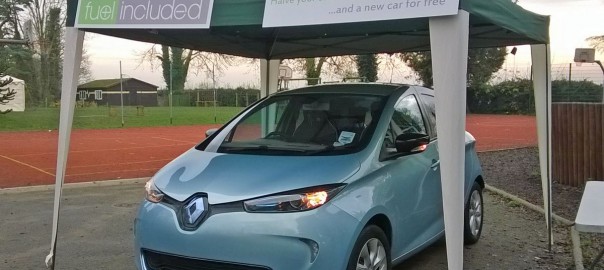
Fuel Included’s first public event – with a Renault ZOE at the Steiner School Advent Fair

We wanted to get the concept of Fuel Included to a different audience and so took a Renault ZOE to the Advent Fair at the Rudolf Steiner School in Kings Langley, Hertfordshire.

It was a mild day and so well suited to standing outside and talking to folks as they passed.

Everyone was in festive mood, and it was gratifying to hear the level of excitement about electric cars as well as the personal commitment people had to making changes and making a difference.

Our message of reducing your personal carbon footprint at the same time as saving money was well received, and after only a few hours, we had many solid leads for electric car leasing with fuel included – essentially fixed cost motoring.

All in all a most enjoyable start to the Christmas season.

Nissan Leaf in one of the OU electric vehicle scheme parking spaces (Image: T. Larkum)

Open University Electric Vehicle Research Study

EV Study venue, the OU Berrill Building (Image: T. Larkum)

In November I was invited to attend an Open University Electric Vehicle Research Study. I came across it online, plus friends who know I am an EV driver had also told me about it.

The study is being conducted by researchers from the Open University’s Ubiquitous Computing and Sustainability Lab, part of the OU’s Centre for Research in Computing. Their aim is to design interactive in-home technologies to help people better understand and manage energy issues of electric vehicles. In particular this study will investigate how an electric vehicle can fit among household energy practices and activities.

The first stage of this study is an interview, and I was happy to visit the OU campus at Walton Hall in Milton Keynes. There in the Berrill Building we talked about my experiences with an electric car, and having solar panels on my home, and my general energy usage/behaviour.

Nissan Leaf in one of the OU electric vehicle scheme parking spaces (Image: T. Larkum)
Nissan Leaf in one of the OU electric vehicle parking spaces (Image: T. Larkum)

While there I noticed that there were electric vehicle charge points in the car park outside, and one was occupied by a Nissan Leaf. However, they are part of an EV Membership Scheme and are not directly associated with this study.

I wish the Lab good luck with this project, and will report on its results when they are published.