Category Archives: Energy and Climate Change

News and articles on climate change, vehicle pollution, and renewable energy.

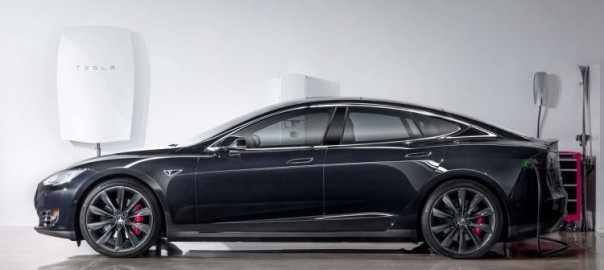
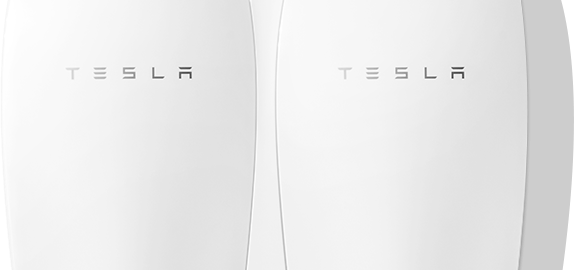
Tesla Powerwall home battery storage system (Image: Tesla)

Why is the Domestic Battery so Important?

Earlier this year I saw an all in one inverter and domestic battery unit on display at the Bosch stand at CES.

2 years ago I stayed with my friend Simon Hackett in Adelaide, Australia and saw his line up of domestic batteries in sturdy cabinets outside his home. Simon’s house is covered in solar panels, he makes more electricity than he can use and he runs three electric cars from this power source.

Yesterday Tesla announced its domestic battery range.

Tesla Powerwall home battery storage system (Image: Tesla)

So, is this yet further ‘playthings for the rich’ as so many suggest to me on the Twitters?

What role can a domestic battery have for the ordinary Joe/Joanne?

With the advent of ever cheaper and more effective lithium ion battery technology, something government supported scientists have been working on for the last 40 years, a new paradigm is beginning to emerge.

On a personal level, if you have a few solar panels and a battery in your home, this doesn’t mean you can ‘live off the grid’ but it does mean you can reduce your electricity bill by a much larger amount that you can at the moment. You can obviously store the electricity coming from your panels during the day when you are not home and use it in the evening when you return.

But that really isn’t the story.

If a thousand homes had solar panels and domestic batteries fitted, it wouldn’t make any difference to the national picture.

Those homeowners would benefit from greatly reduced bills and maybe feel smug, but that’s about it.

If ten thousand houses had them, it might be possible to register the reduction in peak demand at the National Grid control room I visited for a Fully Charged episode.

If a million homes had them, solar panels or not, it would make a very profound difference.

If 10 million homes had them, well, everything would change.

But why?

Read more: Llew Blog

The Tesla Model S And The Powerwall (Image: Tesla)

Tesla Reveals Battery Storage Solutions

Late Thursday night [30 April] in Hawthorne, California, Tesla revealed its “missing piece to building a sustainable future,” which the company says puts the world on the road to “enabling zero emissions power generation.”

Tesla notes that the world currently uses 20 trillion kWh of energy annually, which is:

“Enough energy to power a single family home for 1.8 billion years or supply energy to a nuclear power plant for 2,300 years (or launch the Falcon 9 rocket seventeen million times).”

The company says that the Tesla Energy products launched today will help to start to wean the world off fossil fuels.

The Tesla Model S And The Powerwall (Image: Tesla)

More specifically the company is offering “a suite of batteries” for residential, business and utility use. Those solutions are outlined below.

As for what was available before today, Tesla CEO Elon Musk was very candid, “The issue with existing batteries is that they suck. They are expensive, unreliable and bad in every way.”

The Tesla CEO said that the first residential units will start shipping in about three months, but that the initial ramp will be slow, as early batteries will be built at the company’s Fremont factory.

However, next year production will switch to Tesla’s Nevada Gigafactory, and things will quickly speed up.

As a special bonus, the whole presentation made from California was done off the grid, via the company’s new utility grade “Power Packs”.

Read more: Inside EVs

Car exhaust (Image: BBC)

UK government ordered to cut air pollution

Supreme court tells ministers to take “immediate action” to meet safe limits of nitrogen dioxide 25 years after original deadline

[From 29 April] Britain’s highest court today told the Government to draw up plans to tackle illegal levels of nitrogen dioxide.

In a victory for environmental lawyers ClientEarth following a five-year legal campaign, ministers must deliver proposals by the end of the year.

The government was ruled to be in breach of safeguards set under European law of the harmful pollutant in 16 UK regions and cities.

Nitrogen dioxide is produced by emissions from diesel engines.

Court justices were unanimous in the decision, saying:

“The new Government, whatever its political complexion, should be left in no doubt as to the need for immediate action to address this issue.”

ClientEarth called the ruling “historic” and said it would save thousands of lives a year.

“We brought our case because we have a right to breathe clean air and today the Supreme Court has upheld that right,” ClientEarth lawyer Alan Andrews said.

The Government has failed to bring under control levels of the pollutant for nearly 25 years, projecting it wouldn’t meet EU-set levels by 2030. In 2011 it won a grace period valid on regulations brought in 2005.

But ClientEarth today quashed the government’s statement that its actions since 2010 had been effective.

“It is very appropriate that the Supreme Court has ruled in the dying days of the government to hold it to account,” Simon Birkett, director of clean air in London said.

“The first job of the next government will be to produce a proper air quality plan and take immediate action to meet legal limits for nitrogen dioxide, currently breached up to three fold in central London,” he said.

Britain elects a new government on 7 May.

Diesel drive

Air pollution causes 29,000 premature deaths a year and costs the UK economy £9-19 billion, according to government figures.

Nitrogen dioxide is linked to respiratory problems, heart attacks and strokes.

The number of diesel cars surged to 9.4 million in 2012, a third of all licensed cars, according to official statistics. The cars, whose exhausts the World Health Organization labels as “carcinogenic” made up just 7.4% of all cars in 1994.

ClientEarth called for a “comprehensive plan” that considered “low emissions zones, congestion charging and other economic incentives”. Andrews called for London to modernise its transport fleet in an interview with RTCC earlier this month.

In London, one of Europe’s most polluted capital cities, a poll showed yesterday nearly seven out of ten Londoners thought political leaders weren’t doing enough to tackle the hazardous fumes in the capital.

Source: RTCC

Inconveniences of Gasoline 1: Gas Station (Image: Clean Technica)

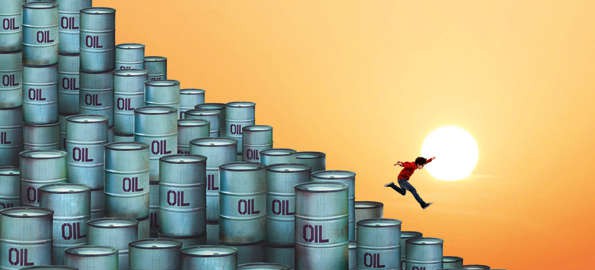
Big Oil To ‘Lose Control Of Auto Industry’

It’s not uncommon for media commenters to look at electric-car sales numbers, only to conclude that the segment is teetering on the brink of death.

Electric cars will never become mainstream, they argue, because of fickle consumers who base their-car purchases on what the price of gas happens to be the moment they walk into a dealership.

Yet while the media engages in a tug of war over gas-price analysis, there are encouraging signs pointing to continued growth of electric-car adoption.

Sales have steadily increased since the Chevrolet Volt and Nissan Leaf first went on sale in December 2010, and the cost of the batteries that power these cars is decreasing.

Those trends inspired the provocative title “Big Oil Is About to Lose Control of the Auto Industry,” for a recent article by Bloomberg (via Charged EVs).

The article promotes the Bloomberg New Energy Finance (BNEF) conference held two weeks ago, where optimism about electric cars was in abundance.

Read more: Green Car Reports

(Image: D. Bacon/Shutterstock/Economist)

Bad News About Oil Prices

I have very bad news about oil prices. In the foreseeable future (12 months), their most likely trajectory is… volatile. That is right, bullish and bearish oil price narratives will be proven to be unsatisfactory and overly simplistic. The best bet would be to invest in volatility plays.

What explains this heightened volatility in oil prices? The short answer is the death of OPEC. The U.S. geopolitical deleveraging out of the Middle East has created a disequilibrium, with Iran and Saudi Arabia engaged in a competition for regional hegemony. This competition is unlike anything investors have seen in the Middle East because it takes place in the context of global multipolarity. The U.S. is no longer willing to expend increasingly scarce resources to micromanage the Middle East and no other power is going to step in to fill the vacuum. OPEC cannot survive in this environment because a cartel cannot be maintained when its members are openly at war with each other.

How important is the death of OPEC for oil prices? My colleague Robert Ryan, Chief Strategist of BCA’s Commodity & Energy Strategy, and I think that it is transformative. In our report – titled End Of An Era For Oil And The Middle East – we argue that the salient feature of the global oil market for the past 85 years has been coordinated control of production. Oil markets will see truly free-market pricing for the first time since 1930, when amidst a chaotic production free-for-all spawned by the oil boom the Texas Railroad Commission began pro-rating production in the state to control prices.

In addition to free-market pricing, oil prices are also no longer directly proportional to geopolitical risks in the Middle East. Geopolitics will now fatten both the left and right tails of the oil price probability distribution curve. Gone are the days when geopolitics of the Middle East played an obvious, unidirectional role that simply raised the risk premium on oil prices. The new paradigm, one of disequilibrium, will create headwinds and tailwinds to oil prices.

Read more: Linked In

The sun sets on drilling (Image: Pexels)

War, hedge funds and China: why oil will hit $100 a barrel

Oil prices are heading higher and could soon return to $100 per barrel as war in the Middle East and speculators drive market

It wouldn’t be the first time that oil experts have got it spectacularly wrong when predicting the price of crude.

Goldman Sachs went against the prevailing mood in 2008 when it famously predicted that crude would hit $200 per barrel within months. Instead, oil crashed to levels around $40 per barrel as the global financial crisis punctured world demand.

This time around, the US investment bank decided to follow the consensus view on Wall Street when earlier this year it downgraded its short-term forecast for the price of a barrel to around $40 per barrel.

But instead of falling, oil has rallied strongly. Brent crude now trading above $63 per barrel is up 36pc since reaching its year low in early January. At this rate oil will be back at $100 per barrel by the end of the summer driving season in the US when middle-class America hits the great open roads to visit their ‘Aunt Agatha’ in Pennsylvania.

The sun sets on drilling (Image: Pexels)

So why has the short-term outlook for oil changed overnight?

Lower prices have started to filter through to boosting growth in the world’s most advanced economies and with it demand for gasoline, which is once again on the rise.

Here are six reasons why oil is heading back to $100:

The market is tighter than you think: World demand for crude oil is beginning to rebound. After growth in consumption slowed last year the early signs are that demand is beginning to pick up led by developed markets that are responding to a period of lower prices. The Organisation of Petroleum Exporting Countries (Opec) expects demand for oil to grow by 1.17m barrels per day (bpd) in 2015 but this is a conservative estimate. Another 500,000 bpd of crude would erase the current 1.5m bpd surplus in the market. Remove this tight surplus and oil is back above $100 in a heartbeat.

Read more: Telegraph

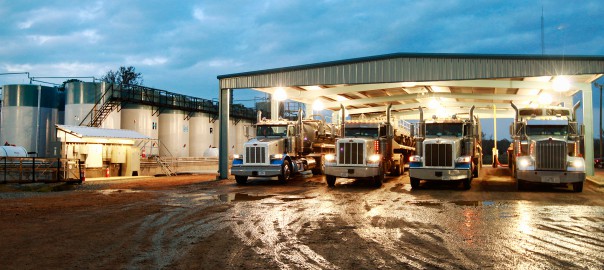
Half of U.S. Fracking Companies Will Be Dead or Sold This Year

Half of the 41 fracking companies operating in the U.S. will be dead or sold by year-end because of slashed spending by oil companies, an executive with Weatherford International Plc said.

There could be about 20 companies left that provide hydraulic fracturing services, Rob Fulks, pressure pumping marketing director at Weatherford, said in an interview Wednesday at the IHS CERAWeek conference in Houston. Demand for fracking, a production method that along with horizontal drilling spurred a boom in U.S. oil and natural gas output, has declined as customers leave wells uncompleted because of low prices.

There were 61 fracking service providers in the U.S., the world’s largest market, at the start of last year. Consolidation among bigger players began with Halliburton Co. announcing plans to buy Baker Hughes Inc. in November for $34.6 billion and C&J Energy Services Ltd. buying the pressure-pumping business of Nabors Industries Ltd.

Weatherford, which operates the fifth-largest fracking operation in the U.S., has been forced to cut costs “dramatically” in response to customer demand, Fulks said. The company has been able to negotiate price cuts from the mines that supply sand, which is used to prop open cracks in the rocks that allow hydrocarbons to flow.

Oil companies are cutting more than $100 billion in spending globally after prices fell. Frack pricing is expected to fall as much as 35 percent this year, according to PacWest, a unit of IHS Inc.

While many large private-equity firms are looking at fracking companies to buy, the spread between buyer and seller pricing is still too wide for now, Alex Robart, a principal at PacWest, said in an interview at CERAWeek.

Fulks declined to say whether Weatherford is seeking to acquire other fracking companies or their unused equipment.

“We go by and we see yards are locked up and the doors are closed,” he said. “It’s not good for equipment to park anything, whether it’s an airplane, a frack pump or a car.”

Source: Bloomberg

Storm blackouts in Australia will push consumers to battery storage

Up to 200,000 business and household customers in New South Wales face extended blackouts of up to a week, or even more, following the dramatic storms in the Sydney region and to its north.

And the impact could have as galvanising an effect as Hurricane Sandy had on the New York region of the United States – causing utilities, business and household customers to consider battery storage and even micro grids.

NSW has more than 260,000 households with rooftop solar, but any houses with solar on their roof would still be without power, because their inverters are usually connected to the grid. So when the grid goes down, the inverters go down too.

The only way to be able to use that solar power is to have battery storage and a special battery storage inverter, which effectively creates its own mini grid, and can operate on its own when the main grid goes down.

“Every storm we get a surge of inquiries,” says Glen Morris, the vice president of the Australian Energy Storage Council, and the owner of a solar-storage business. (Morris also lives in an off-grid community).

“People realise that if they have got solar PV and a grid connected inverter it doesn’t work when the power goes down, so they must have storage.”

Muriel Watt, head of energy policy at renewable energy consultants IT Power Australia, says the number of customers looking at battery storage were likely to increase dramatically as a result of the blackout, and when an estimated 146,000 households in NSW come off their premium 60c/kWh tariff next year.

“With so many households now having PV, it is making even more sense for them to consider adding storage and an inverter which allows them to switch to off-grid mode,” Watt said.

“This would at least keep the lights on and prevent the ‘fridge defrosting. Japanese people have been very aware of this option after losing power for weeks after the Kobe earthquake, but prices for PV and batteries have fallen considerably since then.

“Cost effectiveness is never the only consideration for household investments – emergency power would rate quite high on the list if we are to have more frequent severe weather events.”

As for costs, Morris says it is currently making a 10-15 year payback. But like Watt, he says that is not the main consideration.

But, he notes, the cost of battery storage is coming down quickly – around 20 per cent in 2014 for lithium-ion batteries, and another 25 per cent fall expected in 2015, battery manufacturers tell him. That is the same price trajectory as solar modules over the past 5 years.

How much storage was needed depended on what the customer needed. One household recently installed a 4kWh battery storage system, but because they were careful with their energy use, that was enough for a full day.

Many households or businesses would want storage just to ensure the TV, lights and radio are kept on, and possibly the fridge. Others use storage to bank the output from their solar panels and use later in the day.

That’s because new owners are either getting paid little or nothing to export back to the grid, or are prevented from doing so.

Businesses, particularly those with refrigeration needs who find they are paying $40,000 to $50,000 for a back up generator with high maintenance, are also finding rooftop solar and battery storage is a cheaper and more effective alternative.

Some forecasts suggest that within a few years, it will be economic for households in city suburbs to disconnect from the grid. Some suggest one-third may do so within the next few decades.

Right now, though, Morris says even the market operator does not know how many battery storage systems are in place. That’s because most people installing storage are adding it to pre-existing solar systems.

Michael Anthony, from Solar360, says the bulk of his company’s business is now centred around storage. He says about 40-60 new storage systems are being installed each month, much of it in regional areas, but also in the city – both for businesses and households.

“Most dealers are trying to sell just solar, but they haven’t understood that adding storage gives a better result.”

Anthony says the levelised cost of energy for added battery storage systems is at the same level as grid power.

Ironically, Morris was speaking from the northern NSW town of Ballina, where he was hosting a course on battery storage for technicians from the local network operator.

The main grid operator in the Sydney, Hunter region, Ausgrid had to put out a warning on Wednesday in response to reports that desperate households and businesses – facing another week without power – were rushing to hardware stores to buy generators.

Morris said this was both illegal, and stupid. Generators could only work when powering appliances directly. If they are fed into a household wiring system, they can be incredibly dangerous, both for the occupants and network linesmen.

Source: RenewEconomy.au
Earth Day 2015: 8 reasons to buy an electric car

Why 2015 can be the year you go green

We love electric cars. They’re almost always pleasant to drive, and the amount of power available at low speeds makes them incredibly fun to use. More importantly however, they help reduce harm to the environment, contribute to a more sustainable level of energy usage, and create a cleaner urban environment.

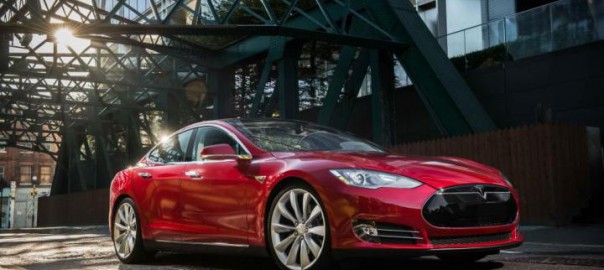
The Nissan Leaf is a spacious city car, the dinky Smart ForTwo is perfect for slinking around city streets, and the Renault Zoe is the cheapest car to run according to our Driver Power survey. The Tesla Model S is an incredible car and beats many conventional fuel-burners, with its 0-60mph time of 3.1 seconds and top speed of 155mph.

Still need convincing? Here are eight reasons to buy an electric car this year:

1. Electric cars are quiet

One of the most striking features of an electric car is the silence with which it operates. We’re accustomed to the noise generated by an internal combustion engine, but pulling away from the lights in a Ford Focus Electric makes no noise at all. The result is a very calming driving experience, as well as a quieter environment.

2. Electric cars are fast

An electric drivetrain enables a car to use almost all of its power immediately. A petrol or diesel car won’t be able to use all of its power until the engine is turning at a specific speed – an electric motor is always generating as much power as it can. The effect? A quick car – the Tesla accelerates faster than an Audi R8.

3. Electric cars are reliable

There aren’t many moving parts in an electric car. Those parts that do move are relatively simple and robust – electric motors are clean, safe technology. Fossil fuel cars, meanwhile, rely on combustible fuel and a plethora of perishable, metallic components that wear out and need replacing.

4. Electric cars are cheap

They might not be as cheap as their gas-guzzling counterparts, but they’re not far off. The Tesla Model S is obviously a bit of an anomaly, as – despite its supreme value – it’s a very high-end product. But electric cars start at well under £20,000 and finance options are available, making them easily attainable to most drivers and families.

5. Electric cars are good for the planet

It’s barely worth mentioning, but electric cars are vastly better for the environment than their petrol or diesel counterparts. The generation of electricity depends partly on fossil fuels, but the percentage is falling and it’s still a more efficient process than burning petrol on an individual basis.

6. Electric cars are good for your town

“The environment” includes your personal one. Towns and cities, especially congested ones like London, suffer from pollution caused by conventional vehicles. Pollution warnings are becoming common in the capital – everyone’s life would improve if petrol and (especially) diesel cars were replaced with electric vehicles.

7. Electric cars are cheap to run

The Renault Zoe is the cheapest car to run according to Carbuyer and Auto Express readers who contributed to the Driver Power survey. You can expect to pay a couple of pence per mile, and sophisticated charging systems enable you to charge your car when electricity demand is at its lowest nationally (and therefore prices are at their lowest). What’s more, a lack of maintenance overheads and a wide variety of incentives and discounts make owning an electric car a clever financial move.

8. Electric cars are probably the way of the future

Fossil fuels are a finite resource. The way we depend on them for transport is going to have to change, and the best option we have at the moment is electricity. They’re likely to become the norm in the next few decades, so the question isn’t so much whether you should buy an electric car – it’s when.

Source: Car Buyer

Global warming: Scientists say temperatures could rise by 6C by 2100

There is a one-in-ten chance of the world being 6C warmer than it is today by 2100 which would lead to cataclysmic changes in the global climate with unimaginable consequences for human civilisation, leading climate researchers have warned in an “Earth Statement”.

The risk of hitting the highest upper estimate for global warming based on current levels of carbon dioxide emissions is now so high that it is equivalent to tolerating the risk of 10,000 fatal aircraft crashes a day, according to the 17 “Earth League” scientists and economists who have signed the joint statement.

The experts have drawn up a three-page summary of the action needed to be agreed on at the UN meeting in Paris this December, which is widely seen as the last chance for the world’s political leaders to agree on a binding treaty to prevent the global climate from slipping into a dangerously precarious state.

Scientists calculate that the world has already warmed by an average of about 0.85C over the past 120 years and that a further increase of no more than 2C is the lowest that could be tolerated without running the risk of dangerous climate “tipping points” leading to further, accelerated warming.

“We should aim to stay as far below [2C] as possible, since even 2C warming will cause significant damage and disruption. However, we are currently on a path to around 4C warming by 2100, which would create unmanageable environmental challenges,” says the statement.

“If we do not act now, there is even a 1 in 10 risk of going beyond 6C by 2100. We would surely not accept such a high risk of disaster in other realms of society. As a comparison, such a 1 in 10 probability is the equivalent of tolerating about 10,000 airplane crashes every day worldwide,” it says.

Read more: Independent