Category Archives: Energy and Climate Change

News and articles on climate change, vehicle pollution, and renewable energy.

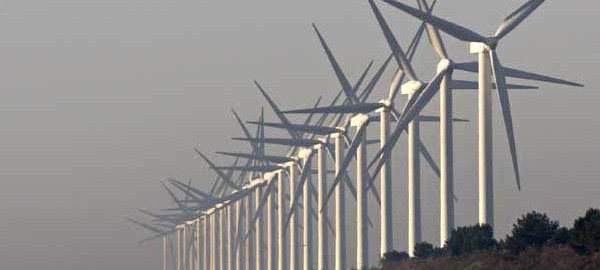
Wind farm in Europe (Image: EV World)

UK downgraded on global energy rating

The World Energy Council rates countries in their energy and climate policies. The recent rating is available on the WEC website. The WEC points out that only two countries have the triple A rating. This post from Reuters in The Guardian shows that the UK has lost that rating, because of the government scrapping onshore wind subsidies and cut solar subsidies.

Britain loses top energy rating after green policy U-turns

Wind farm in Europe (Image: EV World)

Britain has lost its top-notch energy policy rating from the UN-accredited World Energy Council after the government prematurely cut some renewable energy subsidies, creating uncertainty about how it will address support in future.

The World Energy Council has downgraded Britain to an AAB rating, from AAA, in its annual “energy trilemma index”, which ranks countries’ energy and climate policies based on the issues of energy security, equity and sustainability.

The downgrade reflects the damage the subsidy cuts have caused to Britain’s reputation as an attractive renewable energy market.

Earlier this year Britain scrapped subsidies for onshore windfarms, closed support for small-scale solar projects and changed the way other renewable energy projects qualify for payments, saying they were becoming too costly for taxpayers.

“The UK government must give more predictability to investors in the way the electricity market reforms are progressed,” said Joan MacNaughton, executive chair of the World Energy Trilemma study.

Read more: Energy in Demand
The Defining Myth of Our Culture

Many people view the word myth as almost synonymous with ‘story’ or ‘fairy-tale’. This sells myth appallingly short, for it is much more that that, a trope that can give meaning and context to a whole culture.

steamworkshop_webupload_previewfile_333389464

Myths can define a culture, giving a people a shared world-view, a common set of assumptions from which to experience the world. We may sneer and say the myths were wrong, for instance the view that the Earth is at the centre of the universe, requiring byzantine wheels within wheels to explain the movement of the planets in the sky. And yet even such a world-view is good enough to farm successfully, it was good enough for Ptolemy to be able to predict planetary motion reasonably well.

Religion is often a defining myth, indeed Christianity has probably been the defining myth of the West for much of its written history.

We believe, of course, that we are more sophisticated. We don’t need a myth. But we have one

Our myth is continual growth

Like Ptolemy’s geocentricity, it needs to be true enough to explain many observations. From where I’m standing it explains most things. I grew up in a world of coal fires, frost on the inside of windows in winter and pipes that froze up in the cold and vacuum tubes in the radio.

We now have central heating, iPods and a bewildering choice of all sorts of things. That’s growth for you, and pretty much continual growth at that. I’m not complaining, but I don’t think I’ll see another 30 years of it at the same rate.

So the myth of continual growth is a good myth for our times. Our economic system appears to be predicated on it, and until now it has worked pretty well. However, most natural systems have limits, beyond which they won’t go. Draw too much water from a well, and you don’t have any any more.

Read more: Simple Living in Suffolk

‘Step back a pace and you see that all these crises arise from the same cause.’ (Image: S. Thibault)

The gathering financial storm

Governments are liberating global corporations from the rule of law and leaving them to rip the world apart

‘Step back a pace and you see that all these crises arise from the same cause.’ (Image: S. Thibault)

What have governments learned from the financial crisis? I could write a column spelling it out. Or I could do the same job with one word: nothing.

Actually, that’s too generous. The lessons learned are counter-lessons, anti-knowledge, new policies that could scarcely be better designed to ensure the crisis recurs, this time with added momentum and fewer remedies. And the financial crisis is just one of the multiple crises – in tax collection, public spending, public health and, above all, ecology – that the same counter-lessons accelerate.

Step back a pace and you see that all these crises arise from the same cause. Players with huge power and global reach are released from democratic restraint. This happens because of a fundamental corruption at the core of politics. In almost every nation the interests of economic elites tend to weigh more heavily with governments than do those of the electorate. Banks, corporations and landowners wield an unaccountable power, which works with a nod and a wink within the political class. Global governance is beginning to look like a never-ending Bilderberg meeting.

Read more: The Guardian

Oil and gas firms will be fossils by 2025

Technological development will transform the global marketplace over the next decade, with the oil and gas sector set to be the most negatively affected, according to Neptune Investment Management’s chief investment officer and economist James Dowey.

AAEAAQ_Oil_RollerCoaster_LinkedIn

Speaking at a press event, Dowey argued that the pace of technological change is likely to speed up over the next decade, with the development and adoption of new technology likely to drive returns in financial markets far more than traditional macro-economic factors.

‘Over the next 10 years macro-economic issues such as the growth of China are going to be far less important. Rather, technological innovation and change is going to drive markets, and many established businesses will have their current models ripped apart,’ says Dowey.

TECHNOLOGICAL CHANGE

Pointing to the pace of technological change since the 1970s, Neptune’s newly appointed CIO says that markets continue to underestimate the transformative power of technology despite the exponential growth of firms such as Google over the past five to 10 years.

In particular, he argues that the oil and gas industry could be entirely wiped out by 2025, with consumers and industry far more likely to be generating their own solar energy in a decade.

‘The potential disruption to the energy sector is the most profound. I am not at all clear that we will still be digging oil out of the ground in 10 years’ time. Household energy consumption will be radically different, with most generating their own solar energy at home,’ says Dowey.

Read more: Money Observer

Renault-Nissan CEO Speaks Of Importance Of Paris Climate Change Deal

https://youtu.be/UKewKOnc_D4

Renault-Nissan Alliance CEO Carlos Ghosn published a post discussing the importance of the United Nation’s COP21 climate conference in Paris, which is supported by Alliance EVs.

Ghosn hopes for a new, broad global agreement on the climate change, strongly believing that we should deal with environment impact.

As an example for the automotive industry, Ghosn shows 800 million vehicles on the world’s roads, which will grow to more than 2 billion by 2050, according to expectations.

“We cannot continue to rely only on fossil fuels to power those vehicles and supply the bulk of our energy if we are going to avoid the worst effects of climate change.”

Read more: Inside EVs

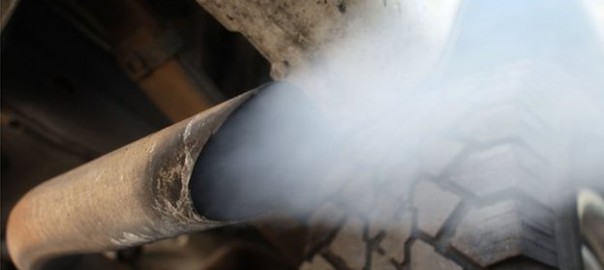
Car exhaust (Image: BBC)

London’s Fog Returns

Cambridge, England — IN January, researchers at King’s College London announced that pollution levels on Oxford Street, in central London, had exceeded limits set for the entire year in just the first four days of 2015.

Similarly alarming numbers have been recorded for other streets in the city — and yet the mayor, Boris Johnson, has delayed implementation of stricter air-quality measures until 2020.

Car exhaust (Image: BBC)

What’s happening in London is being played out in cities worldwide, as efforts to curtail the onslaught of air pollution are stymied by short-term vested interests, with potentially disastrous results.

Read more: NY Times

Greenland Is Melting Away

This is an excellent article – not just for its content, but for its technical tour-de-force.

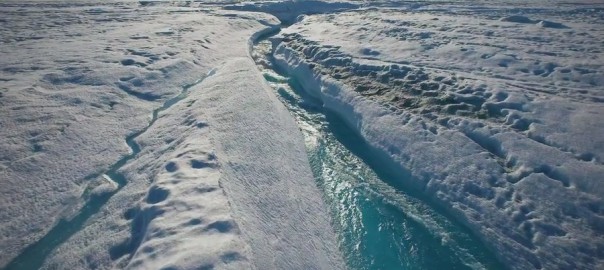
— The midnight sun still gleamed at 1 a.m. across the brilliant expanse of the Greenland ice sheet. Brandon Overstreet, a doctoral candidate in hydrology at the University of Wyoming, picked his way across the frozen landscape, clipped his climbing harness to an anchor in the ice and crept toward the edge of a river that rushed downstream toward an enormous sinkhole.

If he fell in, “the death rate is 100 percent,”

said Mr. Overstreet’s friend and fellow researcher, Lincoln Pitcher.

top-desktop-900_greenland_river_NYTimes

But Mr. Overstreet’s task, to collect critical data from the river, is essential to understanding one of the most consequential impacts of global warming. The scientific data he and a team of six other researchers collect here could yield groundbreaking information on the rate at which the melting of the Greenland ice sheet, one of the biggest and fastest-melting chunks of ice on Earth, will drive up sea levels in the coming decades. The full melting of Greenland’s ice sheet could increase sea levels by about 20 feet.

Read more: NY Times

Obama Rejects Construction of Keystone XL Oil Pipeline for Climate Change

WASHINGTON — President Obama announced on Friday that he had rejected the request from a Canadian company to build the Keystone XL oil pipeline, ending a seven-year review that had become a symbol of the debate over his climate policies.

untitled_oil_pipeline_unk

Mr. Obama’s denial of the proposed 1,179-mile pipeline, which would have carried 800,000 barrels a day of carbon-heavy petroleum from the Canadian oil sands to the Gulf Coast, comes as he seeks to build an ambitious legacy on climate change.

“America is now a global leader when it comes to taking serious action to fight climate change,” Mr. Obama said in remarks from the White House. “And, frankly, approving this project would have undercut that global leadership.”

Read more: NY Times

(Image: D. Bacon/Shutterstock/Economist)

Full Extent of Oil Industry Suffering Revealed Soon

Get ready for some bad news and red ink.

(Image: D. Bacon/Shutterstock/Economist)
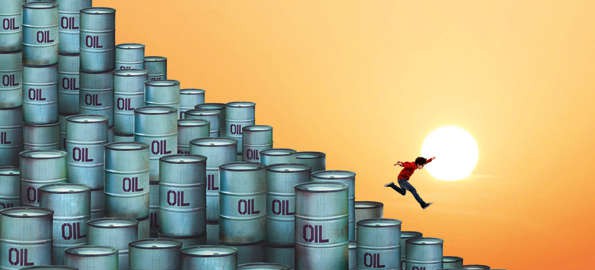
Oil Mountain (Image: D. Bacon/Shutterstock/Economist)

With the bulk of quarterly earnings reports in the energy industry yet to be announced, there are already $6.5 billion worth of asset write-downs, according to Bloomberg. And that could be just the tip of the iceberg. A Barclays’ assessment last week predicted $20 billion in impairment charges from just six companies.

Write-downs occur when the expected future cash flow from an asset falls sufficiently that a company has to report that the asset has lost some of its value. With oil prices half of what they were from mid-2014, oil and gas fields around the world are no longer worth what they used to be. Some oil fields that were previously expected to produce in the future may no longer even make sense to develop given current oil prices. As a result, investors should expect billions of dollars in further write-downs in the coming weeks.

Persistently low oil prices are putting a lot of pressure on the dividend policies of oil and gas producers. The Wall Street Journal reported that four oil majors – BP, Royal Dutch Shell, ExxonMobil, and Chevron – have a combined cash flow deficit of $20 billion for the first half of 2015. In other words, these big players are not earning enough revenues to cover expenditures, share buybacks, and dividends. With such a large cash flow deficit, something has to give. All four are focusing on slashing spending in order to preserve their promises to shareholders, with dividends especially seen as untouchable.

Read more: Oil Price

Global Trade Is Collapsing As The Worldwide Economic Recession Deepens

When the global economy is doing well, the amount of stuff that is imported and exported around the world goes up, and when the global economy is in recession, the amount of stuff that is imported and exported around the world goes down.

300x228_Dominoes_Falling_Public-Domain
It is just basic economics. Governments around the world have become very adept at manipulating other measures of economic activity such as GDP, but the trade numbers are more difficult to fudge. Today, China accounts for more global trade than anyone else on the entire planet, and we have just learned that Chinese exports and Chinese imports are both collapsing right now. But this is just part of a larger trend. As I discussed the other day, British banking giant HSBC has reported that total global trade is down 8.4 percent so far in 2015, and global GDP expressed in U.S. dollars is down 3.4 percent. The only other times global trade has plummeted this much has been during other global recessions, and it appears that this new downturn is only just beginning.

Read more: TEC Blog