Category Archives: Energy and Climate Change

News and articles on climate change, vehicle pollution, and renewable energy.

The possible irrelevance of oil

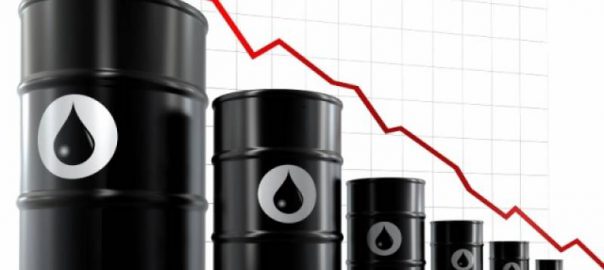
The average price of a barrel of oil has plummeted from over 120 USD / barrel to about 30 USD /barrel in the last three years. There may be a lot of geopolitical reasons why this has happened. There is also an analysis of how long this will persist. Relations between Saudi-Arabia and Iran, the situation in Iraq, OPEC relations and shale-oil boom in the US all play a part in this. But there may be another aspect of this situation which may be more relevant and inevitable than most of us may believe at the moment.

1461131183-8625_the-possible_irrelevance-of-oil_unk

There have been many “industrial disruptions” in the last few decades that most of us never really saw it coming. Products and companies which were household names have disappeared into the oblivion. For example Kodak was a company that was synonymous with photography. The brand was so well know that fifteen years ago when a family got together or there was a good photo opportunity it was popularly referred to as a “Kodak” moment. The company does not even exist now. Not because they were not performing well, but because the product that they were making suddenly became irrelevant. Similarly cassettes and VCRs are gone and children growing up today will only know them as novelties from the past.

An industry disruption, according to an expert in this field from Stanford University in the United States, Tony Seba, is when a new industry or product “disrupts” a previously well-established product or industry. If you look at what happened to Kodak, people did not stop taking pictures, but the way it was being done completely changed. Similarly, music is still popular, but the cassettes and VCRs have been replaced with new and more convenient devices.

A similar disruption is possibly taking place in the automobile industry, at this very moment. Automobiles need petrol or diesel as fuel to function. In fact, more than 50% of crude oil produced gets converted to fuels used by automobiles. But the new generation of cars may not need petrol or diesel at all to function. These may not contain the traditional internal combustion petrol or diesel engine.

A few years ago, nobody had heard of a car company called Tesla Motors. The company was founded by a charismatic US based entrepreneur named Elon Musk, in 2003. The cars made by this company are fundamentally different from cars being produced by other large automobile companies like Toyota, Volkswagen and GM. Tesla cars don’t have a petrol or diesel engine but contain electric motors and batteries. The basic concept is simple. The battery is charged like how one charges a mobile phone or a laptop and the power stored in these batteries is then delivered by electric motors to the wheels. The most amazing thing is that the final product is not an experimental or a concept vehicle anymore, but is a thoroughly acclaimed luxury car which is now being compared to the likes of best traditional cars in the business such as Mercedes Benz S class.

Read more: Nation
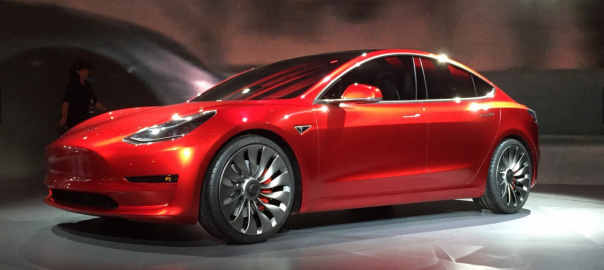
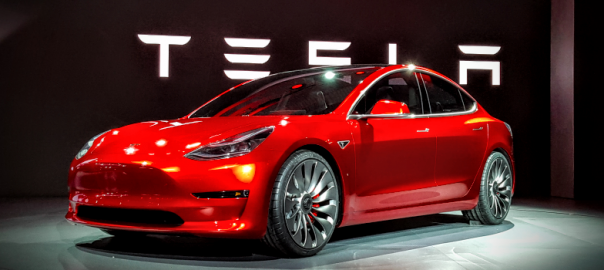
Tesla Model 3 (Image: Green Car Reports)

How do we jam the roads with Teslas by 2030? Just ask Norway

Last week, I explained a dismaying reality for planet-savers everywhere: Not even mega-blowout sales for Tesla’s new Model 3 sedan are enough to substantially green and decarbonize our global transportation system. There are simply too many cars on the road and too many new cars sold each year — the vast majority of which run on gasoline, not electricity, and will for some time.

Tesla Model 3 Unveil (Image: Tesla)

What this means is that we’re probably now at the beginning of a gradual, rather than rapid, electrification of the transportation sector. Yeah, it’ll help out when it comes to greenhouse gas emissions — especially as the electricity that powers Teslas and other electric cars also becomes greener — but it probably won’t do so fast enough to save us in the critical two decades or more when all the big decisions about the planet’s future need to be made.

So how is it possible to scale up faster? Well, one answer may come by looking at the example of a country that has already done just that: Norway, where electric vehicles were fully 18 percent of new cars sold last year.

In a new paper in Applied Energy, Måns Nilsson of the Stockholm Environment Institute and Björn Nykvist of the KTH Royal Institute of Technology in Stockholm examine the policy moves that made this kind of high growth possible, using Norway and several other examples from around the world to drive their analysis.

The gist? You essentially need two things — public policies that address the current higher cost of these vehicles (through tax breaks or rebates) until those costs decline, and then other public policies that do something else: Get past people’s psychological blocks when it comes to driving electric vehicles. That’s a very big issue when people are used to pumping gas rather than charging, and so develop ‘range anxiety’ — the fear that their EV will run out of juice far from a recharging station.

“When you start to change some of the economic incentives, you get the first movers,” says Nilsson. “But then what we have seen is this norm change, that it’s like a cultural shift in certain pockets, typically certain communities, it could be certain suburbs, certain cities, where the electric car becomes the norm.”

Read more: Washington Post

We can ditch fossil fuels in 10 years, if we want to

Patterns show that the move to cleaner energy would be quick if there was a concerted effort.

506079846_oil_rig_unk

The quest to end the use of fossil fuels might not be as daunting as you think. A University of Sussex study claims that humanity could drop coal and oil within a decade, based largely on historical evidence that many tend to overlook. Professor Benjamin Sovacool notes that energy transitions have happened quickly whenever there was a combination of “strong government intervention” with economic or environmental incentives to switch. It only took 11 years for the Canadian province of Ontario to abandon coal energy, for example, while nuclear power surged to 40 percent of France’s electricity supply within 12 years. In the case of fossil fuels, it’s a combination of climate change worries, dwindling resources and advanced technology that could step up the pace.

The researcher admits that these handovers tend to move slowly if left to their own devices, such as the decades it took for electricity to see widespread adoption. However, Professor Sovacool argues that the mainstream notion that these transitions must happen slowly doesn’t really hold water. They just need a concerted, collaborative effort, he says.

Of course, actually creating that effort is another matter. While electric cars and renewable energy are quickly hitting their stride, there’s also stiff opposition from the fossil fuel industry (and the politicians that protect it) to the sort of regulation that would speed up the use of cleaner power sources. Also, developing countries seldom have the luxury of dropping fossil fuels — it’d cost too much, or leave too many people without reliable electricity. An accelerated transition might not happen until the political and economic advantages are so overwhelming that even the staunchest opponents concede defeat.

Source: Autoblog

Severe Flooding, Against a Background of Wind Turbines: November 2012, Tyringham, Bucks. (Image: T. Larkum)

US shale oil peak in 2015

I’m including this as a follow-on to my blog post of last summer: It’s time to call Peak Oil.

The recent EIA drilling productivity reports show a peaking of shale oil production in the main production regions. https://www.eia.gov/petroleum/drilling/

Fig 1: Bakken production change from old/new wells (Image: EIA)

The 1st panel shows that the number of drilling rigs has dropped sharply but the initial well production per rig has increased from 450 b/d to 750 b/d. The 2nd panel depicts the monthly production decline in old wells, which has stabilized at around 60 kb/d. This is the volume needed to keep production flat but the 3rd panel shows that new wells offset only about half of the decline. That is why in panel 4 overall production declines.

We see that in 2015 production from new wells declined abruptly. The intersection point with old wells corresponds to the peak in production. The old wells decline has moderated suggesting that more and more old wells have entered their phase of final, flat production at very low levels.

We see that forecasts by the EIA have been revised downwards since mid of last year. Production at the end of 2017 is expected to increase modestly as a result of rising oil prices.

Conclusion:

The so-called US shale oil revolution got stuck in 2015. The longer oil prices remain low, the more the 2015 peak will establish itself. There are no free-bees here. Pay less for oil and you will get less oil.

Source: Crude Oil Peak

Tesla Model 3 at launch (Image: K. Field/CC)

‘I Drive Electric Because I Love My Children More Than You Do’

I am the CTO of a company supporting the oil and gas industry, and also the CEO of a start-up (FuelIncluded.com) promoting the adoption of electric cars. Clearly, from at least one perspective, these industries are in direct competition. However I prefer to see them as complementary: the tension between these industries is an example of the many energy transitions we are starting to experience as a society as we move from fossil fuels to renewables, and from pollution to clean air. Having a foot in each camp gives me, I think, an interesting and exciting position from which to watch things unfold, and, to an extent, to promote a much needed change.

Smog in New York City (Image: Public Domain/Wikipedia)

Naturally I’m a big fan of electric cars. I’ve owned one for nearly 3 years and have driven it more than 40,000 miles in that time. It charges at home either from my own solar panels or from our renewable energy supply. It charges on the motorway/freeway at Ecotricity rapid chargers which also have a renewable supply. I’m clearly sympathetic to the view that we should all be driving electric vehicles for the sake of public health and our future climate, never mind peak oil.

However, I was still shocked to receive a retweet on my Twitter feed this week that seemed to go beyond the usual debate on the pros and cons of electric cars. It showed a bumper sticker that said:

“I Drive Electric Because I Love My Children More Than You Do”

It was a bit of a shock to read so I read it again. I then moved on, meaning not to give it another thought. However, since then I’ve found myself reflecting on it. It bothered me, enough for me to want to put my thoughts on paper.

I’ve concluded that there are two issues here that caught my attention – the message itself, and the way the message was communicated.

The Message

I have a lot of sympathy with the message, …

Read more: Me on LinkedIn

Ecotricity acquires SunEdison UK solar business

Ecotricity, Britain’s leading green energy company, today announced that it has acquired the home rooftop solar business of SunEdison.

ecotricity-acquires_sunedison_uk-solar-business_ecotricity

Before exiting the UK, SunEdison had built a portfolio of nearly a thousand rooftop solar installations, a product known as the Energy Saver Plan.

The news comes on the day SunEdison Inc. filed for bankruptcy in the U.S.

Dale Vince, Ecotricity founder, said:

“This is an exciting and important step for Ecotricity. As a company, we want to help more people generate their own power at home.

“The government’s cuts to the feed-in tariff, and its broader attack on the renewables industry, have caused a significant problem for companies like SunEdison: we have seen some go bust and others quit the UK market as a result, losing a lot of jobs as a result.

“This is our first step into the domestic solar market, and as the price of the technology continues to fall, we’re confident that it’s only a matter of time before we can resume the work SunEdison started and help more homes take advantage of solar power.”

Ecotricity, who now supply approaching 200,000 customers from a fleet of wind and sun parks, last made an acquisition in 2014 when they rescued small windmill company Evance from administration – uniting Evance with other supply chain companies, Ecotricity formed a new small windmill company called Britwind.

Dale said:

“We see a big future for renewable technology of this scale in Britain – small wind and rooftop solar will allow more people to generate their own power at home, decentralising the energy sector and putting power in the hands of the people.”

Source: Ecotricity

March temperature smashes 100-year global record

Average global temperature was 1.07C hotter – beating last month’s previous record increase

CgAsJxYWEAAYAPA_March_HighTemps_JMA

The global temperature in March has shattered a century-long record and by the greatest margin yet seen for any month.

February was far above the long-term average globally, driven largely by climate change, and was described by scientists as a “shocker” and signalling “a kind of climate emergency”. But data released by the Japan Meteorological Agency (JMA) shows that March was even hotter.

Compared with the 20th-century average, March was 1.07C hotter across the globe, according to the JMA figures, while February was 1.04C higher. The JMA measurements go back to 1891 and show that every one of the past 11 months has been the hottest ever recorded for that month.

Data released released later on Friday by Nasa confirmed last month was the hottest March on record, but the US agency’s data indicated February had seen the biggest margin. The Nasa data recorded March as 1.28C above the average from 1951-1980, while February was 1.34C higher.

The World Meteorological Organisation, the UN body for climate and weather, said the March data had “smashed” previous records.

Climate change is usually assessed over years and decades, but even scientists have been struck by the recent unprecedented temperatures. Furthermore, annual heat records have been also tumbling, with 2015 demolishing the record set in 2014 for the hottest year seen, in data stretching back to 1850.

The UK Met Office expects 2016 to set a new record, meaning the global temperature record is set to have been broken for three years in a row.

Prof Michael Mann, a climate scientist at Penn State University in the US, responded to the March data by saying: “Wow. I continue to be shocked by what we are seeing.” He said the world had now been hovering close to the threshold of “dangerous” warming for two months, something not seen before.

“The [new data] is a reminder of how perilously close we now are to permanently crossing into dangerous territory,” Mann said. “It underscores the urgency of reducing global carbon emissions.”

Read more: The Guardian

Diesel vehicles are among the worst for harmful pollution, experts claim (Image: N. Howard)

‘Ban all diesel vehicles from capital’s centre,’ say over half of Londoners

[13 April] More than half of Londoners want diesel vehicles banned from the city centre to cut toxic air pollution blighting the capital, a new poll reveals today.

Diesel vehicles are among the worst for harmful pollution, experts claim (Image: N. Howard)

The YouGov survey showed 55 per cent of adults in the city back a crackdown on buses which experts blame for the largest proportion of nitrogen dioxide fumes from traffic in central London.

Even more supported a ban on diesel lorries, 62 per cent.

While 54 per cent believe diesel taxis should be stopped from operating in this area, and 52 per cent think all diesel cars should be banned from it.

More than two thirds of Londoners also say higher polluting vehicles should pay more for travelling through the capital.

The findings will heap pressure on the next mayor to speed up switching away from diesel to cleaner electric buses and hybrid models used in electric mode.

Read more: Standard

The costs of setting up a diesel scrappage scheme wouldn't merit the benefits says RAC Foundation

Bin diesel scrappage idea and support EVs says RAC Foundation

A proposed diesel car scrappage scheme would have very little effect on air quality – unless implemented on a huge scale – and instead support should be given to electric vehicles, according to analysis by the RAC Foundation.

The costs of setting up a diesel scrappage scheme wouldn't merit the benefits says RAC Foundation
The costs of setting up a diesel scrappage scheme wouldn’t merit the benefits says RAC Foundation

The idea, proposed by think tank Policy Exchange last month, suggested that a scrappage scheme be set up for drivers of older, more polluting diesel cars, in a similar fashion to the 2009/10’s vehicle scrappage scheme. This would give owners an incentive – previously around £2,000 off the price of a new car – to have their highly polluting vehicle taken off the road to benefit air quality.

The RAC Foundation has found that around 1.9 million older diesel cars are on UK roads, fitting into Euro standard categories 1, 2 and 3. Currently, all new cars sold have to be certified to Euro 6 standards.

These older models account for 17 per cent of all diesel cars on the road – more than 11 million in total – and are responsible for 15 per cent of total NOx emissions from diesel cars says the RAC Foundation.

Analysts went on to calculate the benefits of such a scheme if, as would be expected, it ran along the same lines as the vehicle scrappage scheme around seven years ago.

Around 400,000 old diesel cars would be taken off the UK’s roads, at a cost of around £800 million should the government and manufacturers each contribute £1,000 for the incentive for customers to buy a new model.

If every one of those cars was replaced with a zero-emission vehicle, the annual cut in NOx emissions from the diesel fleet would be about 4,900 tonnes, or 3.2 per cent of total emissions from diesel cars.

Should the 400,000 models scrapped be replaced with new Euro 6 diesels, that saving would drop to 2,000 tonnes NOx per year at 1.3 per cent of the total, accounting for drivers covering the same mileage as with their old diesel car.

Read more: Next Green Car

Red Tesla Model S (Image: T. Larkum)

Why Would You Power A Clean Electric Car With Dirty Energy?

Buying a Tesla might lead to greener choices elsewhere

Red Tesla Model S (Image: T. Larkum)
You’ll want to know how the electricity is produced, right? (Image: T. Larkum)

NEW YORK — It’s one thing to get people to care about the price of energy. It’s quite another challenge to get them to care about the source of energy and its environmental impact.

But buying an electric car — presumably, in part, to reduce one’s carbon footprint — may push people to think about where the electricity to power that vehicle comes from, according to one early investor in Tesla Motors.

“The electric vehicle is like a Trojan horse for energy literacy,”

Nancy Pfund, managing partner at the venture capital firm DBL Partners, said during a panel discussion at the Bloomberg New Energy Finance Summit in Manhattan on Monday morning.

Pfund said she noticed the possible linkage a decade ago, when DBL first invested in Tesla, which sells luxury electric cars, and its sister company, SolarCity, which markets solar power systems. Both are chaired by billionaire Elon Musk.

“In the early days of Tesla, early adopters would buy the Roadster or the Model S, and weeks later we’d see an uptick in solar adopters,” she told The Huffington Post in an interview. “They’re really examples of the connection between transportation and the green electrical grid.”

The idea is that no one wants to go greener by buying a battery-powered electric vehicle only to charge it with electricity generated from burning coal or gas.

Most Americans buy electricity from utility companies that produce energy by burning fossil fuels or generate power from water flow, wind turbines or solar panels. A small but growing number of people generate power from rooftop solar panels or backyard wind turbines and then sell any excess energy to the utility companies. To really go green, people need batteries to store their own clean energy for later use.

If purchasing an electric car focuses the buyer on other ways to access cleaner energy and use it in lower quantities, that can work to improve the whole system.

“Anytime you get people to be more literate and understand where something is coming from, they have a voice,” Pfund added. “And a more engaged and vocal population will demand more energy choices.”

Read more: Huffington Post