Category Archives: Energy and Climate Change

News and articles on climate change, vehicle pollution, and renewable energy.

EU dilutes proposal to halve air pollution deaths after UK lobbying

If implemented, weakened proposal means 14,000 people could die prematurely across Europe each year from 2030

EU states have agreed to water down a proposed law aimed at halving the number of deaths from air pollution within 15 years, after intense lobbying from the UK that cross-party MEPs have condemned as “appalling”.

Some 14,000 people will die prematurely every year across Europe from 2030 as a result, if the weakened proposal is implemented, according to figures cited by the environment commissioner, Karmenu Vella.

The revised proposal is likely to be rejected by the European parliament next week, setting the scene for a public row on 20 June, when Europe’s environment ministers meet to thrash out a compromise.

But EU diplomats said that the UK had been a key player in crafting a blocking minority to kill a more ambitious proposal to bring in measures that would result in a 52% improvement in pollution-related health impacts for citizens around Europe. This translates as a reduction in deaths from conditions such as stroke, heart disease and asthma.

One diplomat said:

“They [the UK] gathered some of the environmental attaches in Brussels who they thought would be most willing to follow their line and weaken the directive. They talked to big countries, such as France and Italy, and I think they also discussed with the strongest ones in eastern Europe, like Poland.”

Seb Dance, the Labour parliamentary group’s environmental lead, said the UK was

“a leading proponent of watering down the proposed target and [also] seems to be playing a leading role in the coalition of the unwilling”.

Read more: The Guardian

Climate Change Impact in Africa (Image: iPhoto)

Another Terrible Consequence Of Antibiotics In Farm Animals

In case you weren’t already convinced that overuse of antibiotics in livestock is a bad, bad, bad idea — a recent study offers a new reason to scale back on them: climate change.

Climate Change Impact in Africa (Image: iPhoto)

An international research team found that dung from cattle treated with a commonly used antibiotic gave off a little less than double the amount of methane of antibiotic-free dung. Their work was published Thursday in the science journal Proceedings Of the Royal Society B.

Scientists tested dung from 10 cows. Five of the cows received a three-day course of broad-spectrum antibiotic tetracycline, and five received none, Phys.org reports. Researchers then measured the dung’s outputs of carbon dioxide, methane and nitrous oxide, and found that the antibiotic course “consistently increased methane emissions.” Right now, the researchers aren’t sure exactly why the antibiotics have this effect.

Scientists also found that the antibiotics changed the types of microorganisms living within dung beetles that fed on the dung. That finding is important because it indicates that giving livestock antibiotics can affect other wildlife and not just the “target animal,” lead author Tobin Hammer told The Huffington Post in an email.

“In this case, dung beetle size and numbers were not affected — which is good, because these beetles are ecologically important,” Hammer said. However, it’s possible the drugs could influence the beetles in other ways that researchers didn’t examine, like behavior. He added that more work is needed to determine the various ways that different types of antibiotics could affect different animal species.

The new research comes after decades of experts warning that mass antibiotic use in livestock can and does lead to “superbugs” — bacteria that are totally resistant to antibiotics. As early as 1976, a Tufts University researcher found that when chickens received tetracycline, both the chickens and the farm workers handling them developed tetracycline-resistant bacteria within only a week.

Read more: Huffington Post

This Dutch town will grow its own food, live off-grid, and handle its own waste

It’s no secret that today’s aggressive agricultural techniques can take a heavy toll on the environment, both on the land used for crops and livestock, and in the surrounding atmosphere.

Architectural drawing of pilot project (Image: Effekt)

But a new vision of a more sustainable ‘integrated neighbourhood’ community is being implemented in the Netherlands, with the first of a series of high-tech farm villages set to be completed next year. The project, being built just outside of Amsterdam, is the brainchild of California-based developer ReGen Villages, and after its pilot community is finished in 2017, the company plans to bring the concept to Sweden, Norway, Denmark, and Germany.

Of course, communal farms aren’t exactly a new idea, with communities like the Amish people and more recent kinds of farming collectives having long lived off the grid. But we’re not talking about another attempt to recreate simple, pastoral living here.

ReGen Villages wants to harness the power of today’s technology to create “off-grid capable neighbourhoods” that provide the comforts of a regular modern lifestyle, but which are entirely self-reliant and sustainable: growing their own food, generating their own energy, managing waste locally, and recycling water.

“We’re really looking at starting off as the Tesla of eco-villages,” ReGen Villages CEO James Ehrlich told Adele Peters at Fast Company. “We are redefining residential real-estate development by creating these regenerative neighbourhoods, looking at first these greenfield pieces of farmland where we can produce more organic food, more clean water, more clean energy, and mitigate more waste than if we just left that land to grow organic food or do permaculture there.”

Read more: Science Alert

Tesla Powerwalls for Home Energy Storage Hit U.S. Market

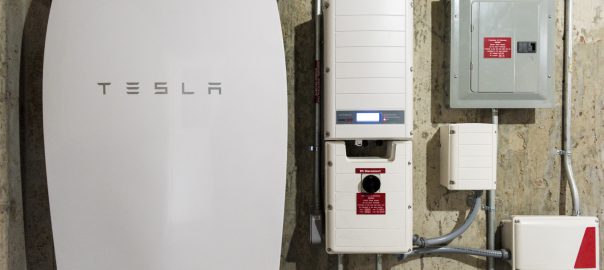
To Steve Yates, the best thing about his new Tesla Powerwall is that he doesn’t have to worry anymore about the lights going out during a storm. Or maybe it’s how cool an addition it is to the entryway of his house in Monkton, Vermont.

“I’ve always wanted to have a backup power source,” said Yates, who was without electricity for 36 hours during Hurricane Irene in 2011. He also admires the Powerwall’s sleek white contours. “It’s kind of art-deco looking.”

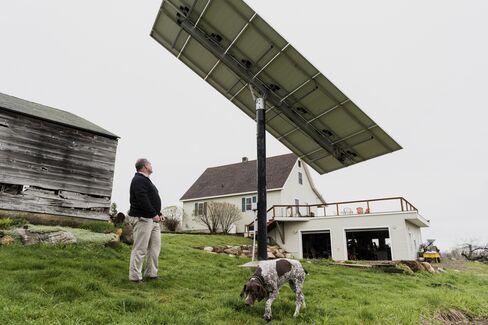
Solar panel linked to a Tesla Powerwall.
Photographer: Ian Thomas Jansen-Lonnquist/Bloomberg


A year after Elon Musk unveiled the Powerwall at Tesla Motors Inc.’s design studio near Los Angeles, the first wave of residential installations has started in the U.S. The 6.4-kilowatt-hour unit stores electricity from home solar systems and provides backup in the case of a conventional outage. Weighing 214 pounds and standing about 4-feet tall, it retails for around $3,000. But hookup by a trained electrician is required, as is something called a bi-directional inverter that converts direct-current electricity into the kind used by dishwashers and refrigerators. The costs add up quickly — which has fueled skepticism about Musk’s dream of changing the way the world uses energy.

Tesla Energy's home battery, Powerwall, is seen newly installed in the home of Steven YatesÊ in Monkton, Vermont on Monday, May 2, 2016.
Tesla Energy’s home battery, Powerwall, is seen newly installed in the home of Steven Yates in Monkton, Vermont
 Net-metering policies, which allow residential solar customers to sell their excess solar electricity back to utilities, have limited the appeal of home batteries in many states. But that’s shifting: Net metering is being phased out in some states, making storage more attractive.

“The picture is rapidly changing across several markets,” said Yayoi Sekine, an analyst for Bloomberg New Energy Finance. “Changes to net-metering policies and implementation of time-of-use rates will improve the case for residential energy storage systems going forward.”

Read more: Bloomberg

The Government is planning to phase out coal energy completely by 2025 (Image: PA)

The day coal power dropped out of the national grid for the first time in more than 100 years

From 1882 until 10 May this year, coal has powered the nation. Could the UK be one of the first countries to end coal power altogether?

The Government is planning to phase out coal energy completely by 2025 (Image: PA)

At midnight on 10 May 2016, the UK hit an energy milestone. For the first time in over 100 years, the amount of coal being used by the national grid to power Britain’s kettles, computer and televisions fell to zero. And then it stayed at zero for four hours.

Two days later, this time for five hours, coal usage fell to zero again. Nuclear, wind, hydro and solar energy powered the national grid in coal’s place. By 13 May, the needle had hit zero four times, for a total of around 25 hours.

This historic turning point came on the eve of a Government consultation on phasing out coal energy completely by 2025.

A spokesperson for the Department for Energy and Climate Change told The Independent:

“As part of our plans for a cleaner energy future, we are one of the first countries to announce our intention to consult on ending unabated coal by 2025,

“We will issue this consultation shortly.”

Read more: Independent

SmartFlower solar PV (Image: Green-Mole)

Launch of Solar SmartFlower

Wouldn’t it be wonderful if each of us could produce all clean energy we need
right in our backyards? And wouldn’t it be a cherry on the top if the same photovoltaic
system could simply be plug-&-play like any other normal home appliance?

SmartFlower solar PV (Image: Green-Mole)

At smartflower, we have stopped asking such questions. Instead, we have
answered them – with smartflower POP, the world’s first all-in-one solar system.

Thanks to its extraordinary construction and the perfectly synchronised components,
the system delivers, on an average, approx. 4,000 kWh per year, thus
fulfilling the complete average electricity requirement of a household in the central
European region.

Smartflower Promo from ImagePlay on Vimeo.

smartflower POP represents changing times. The size of the system alone is no
longer the measure of all things. What counts is a fairly constant production
rate during the course of the day, in order to enable a more effective use of the
produced energy. smartflower POP achieves a degree of self-utilisation of
around 60% – a significant improvement over a comparable rooftop unit, which
averages just around 30%. Now that is what we call smart!

Source: Green Mole press release

Fuel prices have risen as oil recovers to $40 per barrel (Image: N. Ansell/PA)

VW and Shell accused of trying to block EU push for electric cars

Industry giants’ call for biofuels over electric and fuel-efficient cars puts Europe’s carbon emissions targets at risk, say experts

Fuel prices have risen as oil recovers to $40 per barrel (Image: N. Ansell/PA)

VW and Shell have been accused of trying to block Europe’s push for electric cars and more efficient cars, by saying biofuels should be at heart of efforts to green the industry instead.

The EU is planning two new fuel efficiency targets for 2025 and 2030 to help meet promises made at the Paris climate summit last December.

But executives from the two industrial giants launched a study on Wednesday night proposing greater use of biofuels, CO2 car labelling, and the EU’s emissions trading system (ETS) instead.

In reality, such a package would involve the end of meaningful new regulatory action on car emissions for more than a decade, EU sources say. But Shell insisted it is not trying to block an EU push for electric cars.

Ulrich Eichhorn, VW’s new head of research and development, said that plug-in hybrids and more efficient vehicles were “building blocks” for the future, but that “higher shares” for biofuels would be needed in the meantime.

He told a meeting in Brussels:

“Modern diesel and natural gas engines will absolutely be required to deliver CO2 targets until 2020 and they will also contribute to further reductions going on from there.”

In meeting the Paris goals, “societal costs need to be minimised to keep our industrial strength and competitiveness,” he said.

The Auto Fuels Coalition study, written by Roland Berger, makes a series of highly pessimistic assumptions about the costs of fuel efficiency improvements, and equally optimistic ones about greenhouse gas emissions from biofuels. A recent EU study found the dirtiest biofuels three times more polluting than diesel.

An EU source said:

“these two industries have realised they have a shared interest. When you saw who was paying for the study, you knew what the answer would be.”

Read more: The Guardian

April breaks global temperature record, marking seven months of new highs

Latest monthly figures add to string of recent temperature records and all but assure 2016 will be hottest year on record

[16 May] Last month was the hottest April on record globally – and the seventh month in a row to have broken global temperature records.

The latest figures smashed the previous record for April by the largest margin ever recorded.

It makes three months in a row that the monthly record has been broken by the largest margin ever, and seven months in a row that are at least 1C above the 1951-80 mean for that month. When the string of record-smashing months started in February, scientists began talking about a “climate emergency”.

Figures released by Nasa over the weekend show the global temperature of land and sea was 1.11C warmer in April than the average temperature for April during the period 1951-1980.

It all but assures that 2016 will be the hottest year on record, and probably by the largest margin ever.

Read more: The Guardian
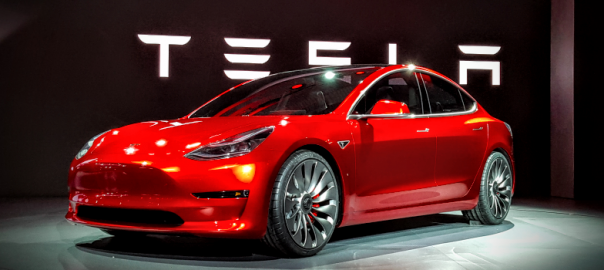
Tesla Model 3 at launch (Image: K. Field/CC)

Your time is up, Stanford tech expert tells petroleum industry

ADDRESSING a high-profile audience of the Thai energy sector last week, Stanford University lecturer and Silicon Valley investor Tony Seba minced no words in warning them that petroleum, which had been a source of livelihood to many of them, would become obsolete by 2030 or sooner.

Tesla Model 3 at launch (Image: K. Field/CC)

Citing four key technologies – energy storage, electric vehicles, self-driving cars, and solar – the author of the amazon.com best seller “Clean Disruption of Energy and Transportation” said the energy and transport industries were on the cusp of either being transformed or destroyed.

“The energy and transport industries will become high-tech industries” he told the Petroleum Institute of Thailand’s 30th anniversary event that was attended by energy and science ministers, privy councillor, director of the Crown Property Bureau Snoh Unakul, and other top energy officials and executives. Speaking at a press conference held at the conference, Seba said since consumers would switch “en masse” to electric vehicles by 2020, petroleum – 60 per cent of which is used for transport – was going to become obsolete.

The driving force will be the four key technologies that will improve exponentially, not because of climate change, he said.

Besides “exponential” technological development in key areas such as in lithium-on batteries, solar photovoltaic installations and generating costs, electric and autonomous cars, and LIDAR sensors, Seba pointed out business model innovations that could accelerate the changes such as storage-as-a-service, electric vehicles’ (EVs) free charging network, car-as-a-service, and “zero money down solar” leasing.

EVs will hit the low-end automobile segments by 2020 when their prices drop to $20,000 (Bt700,000) and will put an end to internal combustion engine cars when EV prices fall to $5,000 in 2030, he predicted. Tesla recently introduced its Model 3 at an unsubsidised retail price tag of $35,000. Within 24 hours, it received 180,000 bookings – a record for the car industry.

Read more: Nation Multimedia

Sadiq Khan at Sir John Cass’s Foundation primary school roof garden where he announced new plans to clean up London’s air pollution (Image: S. Rousseau/PA)

London Mayor Sadiq Khan to more than double size of London’s clean air zone

New mayor of London calls air pollution ‘our biggest environmental challenge’ and plans to bring the increased ultra low emission zone into force early

Sadiq Khan at Sir John Cass’s Foundation primary school roof garden where he announced new plans to clean up London’s air pollution (Image: S. Rousseau/PA)

The new mayor of London Sadiq Khan has made his first major policy announcement, unveiling plans to substantially increase the size of London’s clean air charging zone to tackle the capital’s illegal air pollution levels.

The Ultra Low Emissions Zone (ULEZ) – which could also now come into force earlier than planned – will require drivers of the 2.5m oldest and dirtiest vehicles to pay a charge. Owners of cars that fail to meet the standards will pay a £12.50 charge, separate to the congestion charge.

The scheme is intended to act as an incentive to drivers to use cleaner vehicles or alternative transport to reduce the levels of nitrogen dioxide, a toxic gas produced by diesel vehicles.

Under Khan’s plans, which will now be subject to a public consultation, the ULEZ will stretch from the north to south circular roads in London rather than just the much smaller congestion charge zone in central London as currently planned. Officials said the area covered will more than double in size.

Khan said his predecessor, Boris Johnson, had been too slow to act and had left the city a “laughing stock” internationally, and the government had been “hopelessly inactive” on the issue. Officials said the ULEZ, under a consultation to be published within weeks, could now come into force as soon as 2019 rather than the original plan of 2020.

“I have been elected with a clear mandate to clean up London’s air – our biggest environmental challenge,” Khan said at a school in east London. He said London had only acted on pollution in the past after emergencies, such as the Great Smogs of the1950s: “But I want to act before an emergency, which is why we need big, bold and sometimes difficult policies if London is to match the scale of the challenge.”

The mayor’s office also said an extra charge on the most polluting vehicles would be brought in from 2017, which would be administered by the congestion charge system but be separate to the congestion charge. It is not yet clear what that charge will be.

Read more: The Guardian